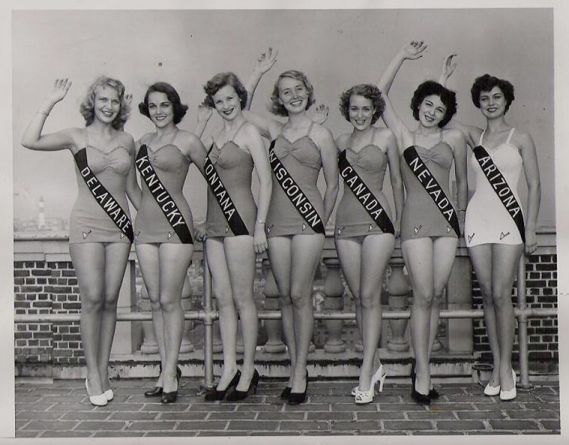
Maybe I have a shot at Miss Congeniality

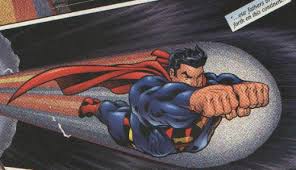
Many will enter, but only one will win
Beneath these pleasant exteriors exist cunning, ferocious competitors

The past few weeks have been exciting to watch as the latest results were announced for some of the major screenwriting contests.

First, congrats to everybody who advanced! It’s always thrilling to see good things happen for friends and trusted colleagues. Make sure you let them know you’re glad for them.

And if your contest email included the word “Unfortunately,…” it’s not the end of the world. Believe me. There’s a long list of reasons why your script didn’t make the cut. It happens. We’ve all been there. Getting upset about it won’t do you any good. The sooner you put it behind you, the better off you’ll be.

Once you’ve gone through the last of the 5 stages, you’ve got several months to really embrace the opportunity to put more work into your script (or scripts) so you can resubmit it/them again next year.

You want your scripts to do better? Do the work to make them better. Get feedback. Pay for professional notes if you can. Whatever it takes. You’re going up against literally thousands of other writers and their scripts. This isn’t the time to hold back.

Entering contests was something I did not do this year, primarily because I didn’t think my scripts were ready. The western needs at least 1-2 more drafts, and I’m going back and forth as to which one to do after that. I’ve never entered two at the same time, but based on how the writing goes over the next few months, might consider it.

So consider me among those thousands competing against you next year, and remember that each and every one of us wants to win just as much as you do.

Good luck.

A whole lot of something out of an almost-nothing

An apt metaphor if ever there was one

A bit of a snag had developed in the rewriting of outline for the pulpy adventure spec. A certain aspect of the story had proven to be too simple, as in “not complicated enough” or “lame half-assed, last-second placeholder”.

It was also falling short in terms of overall pulpy-ness.

Seeing as how this is supposed to be a rousing tale sprinkled with elements of mystery and intrigue, it just wasn’t happening.

I won’t totally jettison a story, but rather see what changes, small or drastic, can be implemented in order to get things back on track.

I don’t know how it is for other writers, but sometimes I’ll go over a previous draft, hit a word or phrase that originally didn’t hold much significance, and all of a sudden it triggers a whole new realm of possibilities. Call it the “How did I not see that before?” syndrome.

In this case, it was a character’s name. This set off the auto-immediate response of “Hmm. What if…?”

Cue the heavenly chorus.

Suffice to say, now it’s back for yet another take on the draft, but this time going into it armed with a whole new batch of ideas.

-Time for a couple of book plugs!

Friend of the blog Justin Sloan has a new book coming out this weekend – Military Veterans in Creative Careers: Interviews with our Nation’s Heroes. Some great stuff in there, including quality interviews with men and women who’ve served in the armed forces and are now working in creative fields.

If you’re looking for a little guidance on your journey to becoming a working writer, then take a look at Notes to Screenwriters by Vicki Peterson and Barbara Nicolosi, who also run the Catharsis script consulting service.

Toothbrush. Clean skivvies. Business cards. Let’s go!

Opting to leave my emotional baggage at home

Kind of busy getting ready to head out to the Great American Pitch Fest, so another shorty today.

(Still accepting suggestions about where one might find quality pie in beautiful downtown Burbank.)

-Didn’t get much writing done this week due to our shaggy dog getting a mess of foxtails stuck in her toes, including one so far in it required a trip to the emergency pet clinic. She’s better now.

-More great notes received for the western. Thanks to all who’ve contributed. It’s especially nice when those who’ve read the previous drafts have high praise about how much of an improvement the latest one is.

Hopefully the next draft will continue that trend.

-The revamping of the comedy outline continues, including tightening the whole thing up. I must have cut at least 10 scenes/pages, so shooting for a total of somewhere in the mid-to-upper 90s. As it should be.

-Yet another “pass” on the fantasy-adventure pitch, so taking a break from those for the time being. The most frustrating part is the oddly-phrased way some of them say no. I’d rather they just said “Sounds intriguing, but it’s not for us.”

Too bad there’s no translator app for that.

-Reader participation time! In the comments below, please give the title, genre and logline of the second script you ever wrote.

I’ll go first.

WOK & ROLL. Comedy. An overly-ambitious Caucasian chef in a struggling family-run Chinese restaurant takes on a sleazy rival determined to shut it down.

Who’s next?

The name’s Piphany. E. Piphany

If it weren't for that whole possible electrocution thing, I'd write in the tub too.
If it weren’t for that whole possible electrocution thing, I’d write in the tub too.

Progress on the first draft of the low-budget comedy spec has been slow but steady; averaging about 2-3 pages a day. It’s a smart move to accept the fact that the first draft of anything you write is going to suck, because it always does. And this one’s no different. Several cogs within this machine in drastic need of retooling have been identified.

So there I am, working on a scene, having the ongoing internal discussion of “Is this the funniest way to do this bit?” The scene as originally conceived is pretty straightforward, but the comedy part still needs something. A line of dialogue just won’t cut it. While I’m quite adept at witty conversation in person, putting it on the page is an entirely different animal.

Overall, it felt like things were slowing down and becoming tougher to work through.

No matter how hard you look, sometimes you can’t find the answer you seek because you don’t realize it’s just staring you in the face.

There was a scene much earlier in the script where, for no reason in particular, I used a joke of a particular nature just for the hell of it. Some might consider it a dumb joke, but I’m still in first draft mode, so it might not stick around for very long.

But there was something about it that really stuck with me. I thought it was pretty funny, and the more I thought about it, the more it seemed like exactly something I would come up with.

And there it was. The floodgates had opened, and my much-needed solution came gushing forth. These jokes would work perfectly throughout the whole thing.

Added bonus – it’s the kind of comedy I’ve known and loved my entire life. I’d been trying to write this in a way or style that’s not exactly me, whereas this rediscovered approach is practically spot-on. Coming up with these kinds of jokes is almost second nature. Hopefully I can successfully transition them onto the page.

But now I was presented with a new problem: stop here (around pg 48) and start over, or hammer my way forward?

Tempting as it was to start over, I’m opting to keep going forward (and start implementing the new jokes), mostly so I can just get this draft finished. The sooner I get to the end, the sooner I can start on the rewrite.

As I said, progress continues to be slow and steady, but it’s still progress.

-One week to the Great American Pitch Fest, so you still have time to register. Use code MaximumZ20 at checkout for a whopping 20 percent off!

Ask a Truly Superlative Script Consultant!

Terri Zinner

The latest in a series of interviews with script readers and consultants who would be worth your while to work with if you want to get your script in shape. Today’s spotlight is on writer-producer-consultant-instructor Terri Zinner of afilmwriter.com.

Terri Zinner has been in story development for over 15 years. She began as a reader for Blue Cat competition and then a reader for Gallagher Literary, who eventually promoted her to SVP of Development.

Terri is also a produced writer and Producer of independent feature films such as EL CAMINOTHE BRIDE FROM OUTER SPACE and other independent projects. Terri worked on the award-winning film MONDAY MORNING.

Terri has provided story consultation on such films as AMERICAN SNIPER, ALBERT NOBBS, KILL YOUR DARLINGS, BREAK THE STAGE, THE HOWLING: REBORN, WHAT MAISIE KNEW, THE BRASS TEAPOT, LOUDER THAN WORDS and more….

Being named as one of the top story consultants in Creative Screenwriting Magazine, Terri is a sought-out story and screenplay analyst. Terri founded the website A FILM WRITER and developed the Screenplay Reader Training. She mentors and trains a team of screenplay readers.

1. What’s the last thing you read/watched that you thought was incredibly well-written?

I had the honor of reading the script AMERICAN SNIPER. It’s one of those rare occasions when you know that this script is something special from the very first page. The script was heart pounding and riveting from the opening through the ending. The story just came to life for me, as if I were actually watching the movie. The writer, Jason Hall, earned a well-deserved nomination for a harrowing script. I’m also always in awe of TV writers, who have a special gift with words. I admit I haven’t had much time for watching TV, but DAMAGES was one of my favorite shows because I thought the writers did a terrific job of creating a complex character in Patty Hewes. She was a fascinating, morally corrupt character to watch, and I found the dialogue to be very powerful. I try to watch a variety of films, but when I watch now, I tend to pay more attention to the structure. In fact, I forced my friend to go to a horror film, EVIL DEAD, just to analyze how the structure worked.

2. How’d you get your start reading scripts?

Like most readers, I began by writing screenplays. I optioned a few, but then I was provided the opportunity to become a reader for Gallagher Literary and a reader for Gordy Hoffman’s Blue Cat competition. I found that my real skills were in deconstructing a screenplay and guiding the writer in the development of their script. I read all I could on developing screenplays, structure, and what makes for a great character. I went from a reader to Sr. VP of Development. It just became a passion that I haven’t overcome. I created my own website AFILMWRITER.COM with the idea of helping writers at an affordable rate. Through word of mouth my business began to grow and expand. I also freelance for other agencies and have produced independent films. I developed a program to help teach and mentor others on how to become an effective professional screenplay reader. I enjoy nothing more than the creative process and mentoring writers in their craft.

3. Is recognizing good writing something you think can be taught or learned?

Like writing, I think being a screenplay reader or story analyst is a craft. It requires a fundamental understanding of the rudiments of structure, plot, tension, character, dialogue, and what makes for a great story.

I actually teach a course for potential readers. It’s an intensive course and the reader is given the opportunity to practice coverage. I’ve seen my readers grow as analysts, but like anything, it requires ongoing learning and understanding the craft, being open to visionary worlds, and having a passion for the craft. It’s not about being punitive or negative, but for me it’s about finding the strengths in the writer’s script and helping the writer build upon those strengths. I do become concerned about people who claim to be professional readers, but know little about the craft. A reader has to have the ability not only to deconstruct what’s on the page, but also to be able to deconstruct what’s not on the page.

4. What are the components of a good script?

There’s so much that goes into writing a great screenplay. It’s a skill to bring those elements together. You can have a terrific idea, but executing that idea is the major challenge. Creating an original concept, or taking a tried and true concept and telling it from a new point of view is one step in crafting good script.

Understanding structure, pace, and how tension and conflict works is pivotal to the craft. Creating deep and complex characters with not only a well-identified external goal, but with inner conflict and struggle is part of writing a great character. Giving characters strong moral choices to make and defining moments can create powerful storytelling. Powerful dialogue can propel a script. Incorporating an emotional theme that’s well assimilated into the script can make for a compelling script.

A writer should be asking questions like this: Is there a ticking clock tension and sufficient tension to sustain the story? Does this tension build? Is there a relationship component to the story? Is there a satisfying ending that involves a hero/foe conflict or confrontation?

A reader knows a great script when they can visualize it as a film in their mind vs. on the page.

For me, the most significant component of a great script is that the script provides an emotional experience, in which not only does the character learn something about life, but so do I.

5. What are some of the most common mistakes you see?

Normally, it’s the lack of the writer having the ability to convey a clear and compelling story. It can be challenging to read a script and not be able to visualize what the writer is attempting to convey. I honestly want to be able to provide constructive notes, but sometimes you run into a script and you’re simply bewildered by what the script is truly about. This commonly occurs when the writer doesn’t stay on task with the goal and the script isn’t goal-focused. The hero may not be proactive. Without a strong structure it’s going to be a long, difficult read for the reader.

For new writers, certainly professional presentation is a common mistake. First impressions are important, but these elements are easily correctable. Writing “ordinary” characters or on the nose dialogue is also more typical with new writers. Some writers tend to over write. They add dialogue when dialogue isn’t necessary and they forget the power of visual storytelling.

6. What story tropes are you just tired of seeing?

I recently wrote a blogpost on this topic. Several scripts involved slacker men playing video games. Script after script, all these immature men are obsessed with video games. Some of the other common tropes for me are lines of dialogue that make me cringe. My most feared line in a script has to be: “You’ll never get away with this.” If I read a comedy, most likely in the first act the character will lose their job, get evicted, and break-up with their significant other. If the character races to the airport at the end of the script to stop the person they love from leaving, it’s not original. I have to admit I’m not fond of the script in which the world is in jeopardy of being blown up. There’s always a way of taking the tried and true, and crafting it to be more refreshing.

7. What are the 3 most important rules every writer should know?

-Learn the craft. Study structure. Understand conflict and tension.

-Understand it’s a creative process. Feedback, coverage, and rewrites are part of the process. It’s not personal.

-Be passionate about what you write.

8. Have you ever read a script that was an absolute, without-a-doubt “recommend”? If so, could you give the logline?

I have been fortunate to read some great scripts ranging from American Sniper to Killing Your Darlings to Albert Nobbs. All were recommends. I’ve read other scripts that I have given a recommend to and they are in development. On the other hand, I have given “consider” to scripts that have also been produced. I’ve watched some of films I’ve recommended and haven’t enjoyed the film as much as the script. “Rating” a script can be somewhat subjective. I’ve given recommends on scripts that others have passed on, and I’ve passed on scripts others have given considers or recommends to. The lesson for writers is that every reader is not always going to love or like your script. That’s okay. You also shouldn’t just rely on one reader. I always encourage getting coverage from more than one professional reader to get a good idea of how readers are reacting to your script. Make sure they know their craft.

9. How do you feel about screenwriting contests? Worth it or not?

There are many screenwriting contests, so I think the writer has to be selective in which ones they enter. It can be an opportunity for writers to get their name out in the community and receive feedback, but it’s also a business and can be costly. A writer has to remember that placing in a contest doesn’t necessarily mean the script will receive a consider or recommend from a professional reader. On the other hand, a great script may not place. Contests are very dependent on the reader you get.

10. How can people get in touch with you to find out more about the services you provide?

I am always open to writers or potential readers. They can contact me at afilmwriter@aol.com or visit my website afilmwriter.com

11. Readers of this blog are more than familiar with my love/appreciation of pie. What’s your favorite kind?

Cinnamon Crumble Apple Pie.