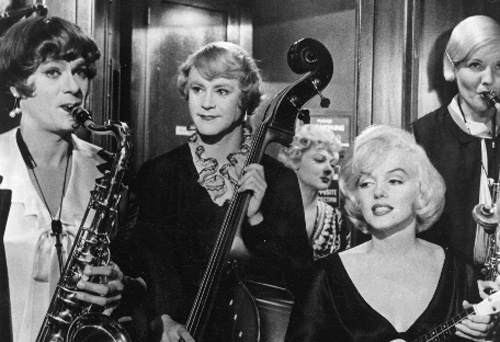
Moose, squirrel, and two guys in drag


rocky & bullwinklesome like it hot

It’s been a very long time since I attempted to write a script that did not involve the phrase “rollercoaster ride” as part of the description.

So while I wait for notes on the western and mystery-comedy, I’m taking my time in figuring out the story of what is shaping up to be a low-budget comedy.

Which also means it has to be funny, yet another mountain to conquer in itself.

Funny is subjective.  Something somebody else considers hilarious might make me shrug and say “I don’t get it.”  But I know what makes me laugh, so that type of humor is what I’ll attempt to incorporate into my story.

For me, a very important part of this is re-educating myself in how the jokes work and how they’re constructed. As I figure out the story, I’ll also be watching and learning from some prime examples of how it’s done.

Among them: episodes of ROCKY & BULLWINKLE and SOME LIKE IT HOT.

Part of what I like about them is how the jokes feel organic AND smart. The humor comes from the situation and how the characters react, rather than feeling forced.

Each also does a great job of gradually setting up punchlines, and not just going for a rapid-fire bombardment of one-liners.

Something else to keep in mind: both are over 50 years old and still hold up – further proof of their durability. The subject matter may be a bit dated, but the jokes still work, and that’s really what matters.

The me business – a 24/7 operation


The friendliest staff in town!
We’ve got the friendliest staff in town!

What may have been my biggest mistake with my old manager was not doing enough.

I’d toil away on the new script, and send him an occasional email asking if there had been any responses to the first one. They were minimal, which is putting the best positive spin on it.

Why weren’t we getting the results we’d expected? Mostly, I blame myself.

Looking back, I realize now that it was me who wasn’t being the more proactive one. He was a busy guy with other clients to handle. Instead of handing off the material with the instruction of “I’ve got a script to write. You do what you have to,” I should have been making his job easier by doing the research, finding the names and providing the contact info so all he had to was send off an email.

Lesson learned. Behavior modified. Jump to the present.

Now being representation-free, I’ve no choice but to be the proactive one. Nobody’s coming to me, so I’m exploring numerous avenues to get to them.

-query letters. A few managers have requested the script, with more being targeted.

-researching producers and production companies who’ve made films similar to my scripts

-expanding my network and connecting with writers on community sites, which includes face-to-face meetings with those in the immediate vicinity when applicable

-publicizing my scripts and their loglines on said sites and public forums, which has resulted in not only more connections, but offers to read the scripts. Feedback is always invaluable, and somebody’s status in the industry can change overnight, so any connection is a potential good one.

My former m.o. was to devote as much time as possible to writing, rewriting and polishing. But for now, that’s just not an option anymore.

Time for a little diversification.

It’s just as important now to set aside some time each day to find some potential recipients for my material. Even if it’s only 20-30 minutes of researching names on IMDBPro, that’s still a few small steps in the right direction.

Even if something may feel like the longest of shots, I remind myself I’ve got absolutely nothing to lose, and the worst that can happen is somebody says no.  If that happens, I shrug it off, move on to the next name and try again.

Being realistic in a work of fiction

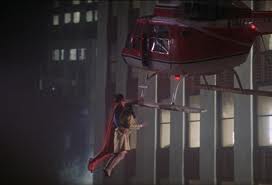
You're upset about the scientific inaccuracies in a comic book movie about an alien who can fly?
Some people were actually upset about the scientific inaccuracies in a comic book movie about an alien who can fly

“The monsters attack.”

This simple line in my action spec outline was the catalyst for a major thought process that continues to grow by leaps and bounds.  Questions are being raised that demand answers.

In creating this world, not only do I have to develop the story you’ll be following, but also fill in a lot of details about the world itself – which just happens to have monsters in it, which leads to more questions.  It never occurred to me to consider subjects such as biology, geology and the laws of physics as they apply to monsters (all of which play a part in the story).

“But it’s just a story,” some might say. “Don’t worry about stuff like that.” But it’s exactly the stuff like that that makes the story better, plus it shows I’m taking this seriously – even if it does involve monsters.

I’ve always had an intense dislike for writing that takes the easy way out in explaining something, or does it in a very half-assed way.  It makes it seem like the writer didn’t care enough to do a little more work.

It’s very important to me that not only are the events of the story based in reality, but the setting is as well.  This is something I strive for in everything I write – no matter what the genre.

The more detailed you can make the world of your story, the more believable it’ll be. But be careful not to overdo it – too much detail creates confusion. Just give enough to make ’em say “Yeah, that makes sense.” or “I can totally see that happening.”

Now it’s back to my research on which metallic alloy would be the most effective for killing monsters. So far, tungsten carbide seems to be the frontrunner.

It must be true. My business card says so.

So as to remove any further doubt

I got a very interesting email the other day, with the subject of “Want to get your script into shape?”.

How could I resist such a persuasive sales pitch?

What followed was a lengthy diatribe about what an almost insurmountable task it was to write not just a good script, but a great one with the potential to open all kinds of doors and really get my career going.

If I wanted any of that to happen, then I should seriously consider the services of a script consultant.  Specifically, this person.

It was a foregone conclusion I wasn’t interested, but I was intrigued to know more about them. Exactly who is this, and why should I invest the time and money to work with them? So I clicked on the link to their website.

Let’s just say it was not encouraging.

A very early-2000s look to the whole thing. Generic descriptions of what a script consultant is, how they can help me and lots of pie-in-the-sky descriptions of what could possibly happen with my script. No details about cost. Totally anonymous testimonials (which didn’t even sound true to begin with).

Did I mention this email showed up in my junk mail folder?

Just to seal the deal, I looked them up on IMDB Pro. Exactly. Nothing.

We all know this is an incredibly tough business to break into, and take all the help we can get.  Using professional feedback can really benefit your work and help develop your skills.  The tough part is figuring out who actually is a professional and gives you your money’s worth.

Utilize the tools at your disposal and do your homework. Ask questions of your peers via emails or Twitter. Check the numerous blogs and forums. There’s no reason you can’t find the information you need. And don’t be afraid to price-check and comparison shop. This is your time and money we’re talking about.

There will always be people who claim to be experts or professionals with all the answers, looking to take advantage of your desperation to succeed and ready to take your money.

Fortunately, you can go into this prepared and not let them.

An air of authenticity -OR- That’s why God invented Wikipedia*

Wikipedia was actually founded by this guy - Jimmy Wales - but it's not as funny
*Yes, I know Wikipedia was actually founded by this guy – Jimmy Wales – but it’s not as funny

“Write what you know” can only get you so far.

What if you want to write something you don’t know that much about?

One word: research.

Thought you were done with that when you got out of school? No such luck, my friend.

When you write, you want to make the reader/audience feel like you know what you’re talking about, or least give the impression you do. Just making stuff up or copying something used in an older movie is the lazy approach.

This isn’t saying you need a character spouting a master’s thesis on the subject, but tossing a few facts or proper terms here and there can really go a long way towards establishing credibility.

If you’re still in the outline phase, this is prime researching time. As you’re developing your story, try to find out something you can use that would make it that much more believable.  While this practice definitely applies to anything history-based, it also works with stories set in the present.

Say you’re working on a medical drama. Those characters should be able to immediately identify a certain condition, the cause (if necessary) and what the treatment is. Spending a few minutes finding this information out will make that possible.  You think the writers of HOUSE just made stuff up? Nope. The medical problem in each episode was based on facts.

Researching could also prove to be a key part of moving your story forward. Maybe a character finds something out or reveals something that suddenly changes the direction things are going.

Writing about a profession you know nothing about? Talk to someone who actually does that for a living. How would they handle this type of situation? When someone finds out you’re writing a story and want their input, they’re usually pretty enthusiastic about helping you.

Spending some time finding stuff out can even pay off when you least expect it, or aren’t expecting it all. Even if you don’t use it this time, there’s a good chance it could come in handy somewhere down the line.

This way you can solve that particular problem faster, thereby making yourself look that much more like a writing genius, impressing all who sample your craft.

And isn’t that what it’s really all about?