Doesn’t get any cheaper than this

cashier
Our helpful staff is ready to assist you!

As my network of fellow screenwriters has expanded over the past few years, I’ve become more active with exchanging script notes with some of them. It’s a pretty even split between me approaching them first, and vice versa.

From my perspective, the whole thing has been quite helpful and I think my scripts are definitely better for it. And as far as I know, none of the other writers have any complaints about my notes. If they do, they’re not saying anything.

It’s gotten to the point where every once in a while, an email will pop up from one of these folks asking if I could look over their latest draft and offer up my two cents. I’m fairly certain I’ve never said no.

Full confession: it usually takes me a little longer than I expect to get it done, but I do make a point of getting it done. I try to extend the same courtesy to them that they would to me.

I bring all of this up because I had a great catching-up coffee chat with a writer yesterday; somebody I haven’t seen since last summer. We shared what’s been going on with our respective projects, and I mentioned finishing/sending off some notes.

“Do you charge for that?” they asked.

No. It’s just an exchange, and I like helping out when I can.

“That’s really generous of you to give up your time like that. Have you thought of charging for notes?”

Of course, but I don’t consider myself qualified to. If I was a working writer and had a couple of produced features under my belt? Maybe.

I’ve always found the bios of professional consultants and readers to be pleasantly diverse and equally fascinating. Almost all of them have spent time working in the industry, many having read or given coverage on thousands of scripts.

Me? I can’t make the same claims. I’ve read a lot of scripts, but nowhere near those numbers, and a large percentage of my time has been (and continues to be) focused on honing my writing skills.

They have a fairly solid grasp of what works and what doesn’t, and provide much more insightful comments than I believe I could.

All things being equal, I’d say my analytical skills have definitely improved over time. I don’t know what kind of pro reader/consultant I’d be, but for the time being, I’ll stick to the friendly no-cost, between-writers exchange.

As mentioned earlier, I like helping when I can, and will continue to appreciate any opportunity to read an associate’s script in order to give them notes that will in theory help them make it better.

*personal note – this is my 800th post. Thanks for being part of the journey, and hope you’ve enjoyed it. I certainly have.

Try the direct approach

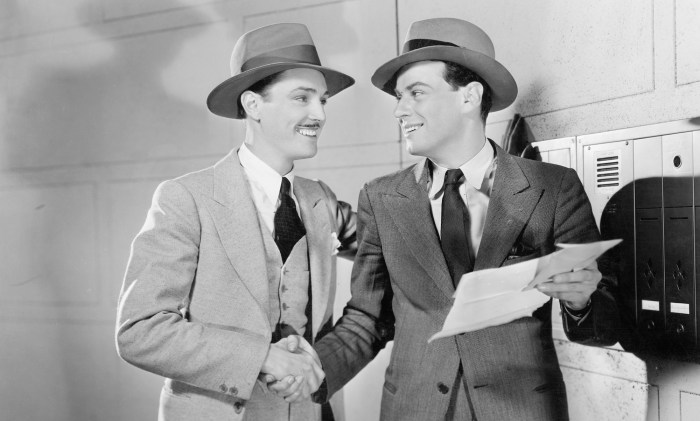
handshake
Nice to see you again. Mind if I ask you something?

Sometime last week, I received a very nice compliment via on online forum regarding the quality of the script notes I give. A mutual associate of ours chimed in with the grumbly “Well, he never does it for me.”

To which I responded “Because you never ask.”

I don’t know what this writer’s standard M.O. is for getting notes, but from what I can gather, usually involves them posting “Anybody want to read my stuff?”

There’s nothing wrong with that, but the drawback is you run the risk of getting feedback from somebody with less experience than you, or worse, has no idea what they’re talking about.

This is why networking and establishing relationships with other writers is so important. If someone posted a generic request for a read, I’d be less inclined to respond. Even if I knew the person. I figure they’ll probably get a few other responses, so why bother?

But if someone came to me specifically and said “If you have the time, would you be able to read this?”, I wouldn’t hesitate to say yes. This shows me that they value my experience and opinions, along with respecting that I can’t simply drop everything to accommodate them. They’ll also include an offer to read something of mine, if I’m interested.

Sometimes I’ll get an email asking me for a read, and it might be because of any number of reasons. They’ve read my stuff before and think this new script is similar. They know I have an eye for fill-in-the-blank. All of this could only have come from myself and this other writer having already established a good professional relationship.

While I always encourage writers to get out there and network, it’s also important to build on those connections once you’ve got them. You don’t have to become somebody’s best friend, but being supportive or offering the occasional words of encouragement really go a long way. Plus, people are much more likely to remember that sort of thing, adding to the likelihood they’d be willing to help you out.

More than often I’ve read about another writer’s projects and introduce myself, tell them how I found them (usually via the forums) and of my interest in the script in question, then ask if they’re cool with me taking a look at it. It’s a rare occurrence when someone says no.

Both of you are writers constantly striving to improve, and some good, solid feedback can play a big part in that. And that can be best achieved by getting to know other writers and treating with the same respect you’d expect to be treated with yourself.


You don’t know me, but can you help me?

the-stranger
Let’s not complicate things with petty details like who I am

So this email arrived yesterday.

“Hi, Paul, Do you know any past or current Executive Producers that might be eager to engage in a new multi-billion dollar franchise that could be as good as “Harry Potter” or “Star Wars”?”

Immediate smartass answer: Well, of course I do, person-I’ve-never-communicated-with-before! I like the cut of your jib, especially with that totally unsolicited request for help! I’ll pass your info along straightaway! Even though I think smoking is a totally unhealthy thing, I’m going to learn how just to be able to literally light cigars with hundred-dollar bills which I’ll be grabbing out of the huge bags o’cash which will no doubt be continuously rolling in once Hollywood gets its mitts on this!

Secondary upon-reflection answer: Do you really think this is the best approach?

Sure, we’ve been connected on a networking site for several years, but as far as I can recall, have had absolutely no interaction during that time. No emails. No comments on a post. Not even a single “Hey, how’s it going?” And then, totally out of the blue, you come to me and ask for help.

I’m more than happy to help somebody out when I can, but it has to be somebody I know, somebody I’ve communicated with, and somebody I think is worth helping. Apart from this nebulous “connection” we have, to me you’re little more than a total stranger.

And you’re not asking for just any kind of help. You have what you proclaim to be “the next big thing”. If I had a dollar for every time I’ve heard or read that about a script/story/idea, I’d be able to fund my own franchise.

It’s great that you have a high opinion of your material, as you should, but keep in mind you might be the only one who does. You can prognosticate all you want, but that’s not going to impact anything. You can’t say something’s going to be a hit because you want it to be.

I’m still a little fuzzy on the details, but I think the title “Executive Producer” depends on the extent of that person’s involvement with the project. Until then, I believe “producer” is the appropriate title. Feel free to enlighten the rest of us in the comment section.

Let’s also discuss the fact that you sent this to me. Me. Why? I’m not exactly Mr Industry Insider. In fact, I’m more likely in the same boat as you; a nobody busting his ass trying to establish a career. Did you know that? Did you do any research, or are you just sending this to as many people as possible, hoping one of them works out?

I never responded to the email in question, simply because I don’t think it’s worth it. I suspect anything short of “Here are those names you asked for” would not be welcome, let alone “This is a really unprofessional email, and here’s why”. As always, I wish them the best of luck.

I’ll admit I’ve made a lot of mistakes over the years, but each one has been a learning experience unto itself. I’ve learned how to network, how to communicate, and how to interact. I know how to seek out help and how to offer it. I’m a firm believer in researching and finding out everything I can about whatever it is I’m working on.

I always strive to be as professional as I can when it comes to this sort of thing. Everybody’s a potential future partner/connection/resource, but I don’t take it for granted.

I’ll treat you with respect provided you do the same.

Q & A with Ashley Scott Meyers of Selling Your Screenplay

ashley-meyers-high-res

Ashley Scott Meyers is a screenwriter and blogger/podcaster at SellingYourScreenplay.com. He has optioned and sold dozens of spec feature film screenplays, with many making it into production. All of Meyers’ screenwriting success has come through his own marketing efforts which he teaches on his blog and podcast.

What’s the last thing you read/watched that you thought was incredibly well-written?

The screenplay for SOURCE CODE is excellent; one of the best scripts I’ve ever read. I highly recommend it to anyone who is a screenwriter.

I have two young daughters, ages six and three, so I’m watching a lot of children’s movies these days. I just watched THE IRON GIANT for the first time, and thought it was very well-written.

In fact, I’d call MEGAMIND one of my favorite films. In terms of screenwriting, it’s excellent. There are very few films I watch that I think are perfect, but as a screenwriter, I’d consider it one of the few that could be called practically flawless.

My daughters and I recently watched the 80’s classic CLOAK & DAGGER, another very well-written movie. It keeps the action going and all comes together at the end. A very smart script. I saw it when I was a kid and didn’t think much of it at the time, but seeing it again, it’s a pretty solid piece of writing.

Tell us about your writing background, including your “big break”.

I’m not sure I’ve really had a “big break.” Every script I sell or option feels like a monumental effort and it hasn’t gotten any easier. In fact, I’d say it’s gotten harder as the DVD market has shrunk over the last decade or so.

But to answer your question… I really never had a background in writing. I just liked movies, and for some reason writing scripts appealed to me. So I decide to pursue screenwriting. I was a terrible student when it came to English, writing, spelling, and grammar. Pretty much every skill you need to be a writer, except one (maybe two)… persistence and determination. So I’ve just plugged away and sold a few scripts.

How did the Selling Your Screenplay blog and podcast come to be?

Believe it or not, I once saw Gary Vaynerchuck speak at a conference where he was talking about not putting your personality into your brands. At the time, I was running a whole bunch of websites, but nothing around screenwriting. So I decided then and there that I needed to do something that combined two of my skills and interests: screenwriting and web development. So I did.

As far as the podcast goes, I just started to listening to podcasts and I thought they were really powerful. So I launched my own.

You’ve had experience with short films. What do you consider the benefits of working on a short, both as a writer and filmmaker?

The biggest thing is that you get to see your work get completed, which is rare as a screenwriter. But if you write a halfway-decent short, it’s fairly easy (nothing is every easy in this business, but it is possible) to find someone who wants to shoot it. You also might get an IMDb credit, win an award at a film festival, and meet other filmmakers. Shorts are a great way to hone your craft. You’re not going to make any money doing them, but they can be a great learning experience.

Is recognizing good writing something you think can be taught or learned?

Yes. The more screenplays you read, and the more you write, the more you’ll be able to recognize good writing.

One of the things that makes movies so vibrant is the fact that you can watch a movie or read a script and notice different things every time, depending on where you are in your own life and skill level.

But yes, everyone can get better at writing and recognizing good writing.

What are the components of a good script?

That’s a pretty broad question. If I had to boil it down, I’d say good writing evokes genuine emotion in the reader or watcher. If someone reads your screenplay, and it evokes emotion in them, you’re on the right track. Everything else, like structure, characterization, dialogue, the hook, theme, etc., is really secondary to being able to evoke emotions in people with your words.

What are some of the most common mistakes you see?

The biggest mistake is underestimating the amount of work it takes to be a professional writer. I hear from so many people who’ve written one script, entered it into a handful of contests, and then wonder why they haven’t made it as a professional writer. Nobody gets to pitch for the Yankees after spending one summer practicing. Being a professional screenwriter is probably as hard as, or at least harder than, being a professional athlete. It takes an enormous amount of luck, talent, and lots and lots and lots of hard work.

What story tropes are you just tired of seeing?

It’s often inevitable that you’ll write scenes that feel familiar. I often find myself doing it, so I step back and just mix things up a bit. Try anything that’ll give the tired tropes a new interesting spin, which often boils down to adding a quirky or interesting character to the scene who can mix things up.

I recently watched a short film where a little girl dropped an ice cream cone that fell to the ground in slow motion. It was so clichéd that I really wondered why the filmmaker didn’t try to do something more original.

What are the 3 most important rules every writer should know?

There are really only two mandatory things to do to be a successful screenwriter: write a lot, and read a lot of screenplays. That’s it.

If you do those two things and really spend time analyzing your writing and the writing of others, you’ll get better and maximize whatever talent you have.

How do you feel about screenwriting contests? Worth it or not?

Contests are great. Screenwriters should be doing everything within their power to get their work out into the world, and contests can be a part of that plan. But understand that even winning the best contest still means you’re quite a ways away from being a professional screenwriter. And I certainly wouldn’t use contests as my only way to market my material.

How can people find out more about you and Selling Your Screenplay?

I blog and podcast over at SellingYourScreenplay.com. I release a new screenwriting podcast episode every week. In nearly every episode, I interview an experienced screenwriter. I also run a script consulting service.

Readers of this blog are more than familiar with my love/appreciation of pie. What’s your favorite kind?

Apple. Not very original, I know. But every once in a while someone will bring an apple pie to Thanksgiving dinner, and as I eat it I think, “Damn, that’s good pie.”

Do you know what you don’t know?

scarecrow
I’m no ThD (Doctor of Thinkology), but I try

Throughout the online writing community, among the many forums and networking groups, there will always be someone, most likely just starting out, who asks a question along the lines of:

“How do I go about accomplishing THIS?”

The variations on this are endless (as are the number of possible answers, but that’s another subject for another time).

A lot of the time, the question stems from a simple lack of knowledge; they just don’t know. Most likely, it’s about a subject which the more seasoned of us have an answer, probably having lived through it ourselves. Hoping to pass on the benefit of your experience, you provide an answer.

Is it what they were expecting to hear? Maybe. Maybe not. But you are giving them THE TRUTH.

With any luck, the question-asker is grateful and appreciative. A win for both sides. They learn something, and you fulfill the mentor role. Even if you just told them “For God’s sake, DON’T DO THAT!!”

And sometimes they don’t like the answer, possibly even getting angry and resenting you for telling them what is, in essence, THE WAY THINGS ARE. How dare you shatter their illusion in which they can do no wrong? They probably don’t realize how petty and thin-skinned they’re acting; two traits which will doom their potential writing career before it  even gets started. Hey, at least you tried to help.

(Side note – this process is a two-way street. If somebody asks you a question straight out of the first day of Screenwriting 101, don’t insult or belittle them for asking it. You were in that exact same situation once too. Plus, it makes you come across as a total dick.)

If you’re among those just starting out, remember that nobody’s first script is at 100 percent. Mistakes will be made. Don’t be afraid of making them. It’s the only way you’re going to learn.

If you’re among those who’ve been down this road many times, be willing to take on the role of patient educator and help when you can.

Even though writing is for the most part a solitary activity, we’re still part of this community, and all in this together.