Actually, Zippy, I am

zippy
Zippy the Pinhead c/o Bill Griffith

Although the numerical output isn’t as high as I’d like it to be, the daily churning-out of pages for the current project continues. I’m hoping to ramp things up over the next few days and beat my self-imposed deadline of having a completed draft by December 31st.

There are a few factors in play regarding getting this done:

-I’ve got a solid outline to work with. This took a long time to put together and fine-tune, but it’s been a very helpful foundation for keeping both me and the story on track.

-Taking that one step further, sometimes I’ll describe a scene in the simplest of terms; maybe one or two sentences (which can be quite a challenge when you need more detail to make that scene into at least more than a page). A lot of the time, this means I’ll have to come up with something right then and there to flesh it out, and after years of working on this, it’s just gotten easier to actually do that. Fortunately, a majority of my initial ideas seem to work out the best.

-And what may be the most important in helping me continuously move forward – it’s fun. I’m just really enjoying doing it. It’s a genre of which I’ve proven to be somewhat adept. While it may not be the most original concept, I’m able to have a little fun messing with some of the tropes that come with the territory. I’ve got free reign to write whatever scenario I want that works within the context of the story. It’s quite liberating.

All of this combined makes for daily writing sessions that seem to zoom by. I’ll hammer out a scene or page, oblivious to the passing of time. Before I know it, it’s later than I expected, I’ve inched forward in the script, which chips away at the number of scenes still left to do. A very nice scenario indeed.

Dorothy Parker said “I hate writing, I love having written.” I don’t mind admitting I love the writing part too. Sure, sometimes it’s tough, but it’s the only way to get to “having written”.

And if you’re not enjoying writing in the first place, then why do it at all?
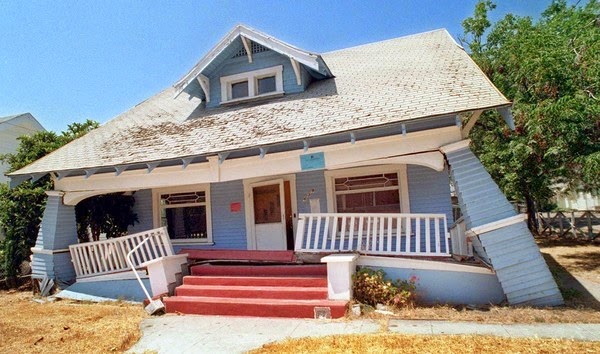
First, you build a solid foundation…

foundation
And this is what could happen if it isn’t

As the daily churning-out of pages continues for my November writing project, I’ve found it extremely helpful that so much time was spent working on the outline.

Only through trial-and-error did I eventually discover that making sure the outline is rock-solid before starting on pages makes a huge difference.

Keep in mind that this is what works for me. You may have an entirely different approach, and that’s totally cool. Actually, I’m curious to hear about some of them. Feel free to discuss in the comments section.

And now, back to the subject at hand…

I see putting together the outline as a gradual building-up process. I start with establishing the main plot points. What are the pivotal moments in this story? Does each one properly fulfill its purpose in the overall context of the story?

Then I fill in the blanks between those plot points. Does it make sense how we get from, say, the inciting incident to the end of the first act? Does each scene do its job in moving the story and characters forward? Are you presenting information we need to know, or setting things up so as to adequately pay them off later? Does each scene appropriately follow the one before and lead into the one after it?

Something important to keep in mind during this part: eliminating unnecessary scenes. You may have a scene you really, really like, but may not be absolutely vital to the story. My recommendation is to either make it vital or get rid of it entirely. The last thing you want is to interrupt the flow of your story for a scene that really doesn’t have to be in there.

Once you’ve got all those blanks filled in, then you move on to expanding each scene – mostly just putting in the necessary elements that reinforce the purpose of the scene. Sometimes I’ll add in a snippet or two of dialogue.

Another very important detail about each scene: get to the point, then get out and into the next one. Once the scene fulfills its purpose, anything after that just slams on the brakes.

Hang in there. You’re almost done. The outline is pretty sturdy, but it could probably use a little more editing, fine-tuning and polishing. When you think it’s honest-and-truly ready, that’s when you make the big jump to pages.

This isn’t to say there won’t be more changes in store once you’re into pages mode, but by putting so much time and effort into your outline, you’ve eliminated a lot of the heavy lifting for when you get there.

A splendid use of a month’s time

pilgrim-marilyn
Most apropos Pilgrim-related photo I could find

Bit of an Election Day shorty today (and for readers in the US – make sure you vote, if you haven’t already).

Count me among the legion of writers using the month of November as a 30-day writing exercise.

My project of choice: first draft of a script that’s been in development for about a year and a half. Looking forward to talking about it more once the draft is complete and some next steps take place; but for now – mum’s the word.

The daily goal of 2-3 pages has again been established. So far, so good, especially working with an outline that’s pretty solid. That really helps.

Working on this reminds me of how much I enjoy the writing process, particularly when it involves my genre of choice (action).

My objective is to be finished, or at least as close to being finished as I can get by the end of the month. Fingers remain, as always, firmly crossed.

I sincerely hope your November is equally as productive.

Strong rope & solid knots required

rope bridge
As long as it leads somewhere

I’m a big believer in tying story elements together whenever possible. While this should already apply to key details within the story, sometimes it’s simply a matter of a setup and payoff, even if it seems like a throwaway item. Bonus points if it ties in to your primary storyline. Which it should.

Case in point: in the opening scene of CHINATOWN, Gittes is showing his client photos of the man’s wife’s infidelity. The man, heartbroken, tells Gittes “if there’s anything you ever need, let me know.” The scene ends, and we figure that’s that. This is what kind of guy Gittes is and what he does, and then we transition into the main storyline. Events play out, and Gittes finds himself cornered in a tough spot.

So how does he get out of it? He leads his pursuers to a house he claims has the answers. But when he knocks on the front door, who answers it? The guy from the opening scene. We’d totally forgotten about him, but it’s a perfect choice. It ties things together, works within the context of the story, and anybody else would have not worked.

Everything in your story should serve a function in helping move the story forward, no matter how small or insignificant it might seem.

Do you have characters or events in your script that are strictly one-time-only? What purpose do they serve? If you took them out, would it make a difference?

And if you do keep them, is there any way to change them around so that you have a solid setup and payoff that tie into the overall story? It might not be as tough as you think.

In the outline of my current project, I had some smaller scenes in the first act that were totally unconnected. Going through it a second time, I’ve been finding ways to connect them. Sometimes it’s about using a character making a return appearance, or having some key scenes take place in the same location. Again, it’s all about what works within the context of the story.

(Admittedly, I’m also working on this from the mindset of keeping the budget low. If having the same character appear twice, rather than it being two separate characters, or being able to use a location more than once means less money that needs to be spent, than so be it. It’s an influence, not a rule. But this is me. You may choose to take a different approach.)

Another benefit of tying elements together is that it shows how much thought and effort you’ve put into crafting this story together. The evidence is right there on the page. You’re proving that you’re actually thinking this through and not just randomly throwing things in and hoping something sticks. You’d be surprised how many writers do that.

Don’t be one of them.

New steps on an old path

road
A return journey to a long-ignored route

Over the past couple of days, as notes for the low-budget comedy spec were being compiled, I considered jumping right in to the rewrite, but instead opted to take a break and put it on the back burner for now. It’s been the focus of my attention for a while, and I didn’t want to risk burning out on it.

No big deal. All of the material will still be there when I get back to it.

So what now? Work on another script, natch.

But which one?

I just didn’t have it in me to work on the few that were still in plot-development stage, nor did my brain feel totally ready to tackle assembling the pieces of the jigsaw puzzle that is the mystery-comedy.

Since I’ve been on a bit of a low-budget kick, I delved into my stash of long-ignored stories to see if there was a suitable candidate.

And I found one. A comedy I haven’t worked on for a good number of years that would make for another great low-budget production.

It had gone through several better-than-I-remembered drafts of the outline, each one with elements similar to the others, but also with its own uniqueness. Looking them over, there’s a lot of material to work with and develop into a new version.

Plus, it’s a fun story, which is always enjoyable.

(Moral of the story – never throw anything away.)

Working on the previous comedy spec also helped boost my confidence regarding my comedic writing skills. It’s not perfect, but better than it was. There were already some good jokes among these earlier drafts, and coming up with new material is still somewhat of a challenge, but not as daunting.

So the next couple of weeks will be all about combining, editing and fine-tuning this story, and then cranking out some actual pages.

Exciting times, chums.