
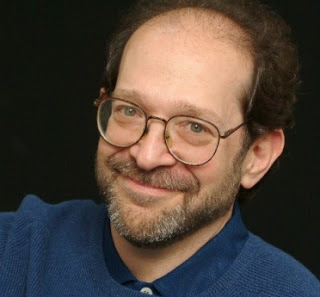
The latest in a series of interviews with script readers and consultants who would be worth your while to work with if you want to get your script in shape. Today focuses on writing comedy, so the spotlight is on Steve Kaplan, who runs the Comedy Intensive course.
1. What would you call a good example of some great comedy writing in recent TV or film?
It’s sometimes difficult to separate great comic writing from great comic performances. That being said, I think the best comedy writing on television occurs, day in and day out, on THE DAILY SHOW and THE COLBERT REPORT. Both shows are able to combine sharp satire with great comic characters, and in the case of THE DAILY SHOW, much of the comedy benefits from the relationship between Jon Stewart’s somewhat befuddled and beleaguered news anchor and his crew of inspiringly loony correspondents.
Much has been written about the death of the sitcom, but Network TV still offers the great work from THE SIMPSONS (25 years, and still going strong) and MODERN FAMILY’s writing staff, while cable is a treasure trove of niche delights, from sketch shows like INSIDE AMY SCHUMER to episodics like LOUIE, VEEP, GETTING ON, and EPISODES. I’m also looking forward to the BREAKING BAD prequel, BETTER CALL SAUL.
The comedy feature record is spottier. Big hits like DUMB AND DUMBER TO and THE HANGOVER 3 may have made a lot of money, but for me, my favorite comedy of 2014 was THE GRAND BUDAPEST HOTEL — funny, lovely, odd, stylish, a little sad, touching and in the end, really about something. (As of this writing, I still haven’t seen THE INTERVIEW, but I’m really looking forward to it. The trailer made me laugh out loud, it provoked North Korea into a mammoth cyber-attack on Sony—what’s not to like?)
Film comedies I’ve enjoyed from the past few years include SILVER LININGS PLAYBOOK, AMERICAN HUSTLE, MOONRISE KINGDOM, THE TRIP and THE TRIP TO ITALY, THIS IS THE END, NEBRASKA, WARM BODIES, THE WAY WAY BACK, TED —exactly the way I like my comedies. Some were silly and looney, but looking over the list, most were funny, lovely, odd, stylish, a little sad, touching and in the end, really about something. What can I say. You might like vanilla; I like chocolate. In the end, it’s subjective.
2. What’s your comedy background?
As a kid, I was awkward and kind of odd—I was drawn to comedy because I noted that in comedy movies, the funny guys were awkward and kind of odd, but sometimes got the girl! That was good enough for me!
In college, I studied acting and directing. After college, I was given an opportunity to start an Off-Off Broadway theatre. I convinced my two partners that we should start a theatre that was completely devoted to comedy. Manhattan Punch Line helped launch the careers of actors like Nathan Lane and Oliver Platt, and writers like Michael Patrick King, Peter Tolan and David Crane. While at the Punch Line, I taught classes and worked with and directed sketch groups. I began to wonder why something that was incredibly funny on Thursday night would get no laughs on Sunday. Why sometimes the funniest performance of a play was at its very first table read? What was going on here? That’s when I started seriously exploring the art and the science—some would even call it the physics—of comedy.
At the time, I was teaching an improv class. Without telling the actors, I started experimenting with them—devising improv games to get at the core of comedy: how it works, why it works, what’s going on when it stops working, and what the hell can you do about it?
These experiments led to the discovery of a series of techniques, which in turn led to a forty-week Master Class in comedy. When I moved to LA, I it was suggested to me that I gear my course to writers. “You could be the Robert McKee of comedy!” was how Derek Christopher (who produces the annual Story Expo in LA) put it. That led to teaching comedy around the globe, and working with companies like DreamWorks Animation, Disney Animation, Screen Australia and Film Victoria, working as a consultant with writers and producers, publishing my book, The Hidden Tools of Comedy, and ultimately, being interviewed by you.
3. Who are some of your comedic inspirations/role models? What is it about them in particular that appeals to you?
That’s a hard question to answer. I’m a fan of great comedy, and the list of great comedy writers performers and creators could go on and on. There are parts of careers that inspired me—early to mid Woody Allen, late George Carlin, some Mel Brooks, Bob Hope in the ROAD movies, Steve Martin in ROXANNE and L.A. STORY and BOWFINGER, Monty Python, FAWLTY TOWERS, THE MARY TYLER MOORES SHOW, SEINFELD, Lily Tomlin, THE BOB NEWHART SHOW, ALL IN THE FAMILY, Richard Pryor, Chris Rock, Louie C.K., Lenny Bruce, Sarah Silverman, Tom Lehrer (okay, and Allan Sherman), George Burns, Bill Irwin, Judd Apatow, BROADCAST NEWS and AS GOOD AS IT GETS. I’m sure I’m leaving out twenty that after this is posted, I’ll hit myself on the forehead, shouting, “How could I forget _________?!!?”
What they all have in common, in some fashion, is an immediacy, honesty (in some cases, a ferocious honesty), an ability to see a slightly off-centered view of the world, and then share it so we see it as well. They all made me laugh, and most had the ability to touch the heart, to make you care and still be funny!
4. Do you think someone can be taught to be funny, or is it something that just comes naturally?
Groucho Marx once said “you can’t teach funny.” But the Marx Brothers were a terrible, just terrible, act when their mother Minnie first pushed them out on stage. But working eight shows a day in vaudeville, picking up hints and tips from the other performers, they honed their act into one of the greatest comedy teams of all time. But it wasn’t ‘natural’; it was through apprenticeship, observation, and yes, being taught by other performers.
While you can’t teach someone to be more talented, you can teach someone to act and write to the best of their ability. And just like you can teach drama, you can certainly teach comedy. Yes, comedy can be taught.
5. What would you recommend for a writer who wants to develop or sharpen their comedy-writing skills?
What can writers do to sharpen their skills? Hang around with other funny people.
There are two great ways to do that. One would be to join an improv group or take improv classes. Since much of comedy is character-based, the best way to get inside a character’s head is to be one. Even if you’re not interested in being a performer or stand-up, the comic skills you’ll pick up are invaluable when writing material, whether it’s long form or short form, or just a set-up and punch line.
The second piece of advice would be to form or join a writers’ group. Once you’ve written your material, it’s imperative to hear the material read out loud in front of even a small group of friends and colleagues. It’s basic to comedy: the interaction between script/performer and audience. You’ve got to hear how those golden pearls play when read by humans to humans. You’re not looking for hours of rehearsal and polished performances, but just an intelligent read can tell you what’s alive and kicking in your script, and what’s dead as a doornail, only you don’t know it yet. So, in a nutshell: Funny people get funnier when in the company of other funny people.
6. Are there any comedy cliches you consider overused? Which ones are you just tired of seeing?
I’ve really tried to think of some that I hope never to see again, but I kept coming up with exceptions to the rule. Spit-takes are overdone, yet I still laugh when Desi or Danny does one. Getting kicked in the balls is another, yet there’s a beat in MONSTERS, INC. when Billy Crystal’s one-eyed character lands hard on his privates, and I’m sorry, it’s only a cartoon, but it’s funny. At least I thought so. I guess the difference is a meme or bit done by rote, and one enhanced by a great character or performance.
The things I am tired of seeing are scripts overloaded with weak, puerile jokes; scripts in which every character is a wise-cracker or failed stand-up comedian.
7. What’s the funniest joke you’ve ever read or heard from a non-professional ?
Hmmm. . . my six-year old niece once asked me, “Did you hear about the peanut walking alone in the park at night? It was a salted.” I thought that was pretty funny.
8. How can people contact you to find out more about your services?
My website is www.KaplanComedy.com, and my email address is Steve@KaplanComedy.com. In addition, you can follow me on Twitter at @skcomedy or on Facebook at Facebook.com/KaplanComedy. In addition to presenting one and two day workshops in the US and abroad, I’m also available for script consultations, whether on full-feature scripts, pilots, webisodes or treatments.
9. Readers of this blog are more than familiar with my love/appreciation of pie. What’s your favorite kind?
Man, that’s a tough question. I love Boston Cream Pie and apple pie a la mode, but if I’m on a desert island, and can only have one slice, I’ll go with pumpkin pie—ice cream on the side!


 Maximum Z