Mind the gap(s)

Feeling really good about how the latest rewrite of the sci-fi adventure outline is going.

A lot of the story is in place, but there are still a few blanks or gaps that need filling in – questions that need to be answered or an issue that needs to be addressed. Something relevant has to happen at those points, but I don’t know what yet, so I’ll put in a generic placeholder like “HOW??” or “WORK ON THIS!”

I’ll do this as I work my way through the rest of the story, and when I move on to the next draft, I’ll be able to focus on filling in those gaps. Sometimes that’s enough, but there have also been instance where a new detail can inspire a new direction or a spur-of-the-moment minor changes.

It’s like putting together a jigsaw puzzle, but putting in that missing piece creates a new, slightly different version of what the puzzle was originally supposed to look like, but you don’t mind because it still works – maybe even more than you thought it would.

This approach also proves helpful because more than a few times I realized something was happening with no setup whatsoever, so I’d go back and see where that could happen. I try to make it organic, rather than feel forced because the story requires it. Sometimes the answer comes quickly, or it might take a few tries. It’s also not uncommon to suddenly come up with something that’s the total opposite of what I originally intended, but it works even better, so in it goes.

I’m making a real point of taking my time with this. That seems to be helping in terms of determining where the fixes (and follow-up fixes, if necessary) need to be made, so the proper adjustments can be made as I go along. Bulldozing my way through seems more of a short-term solution, resulting in more potential rewrites down the line. Better to take it slow and deal with all the problems now than to spread it out and spend more time on them later.

I just wrapped up Act One, and am fairly hopeful Act Two won’t take too long. A lot of Act Three had already been set up in One and Two, so probably won’t need as much work.

I’m eager to get started on pages, but have no problem taking the time to fill in those gaps to make sure everything flows nice and smoothly.

-Coming to Austin? I’ll be there. Feel free to say hi.
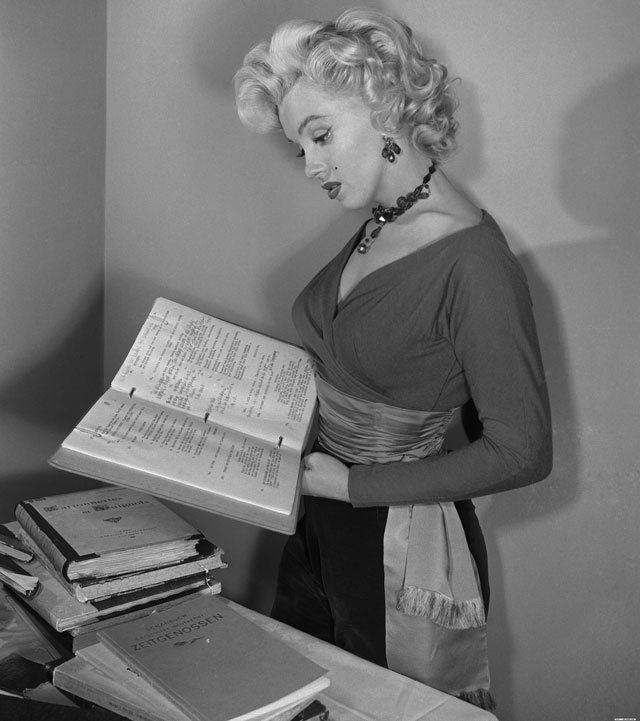
From the archives: Writing in your own voice

“Hmm. Billy’s new script. Something about men dressing up as women to hide from gangsters? Hope it’s funny.”

I’ve seen a good number of articles and online comments recently about how a script should convey the writer’s “voice”. That prompted this blast from the past from June 8, 2018.

Enjoy.

“When I’ve done script notes for writing colleagues, no matter what the genre is, I can usually tell who wrote it – because of the way it reads. Each writer has their own particular style, so each of their scripts has its own corresponding “sound”. Or I’ll get notes back on my material which often includes a comment along the lines of “this sounds like something you’d write”.

This isn’t just about dialogue. It’s about a writer’s overall style, or how they tell the story of their script. You don’t just want the reader to read your story; you want them to experience it. Which can be accomplished by adding that extra layer.

Everybody develops their own individual style, and it takes time to find it. The more you write, the more you’ll be able to hone your writing to reflect your own individuality.

Just a few things to think about:

-How does your script read? Is the writing crisp and efficient, or are you wasting valuable page real estate with too many lines of  your loquacious verbosity? Taking it one step further, do you use the same words over and over, or do you relish any opportunity to give your thesaurus a solid workout?

-How is your story set up and how does it play out? Is it simple and straightforward, or complex and full of deliciously tantalizing twists and turns? Are you working that creativeness to show us things we haven’t seen before, or is just page after page of the same ol’, same ol’?

-Is it a story somebody besides you would want to see? Just because you find the subject matter interesting doesn’t mean it has universal appeal. However, there is the counter-argument to that in which you could attempt to have your story include elements that would satisfy fans of the genre while also appealing to newcomers.

-Can’t ignore the population within the pages. Are your characters well-developed and complex, or do they come up lacking? Do we care about them, or what happens to them? Can we relate to them?

-What are your characters saying, or not saying (subtext!)? How are they saying it? Do they sound interesting or dull as dishwater? Very important – do they sound like actual people, or like “characters in a movie”?

Remember – the script is a reflection of you. A solid piece of writing shows you know what you’re doing. Offering up something sloppy is simply just sabotaging yourself.

Who hasn’t heard a variation on the line about a script being a cheap knockoff of a more established writer? While I can understand admiring a pro writer’s style, why would you attempt to copy it? It probably took them a long time to find their own voice, and by trying to write like they do, you’re denying yourself the opportunity to do the same thing for yourself.

Or to put it another way: they didn’t take any shortcuts to become the writer they are today, so why should you?”

Knowing your nails and how to use them

Savvy and experienced consumer of literature I’m sure you are, no doubt you’re more than somewhat familiar with the classic piece For Want Of A Nail:

For want of a nail the shoe was lost.
For want of a shoe the horse was lost.
For want of a horse the rider was lost.
For want of a rider the message was lost.
For want of a message the battle was lost.
For want of a battle the kingdom was lost.
And all for the want of a horseshoe nail.

Sometimes we don’t realize how important something is that at first glance might seem completely insignificant.

The same concept could apply to screenwriting and the details of your story. A reader could see something and wonder “I don’t get it. Why is this in here?”

If you do the work and plan accordingly, the answer/reason will soon be obvious. That little detail is there for a reason, probably an important one, and without it, the rest of the story won’t work.

This is important on several levels.

It shows you put a lot of thought into putting the story together.

It shows you understand the concept of effective setups and payoffs.

It shows you respect the intelligence of your reader/audience and don’t feel the need to deliberately draw our attention to this sort of thing.

It always bothers me when a story sets something up and doesn’t pay it off, or has something later on in the story that comes out of nowhere.

Some writers go into it with a solid idea of how everything is set up and know how it’s going to play out, some come up with the bare bones of a foundation and fill in the blanks, and there are even those who sit down with a blank page, start writing, and see how it goes.

I tend to waver between the first two.

Sometimes you might even go back over what you’ve already written and discover an opportune moment to put in a small detail that can further enhance something later on in the story. It’s as if your subconscious was working in conjunction with your creativity and giving you an unexpected helping hand.

Are parts of your story set up that they start with a “nail” and escalate from there? Or does something happen later that could use a stronger setup?

You’d be surprised at seeing the ripple effect one little change can have on the rest of your script. Hopefully for the better.

Reinforcing the shoestring

For those unaware, I had the good fortune last year to connect with a producer-director seeking a writer for their microbudget feature project.

After hearing their ideas and what they were looking for, I started developing the story, keeping them updated as things progressed at a decent clip.

One of the comments occasionally made during all this back-and-forth was, and I’m paraphrasing here – “Is there a way to cut the costs on that?” Since this is a micro-budget project, it’s imperative we get as much out of every dollar as possible.

Thus the changes and alterations began. A scene originally intended for a hospital room now takes place in somebody’s bedroom. A scene in a restaurant now has the two characters drinking to-go coffee and talking on a park bench.

You get the idea.

As the writer, it can be a bit of a challenge to revise a scene or sequence to accommodate the budget, but it also forces you to dig deeper into that creativity and come up with a solution that works just as effectively, if not more so.

If this were a regular spec, working within a budget wouldn’t be an issue. I’d just write whatever worked for the story. But if that script got picked up and the producer needed changes made, then they would be made.

Looking over some of the revisions, I also realized that some scenes could pack even more of a punch by utilizing sound and lighting (or lack thereof) for emphasis, rather than on just what we see. Leaving things to the imagination – what you hear and don’t see – has the potential to be much more effective.

(For a strong example of this, check out the 1942 classic horror-thriller CAT PEOPLE.)

Taking this “less is more” approach also helped with resolving a story problem in a significant way. A sequence that would already have been challenging to make is now drastically different but would be very simple to pull off, and we’re both very enthusiastic about how the end result would look.

While some aspects of the story and how it’s presented may have changed, the tone remains the same. There’s still a ways to go with the script, but writing it with this kind of mindset helps me figure things out so the story is just as compelling while also getting the most bang for the buck.

The heart of the matter

The past few weeks, part of my writing schedule has involved revising the outline of my animated fantasy-comedy spec. It’s been fun to develop – having a previous draft to work with really helps. The action sequences, the story, the jokes and sight gags haven’t been too difficult, but I’ve been making more of an effort to build up the emotional aspect.

This isn’t to say I’ve never included that. It just hasn’t been as prevalent in the early stages of planning and plotting process.

It’s not enough to just show the stuff that’s happening, you need to show how it’s relevant to the characters. While the plot is about the external goal (what do they want?), there’s also the importance of establishing their internal goal (what do they need?).

Sometimes the internal and external goals work together, and sometimes a character will achieve one and not the other. There’s also the tried and true “they got what they wanted, but it wasn’t what they needed” (and vice versa). It all depends on how the writer wants to the story to go.

To help myself get a better grasp of this, I’ve been reading the scripts for and watching other animated films to see how they approach it. There has also been the occasional “read a few pages of the script, then watch how it plays out onscreen”.

*helpful tip – for prime examples of incorporating emotion into story, you can’t go wrong with well-made animated films. They do a fantastic job of setting everything up as fast and efficiently as possible. Sometimes singing is involved. And as it should be with live-action, each scene manages to include advancing the characters’ emotional arc as well as the story arc.

As more than a few readers have said to me, sometimes my writing is more about what we see onscreen and not as much about what’s happening to the characters on the inside. Hopefully that won’t be the case this time around. Since I’m still outlining the story, I try to include what the emotional impact is in each scene. Does the point of the scene affect the character(s) the way it’s supposed to?

At first, this was pretty challenging, but watching how other films accomplished it, it wasn’t as daunting as I initially thought, plus the more I think about it and plan for it, it’s not as bad as I thought. It’s helping with the overall development because I’m taking that sort of detail into consideration as part of the initial planning stages, as opposed to trying to work it in later, along with avoiding a few unnecessary rewrites.

Since this is a slightly different approach for me, I’m sure it’ll be chock-full of trial and error along the way, but am fairly confident it’ll yield the results I’m hoping for.