From the archives: Guilty as charged

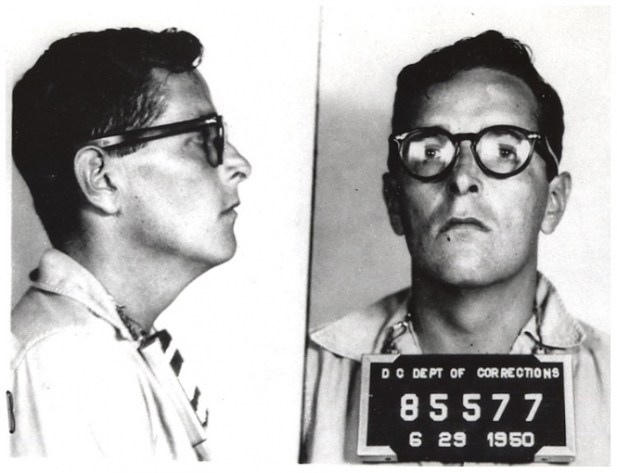
lardner mugshot
I did it. I’m glad I did it. And I’ll do it again. As many times as necessary.*

Got some excellent notes and pro feedback on the latest draft of the animated fantasy-comedy. Some of the suggestions involved totally cutting out some scenes I loved. It was heartbreaking to do it, but it was about what was best for the script, not the writer, so away they went.

Which leads to this classic post from yesteryear – Sept 2017, to be exact. Time has passed, but the sentiment and mindset remain the same. Enjoy.

The clock’s ticking down to the final deadline for an upcoming contest, so almost all of my energies are being directed at getting the pulp sci-fi in as tip-top shape as possible. Overall, I’d say it’s coming along nicely.

As you’d expect, there have already been some big changes made, with more than a few more on the way.

A major part of some of these changes has involved cutting material that I previously considered untouchable, or at least to do so would have constituted a crime against all that is good and wholesome.

Otherwise known as “killing one’s darlings”.

As you edit/polish/rewrite your scripts, changes will (and should) occur within the context of the story, so you have to deal with the consequences and ramifications of making those changes. And that means gettin’ rid of the stuff you love.

Did I really, really like this line of dialogue or that scene? Most definitely.

Did I cut it without a moment’s hesitation because it just didn’t work anymore? Yep.

Any regrets? Not really. Why should I? It’s all about making the script better, right?

A lot of writers won’t cut something because they hold it too close. To them, their ego takes precedence over the material. If a producer or director says something doesn’t work, and says it’ll have to be cut, what are they going to do? Say no?

It’s very rare that the final draft of a screenplay is exactly like the first draft. Changes will always be necessary, whether you want to make them or not. Much as you might hate it at the moment, make those changes. Chances are you’ll barely remember what was there before anyway.

A screenplay-in-progress is the raw material, and your job as the writer is to continuously work with it and shape it in order to get it to the final version – the one that tells your story in the best way possible.

If that means discarding something for something new, so be it. Even more so if the new something is even more effective.

*that’s no random mugshot. It’s Academy Award-winning screenwriter Ring Lardner, Jr. during the Red Scare.

Reading: good and good for you

Wrapped up reading for a contest earlier this week. Happy to have helped, but it was exhausting.

And a good percentage of the writers could really benefit from this recent post.

Now that that’s out of the way, I can return to devoting more time on a few of my own projects, as well as start getting to the scripts in my “to read” queue.

I’m really looking forward to both, and especially the latter.

Some were sent with a request for notes, others were “thought you might enjoy this”, and the rest were ones that got my attention with the logline or the concept.

I’m extremely fortunate to have a professional relationship with a lot of these writers, and many of them are great writers to begin with, so it’s a pretty sure bet their scripts will also be of exceptional quality. And those are always great to read.

It can’t be stressed enough that reading scripts helps a writer become a better writer. So take it upon yourself to start making that a regular practice.

You’ll be glad you did.

And speaking of reading, my new book GO AHEAD AND ASK! INTERVIEWS ABOUT SCREENWRITING (AND PIE) VOLUME 2 is now available in paperback and ebook here and here. It makes a great companion piece to Volume 1, and Volume 3 will roll out a little later this year.

From the archives: If only you could eat a bad script

pineapple upside down cake
Let the metaphors commence!

Author’s note: got some other stuff that requires my attention, and a recent discussion about pineapple upside-down cake reminded me I did a post involving it a few years ago, so hope you enjoy this blast from the past from July 2016.

“Before we get to the gist of today’s post, let’s address the elephant in the room: my western did not advance to the quarterfinals of the PAGE contest.

Honestly, I was a little surprised; I thought it would have done better. After a brief wallow in disappointment, I shrugged my shoulders and moved on. It’s just another one of those things over which I have no control. I still have a ton of confidence in this script and might submit again next year. Also waiting to see how it fares in Austin and the Nicholl.

True, it was a rather lousy way to start the weekend, but over the next couple of days, I managed to redirect my focus, which included a nice long run that involved traversing the Golden Gate Bridge, and attempting something I’ve always wanted to try:

Making a pineapple upside-down cake (from scratch, naturally).

Guests were coming over for dinner, and I’d made pies for them before. But this time,  I wanted to try something entirely new and preferably a little challenging. I’d say this falls into both categories.

I scoured the internet for an ideal recipe, found one to my satisfaction, and followed the directions to the letter. The result? It looked like it was supposed to, and that’s where the similarities end. A little too sweet and the center was still kind of goopy. Nevertheless, my guests still liked it, and K & I split the last piece after they left. Not bad for a first attempt.

Why did it not turn out the way I expected? A lot of reasons. The oven’s a piece of junk. It didn’t bake long enough. The ingredients and the amount of them probably need to be tweaked. No matter what, I know now that I can adjust all of these next time and get closer to the results I seek.

Except for the oven. It will forever remain a piece of junk until it dies. Which can’t happen soon enough. But I digress.

Notice all of the comparisons you could make between baking and writing a script? Trying something new and long-sought-after. Seeking advice and guidance. Following the guidelines. Doing what I was supposed to. An okay-but-was-hoping-for-better initial result. Planning ahead on what to fix/adjust for next time.

If a less-than-determined baker ended up with the cake I made, they’d probably denounce the whole process, give up entirely and probably buy pre-made stuff at the supermarket. But we’re made of sterner stuff. We hit a snag or some kind of unforeseen development, and we compensate as best we can. We learn what not to do next time. Sometimes you end up with something jaw-droppingly amazing, and sometimes you end up with something totally inedible.

With this whole experience behind me, I can now focus on projects of the immediate future, which includes another round of editing and revising a script, and making a pie or two for a dinner party this coming weekend.

It’s my intention to have the results of both of these undertakings be totally and utterly irresistible when they’re done and ready to serve.”

A win is a win is a win

This is a tale of two writers.

Both have recently achieved success, but of very drastic varying degrees.

The first writer has had some tremendous accomplishments over the past few weeks. Their work has placed very highly in some prestigious contests, resulting in sales, professional writing assignments, membership in the Writer’s Guild, and representation with a management company of significant importance.

The other writer had a script do well in a small contest, and had some nice things said about their writing during an online forum chat.

At first glance, the first writer definitely had the better results. Who’d complain about all of that? This is what we’re all working towards, right? That’s like a dream checklist with every box checked off. No doubt ones such as “script produced”, “film/TV show produced and released”, and “box office/ratings hit” still remain, but this is the initial phase.

Even the writer admitted they’re a bit overwhelmed by all of it.

Meanwhile, for the other writer, the contest win is nice, and while it may not be “makes the industry take notice”-level, it still fills them with a certain sense of pride. They sent their script out, hoping for something good, and that’s what happened.

Regarding the online forum chat, the moderator has raved in the past about the professional-level quality of the first writer’s material, so for the other writer to also receive similar praise was pretty uplifting and encouraging. Truth be told, it was just about the first page of a script, but why quibble?

While the first writer’s journey to success seems to be coming to fruition right before our eyes, the other writer continues to sit at their laptop, diligently plugging away and working on scripts that will hopefully garner some attention from reps and producers.

Also important – the other writer is thrilled for everything the first writer has accomplished. They’ve earned it. There might be a smidge of jealousy, but that’s expected, and the other writer can use that as motivation to do better.

The moral of the story is twofold:

First – be proud of anything you accomplish with your writing, no matter how big or small it might seem. This isn’t an easy thing we’re doing, so try to enjoy the journey and celebrate the high points whenever possible. Don’t hesitate to toot your own horn – within acceptable limits, of course.

And second – everybody’s path to success is going to be wildly different from everybody else’s. What works for one person might not work for another. It’s up to you to find your own path and keep pushing forward on it. It might take you longer than you want to reach that finish line, but it definitely feels worth it when you get there.

Q & A with Paula Sheridan of Page Turner Awards

Paula Sheridan is an award-winning entrepreneur and the award-winning author of The People’s Book Prize for her debut novel, The Grotto’s Secret, written under her pen name Paula Wynne. Harbouring a near-obsessive love of learning the craft of writing, Paula has been scribbling down the stuff in her head ever since she can remember.

Paula came up with the idea for the Page Turner Awards when she won The People’s Book Prize in 2017 and received her award from Sir Frederick Forsyth at a glittering awards ceremony in London.

When she’s not day-dreaming up plots for new historical thrillers while walking her Springer Spaniel in the Andalusian countryside, she’s helping Indie Authors to achieve their dream of seeing the novels in a reader’s hands, through her reading community on Book Luver. Paula also blogs about writing techniques and reviews writing books on Writing Goals.

What’s the last thing you read/watched you considered to be exceptionally well-written?

Last night I watched The Book Thief and the book has been on my reading list for ages so after watching the excellent film adaptation of the novel, I will definitely get the book and read it. I’ve also recently watched some cultural films from Australia and India with heart-warming stories and it brings back my mission on Page Turner Awards, which is to reach out to writers across all cultures, religions and interests, simply because they will have amazing stories to tell.

How’d you get your start in the industry?

My first book was published by Wiley. It was a non-fiction book called Pimp My Site. After that I published fiction novels and since then I’ve been learning more about screenwriting. I was also very lucky to win a Director’s Course through Screen South, which inspired me to continue my quest for learning more about writing screenplays. My debut novel, The Grotto’s Secret, won The People’s Book Prize which inspired me to set up Page Turner Awards.

Is recognizing good writing something you think can be taught or learned?

Yes, absolutely! For many years I’ve had an obsession with learning writing techniques and I’ve read hundreds of excellent writing guides, so many that I eventually started WritingGoals.com to showcase all the great writing guides which help writers to improve their craft of writing.

What do you consider the components of a good story?

Lots of elements make up a good story. For the first few pages, the character must hook the reader so they are compelled to continue reading. Beautiful prose is another good element and good writing is easy to spot. It shows the reader, or in the case of a judge on Page Turner Awards, that the writer has honed their craft. At the same time, it takes them deeper into the story. So, compelling characters with a great hook get readers and judges of a screenplay contest to want to know more about the story.

What are some of the most common writing mistakes you see?

Lots of grammatical errors, which are really easy to fix. For example, a writer can use a self-editing software, such as ProWritingAid, to help them spot these pesky gremlins which creep so easily into a piece of writing. You can take a free trial here.

What story tropes are you just tired of seeing?

Zombies! There was a stage where everyone and their aunt wanted to write a zombie story, but soon that will morph into writing about viruses and pandemics, if that hasn’t already happened!

What are some key rules/guidelines every writer should know? 

-We only accept the first ten pages. 

-Film producers and readers in a film production company normally would know by the first ten pages if they want to read further and if they are engaged with the story up to that point. 

-The same goes for literary agent and publishers. They also know very quickly if the story will make the grade. They can also tell if the writer has just thrown something together or if they have put precious time into the story’s first pages.

-Writers should know their premise or logline, and hone and tone it. This is to give the judges a good idea of what the story is all about and how it shows conflict and growth for the character in the story.

-We’re not concerned with spacing and formatting because our judges are looking for story and character and the words they read. Spacing and formatting comes when the agent or publisher asks to see more of the work.

-Screenplay entries, on the other hand, are very different. They need to be submitted in the industry standard format for the film producers to see the story as a screenplay script.

Have you ever read a script or manuscript where you thought “This writer gets it”? If so, what were the reasons why?

We had lots of entries last year where our editor, who was doing feedback, came back to us telling us that one writer in particular was very good and could write exceptionally well. Other judges had similar experiences and as a result, three writers won a literary agent to represent them, five writers won a publishing contract, six writers won a writing mentorship and thirteen independent authors won an audiobook production. We are thrilled with these fantastic successes from our inaugural awards.

Seeing as how you run a writing contest, what are the benefits for writers and screenwriters to enter the Page Turner Awards competition?

The benefits to screenwriters is that they will have the opportunity to put their scripts in front of our judging panel, who are all actively looking for scripts to option and produce. Thus, screenwriters will have the opportunity to get their work optioned for film if any of the judges like the writing. The same goes for the Writing Awards, where literary agents and publishers may want to publish the work if they like it. Success stories from 2020 include three writers won literary representation, six writers won a writing mentorship, five writers won a publishing contract, and thirteen independent authors won an audiobook production.

How can people find out more about you and the services you provide?

They need to go to https://pageturnerawards.com and follow the steps under our menu – Enter. It’s all done online so they will be asked to register an account, which will then send you an email to verify it. Then you can log in and follow the steps to submit your writing.

The early bird discount for Page Turner Awards ends this Sunday (28 Feb), so you can register now, and then have until the end of May to submit your script.

Readers of this blog are more than familiar with my love/appreciation of pie. What’s your favorite kind?

If you mean a baked pie, I can’t resist a pecan nut pie. Just thinking of it now makes my mouth water and I want to stop typing and go and bake one!