The fastest route out of Sore Loserville

Get out and get out fast

There’s been a disturbing trend on some online forums regarding the results of some recent high-profile screenwriting competitions. While the writers who advance receive and exchange congratulatory messages, some of the ones who don’t seem to be looking for some kind of explanation as to why their script didn’t do better.

“They don’t like this genre.” “They’re only looking for stuff they can market.” “They just didn’t get it.”

Hate to break it to you, but that’s not it.

This is: you and a few thousand other people entered the same competition, so the odds were already against you. Chances are pretty good that some of those scripts are better than yours. It happens. Accept it.

And this may come as a shock, but maybe your script just isn’t as good, let alone as perfect, as you think.

So rather than gripe, complain and avow “Those rotten bastards are never getting my money again!”, use this as motivation to make your script better. Rewrite it. Get feedback from your inner circle of trusted colleagues. Pay for one or two sets of professional notes. Some contests offer feedback for an additional fee, so maybe that’s something you might want to consider.

I was disappointed my western didn’t do better in some of these competitions. Frustration and depression were the dominant moods for a couple of days. That’s when reality smacked me in the face and said “You want to do better? Then get to work.”

So that’s what I’m doing. I’ve completed the initial edit, so the script is now 6 pages shorter. There’s still some work to do, but it already feels better and tighter than it was before. I’ll be following my own advice (more rewrites, feedback from friends and pros, etc.), all while planning ahead for next year.

What about you?

Fall back. Regroup. Hit ’em again.

Disappointed? Sure. Defeated? Never.
Disappointed? Sure. Disillusioned? A little. Defeated? Never.

Oh, what a week this has been.

The first round of the Nicholl Fellowship competition is complete. The quarterfinalists have been named, as well as those who placed in the top 10, 15 and 20 percent of all entries.

Regrettably, my western fell into the latter-most category. In some ways, that’s not too bad. Obviously not was I was hoping for, but at least worth noting.

It goes without saying that while there may still be hope for the script in the handful of other contests I entered this year, it’s also safe to say I should probably expect similar results.

But here’s the silver lining to all of this. I sent the script out, thinking it was ready. Since then, I’ve received lots of great feedback about how it could be improved – tighten this, work on that, etc. – and more is on the way.

This script was pretty good before. With a little more work, it could be fantastic.

I’ll be dividing my time between that and the rewrite of the mystery-comedy spec, of which I will definitely seek out professional feedback (Lesson learned here – after I think a script is good to go, I’ll spring for 1-2 sets of pro analysis. Definitely worth it.)

The silver lining to all of this: there’s no reason I couldn’t have two scripts ready to go for next year. Three if I really push myself with the pulpy adventure spec, but that might be overreaching.

Movie of the Moment – YOUNG FRANKENSTEIN (1974) One of K’s favorites, so we watched it as a family. V liked some of the jokes in the beginning, but her interest waned as it went on.

As for me, still holds up as one of the best comedies ever. Smart, funny and a cornucopia of quotable dialogue.

Not done just yet

Made one of these to ease my pain. Ate one piece, gave the rest to coworkers

No matter what level of success a writer has achieved, they are always learning.

Or at least they should be.

So far, my western is 0 for 2 in the competitions I’ve entered, at least in terms of making it past the first round.

Once I got past the initial shock and heartbreak, I took a more analytical approach – why was I not getting the results I was hoping for?

The most logical and practical explanation – the script isn’t as perfect as I thought. It needed fixing.

But what to fix?

(I’ve no inflated sense of ability. I know what I’m good and not-so good at, and expertly analyzing a script falls into the latter category)

So I did what any sensible writer would do – I sought out help from those in the know.  People who write for a living, or advise other writers on how to improve their material.

I asked if they’d take a look at the script at their convenience, let me know what they thought about it, what worked and what needed work. Constructive criticism, not praise, was my objective.

Let’s not say the results were eye-opening, but more like “oh, I see.”

The two most frequent comments were to trim the page count down (many conceded the current 132, while a very fast read, would initially be off-putting to potentially interested parties) and to flesh out the main character a little bit more.

As I said to one person, tough but not impossible assignments.

My biggest mistake was thinking the script was good to go, when what I should have done at that point was get this kind of advice, make the fixes and then do the whole contest and query circuits.  Something to remember for next time.

So for now, another rewrite is in store, which is totally fine.  Anything to make it better.

Sometimes it’s too tempting to finish a project and declare it ready. That’s when your internal editor/critic needs to stand up and ask “Are you absolutely sure about that?”

Make sure you listen to them.

Flying solo

Wild blue yonder, here I come

I’ve been hesitant to say anything, but there’s just no getting around it anymore.

My manager and I have parted ways.

Long story short – things weren’t happening.  Apart from being disappointed it didn’t work out, I bear him no ill will, and wish him and his savvy assistant all the best.

So once again, it’s all me.  Gone is the initial fear/terror of no longer having representation. Actually, the nervousness has segued into one of…let’s call it liberation.

I can’t say I’m all the way back to square one, because this isn’t totally starting from scratch.  This go-round includes a much better understanding of what I have to do and how to do it, such as:

-being able to offer up one script that’s had some moderate success in some high-profile contests, and one that’s “a refreshingly exciting new take on an old genre.” Throw in the two others currently being developed, and I’ve got quite an arsenal of high-concept material at my disposal.

-knowing the right way to do a query letter. Lessons have been learned from mistakes made the last time, and the first wave has been dispatched. There’s even been a couple of “We’d like to read this” responses.  I send the script and don’t look back.

-having a lot more confidence in my writing. All the writing, rewriting and utilizing of notes and feedback has had a significant positive impact. I may not be the absolute best ever, but I definitely know how to spin a ripping yarn you want to keep reading.

Thus the quest resumes. Wish me luck.

Q&A with 2014 Table Read My Screenplay winner Nick Schober!

With so many contest deadlines looming, here’s a tale of encouragement in the form of an interview with Nick Schober, winner of the 2014 Table Read My Screenplay competition.

I met Nick through Twitter (@nicschober). He’s a great guy.

Enjoy.

sundance 3

1. How did you get your start as a writer?

I guess I’ve always been writing, just for different reasons. In college I knew I wanted to work in the industry, but I was sure I wanted to be a director of photography… and then an editor.. then a director, and so on, and the only way to constantly hone those crafts was to write material. After I took a serious run at producing a few years ago, I realized writing was my favorite part of the process and I’ve been at it ever since.

2. What’s your script about, and how did you come up with the story?

GIVEN is a story about a wealthy widow who offers her vast fortune to a local slacker in exchange for one small favor… that he kill her. The concept originated as a “first 15” contest put on by The Writer’s Store. They provide a logline and everyone submits 15 pages based on that. I think the original logline was something about a New England matriarch offering her fortune to anyone who would grant her dying wish. I thought the twist of her asking someone to kill her would grab attention.

3. What was it about Table Read My Screenplay that made you want to enter?

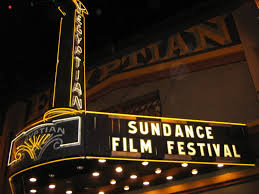
I think I saw the emails about this contest shortly after I found out I did not win The Writer’s Store contest. I figured this was good a time as any to jump back on the horse. Besides that, the opportunity to go to Sundance and have your screenplay read by actors is a once-in-a-lifetime opportunity. Also, as with any good contest, they blast your script out to their network of producers and agents, which is the name of the game.

4. What was your reaction to winning?

I tried to play it cool when I got the call from the organizers but I promptly called my wife and yelled at the top of my lungs. It was pretty awkward considering I was still at work. You can’t help but wonder if you really have what it takes to do this, and things like this are a great signpost to look back on when you need encouragement. 
sundance 2

5. As the contest’s name says, there was a table read of your script at this year’s Sundance Film Festival. How did that go?

It was amazing. They had a conference room at the Waldorf in Park City and cast some excellent actors who really went for it, even though it was just a table read. Harvey Weinstein was having breakfast right outside the door. They also recorded the audio and sent it to me to for review. It was invaluable to hear your words spoken. You can truly understand the importance of timing, what works and what doesn’t.

6. What was your overall experience being at Sundance?

It was a blast. The organizers put us up in an amazing house walking distance from downtown. They set us up with a few movie screenings and also got us into a few parties. It was an intense exercise in networking, especially for a serial introvert, but I made a couple of good contacts.

sundance

7. What’s been happening for you and your script since then?

Since then, I’ve jumped headfirst into trying to get this sold. I’ve uploaded my script to The Blacklist, submitted to all the major contests, and recently started querying. I’m also developing a few other ideas and trying to write every day.

A hearty congrats to Nick!

There are lots of ways to establish a career as a screenwriter. Winning or placing in a contest is just one of them. So keep on rewriting and polishing that latest draft, send it out there and see how it goes.

And in case you don’t make it past the first round (which does happen), more contests now offer notes and feedback, so you can make a few more fixes to make your script that much better.

Good luck!