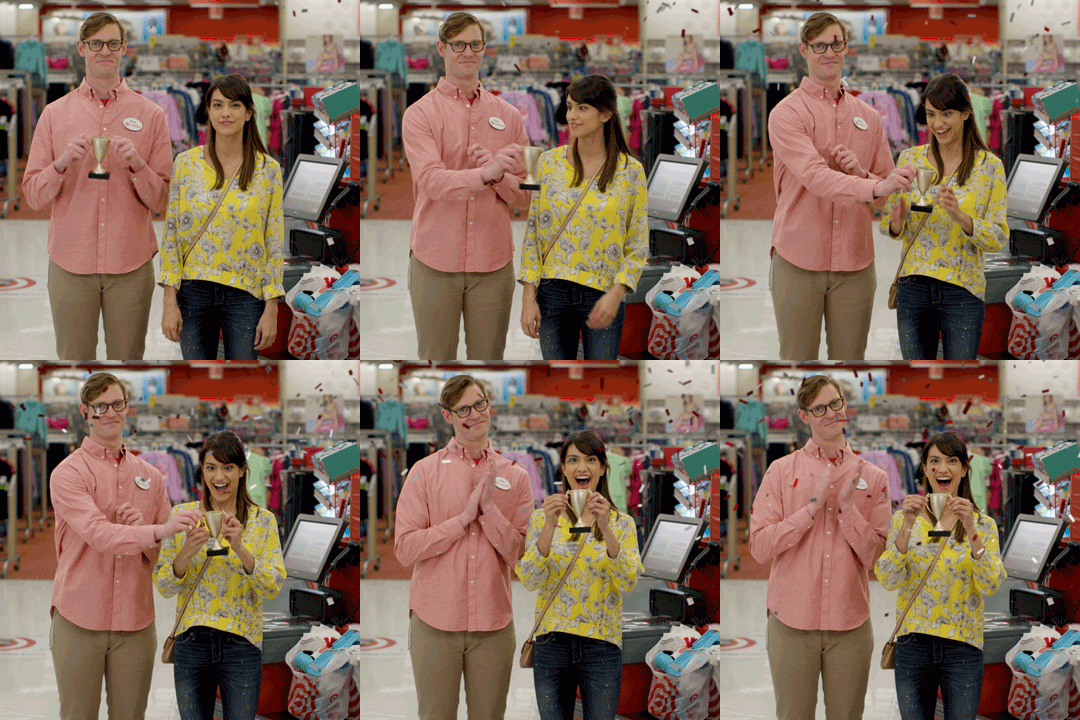
A win is a win is a win

This is a tale of two writers.

Both have recently achieved success, but of very drastic varying degrees.

The first writer has had some tremendous accomplishments over the past few weeks. Their work has placed very highly in some prestigious contests, resulting in sales, professional writing assignments, membership in the Writer’s Guild, and representation with a management company of significant importance.

The other writer had a script do well in a small contest, and had some nice things said about their writing during an online forum chat.

At first glance, the first writer definitely had the better results. Who’d complain about all of that? This is what we’re all working towards, right? That’s like a dream checklist with every box checked off. No doubt ones such as “script produced”, “film/TV show produced and released”, and “box office/ratings hit” still remain, but this is the initial phase.

Even the writer admitted they’re a bit overwhelmed by all of it.

Meanwhile, for the other writer, the contest win is nice, and while it may not be “makes the industry take notice”-level, it still fills them with a certain sense of pride. They sent their script out, hoping for something good, and that’s what happened.

Regarding the online forum chat, the moderator has raved in the past about the professional-level quality of the first writer’s material, so for the other writer to also receive similar praise was pretty uplifting and encouraging. Truth be told, it was just about the first page of a script, but why quibble?

While the first writer’s journey to success seems to be coming to fruition right before our eyes, the other writer continues to sit at their laptop, diligently plugging away and working on scripts that will hopefully garner some attention from reps and producers.

Also important – the other writer is thrilled for everything the first writer has accomplished. They’ve earned it. There might be a smidge of jealousy, but that’s expected, and the other writer can use that as motivation to do better.

The moral of the story is twofold:

First – be proud of anything you accomplish with your writing, no matter how big or small it might seem. This isn’t an easy thing we’re doing, so try to enjoy the journey and celebrate the high points whenever possible. Don’t hesitate to toot your own horn – within acceptable limits, of course.

And second – everybody’s path to success is going to be wildly different from everybody else’s. What works for one person might not work for another. It’s up to you to find your own path and keep pushing forward on it. It might take you longer than you want to reach that finish line, but it definitely feels worth it when you get there.

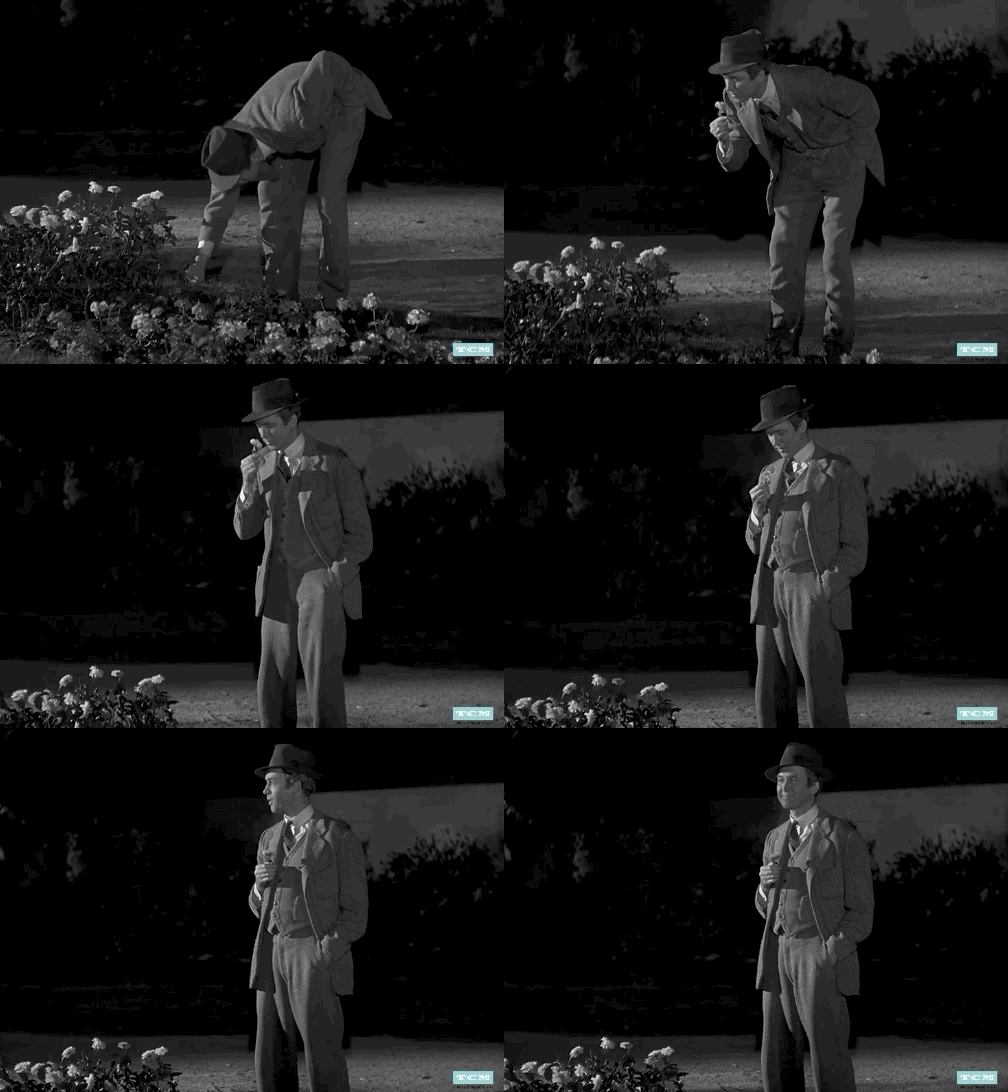
My, what a pleasant scent

jimmy stewart flower

It’s a been good week around Maximum Z HQ. A very good week, you might even say.

Got a couple of read requests, including one several months after the initial pitch, and my western advanced in the first round of a reputable contest.

On the actual writing front, made some good progress in the latest overhaul of the sci-fi adventure outline, plus got a last-minute invite to come up with a story idea for a friend meeting with a filmmaker looking for potential projects.

All in all, not too shabby.

Do I wish every week could be this fulfilling and rewarding? Most definitely.

Will they? Heavens no. But that’s expected. It’s the just way it is, and I accept that.

Everything that happened was the result of me putting in the time and effort. Writing, rewriting, researching who’d be most receptive to queries, figuring out which contest was most worth entering, and so forth.

I just happened to be fortunate that a lot of them are paying off very close to one another.

I also realize that each read request could results in “thanks, but no thanks”, my script doesn’t advance any further in the contest, and the filmmaker doesn’t like my idea.

Disappointing, sure, but it won’t slow me down, let alone stop me. I’ve got too much else going on to worry about it.

While the road to screenwriting success may be dotted with potholes, sharp objects and people who shouldn’t be allowed behind the wheel to begin with, every once in a while you get a long empty stretch of green lights and smooth pavement. It may not last long, but it’ll might make you appreciate it even more.

So when you have a brief window of time where it seems like everything is actually going your way, savor it knowing that YOU EARNED IT. And definitely spread the word to your support network – they’ll be thrilled (just like you’d be if it were them).

Use the emotions and sensations you’re experiencing during this happiest of times to keep you going when every response you get is “NO” and the dark clouds return.

But also keep in mind that it won’t always be like that. This path is full of highs and lows, mountains and valleys. The important thing is to enjoy the journey and keep pushing forward.

As we head into the weekend, I’ll take a moment to review the past few days and think “This was nice.”

And then get right back to the grind, once again hoping for the best.

Plan. Follow through. Repeat.

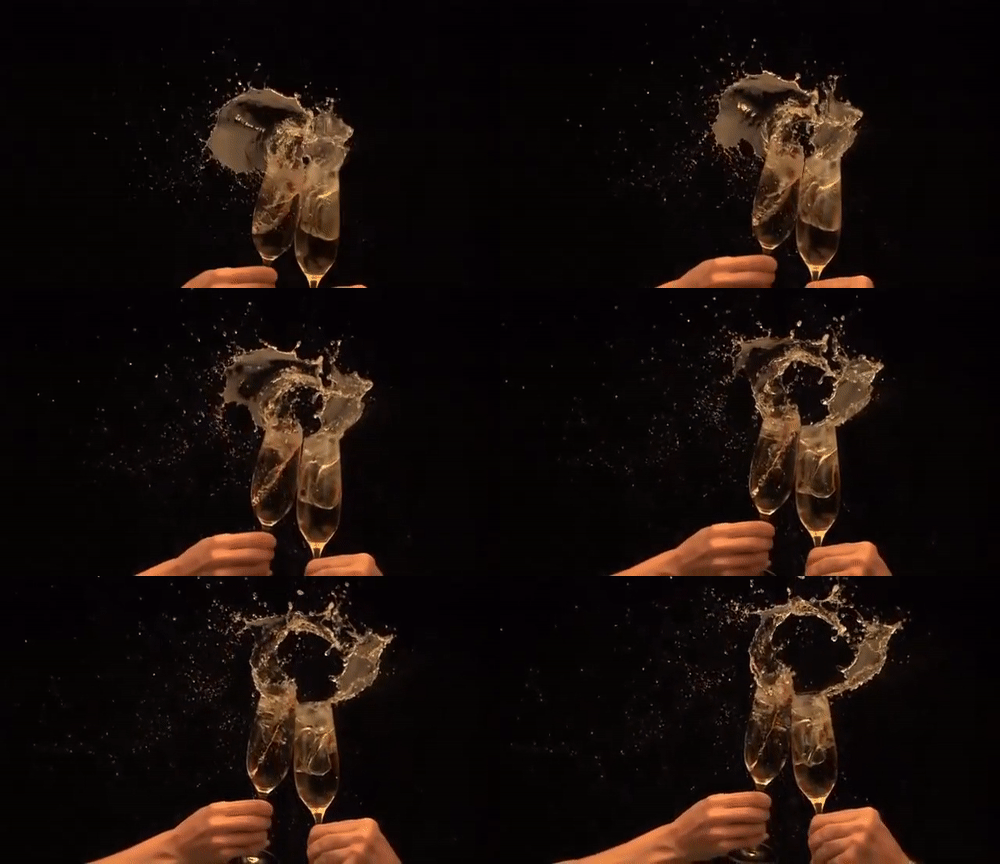
champagne

Well, here it is. The last post of 2019.

How’d your year go? Of all the things you were hoping to accomplish, how many were you able to check off?

All of them? Great!

Some of them? Still good.

I won’t even entertain the notion that you achieved nothing, because there’s always something. Even the slowest runner crosses the finish line.

No matter what your results were over the past 12 months, you can use all of it as the building blocks for what you want in 2020.

Set goals for yourself, and do what you can to reach them. Be the writer with a plan who sticks to it. Try to accomplish something writing-based every day, even if it’s just jotting down an idea and filing it away, editing a page or three, or even reading a friend’s script.

Better to end a day thinking “this is what I did” rather than “why didn’t I do that?”

Remember that everybody’s path is specific to them. What happens, good or bad, for one writer is no reflection on another. The important thing to remember is to focus on you and what you’re trying to do.

But also take the time to offer words of support, encouragement congratulations and sympathy to others when necessary. Your connections to other writers are a vital resources, so treat them accordingly.

This may be your journey, but you’re definitely not alone. There are a lot of other writers out there, all with their own goals and objectives. Don’t be afraid to reach out if you need help, or offer it if they do (if you can).

There will also be things over which you have absolutely no control. Do the best you can with them and move on.

I’m not the first nor will I be the last to say that trying to make it as a screenwriter is an almost insurmountable task. But it can be done. So, if like me, this is what you really, really want, you need to do the work for as long as it takes.

Regard the start of a new year as a great opportunity to set up what you want to happen, then go about making it happen.

So good luck and I wish you all the best in making things happen in 2020.

Q & A with Geoffrey Calhoun

Screenwriter/script consultant Geoffrey Calhoun of WeFixYourScript.com has been previously featured on this site. This time around, he’s answering some questions about his new book The Guide For Every Screenwriter.

What was the inspiration/motivation for this book?

It was inspired from a class I designed when I was asked to teach screenwriting to film students in Ghana, Africa. Unfortunately that class fell through so I took the materials and broke them into seminars, then hit the road teaching at Film Festivals. Eventually, people attending the classes asked if I’d put this in book form. That’s when I realized I needed to create The Guide For Every Screenwriter.

There are a lot of screenwriting books out there. What about this one makes it unique?

Books on screenwriting tend to be one of two things: overly wordy textbooks or focus on a specific area of screenwriting. What I wanted to do was create a book that’s easy to read and comprises all aspects of screenwriting. Thus, The Guide For Every Screenwriter was born. It covers everything from concepts, character design, formatting, branding yourself as a writer, and beyond. All of it done in an easy to access reference guide which gets straight to the point. I wanted to break down the mysteries of our craft into something that anyone can pick up and understand. This is the book you keep on the shelf next to your desk as you’re writing. After reading this book you’ll be able to confidently write a screenplay, even if you’ve never done it before.

Some screenwriting books are geared more towards covering the basics, while others “go beyond (or way beyond) the basics”. How is this a book that both new and experienced writers could use?

I wanted to write a book that even veteran screenwriters could read and walk away with something new or feel refreshed. The Guide covers some really interesting aspects about screenwriting which isn’t really covered in other books. Such as subplots, loglines, how to collaborate with other writers/producers, or even busting myths about queries.

Continuing on that theme – part of the book discusses the basics of formatting. Is this more of an issue than we’d normally expect?

Yes! As a professional screenwriter and consultant, I’m brought in to fix a lot of scripts through my website WeFixYourScript.com. One of the biggest problems I see is a lack of properly using format. Some writers believe it’s optional. Unfortunately, it’s not. So, adding format to the book was a must. I also wanted to delineate between a few of the finer aspects of format, such as montage vs. series of shots. Many writers think they’re interchangeable. The Guide explains exactly how and why they’re used and what makes them different, all with fun examples.

Early on in the book you mention how time, talent and tenacity all play a key role for both the writer and the act of writing. Could you elaborate on that?

The three T’s are my own personal mantra. The funny thing is, I never strung them together until I wrote the book. When it felt like I’d never get a script made I would tell myself I needed more time. Screenwriting is about the long game. Talent was a given. I knew I needed to be the best I could be, which is why I became a lifelong student of this craft. Tenacity is who I am as a person. I don’t quit. I don’t give up. I’m not built that way. I have to see things through. When I sat down to write the Guide, I wanted to create a section that was my own personal truth but also filled with hope and the three T’s were born.

A lot of writing guidelines say “write what you know”, but you’re of a somewhat differing opinion. How so, and how come?

That’s a great question and observation! I break the myth of “write what you know” in The Guide For Every Screenwriter. My hope was to introduce a different perspective to my peers. I believe we as writers need to be two things: experts on what we write about, and chameleons. In order to write about a particular topic or genre we need to master what it is first. Writing is one of the only fields in the world which encourages you to explore all facets of life in order to grow at your craft. The Guide provides a fun way to do that.

We also need to be chameleons. I know many writers scared to work outside of their comfort zones. That’s stifling creatively and also can make it difficult to find work as an indie screenwriter. I love working outside of my comfort zone. It makes me be better at what I do. It pushes me in directions I never expected and thus my skills improve.

I really liked your concept of what you call the “mind map”. Could you explain what that is, and how a writer would use it?

The mind map is a great little trick to get your brain thinking outside of the box. You can do it anywhere. I’ve seen a screenwriter do it at breakfast on a napkin and create their entire concept in ten minutes and it was good! You simply place what you want to develop in the middle of a paper and then branch off wild ideas around it. This isn’t just limited to concept; you can use it on anything including a character or even a story beat. I believe mind mapping in a busy public space can help as well because you’ll find inspiration from the surrounding environment.

There’s a section of the book that deals with a seldom-discussed part of a script: subplots. Why is the subplot important, and how can a writer get the most out of them?

When properly developed, a subplot can add a surprising amount of depth to your story. Subplots also fill out your script. Many writers tend to get lost in the main character’s struggle and end up underutilizing the supporting characters and underdeveloping the antagonist. This can lead to scripts struggling with anything from page count to a meandering script which can’t find its footing. A well developed subplot’s job is to reinforce and prop up the main plot. That’s one of the great keys to creating a killer script. In The Guide For Every Screenwriter, I explain what subplots to use and where they land in the script.

The final section of the book is appropriately called “What Comes Next”, in which you discuss what do after the script’s written – everything from getting feedback to queries. What prompted you to include these topics?

Screenwriting is about more than just writing scripts. If you really want to get out there and start landing writing gigs, then you need a road map of how to do that. I wanted to make sure the Guide can you lead you in the right direction. That’s why it covers topics such as properly protecting your script, a synopsis template, branding, networking, etc…

Last time around, you said your favorite kind of pie was pumpkin with a big dollop of whipped cream. Still the same, or something new?

I don’t know why, but pecan pie has been calling to me.

pecan 3

Resources at your fingertips

kent

Becoming a professional screenwriter is an incredibly difficult goal that takes a very, very long time to achieve.

This doesn’t mean it’s impossible. Just know what you’re getting yourself into.

One goal, lots of strategies

The me business – a 24/7 operation

Apart from writing, what are you doing to help yourself get there? There’s only one person who can be the most effective in helping you move forward. And you already know who it is.

A support staff of one

Are you networking? Trying to meet other writers? Offering to give notes or swap scripts?

When a writer meets a writer…

Are you entering contests to see how your script holds up under scrutiny?

The hazardous journey down Contest Road

Are you sending queries? Researching reps and producers?

Quit them or queue them up?

Part of every writer’s journey is the inevitable frustration and disappointment. Some days it will be very powerful, and learning how to survive and endure it is all part of the process.

How low can you go? Quite, apparently.

Expiration date: NEVER!