Not done just yet

Made one of these to ease my pain. Ate one piece, gave the rest to coworkers

No matter what level of success a writer has achieved, they are always learning.

Or at least they should be.

So far, my western is 0 for 2 in the competitions I’ve entered, at least in terms of making it past the first round.

Once I got past the initial shock and heartbreak, I took a more analytical approach – why was I not getting the results I was hoping for?

The most logical and practical explanation – the script isn’t as perfect as I thought. It needed fixing.

But what to fix?

(I’ve no inflated sense of ability. I know what I’m good and not-so good at, and expertly analyzing a script falls into the latter category)

So I did what any sensible writer would do – I sought out help from those in the know.  People who write for a living, or advise other writers on how to improve their material.

I asked if they’d take a look at the script at their convenience, let me know what they thought about it, what worked and what needed work. Constructive criticism, not praise, was my objective.

Let’s not say the results were eye-opening, but more like “oh, I see.”

The two most frequent comments were to trim the page count down (many conceded the current 132, while a very fast read, would initially be off-putting to potentially interested parties) and to flesh out the main character a little bit more.

As I said to one person, tough but not impossible assignments.

My biggest mistake was thinking the script was good to go, when what I should have done at that point was get this kind of advice, make the fixes and then do the whole contest and query circuits.  Something to remember for next time.

So for now, another rewrite is in store, which is totally fine.  Anything to make it better.

Sometimes it’s too tempting to finish a project and declare it ready. That’s when your internal editor/critic needs to stand up and ask “Are you absolutely sure about that?”

Make sure you listen to them.
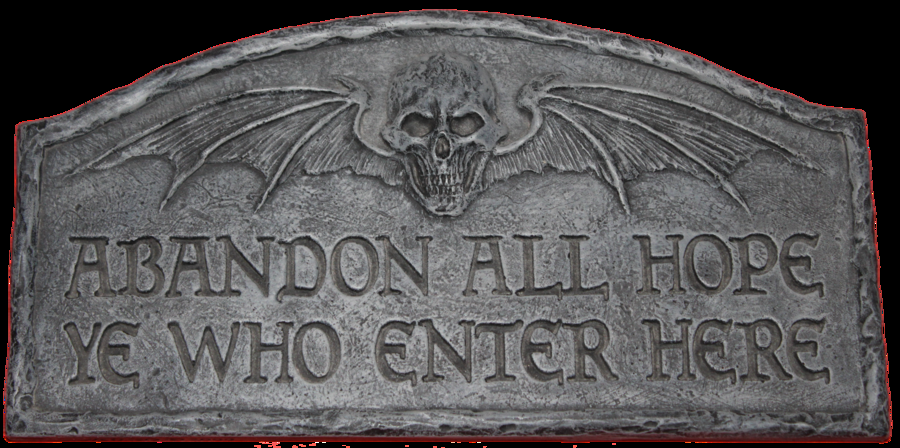
Just call me Dante, because this sure feels hellish

Seems pretty appropriate at times

I wanted to rework the logline for my mystery-comedy spec, so, never one to totally learn from previous experience and hoping for best possible results, I took the plunge and posted it on a few forums, seeking potentially helpful feedback.

Thus did the floodgates open.

It’s me and my story out there in the open, waiting for the world to let itself be heard.

And it did. Oh boy, did it.

One response was a literal interpretation of the words, and why it didn’t work. My assumption that certain details were implied was apparently incorrect.

Several focused on presenting the story in a way I repeatedly explained just didn’t apply. No matter how much I emphasized it was THIS kind of story, they just could not get away from thinking it was THAT kind of story.

Then there’s the omnipresent “I can’t see this being a story” and “It doesn’t sound solid enough.”

Well, I can and think it does.

My words, meet deaf ears. I got similar responses when I was starting the western, and that turned out pretty well.

It’s my sincere belief that everybody’s intentions are good, and they probably don’t mean for their comments to come across in such a “why don’t you know better?” and “THIS is the right (read: only) way to do it” manner.

Even if I totally disagree with somebody, I still appreciate the fact they made the effort to read it, analyze it and create what both of us hope is a helpful response. That doesn’t mean I have to take their word as gospel.

And unless I’ve actually met the person, I have no idea how much legitimate experience or expertise they have. For all I know, everything they say stems from reading SAVE THE CAT a couple of times.

Putting together a logline is an exhausting process. Some people are better at it than others.

As it so happens, I’m not one of them.

Here’s the windup…

lincecum
I admit it. Local bias.

Interesting discussion the other day with a professional hyphen (writer HYPHEN director HYPHEN script consultant) about my western.

They wanted me to pitch them the story, but without notes. Pretty much without any preparation whatsoever.

This way, they explained, it comes across as “more natural” and “less rehearsed”. I don’t necessarily agree, especially because I despise those momentary pauses which make you rely on saying “um” while your brain races to come up with the next words out of your mouth.

Despite not really having thought about the story that much over the past few months, I did my best to work my way through it and think I did okay. Maybe B-plus/A minus territory. Not fantastic, but not bad operating with pretty much no prep time whatsoever.

I made sure to include key story points and not go into too much detail, and tried to sound excited and upbeat while describing the high-octane action.

After I’d finished, there was a dread-inducing silence that grew with each passing second (maybe 3 in total, but felt more like neverending).

“Hmm,” came the reply. “Not bad.”

Not exactly a standing ovation, but I’ll take what I can get.

They listed what they liked and what could use a little work. Surprisingly, they felt the ending was a little ‘soft’ and their explanations why, to which I calmly disagreed and gave my explanation why.

Even more surprisingly, they then revealed they’d only read up to page 15 and wanted to hear my pitch to see if the rest of the story warranted continuing.

(Just to set things up, this person claims to have given 3 pages of notes just on the first page alone for other scripts. Apart from a few comments about the dialogue, they didn’t really have any for mine, and that when they usually get to around page 10, they jump ahead to the middle, then to the end. But mine they wanted to keep reading. Make of that what you will.)

After hearing my rationalization for the ending, they admitted that they should “probably read it to see if they agree.” In theory that will be happening this week, but we’ll see.

Our discussion then turned to my experience and some of my other scripts, 2 of which they requested to read. A victory, no matter how you slice it.

Looking back, I could have done a much better job at pitching my story – if I’d known I was going to have to do it. Still, if I’m going to be sending out queries about it, I should be prepared to talk about it in a moment’s notice.

So while I while away upcoming hours engaged in the rewrite of the mystery-comedy spec, I’ll try to make the most of potential down-time and re-read the western and maybe put together some kind of FAQ/cheat sheet in case this kind of situation arises again.

And it probably wouldn’t hurt to do the same for those other two – just for good measure.

Flying solo

Wild blue yonder, here I come

I’ve been hesitant to say anything, but there’s just no getting around it anymore.

My manager and I have parted ways.

Long story short – things weren’t happening.  Apart from being disappointed it didn’t work out, I bear him no ill will, and wish him and his savvy assistant all the best.

So once again, it’s all me.  Gone is the initial fear/terror of no longer having representation. Actually, the nervousness has segued into one of…let’s call it liberation.

I can’t say I’m all the way back to square one, because this isn’t totally starting from scratch.  This go-round includes a much better understanding of what I have to do and how to do it, such as:

-being able to offer up one script that’s had some moderate success in some high-profile contests, and one that’s “a refreshingly exciting new take on an old genre.” Throw in the two others currently being developed, and I’ve got quite an arsenal of high-concept material at my disposal.

-knowing the right way to do a query letter. Lessons have been learned from mistakes made the last time, and the first wave has been dispatched. There’s even been a couple of “We’d like to read this” responses.  I send the script and don’t look back.

-having a lot more confidence in my writing. All the writing, rewriting and utilizing of notes and feedback has had a significant positive impact. I may not be the absolute best ever, but I definitely know how to spin a ripping yarn you want to keep reading.

Thus the quest resumes. Wish me luck.

Smashing through the wall you just hit


If it were only this easy all the time

Some days it’s hard to write. Really hard.

This isn’t about finding the time. This is about when the words and ideas just won’t show up.

No matter how many times you try something, it just doesn’t work.

The more you stress over it, the harder it gets. The frustration can be downright crippling.

We already put an exorbitant amount of pressure on ourselves in our attempts to produce quality work, and being angry for not doing so is just counter-productive.

How can people think this is easy? Like us, they soon discover it’s anything but.

Is it at least a little reassuring to know that this is just as common among the pros? Just because you’re a working writer doesn’t make this any easier.  In fact, it may make it even harder – their paycheck is on the line.

Believe me, I wish I could offer up some kind of all-knowing sage advice that goes beyond “Step away, take a deep breath and gather your thoughts,” but sometimes that’s all you can do.

Maybe it’ll work, maybe not. At least give it a try.

The more scripts you work on, the more the odds will be in your favor that you’ll be able to find your way back into that groove and have a few more good writing days.

This is just part of what it takes to be a screenwriter, so you have to know what works for you when this happens.

Which it will.  A lot.

Are you ready?