That special spark within

roald dahl
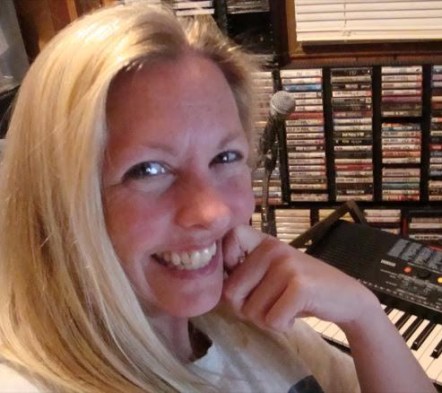
Why is this writer smiling? You would too if you came up with the term “Everlasting Gobstopper”.

This past weekend, I had the opportunity to meet with some fellow Bay Area writers. Among their number was a writer who had written some small stuff, and was in the middle of working on her first big project – a TV pilot.

Even though I don’t know much about writing for TV, I and another writer offered up what advice we could. The recipient was very appreciative, and one of the things she said later on in the conversation made a very strong impression on me.

“I know the first draft isn’t going to be perfect, but I’m just really loving writing this.”

Truer words could not have been spoken.

Like I told her, I write stuff I would want to see. It’s taken me a long time and many drafts of many scripts to feel like I’ve really come into my own. Each time, the end result is a script for a movie I think would be an absolute blast to see play out on the big screen.

It always astounds me when a writer complains about having to write (or rewrite). If you don’t like doing it, WHY ARE YOU DOING IT?

It was genuinely pleasing to hear this writer who, despite the challenges she knew awaited her, was still excited about working on this project. Sure, she was still nervous about doing a good job and hoped the end result didn’t suck too much. No matter how many scripts you’ve written, that feeling never goes away.

But to simply see her face light up while she described the story (which is a real doozy, believe you me) and hear her talk about what she’s experienced so far, including doing the research involved, and learning what to do and not to do regarding formatting, it was just really, really pleasant.

I’m sure a lot of us do this because the title “storyteller” really suits us to a tee. Are some better at it than others? Sure, but instead of being discouraged about what you perceive as a lack of progress, try seeing every time you write as a chance to learn and improve. Because it is. It’s certainly been that way for me, and I strongly suspect I’m not alone in that.

I got the impression our little chat gave this writer an extra little jolt of encouragement that she wasn’t expecting. She doesn’t know when the pilot script will be ready, but I told her not to worry about that and just keep enjoying writing it.

I suspect she will.

-Friend of the blog Andrew Hilton (aka The Screenplay Mechanic) is offering a special deal as part of his stellar screenplay analysis. (Editor’s note – his notes helped shape my western into what it is today)

If you use any of his services, refer a friend, or write a Facebook review of your experience using his services, you are automatically entered to win a free DVD of the motorcycle documentary WHY WE RIDE (of which Andrew was a co-executive producer).

The winner will be chosen on October 1st. The holidays will be here before you know it, and if you or somebody you know loves motorcycles, this would be an excellent gift (as would purchasing some of Andrew’s script services for that special screenwriter in your life).

All the details here.

-My time in the San Francisco Half-marathon the weekend before last – 2:02:56. Disappointing, but still glad I did it. I blame all those uphill stretches in the second half. And probably not training enough.

Next race is coming up in a few weeks in Oakland. Pleasantly flat Oakland. Training a little harder for it, with the intention once again of hoping to break the 2-hour mark.

In with the good air…

deep breath
Step 1. Inhale through the nose.

You’d think working on a comedy would be a fun-filled, joke-laden romp.

Nope.

As you may have heard, comedy’s a tough row to hoe. Everybody has a different take on what they consider funny, so it takes a lot of work.

A lot.

One of my current endeavors is overhauling a low-budget comedy spec. It’s been a long, slow process – with a lot of moments of frustration and aggravation.

When I write, sometimes I just overthink things, which makes feeling stuck seem that much bigger and insurmountable. Not uncommon.

It probably also doesn’t help that writing comedy is a totally different world than writing a rollercoaster ride-type adventure. The latter has definitely gotten easier for me, while the former…

Let’s just say I’m still on a bit of a learning curve.

Despite all the obstacles, there’s still one powerful positive about this – I think it’s a fun concept with a new and unique approach and, if executed properly, would be a really good script.

So I do what I can to work my way through.

K could see the toll the stress was taking on me, and suggested I hit the metaphoric pause button and simply take a couple of deep breaths to help clear my head.

And wouldn’t you know? It did help.

After that last exhalation, the problems don’t seem as huge. Sure, they’re still there, but what originally seemed like “How in the world am I going to do that?” has now turned into “There is a solution here, and I shall find it.”

A little calm and rational thinking can do wonders to help you regain and maintain your footing after a little stumbling. I heartily recommend it.

Writing requires reading

reading
Comfy chair – mandatory. Bon bons – optional.

Bit of a shorty today as I’m steamrolling my way through several projects at the moment. This includes revising two of my own scripts.

As part of the effort to make the next drafts of both that much better, I’m trying to take the time to read scripts in the genres of both. Why not glean what I can from prime examples?

The learning truly never stops.

Added bonus – a lot of these are just fun to read.

This is one of those basic pieces of advice that every screenwriter, no matter their experience level, needs to heed on a regular basis:

Read scripts.

Study them. Use them for the learning tools they are and wring every last bit of help out of them that you can.

Everything really is right there in front of you. 90-110 pages of primo learning material. Pages and pages of “See what they did there?” Take notes. See what’s there and NOT there.

Take it a step further and read a script of a film while watching that film. How do they compare? Lots of similarities? Lots of differences? Do the actions onscreen do justice to the words on the page?

Apply what you learn to your own script. It might help more than you realize.

Side note – DO NOT copy that writer’s style. You’re working on establishing your own voice. No good can come from trying to sound like somebody else.

Only include that which serves a purpose

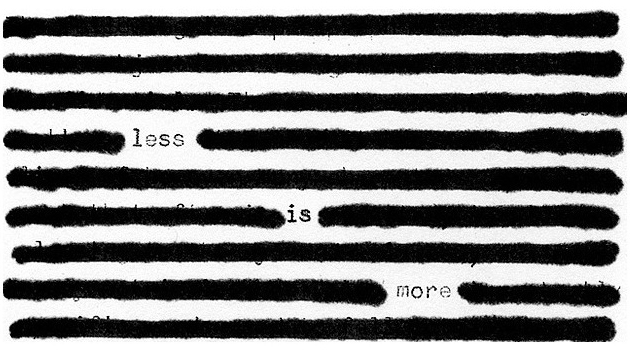
redacted
Exactly

A just-starting-out writer had contacted me, asking if I could take a look at their spec.

I did. It wasn’t easy, but I did.

The script had a lot of the usual problems. On-the-nose dialogue. One-dimensional characters. A story that was more a jumbled collection of random events rather than a cohesive series of scenes and sequences.

But even with all of that, what really stood out was the excessive overwriting when it came to setting up a scene, with excessive being a major understatement. The writer seemed to feel the need to provide an extraordinary amount of details – for just about everything.

Just to name a few:

-What kind of furniture is in every single house or apartment
-What kind of food is on the table during a dinner scene
-Why a character, who’s only in one scene, is wearing a particular item of clothing, along with what it looks like
-A detailed list of all the items of clothing a character removes when getting undressed
-The direction a character is driving, along with street names

Did any of these have anything to do with the story?

All together now – of course not.

Then why is it in there?

I posed this question to the writer as part of my notes. They haven’t responded yet, but it’ll be interesting to see what they say about it.

I can’t remember the specific joke/comment about sculpting, but it’s something along the lines of “Start with a block of marble, and then chip away everything that doesn’t look like a (whatever you’re sculpting).”

Screenwriting’s very similar. While it’s true you should describe what we’re seeing, there’s no need to drastically overdo it. Some writers don’t know the difference between “painting a picture with words” and “overwhelming us with information”. Or worse, think they’re more or less the same thing.

They are most definitely not.

Everything on the page should have a reason for being there. If it doesn’t, take it out. Trust me, it will not be missed. If you argue that it should stay, you better have a mighty good reason why. Helpful tip – saying “Because I want it to” or “Because I like it” will totally invalidate your argument.

When the writing goes into Overly Descriptive Mode, it simply slams the brakes on the momentum of the story; things really do come to a screeching halt. Wouldn’t you rather the reader stayed interested in what’s going on, and not think “Hold on a second. Why is this here? Is it relevant?”

For a lot of writers starting out, they think they need to cover all the bases and include as much info and detail as possible. Only through constant self-educating will they eventually learn what they should and shouldn’t be doing.

I sincerely hope this writer takes my notes to heart and is able to figure out how to transition from the latter to the former.

Proofreading Q&A panel – part 2

Tammy Gross
Tammy Gross
bill.and.puppy.girl.cropped (1)
Bill Donovan and friend (friend occupying Bill’s lap)

Here is the second of a two-part panel discussion with professional proofreaders Tammy Gross of proofmyspec.com and Bill Donovan of screenwritingcommunity.net about proofreading and its connection with screenwriting, along with some info about the proofreaders themselves.

Part one can be found here.

When you proofread a screenplay, do you also take on the role of story analyst?

Tammy Gross (TG): Not as a primary service, but yes. Since I’m reading it anyway, I do offer inexpensive add-ons if a writer wants some basic “coverage.” And even with proofreading, there are some story issues which may be addressed during the edit if there’s a problem with consistency and/or continuity.

Before I started my proofreading service, I took a course on story analysis and offered a coverage service. I soon learned how bad formatting and text were too distracting for my left brain. It’s agony for me to look past multiple errors/issues.

Bill Donovan (BD): To a limited degree, yes. However, I put these and other words at the top of every set of notes I give back with the proofread copy:

“These are not the words of an expert script analyst … I strongly hope not to hurt your feelings … To the extent that you find my comments on your story to be wrong-headed, pointless, or insensitive, you are hereby counseled and, with regret for any hurt feelings, encouraged to ignore them.”

What’s your writing background?

TG: The agony of trying to look past typos sent me down an editing path in my 20s. I read a book published through a major publishing house that had multiple errors in the soft-cover version. I sent my corrections to the publisher, and the author contacted me personally to thank me. Ever since, I’ve honed my editing skills.

My life plan was “sing while I’m young and write when I’m old.” I did write a couple of novels in my 20s and managed to have some sort of writing or editing responsibility in every “real” job I ever worked, whether at a church, a bank or Fortune 500 company.

In 2008, while taking a break from singing, I learned about a couple of female pirates. These historical swashbuckling stories fascinated me. I traveled the world researching pirates (including falling victim to real ones in the Bahamas) and learning about writing screenplays. I haven’t looked back.

So far, every script I’ve entered in contests has placed or won. In fact, my first script won the first contest I ever entered. Since then, I’ve realized that my ability to write in “the language of screenplay” was getting me further than better storytellers due to their weaker technical skills.

I’m currently writing an adventure story for a producer who found me because of one of my scripts (which I also turned into a YA book).

BD: -Screenplay contest judge (three contests)
-Screenplay contest executive (11 screenplay contests, 5 scene-writing contests, two logline contests)
-Two of my own screenplays won three first prizes equaling $30,104 in prize money in today’s dollars.
-Former Editor of Creative Screenwriting Magazine
-Author of three e-books for screenwriters to date; a fourth is upcoming
-USC Master of Fine Arts, Screenwriting and Filmmaking
-Copy desk chief at a daily newspaper, the Morristown, N.J., Daily Record
-Copy editor at the Associated Press
-Copy editor at another daily newspaper, The Record, Hackensack, N.J.
-Copy editor for several business-to-business trade publications
-11,200+ published pages and screenplays edited/proofread over the years
-News stories I wrote and/or edited won five national journalism awards.

How’d you get into proofreading?

TG: Totally by accident. I started a screenwriting group where we would table-read 10 pages of each writer’s script. I found myself making lots of corrections on everybody’s pages, and many of them asked me to proofread their entire scripts. It was a little overwhelming, due to also running a thriving music-arranging business at the time, so I put up a website to help me prioritize and charged a low but fair fee.

And it’s good that I did, because after the 2007 writers’ strike, followed by the recession, the spec-writing business boomed while music arranging fizzled.

BD: For an upcoming book, I surveyed and interviewed producers, agents, screenplay readers, directors, contest judges, and contest executives, asking them for their comments on the most common and the worst mistakes they see. Within the screenplay, proofreading and editing mistakes were named both the most common and most disliked by people in the industry.

How can people get in touch with you to find out more about the services you provide?

TG: The order page functions as a quote calculator, or send an email anytime: Proofreader@ProofMySpec.com

BD: Email me at Bill@screenwritingcommunity.net or use this form at my website.

Readers of this blog are more than familiar with my love/appreciation of pie. What’s your favorite kind?

TG: Humble. I should eat more of that and less Key lime.

BD: 1. Great pizza. 2. Pumpkin, my own homemade recipe. 3. Blueberry, Comstock filling, augmented.