Knowing your nails and how to use them

Savvy and experienced consumer of literature I’m sure you are, no doubt you’re more than somewhat familiar with the classic piece For Want Of A Nail:

For want of a nail the shoe was lost.
For want of a shoe the horse was lost.
For want of a horse the rider was lost.
For want of a rider the message was lost.
For want of a message the battle was lost.
For want of a battle the kingdom was lost.
And all for the want of a horseshoe nail.

Sometimes we don’t realize how important something is that at first glance might seem completely insignificant.

The same concept could apply to screenwriting and the details of your story. A reader could see something and wonder “I don’t get it. Why is this in here?”

If you do the work and plan accordingly, the answer/reason will soon be obvious. That little detail is there for a reason, probably an important one, and without it, the rest of the story won’t work.

This is important on several levels.

It shows you put a lot of thought into putting the story together.

It shows you understand the concept of effective setups and payoffs.

It shows you respect the intelligence of your reader/audience and don’t feel the need to deliberately draw our attention to this sort of thing.

It always bothers me when a story sets something up and doesn’t pay it off, or has something later on in the story that comes out of nowhere.

Some writers go into it with a solid idea of how everything is set up and know how it’s going to play out, some come up with the bare bones of a foundation and fill in the blanks, and there are even those who sit down with a blank page, start writing, and see how it goes.

I tend to waver between the first two.

Sometimes you might even go back over what you’ve already written and discover an opportune moment to put in a small detail that can further enhance something later on in the story. It’s as if your subconscious was working in conjunction with your creativity and giving you an unexpected helping hand.

Are parts of your story set up that they start with a “nail” and escalate from there? Or does something happen later that could use a stronger setup?

You’d be surprised at seeing the ripple effect one little change can have on the rest of your script. Hopefully for the better.

A verbal solution for a writing problem

Even despite a temporary lapse, output on the sci-fi adventure rewrite was progressing at a decent pace.

I already knew there’d be more work to do once it was done, but something still felt off. A piece of the puzzle was missing, and it felt weird to keep pushing forward. Like building a house with incomplete blueprints.

Although my original intent was to finish the rewrite, I wanted to take care of the missing puzzle piece. This in itself was quite challenging.

Once again, my network of savvy writing colleagues comes to the rescue.

I’ve been doing more one-on-one Zoom calls with writers I’ve only known through social media. It’s a great opportunity to get to know them as people, as well as talk a lot of shop about screenwriting.

Such was the case earlier this week. Another writer and myself were discussing some of our current projects, and the sci-fi adventure came up. Despite my stumbling through the “pitch”, my friend got really into the concept, prompting them to ask a lot of thought-provoking questions about the story and the characters. Some I had an answer for, some I didn’t.

(side note – I used to be embarassed about not having all the answers when it came to my stories, but have since embraced it and am now willing to say “I don’t know” or “no idea” because this usually leads to a discussion where everybody involved helps me come up with an answer.)

This led me to realize that some aspects of the story weren’t as defined as I thought. That, in turn, had a ripple effect on the rest of the story. The same story of which I had just passed the halfway mark with rewriting.

It was like taking a piece out near the bottom of the tower in a game of Jenga. Not that everything came crashing down; more like things got a whole lot more wobbly.

We talked things through some more, and did some impromptu brainstorming, all of which which helped point me in the right direction.

Long story short: the rewrite’s on hold and the reset button’s been pushed. But like I mentioned during the discussion, once those fixes are worked out and implemented, it shouldn’t be too difficult to get back on track.

While I originally hoped to be done with the rewrite around now, or at least mighty close to it, I don’t mind making another trip to the drawing board to take care of this. I’m already looking forward to taking this on and seeing how it goes.

Bonus – the chance to make any other fixes in the 50+ pages I’ve already written.

Yet another reason to be active and interactive within your personal writing community.

The final chapter in the Indiana Jones series opens today. The characters and storytelling have been a huge influence for me and my writing, and I can only hope that my scripts can someday be compared to them.

I also hope the movie’s good.

From the archives: Introduce your character with character

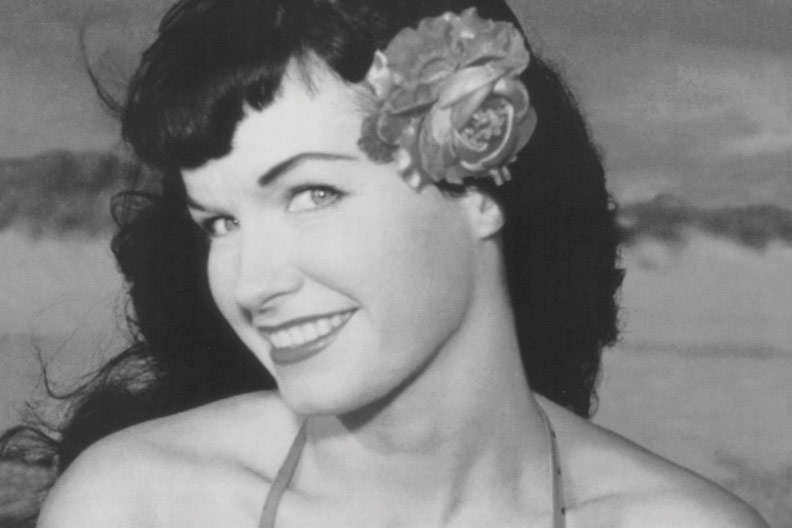
BETTIE, mid 20s. Don't let her all-American looks fool you. Trouble goes out of its way to avoid HER.
BETTIE, mid 20s. Don’t let her all-American looks fool you. Trouble goes out of its way to avoid HER.

Author’s note: had a great in-person notes session this week. Among the many topics we discussed was character intros, and what made for a good one, as well as a not-so-good (i.e. boring) one. That reminded me of this post from April 2014. Enjoy.

“When we, the reader, first meet an important character in your script, how do you describe them? What are the important details?

A lot of the time, the emphasis is on their physical traits – “tall”, “imposing”, “blonde”, “handsome”, “drop-dead gorgeous”, etc.

Or maybe it’s a simple adjective or two – “bubbly”, “funny”, “a nice guy” and so on.

These are okay, but you have to admit they’re kind of dull, which makes it more challenging for us to be interested in wanting to follow their story.

So how do you fix this? Time to ramp up that creativeness and really focus on what kind of person this character is, rather than what they look like. Unless a physical description is a key character trait, don’t worry about it.

One of the most memorable intros I ever read described the best friend of the teenaged protagonist – “James Dean cool at 15.” That’s it. Pretty effective, and in only five words.

Doesn’t this give you a better idea of what this character is like than say, “cool and aloof?”?  This is the kind of writing that catches our eye AND makes an impression.

A former co-worker of mine used to describe a very talkative friend as “If you asked him what time it was, he’d tell you how to build a watch.” See how it goes beyond the good-but-simplistic “chatty know-it-all”?

Cliched as it sounds, we really are painting pictures with words – not just for the story, but the characters in it. You’re already crafting a unique and original story, so why not develop a unique and original way to tell us about the characters in it?

This isn’t saying you should always strive to be clever and witty about it, but at least try for something different. This is just a small part of showing off your writing skills.

Take a look at how you introduce the characters in your latest draft. Does it really tell us what you want us to know about them? If not, how could you rewrite it so it does?”

Q & A with Cody Smart of Next Level Screenwriting

Cody Smart is an L.A.-based Latina writer, script consultant and script doctor with degrees in English Literature & Linguistics, Screenwriting, Development, and Producing, who prides herself of helping writers take their work to the next level, in both English and Spanish. She moved from Santiago, Chile to L.A. to pursue her masters, fell in love, and now enjoys family hikes chasing her toddler around in the perfect L.A. weather.

She worked as a script analyst at Sony for three years, reading hundreds of scripts, and honing her craft and learning to appreciate the development of scripts and how to best guide writers to deliver the best script possible.

She also works as a judge for seven film and screenplay competitions, where she’s learned what makes scripts engage readers and attract the attention of managers, agents and producers. As a writer herself, Cody has placed in multiple competitions, and won some awards.

Cody is also the head of coverage of Story Data, a script-hosting site, where she does a bi-monthly vlog with tips for screenwriters.

She also currently teaches two courses about Screenwriting, Script Doctoring and Get Your Script Contest Ready, as a UCLA Extension instructor in the Writers’ Program, and is developing a new TV Workshop for the fall quarter.

Cody has worked with a wide variety of clients, helping to provide in-depth script analysis, and also rewriting/doctoring hundreds of scripts in order to get them ready for production. She loves working directly with her clients, understanding their needs, and staying true to the essence of the story the client is trying to tell, in order to elevate the story and characters.

What was the last thing you read or watched you considered exceptionally well-written?

THE QUEEN’S GAMBIT. I was a little bit late watching it, as it came out in 2020, but I was so legitimately impressed at the quality of the writing. They managed to take chess, a “boring” subject that doesn’t lend itself to be that visual or entertaining, and turned it into an exemplary work of character development.

How’d you get your start in the industry?

While I was in grad school, I started interning at Sony, and that’s were I fell in love with the development side of things. Before that, I always thought my path was to be a writer only. Then I discovered how interesting developing and consulting was, helping other writers improve their work, and getting scripts ready for production.

Is recognizing good writing something you think can be taught or learned?

Yes, definitely. I believe everyone can learn if they have the will and want to do so. If you study scripts and films, and study your craft, you can learn what good writing is. That’s also what makes any writer a better writer: studying the best in the craft, lots of practice, and lots of rewriting.

What do you consider the components of a good script?

A good script is a great mix of different things: amazing characters that are three-dimensional and realistic, with real wants and needs, and great arcs. A world that aligns with the tone and genre, and that hopefully is also new in some way. A premise that either feels fresh and new or that is a new take on old ideas, making it feel fresh and new. Writing that has a voice of its own, and that makes you want to keep turning pages.

What are some of the most common screenwriting mistakes you see?

As a consultant & doctor as well as a judge for multiple festivals, I’m constantly looking at issues in scripts. Doing that, I’ve found these to be the most common:

– A premise that doesn’t work from the start. Usually this means you just have an idea, but no plot. Or you have an unoriginal concept or one we’ve seen hundreds of times before.

– Not proofreading, which leads to bad formatting, typos, grammatical errors, etc.

– Not outlining first – then you don’t know where your story is going, and it shows in your draft, as the story loses aim. Part of this could be when the story/the protagonist has no clear goal.

– Dialogue that doesn’t feel natural or no use of subtext.

– Starting scenes too early and leaving them too late.

– Not killing your darlings – some scenes may be greatly written, but if they don’t advance the plot, then you don’t need them in your script.

– Directing in your script – this tends to take the reader out of the world of your story.

– Not grabbing your reader/audience in the first 10 pages (or even the first 3!)

– Overusing transitions.

– Use of flashbacks that don’t move the story forward or don’t reveal any new information.

– Zero character introduction/description. No memorable introductions, so we forget them. Also too many characters being introduced at the same time, so we forget who’s who.

– The world of your story isn’t clear.

– Long chunks of descriptions – Readers are known to skip past these. 

– Too much exposition.

– No subplots or interesting supporting characters.

– Antagonists that are two-dimensional or formulaic.

– Writing a formulaic script just with the intention of selling it, instead of writing a unique story you’re passionate about that’ll definitely get you noticed (even if just as a writing sample).

What story tropes are you just tired of seeing?

Tropes work for a reason—audiences expect certain things in certain movies, like a falling in love montage in romcoms. But just because people expect them, that doesn’t mean they don’t want to be surprised. The tropes I’m tired of seeing are those that just follow tropes to the letter. I love when a writer turns a trope upside down and surprises the audience. When they don’t and deliver the same old things, then that’s when they’re boring and I don’t want to see them anymore.

What are some key rules/guidelines every writer should know?

– Show your voice in your script. That’s what will set you apart from the thousands of scripts being written every year.

– Write the story you want to tell as a writing sample to impress people, and open doors for you, even if it doesn’t get bought or filmed.

– Formatting exists for a reason. Follow it and don’t play games, or your script won’t get read, even if it’s amazing.

– It’s hard to come up with new ideas that haven’t been told. But new takes on old ideas that make the ideas feel fresh can be a great way of creating something that feels new.

-The best antagonists are just as interesting as the protagonist, and they’re the hero of their own story. When we understand their reasoning, that makes them much more powerful.

Have you ever read a script where you thought “This writer really gets it”? If so, what were the reasons why?

I remember when I read the script for JUNO. It had such a unique voice and point of view. It had a protagonist that felt real, with flaws and dreams. It explored what felt like real teenagers. It had amazing supporting characters, and we could understand everyone’s POV in the story, as different as they all were. And it was pretty contained. It could be shot for cheap. But most importantly, it wasn’t something completely new: we’ve seen stories about teen pregnancy before but it turned the idea upside down, making it feel so fresh that it ended up winning so many writing awards.

How do you feel about screenwriting contests? Worth it or not?

Totally worth it. I even developed a course called “Get Your Script Contest Ready” for UCLA Extension that debuts in June 2021. That said, having a contest strategy, knowing what appeals to contests, identifying the best contests to propel your career forward, and understanding that you also need to network and take an active role in getting your scripts out there are key things every screenwriter needs to know.

How can people find out more about you and the services you provide?

For information about my script consulting & doctoring services, or my writer services, they can check out my Facebook page (@NextLevelScreenwriting), my Instagram page (nextlevelscreenwriting), or send me an email (nextlevelscreenwriting@gmail.com).

I can share more about my services and background information, and we can talk more in detail about what they need help with, as I offer very personalized services.

Readers of this blog are more than familiar with my love/appreciation of pie. What’s your favorite kind?

Wow, this is such a hard question, because I have such a sweet tooth. But if I had to pick just one, I’d have to say my grandma’s pecan pie recipe. It brings back so many amazing childhood memories by the smell and taste of it, especially living far away from my family, and missing them all the time.


The path through is around here somewhere

The actual writing-of-pages for the current project may be underway, but wow did it take several attempts to get there.

A lot of it involved figuring out how to best set up the world in which the story takes place. I’d considered starting it one way, then thought “how about if…?”, which resulted in another way, naturally followed by “then again, I could try…”

At the time, I’d settled on the one I thought worked best. Feeling confident about the state of the outline, I started on pages.

Progress was slow, but steady. After a couple of days, I was already up to page 20.

Which of course was MUCH MORE than it should have been.

Not that I strictly adhere to the “THIS happens on Page ____”, but there was just too much going on, which was slowing things down a lot more than I’d intended.

What to do, what to do?

One option was to keep pushing forward and then go back and edit like crazy, but at the rate I was going, I’d end up with a script approximately 150 pages in length. Not an option.

Or I could go back to an earlier version of the outline that only includes part of what’s already there.

Yet another option was to go all the way back to how I initially envisioned the whole thing starting.

Quick side note – you know how they say the first page really sets the tone for the rest of the story? This is a guideline I’ve always tried to work with, especially in this case.

The first pass didn’t cut it, nor did the second one. Something needed to be done.

So I went through my extensive notes, hoping to find a solution.

And I found it. And it was the original idea. It had exactly what I needed, and I’ve seen variations of it in other scripts and films, so there was no reason I couldn’t make it work for my story.

I got to work reorganizing it and streamlining it to help things move along faster. This including having to jettison a majority of material I was very sorry to see go, but it was necessary. No reason some of those details couldn’t be implemented later on.

Oh, and another small detail I forgot to mention – my computer’s OS updated, which my screenwriting software hasn’t been adjusted for yet, so working with that became quite a pain. Luckily, some recent contest success resulted in me receiving another screenwriting program. After a quick installation and a few “how to” videos about using it, I was on my way yet again.

All of one page so far. But I like it better than the previous versions, and it’s significantly better than having no pages at all.

Let the pushing forward commence.