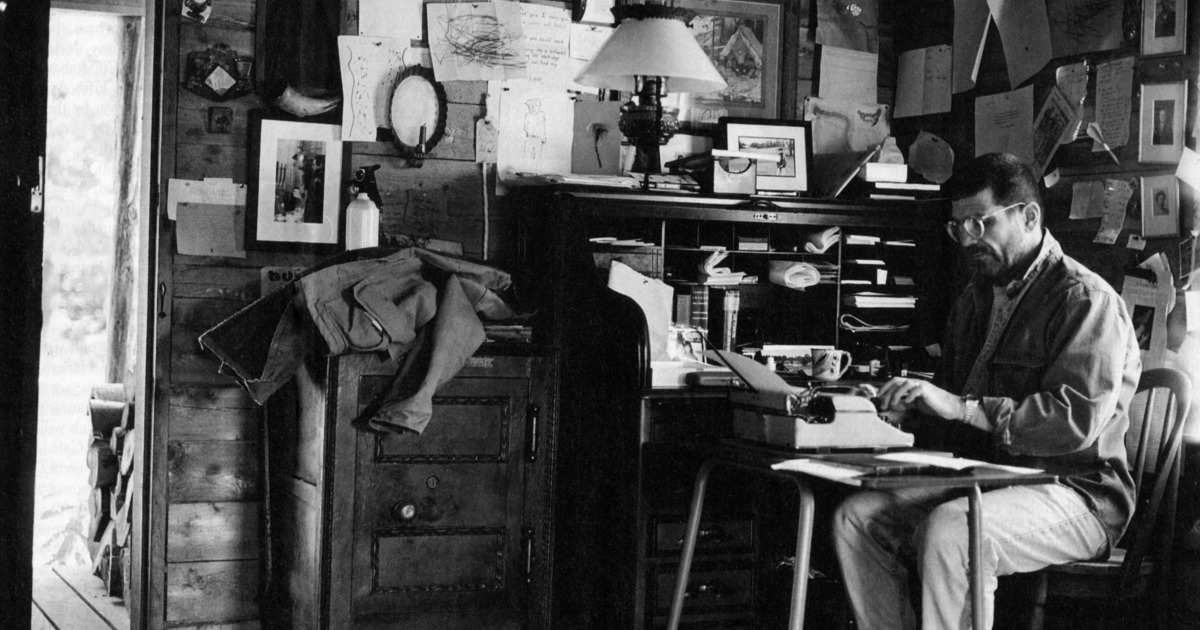
Heed the words of Mamet

A few more pages added to the first draft of the action-comedy spec. So far, so good.

With a little something new added to the mix.

Each scene has been an exercise in “write it, go back and tighten it up.” One scene that was originally 1 1/2 pages was trimmed down to around 3/4ths of a page without sacrificing anything.

What really helped was really adhering to writer David Mamet’s guideline of “Get in late, get out early”.

I’ve written before about my tendency to overwrite, and the scene in question was no exception. I initially put it together how I thought it should be, but it didn’t start as late it should, and took too long to get out. So anything that didn’t absolutely need to be there got cut.

The result – a tighter, faster scene that makes the same point.

As an experiment, I attempted to write the next scene with that mindset from the get-go. Start late, get out asap. Even with a little editing and tweaking as it was being written, this one also turned out nicely.

I’m sure every scene after this won’t be written as smoothly, but it’ll definitely help, possibly even speed up the process. Possibly.

Another detail that’s been incredibly helpful is to just write what I have in the outline for each scene. Nothing extra. It’s getting easier to resist padding it for the sake of padding.

A variation on the Mamet quote could be “Get in late, get to the point, move on to the next scene”.

It’ll definitely take some time to adjust since this is the way I’ve written for so long, but I like the results so far. Will do my best to stick with it from here on out.


First step taken

After some delays, I returned to the outline for the new action-comedy spec. Still a ways to go, but I’d forgotten how much stuff I’d come up with. There’s a lot to work with.

Despite the overall incompleteness, I decided to try something a little different. Something I’d never consider doing at this stage.

I started on pages. Just to see how it read, what could potentially stay, what could be cut, etc.

Since this would be considered the vomit draft, this is all about getting stuff down on the page and focusing forward, rather than writing, going back and rewriting, and so on and so on.

Full disclosure – one day after the first two pages, I thought of ways to improve them and did a little tweaking. I like how it turned out, but am sticking with a “head down, keep writing” approach.

I may even go so far by writing what I already have in the outline, stop at a certain point and finish the outline, or possibly (gasp!) taking a total pantser approach and just write and see what happens.

But that’s not something to worry about right now. I’m just enjoying the writing, as it should be.

More than a few takeaways

While work continues on my actual writing projects, I’ve also been trying to reduce the number of scripts in my “Scripts to Read” folder.

It’s a decent-sized mix of recent and not-so-recent films, along with material written by professionals, colleagues, and “Hey, I saw you posting about this on social media. Sounds cool. Could I read it?”

It’s amazing how fast you can go through a script when you don’t have to give notes. Even more so when it’s exceptionally well-written, which a lot of these are.

One pair in particular, both written by the same pro.

Each script was unique unto itself, primarily in its story/concept. But you could tell that they were written by the same writer. A very distinctive style for how the stories played out, how it looked on the page, and even moreso in terms of voice.

One detail in particular that really stood out was the lightning pace in which these stories are told. Scenes are brief, to the point, and really move things forward. There’s no lingering, no unnecessary dialogue. The writer really adheres to the “get in late, get to the point, move on” method.

These were scripts that once you started, you didn’t want to stop. Honestly. The writing really was that good.

It’s also worth mentioning that these scripts don’t necessarily break any screenwriting rules, but they sure do bend them. Nothing major or drastic, but the writing is so strong that you’re willing to overlook this unusual approach.

Reading these scripts definitely makes you appreciate (and enjoy) how well-written they are, and also starts you thinking “My scripts aren’t at this level, so what can I do to get them closer to it?” Not that I’d ever try to duplicate this writer’s style – that would be futile. It’s more about letting my own voice and style really come through on all those fronts.

I’ve always been guilty of overwriting scenes, and seeing this very streamlined presentation is a good reminder that I should try for that as well.

It’s probably a good thing that I’m reading all of these scripts now because it’s still relatively early in the rewrite/overhaul phase for my scripts. I don’t think it’ll be too much of an issue to start applying what I’m picking up into them.

My scripts were good, but now it feels like there’s more potential for them to be much, much better. Here’s hoping.

Still happy to help

A few years ago, I wrote about some then-recent interactions I had within the screenwriting community. A lot of the sentiment still resonates, and this week saw a few more examples on display.

Last Friday was the San Francisco Writers Conference, and I was the coordinator/moderator for all of the panels for the Writing For Hollywood track. A good time was had by all, including panelists and attendees. It’s also why there was no post last week. (Want to go next year? Just click on the link in that first sentence.)

I didn’t get much of my own writing done because two writing colleagues asked for notes on their scripts, each saying “Don’t hold back. Be as brutal as necessary!” And I was. Well, maybe not brutal; let’s call it “critical, but in a positive way”.

I read each script twice, jotting down notes when needed. Both ended up jam-packed with sticky notes on almost every page with a comment, question, or suggestion.

Both writers were very enthusiastic about their notes. Maybe they didn’t agree with everything; at least a large percentage. Best of all – they were both eager to use those notes and start on the next draft.

And in the middle of all this, a friend referred me to a writing group interested in a screenwriting presentation. A few emails with the coordinator later, I’ll be running an all-day workshop later this year.

I’ve always said this is one of my favorite parts of the screenwriting community – lots of people helping others in one way or another, and that sentiment still rings true.

Writing is already a solitary experience, so when you get the chance to help somebody or somebody asks you for help, you should take it because not only is it good for both of you, but it’s a great reminder that you’re not alone in this.

No lab coat required

A writing experiment of sorts this week has yielded some very interesting results.

I took several drafts of a script and started typing out a new one that combined elements of all of them. Scenes, dialogue, etc. This was primarily to see if it would help me identify what needed work, changing, fixing, and so on.

As I worked my way through, more and more items needing my attention kept popping up. It made me realize this really was going to be the major rewrite/0verhaul I’d expected it to be. Possibly even more so.

And for that I am very grateful.

I don’t know if I would have seen these problem spots or reached this same conclusion if I had just gone through a hard copy of the script with a red pen, marking stuff up. Maybe it’s that specific eye-finger-brain connection while you’re typing that makes you a little more aware of what it is you’re actually typing.

For the time being, I’m deciding between continuing all the way through to the end or starting over at page one. I’m tempted to do the former because that might reveal more problems and issues that need addressing, and it’s probably better to be aware of those earlier rather than later.

All of these pending changes at first seem very challenging, but I have to remind myself I’ve figured my way through similar kinds of problems before, so there’s no reason this time should be any different.

Fingers crossed.