Ask Two Savvy Script Consultants For the Price of One!*

ScriptChix_Logo copy

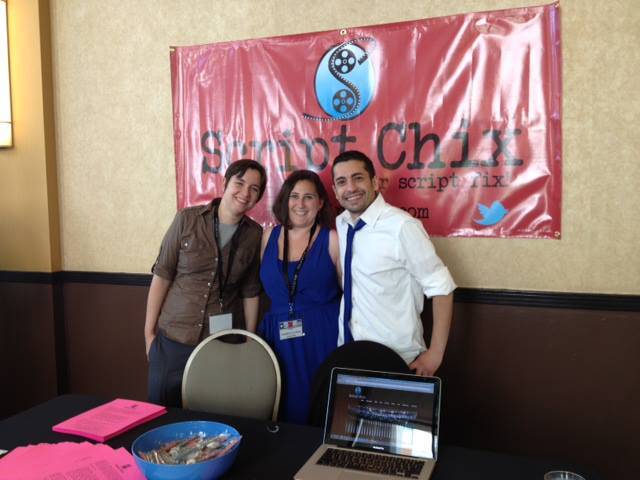
(L-R) Miranda, Sandra & budgeter/scheduler extraordinaire, Hosam, who is not part of this interview
(L-R) Miranda, Sandra & budgeter/scheduler extraordinaire Hosam, who is not part of this interview

*And considering this doesn’t cost you anything to begin with, that’s the best deal you’ll get today.

The latest in a series of interviews with script readers and consultants who would be worth your while to work with if you want to get your script in shape. Today’s spotlight is on Miranda Sajdak and Sandra Leviton of Script Chix.

1. What’s the last thing you read/watched that you thought was incredibly well-written?

WINTER’S BONE

BUTCHER HOLLER by Daniel Shea

2. How’d you get your start reading scripts?

M – Started off as an intern in Hollywood doing the typical script-reading duties. Moved on to being an assistant and continued to do coverage there. Eventually found myself reading for friends and family on the side, and realized (around the same time as Sandra did) that it was a good idea to monetize some of this so as not to just be doing it in my free time. Ended up simultaneously being asked to read for various studios/companies, and turned all that experience around into Script Chix!

S – I believe I read my first script in college, though as a kid, I liked to watch movies and transcribe them. It took hours, but I loved it. The internet wasn’t really a thing yet, so there was no easy access to them. However, professionally, I started reading as an intern doing short coverages for executives during staffing season. My subsequent jobs at an agency and a cable network had me reading all of the time – for potential clients, development, and show staffing. Giving notes to clients, friends, and others who needed feedback was part of my daily life. When I decided to leave my network gig and go out on my own, doing it professionally seemed like a natural transition. As soon as friends at another cable network heard my news, they offered me a spot as one of their book readers. Around the same time, Miranda and I teamed up, and the rest is Script Chix history.

3. Is recognizing good writing something you think can be taught or learned?

M – Somewhat. The biggest thing here is to read as much as possible. We see scripts from writers who clearly don’t read screenplays regularly. The more you read, the more you’re able to recognize. Some of it is likely innate – and it should start early, before you get to Hollywood and decide you want to make movies – but, sure, recognizing what works just comes from reading more.

S – Reading is both objective and subjective. When we give notes, we try to focus on the objective. Even if we personally don’t like a character, a plotline, or concept, we can recognize that it written well, and it’s just not our personal taste. So yes, being able to recognize good writing can be taught; some things are obvious like formatting. However, it takes years of learning and practice to be able to both identify what is good and to be able to separate your own opinions/ taste from it.

4. What are the components of a good script?

S & M – There’s a number of things, but most importantly, a compelling story with multi-dimensional characters. Believable moments that still feel fresh. Strong narrative voice. Imagination and marketability. We would also include formatting in this list. It’s not a sexy component, but it is an important one. The story can be amazing, but if the formatting is off, it’s distracting, and most readers won’t be able to pay attention to greatness of the script.

5. What are some of the most common mistakes you see?

S & M – The biggest one we see, by far, is lack of formatting and proofreading. Bad character introductions. Lazy concept. Writing from experience, but instead of dramatizing the “true story that really happened” to the writer, it’s a regurgitation. Not understanding the difference between edgy and outright offensive or mean. One-dimensional or non-existent women and minorities. Some of these are not necessarily mistakes, but they’re all definitely problems we encounter often.

6. What story tropes are you just tired of seeing?

M – Refrigerator women. Lack of women and minorities. One-dimensional women.

S – Stories about Hollywood, writers, and nights out with the boys. Every writer at some point writes a script about being a struggling writer in Hollywood or their lead male protagonist is a sensitive writer that gets their heart broken. Also behind the scenes of reality TV – this is starting to become a thing. People tend to write what they know and unfortunately, all they know is trying to make it in Hollywood. Unfortunately for them, no executive wants to read this and no audience wants to see it. So if a writer must write this story, do it, get it out of your system, and move on to something more original. Draw from life experience – get out there and enjoy the world, feel heartbreak, and get into trouble (but not too much). The “night out/ retail job with the boys picking up women” is also the most common one we see in fledgling comedy writers. It’s another case of writing what you know. These stories don’t work because they are usually re-tellings of actual experiences that are not particularly dramatic or funny to anyone outside of the people who experienced it. Additionally, the humor only comes from insulting women. Just because making fun of a woman was hysterical to you and your boys in the moment doesn’t make it funny or appealing to anyone else.

7. What are the 3 most important rules every writer should know?

M – Write. Read. Revise.

S – Persistence, practice, and patience.

8. Have you ever read a script that was an absolute, without-a-doubt “recommend”? If so, could you give the logline?

M – Yes! And it just finished shooting! “A teenage con artist tricks a desperate mother into hiring her as a live-in companion for her autistic daughter.”

S – I agree with M. That script is amazing. Honestly, it’s tough to give a blanket “recommend” because each company and client we work with has their own specific mandates of what they are looking for, so it needs to be tailored to their needs. A script that I loved recently, like goosebump-inducing loved is “With the help of a crotchety old neighbor and his garden, a young woman’s world comes alive.” It sounds a bit generic, but it was beautifully written and full of magic with a hint of surrealism.

9. How do you feel about screenwriting contests? Worth it or not?

S & M – Absolutely worth it, but not all of them. Do your research. See which contests have a track record of success for the writers who’ve won. Look at what the prizes are. If the only prize is that you won the contest, it’s probably not that worthwhile (unless it’s a big name like Nicholl or Page). And look at things like fellowships, as well. If they want you to pay but aren’t giving you anything WORTHWHILE in return, it’s not worth it.

That said… if you’re starting out and still sending out queries and you haven’t won anything or been published or produced – enter contests. Get some prestige next to your name, even if it is just “winner of miscellaneous contest.” It helps in general, but it mostly helps if the contest is considered reputable.

10. How can people can get in touch with you to find out more about the services you provide?

www.scriptchix.com/services or drop us a line at info@scriptchix.com

We also blog about writing, life in Hollywood, and host networking events, so be sure to poke around a little: www.ScriptChix.com.

11. Readers of this blog are more than familiar with my love/appreciation of pie. What’s your favorite kind?

A man after our own hearts!

M – Boston cream

S – Apple or chocolate cream

The fastest route out of Sore Loserville

Get out and get out fast

There’s been a disturbing trend on some online forums regarding the results of some recent high-profile screenwriting competitions. While the writers who advance receive and exchange congratulatory messages, some of the ones who don’t seem to be looking for some kind of explanation as to why their script didn’t do better.

“They don’t like this genre.” “They’re only looking for stuff they can market.” “They just didn’t get it.”

Hate to break it to you, but that’s not it.

This is: you and a few thousand other people entered the same competition, so the odds were already against you. Chances are pretty good that some of those scripts are better than yours. It happens. Accept it.

And this may come as a shock, but maybe your script just isn’t as good, let alone as perfect, as you think.

So rather than gripe, complain and avow “Those rotten bastards are never getting my money again!”, use this as motivation to make your script better. Rewrite it. Get feedback from your inner circle of trusted colleagues. Pay for one or two sets of professional notes. Some contests offer feedback for an additional fee, so maybe that’s something you might want to consider.

I was disappointed my western didn’t do better in some of these competitions. Frustration and depression were the dominant moods for a couple of days. That’s when reality smacked me in the face and said “You want to do better? Then get to work.”

So that’s what I’m doing. I’ve completed the initial edit, so the script is now 6 pages shorter. There’s still some work to do, but it already feels better and tighter than it was before. I’ll be following my own advice (more rewrites, feedback from friends and pros, etc.), all while planning ahead for next year.

What about you?

Deliberately avoiding referencing that song

A great mantra, but a little tired of hearing it over and over
A great concept in terms of editing, but a little tired of hearing it over and over

As I work my way through the hack-n-slash editing phase of the western, it’s getting easier and easier to cut something and not worry about if I’ve made the right decision.

Whole scenes, parts of scenes and lines of dialogue are wiped from existence, all with a positive result. Tighter scene(s), better flow of story, all creating a stronger efficiency of words.

Added bonus – script is already 5 pages shorter, and still have Act 3 to go.

(Counter to all of this cutting, placeholders have been identified as potential chances to add in a few lines for some character development.)

Re-reading this script has also made me realize how much I overwrite, especially with dialogue. I try to avoid extra verbage, but don’t see that’s what’s happened until long afterward. By then, it seems more like padding, so out it goes.

A lot of writers are hesitant to cut material or make drastic edits. They just can’t bring themselves around to killing their darlings, because they figure everything is just right the way it is.

Nope.

As much as you like that scene or dialogue, you have to be as objective as possible about your own work. Is it absolutely vital to the story and advance it in the best way possible? If you took it out, would it make any difference whatsoever, or at least have some kind of impact on the story?

I’d venture probably not.

Don’t be afraid to put that red pen to work and cut away! The pain of having to do so is minimal at best and lasts all of a microsecond or two. It’s more than likely that the next time you read through what you’re working on now, you won’t even notice its absence, probably not remember it ever being there and hopefully think “Wow, this draft seems a lot better.”

You mind running that by me again?


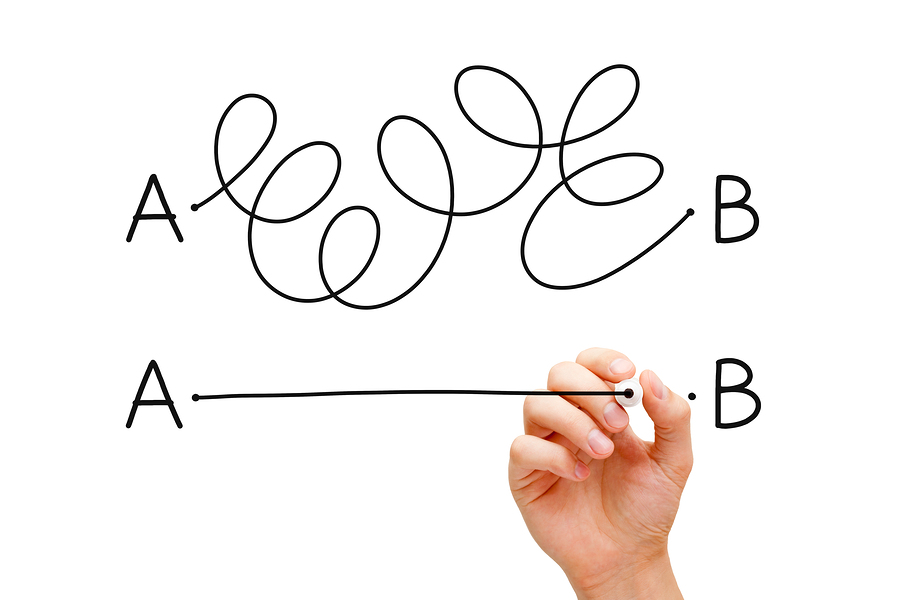
What we seek is somewhere between these two
Top choice is too much, while the bottom is too little

Pop quiz!

Pick any high-profile, mainstream popcorn summer movie from the past 10-15 years, and explain, in as few sentences as possible, how the story unfolds.

This doesn’t mean provide a logline; this is about having a plot that’s easy to understand.

Okay. Pencils down.

There’s been a disturbing trend of overstuffing a story and bombarding the audience with just too much information. It’s gotten to the point that a lot of the time, the details we need to know get lost in big expositional info-dumps, which makes us struggle to follow along, or at least keep up.

Who hasn’t had a lot of questions about the movie they just watched, but those questions are more along the lines of “What happened?”  You want somebody to want to watch your story again because they want to relive the great time they had the first time around, not because they seek answers.

I could list several recent major releases that had too many elements which simply made it less of an experience to watch them. Sometimes the details made no sense, or the explanations behind them weren’t adequate enough. If I have to go back and think about something from earlier on, then everything that came after that doesn’t have my full attention, which makes me not enjoy it as much.

Is it really too much to ask that a story be kept relatively simple to understand? This doesn’t mean to dumb things down.  It is possible to write a smart story with simple details. One of the many reasons certain older films still hold up is because they are smartly-written stories told in a simple, straightforward manner.

THIS is what has to happen, and THIS is how we get there. Of course you’re going to throw in complications, but that doesn’t mean you make it overly complicated.

It’s very tempting to want to show off your writing skills and keep adding stuff into your story, but that usually results in just too much going on.

There’s a big difference between throwing everything at the wall and seeing what sticks and carefully plotting out what happens.

Keep things simple when telling us what we need to know, and leave it at that.

Here’s to our biggest fans

Couldn't do this without you
Couldn’t do this without you

Even though writing is primarily a solitary activity, there are often times when we just can’t go it alone.

Friends and trusted colleagues can only take us so far. The rest of the time we need somebody else.

But not just any somebody. Somebody extra special.

Somebody who’s there for us no matter what.

Somebody experiencing the ups and downs right along with us. Somebody who shares in our joys and frustrations.

Maybe they’re a writer too, but chances are probably not, but it doesn’t matter. They know what it is we’re trying to accomplish, and how tough it is, and offer whatever support they can.

They’re there for us in countless capacities. A sounding board for potential ideas. The editor or proofreader who sees our work before anybody else. The gatekeeper of our writing sanctums.

They provide encouragement when we’re feeling low. They sympathize when we suffer from writer’s block. They are the ones we look to for solace when the long-awaited answer is ‘no’.

But they’re also the first person you want to tell when something good happens.

They are our support, our motivation, our inspiration. They help us to move forward, keep trying and carry on.

So pass along your gratitude to your someone. Let them know how much you appreciate everything they’ve done to help you and your writing.

This is a tough enough journey as it is, and without them, it would be much, much harder.