Pacing & page numbers

number-line
Looks like there’s a lot going on up ahead

When you start reading a script, you tend to recognize pretty quickly whether or not the writer knows what they’re doing. Their mastery of the craft (or lack thereof) will become soon apparent.

Bad formatting. Misspelled words. Unfilmables. On-the-nose dialogue. Cliches as far as the eye can see. Quite a checklist.

Find one or more of these early on, let alone just on the first page (which does happen), and there’s not much hope of improvement. You’re left with no choice but to force yourself to push forward. Maybe once in a while, you glance up at the upper right corner of the page/screen.

Your shoulders sag. “I’m only up to page ____? This is taking forever!” you exclaim. Making it to the end has suddenly become a question of “if”, rather than “when”.

Now let’s examine the other side, where the writer is in total control.

You encounter writing so sharp and descriptive, you can easily “see” what’s happening. Dialogue that’s not just crisp, it practically crackles. Characters who feel and talk like real people. All of it taking place in original and entertaining situations.

You become so wrapped up that you can’t wait to get to the bottom of the page so you can move on to the next one. And maybe once in a while, you sneak a glance at the upper right corner.

Your eyebrows shoot up. “I’m already at page ____? Wow, this is just zooming by!” you exclaim. You eagerly dive back in, more than ready to continue because you simply can’t wait to see what happens next.

Now here’s the big question for you, the writer:

Of the two experiences listed above, which do you want the reader to have when they read your script?

Do you want them to be bored and see reading your script as a chore that ranks up there with cleaning out the cat’s litterbox or listening to a timeshare presentation?

Or do you want them to be so involved, their attention so riveted to the tale being told in your script, that nothing short of a major crisis or natural disaster could tear them away? (Not to diminish the intensity or significance of major crises or natural disasters, but you get the idea)

It’s tough to be that objective when it comes to reading your own material. You think it’s good (“How could anyone not like it?”), but every reader has their own criteria for what works and what doesn’t. The challenge is crafting together a script so rock-solid that not liking it is not an option. Not sure if yours is? Seek outside opinions. Rewrite with the mindset of “how can I make this better?”.

As screenwriters, our primary goal is to tell an entertaining story. The last thing we want is for someone to be easily distracted by something/anything else when they’re supposed to be reading (and in theory, enjoying) our scripts.

Quit them or queue them up?

q
As long as we’re emphasizing Qs today…(Yes, it’s a terrible joke. But that’s how we operate around here.)

Today is all about query letters.

I read about other writers who’ve gotten reads, representation, options and even production. There must have been something quite special about those letters (and scripts) to get those machines in motion.

There are also a select number of writers who’ve never had to use a query letter. Bully for them, I say. But I’ve never fallen into that category, so I’m firmly planted in the “those who send” group, which is still fine.

Taking a look at the somewhat limited results of my past efforts and reading about others’ experience makes me wonder in a “big picture” way about the nature and concept of the query letters themselves.

Are they worth the effort?

Naturally, if something happens as a result, of course they are. But even that appears to be a needle-in-a-haystack kind of scenario.

(Incidentally, any tales of query success are more than welcome in the comments section.)

There are so many factors to take into account, including but not limited to:

-who you’re sending to
-what kind of material they want
-they’re intrigued enough to want to read the script
-your script is a good match (or at least close enough) to what they want
-they think your writing’s strong enough
-they think they can make something happen with your script

Several years ago, an agent who’d struck out on their own (along with a sole assistant) told me that their office received approximately 75-100 queries a week. From around the world. Some were good, most were awful. A significant part of each morning was spent sorting through them. As you’d imagine, finding one, possibly two, that clicked seemed to be the norm.

Remember, this was a two-person operation. If they were getting that many, imagine how many the mega-agencies were getting, and still are. Possibly in the thousands.

The chances of success are minuscule, and grow smaller with each progressive step. Those not exactly in the know are more likely to think they’re the exception, but those of us who’ve been down this road before know better.

This isn’t to say that queries never work, but the odds definitely appear to be not in our favor. Luck and timing seem to also play significant parts. Maybe the person you’ve sent to just happens to be looking for a script exactly like yours. I’ve heard it does happen; just not very often.

But the dedicated, persistent and determined among us, including yours truly, will keep at it.

Even though my success rate hasn’t been the best, I’ll continue to do the research, find potential recipients, craft what I believe is a solid query, and send it out.

All that’s left is to wait, hope for the best, and keep busy working on other scripts, each of which will probably also have its own respective query letter get sent out sometime in the near future.

Q & A with Babz Bitela

Babz Bitela

Barbara “Babz” Bitela is a literary manager operating out of northern California, a “hired gun” editor for fiction writers, and hosts the Babzbuzz internet radio show “because folks were nice to me and helped me, so I’m trying to pay it forward, and believe me, I’m keeping it real.”

“We want voice on the page. We KNOW it when we ‘hear’ it.”

Her book Story of a Rock Singer is currently being adapted as a Broadway musical.

What’s the last thing you watched/read that you thought was incredibly well-written?

Justified and Bates Motel are my top two. Joss Whedon is by far one of my favorite writers. Buffy the TV series –  WOW!  You can youtube his interviews: it’s like an AA degree in writing and it’s free to anyone.

How’d you get your start doing representation?

I pitched a semi-retired agent named Ed Silver on a book I wrote. He was Lee Marvin’s manager and finance guy, also for James Coburn and many others. The guy’s ‘seen’ stuff, man – Hitchcock napping, for one. He loved my style and offered me a gig to take over and he’d mentor. We clicked big time. He’s Jewish, I’m Italian. As Sebastian Maniscalco says, “Same corporation, different division.” That’s us.

Is recognizing good writing something you believe can be taught or learned?

You for sure can learn it IF you want to. Here’s why – bad writing obviously sucks. It just does. How do you know that? By reading GREAT (not just good) scripts. I read so much so often I can now tell what’s going to go and what MAY go but here’s the rub: in the absence of money behind it, it may not matter. And I may love it and another may say “meh”. So pov does matter.  So you can learn and pitch but Lady Luck is no lady: she’s a tramp in cheap shoes and she’s fickle. We press on because we believe in the story/writer we hawk. If it goes, it goes, if it doesn’t, well, I’ve had the benefit of “seeing” incredible “movies” and the only down side is, so few others will see that. THE WRITER however, benefits. Why? Job well done. And if you don’t write for the JOY of the craft, there’s no point. Write for the sale? That’s an industry sucker punch. I’ve learned to find great scripts and I’ve learned it can be like screaming in space once you do.

What are the components of a good script?

VOICE, RISING ACTION and TWISTS.  What is voice: it’s a lot like porn – I know it when I see it but it’s hard to describe. Think of it this way: you open a novel, settle in and by page two you’re thinking “Ugh, this just sucks”, but you press on and by page ten you know it’s not the book for you so you donate it to Goodwill. It’s the same with a script. I once read a tv pilot by my client that I couldn’t read it fast enough. Why? I WAS DYING TO SEE WHERE IT WOULD LEAD. The action and characters were alive on the page. That is what makes a good script: I call it NARRATIVE TUG.

What are some of the most common mistakes you see?

Where to start? Typos, for sure. It’s a speed bump.

Wrylies. Just don’t. UGH! Makes me crazy. There’s only one time I’ve seen it used where it worked. ONCE. And that writer is a five-figure-income writer.

Novels posing as scripts. The writer MUST understand the economy of words and do VISUAL storytelling. Telling a story with pictures is a movie. Telling a story with talking is a soap opera.

Avoid using “ing” words – slows narrative, slows the readers eyes.

Avoid “very”. Just find what IT IS. Don’t say “very smart”, say “bright”  – just pick! Not kidding. You’ll thank me. Rodale’s The Synonym Finder is invaluable for writers.

And never fall in love with your stuff. It’s gonna get cut.

What story tropes are you tired of seeing?

Well, many work. Some don’t. My favorite recently was probably in draft form: “Fire all phasers!” But instead he said “Fire everything!” Love it!

But I say write bad and cliché in the draft, leave it there, then go back and rewrite it.

Lots of folks say “Not my first rodeo.” I say “Not my first rocket launch.” Anything to WAKE UP the reader.

What are the three most important rules every writer should know?

I’ve got more than three.

-Don’t enter a script contest pitching a word doc.

-Don’t send a script unless invited.

-Don’t ask me what I think if you don’t want to know.

-Don’t go past 120 pages. I mean it. Try to stay around 100 if you can.

More rules? I think it’s just wise to do 12pt Courier font as it’s tradition. The Coen Brothers don’t use Courier. But they’re already famous, so when you’re famous do what you want. In the meantime, stick to tradition.

What do you look for when it comes to potential clients, both personally and professionally?

No dope. No booze. No drama.

Feet on the ground, and committed to spending tons of time doing what you love, regardless of the outcome.

My clients pitch themselves. They must. If that’s not for you, then I’m not the agent for you, and also, you’re in the wrong business.

Yes, the agent makes inroads, but you must pitch you and build relationships. When you do; AVOID using “I” and ask the person “What do you do, and how do you do it?” Ask about them. We’re people FIRST. That’s why I do Babzbuzz. People like me. They helped me. So I take what they tell me and mush it up with what I’ve learned, and talk about it on my show to try to help.

I’m a small company: I’m WGA.

Meh. Folks hang up on me all the time.

Why?

“Babz, love the script! Who’s funding?”

Crickets.

“Babz, baby. Call us back when you have the dough and I’ll show my client. He may want to star in it.”

EEEK!

What happened to love of story?

Hell, that left the building and moved to an island the actor/director owns. He’s got to feed his family too, ya know. So bring the bricks.

EEEK!

Lightning can and does strike. That’s what I do. I’m really a stormchaser who looks for folks with money who want to buy.

Readers of this blog are more than familiar with my love and appreciation of pie. What’s your favorite kind?

Oh man, you had me at the fridge door. Dutch apple. Key lime. Rhubarb when you can find it. And pretty much any clever use of chocolate.

In it for the long haul

ahab
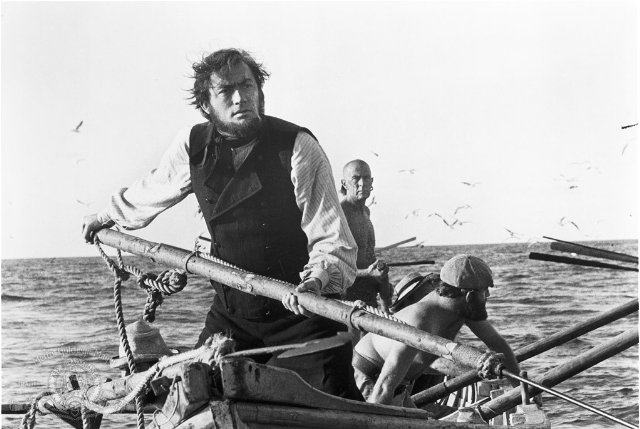
A somewhat extreme example, but you get the idea

Some days this is quite the struggle. You slave away on a script, send it out (contest, query, what have you) and hope for the best.

Unfortunately, a lot of the time, the best isn’t what happens. There will be rejection. A lot of it.

But every defeat is temporary, and a chance to regroup and try again.

In the beginning, when somebody tells you “no”, you take it personally. But you eventually grasp the concept that they’re addressing the writing, not the writer. You hunker down and keep going, continuously striving to improve.

The “no”s will still come, but eventually you get to the point where you simply shrug it off.

“Why even bother?” some might say. “Why keep doing this to yourself?”

Because the longer and harder you work at it, the closer you get to reaching that goal.

Because we feel this is a goal worth pursuing.

Because we’re compelled to.

Because we believe in our abilities.

Because we love doing it.

Success, especially when it applies to screenwriting, does not come easy. Or quickly. You will need an unlimited amount of patience and perseverance. This is going to be a long, perilous journey.

I’ve started walking. Who wants to come with me?

And I think this is a pretty good way to get things started.

Make Emily Post proud

manners
White gloves are, of course, optional

A few months ago, after connecting with another writer on a networking site, I asked my usual get-to-know-you question – “How are your latest projects coming along?”

Their response: “Good. You can read these (2) copyrighted scripts HERE (link). Also looking into setting up some table reads.”

Sometimes this happens. I ask somebody how it’s going, they give a brief, no-nonsense answer, and that’s it. No “How about you?” Hey, it’s cool. I understand. You’re not interested in being social. No big deal. (Although it does defeat the purpose of this whole “networking” thing.)

My standard procedure after that is to let things drop, which I did.

Until a month later.

This same person sent me a boilerplate notice regarding something else, so I decided to try again.

“How’d the table reads go?”

“Still waiting for funding. Still haven’t read my screenplays yet, have you?”

Um, was I supposed to?

I looked over our previous exchange. Nope. No request to “please read my screenplays”. Just “this is where you can read them”, plus the emphasis on them being copyrighted, to no doubt put the kibosh on any potential IP theft on my part.

This was also just after I’d started my 10-day writing marathon, so I had absolutely no time to read anything. I said I hadn’t read them, and was currently involved with some really big projects.

That did not sit well with them, at least from their perspective.

“Figured this is the pat response I always get when I try to start a conversation here. If you ever join OTHER NETWORKING SITE, let me now (sic). That’s where I network the most and actually find fellow creatives to work with. Here, not so much.”

And that was that.

Huh? Did I miss something? They were starting a conversation with me? Apparently I was the latest in a long line of someone giving what they considered to be a lame excuse as to why I hadn’t read their material, which I supposedly said I would.

I considered responding with some kind of harshly-worded retort, but opted not to. It simply wasn’t worth the time or effort. In fact, up until I started writing this post, I hadn’t even thought about them since, and will have most likely forgotten about them by this time tomorrow.

I’ve covered this subject before, and am compelled to do so again.

A big part of this industry is establishing and maintaining relationships.

It is extremely important for you to be a nice person. To everybody.

Granted, not everybody is going to reciprocate, but you’re much more likely to make a good impression if you’re friendly, polite, and professional. Both in person and online. People will remember that.

And they will also remember it if you’re not. Establish a reputation for being a pompous, know-it-all jerk, then that’s how people will perceive you, which will severely reduce your chances of somebody wanting to work with you a second time (providing they survive the first).

When you initially connect with somebody and a conversation develops, take the initiative  and make it about them. Ask how their projects are going. In theory, they’ll answer and ask about yours. Be friendly, inquisitive, and encouraging. I’ve made a lot of good contacts and gotten to know a lot of extremely talented writers that way.

Added bonus  – Your network of writing associates has the potential to be a virtual support team. Part of why my writing’s improved over the past few years is a direct result of receiving quality notes from many of these writers, and I’ve always been totally willing to return the favor.

And they’re also there for you in the rough times. If I announce some disappointing news, I can always rely on receiving a lot of sympathetic and encouraging comments to remind me I’m not alone in this, and that a lot of folks (none of whom I’m related to) believe in my abilities.

All of this from being a nice person!

But, as exemplified in my little anecdote from earlier, sometimes a connection just doesn’t happen. If somebody doesn’t seem interested, don’t push it. Wish them the best and move on. There are a lot of other writers out there for you to meet.

And they’ll probably think you’re just as fantastic as I do.