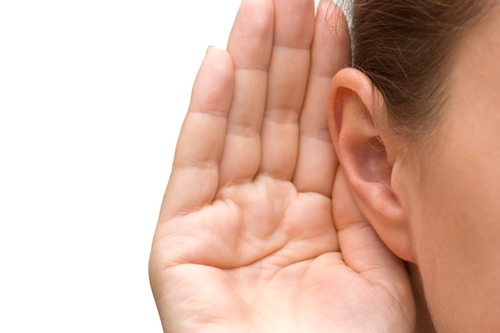
From asking to being asked

Nothing like a receptive ear (and the person connected to it)

Compare the most recent thing you wrote to the very first thing you wrote. How much of a difference is there?

One thing’s for certain: it no doubt took a lot of hard work and learning to get you from your skill level then to what it is now.

But you didn’t do it alone, or in a vacuum. You had help along the way from countless resources. It might have come from a book, a class, a writing group, or the occasional someone with more experience willing to help out.

When I started out, that was me. I got my hands on as many books as I could (the one I still recommend – Story Sense by Paul Lucey). Classes weren’t really an option, so I read a lot of scripts and attended a few seminars and expos when I could. I also had the good fortune to be involved with a few writing groups. A lot of this was also in the early days of the internet, so online resources and networking were nowhere near the levels they are now.

But what definitely helped the most was getting notes and feedback. The more fresh eyes you can get to take a look at your work, the better the end result will be. One stipulation: it depends on who you ask. Specifically, someone who really knows what they’re talking about, and whose knowledge and opinion you trust.

This has made a significant difference for me, such to the point that I now have a core group of trusted colleagues I can rely on for quality notes, and I’ve done my best to return the favor to many of them when possible.

And in recent months, as my network has grown and I connect with more writers, I’ll occasionally get an email asking along the lines of “If it’s not too much trouble, would you take a look at this and let me know what you think?” A script. Some pages. A logline. What have you.

I honestly never expected to be on the receiving end of that question, but, schedule permitting, am always happy to help out when I can. It’s the least I can do. Hopefully my notes will give them the help they need.

I don’t claim to have all the answers, but it’s kind of nice to think that I might be able to help somebody in the same way others did for me in the past.

Feeling triumphant, if only for a few minutes

By the time you finish reading this sentence, I'll already have gotten back to work
By the time you finish reading this sentence, I’ll already have gotten back to work

Well, it’s done. I got to type in those glorious words “Fade Out”, thus bringing to a close the massive rewrite of the western.

The script now clocks in at a respectable 114 pages. No reason a few more can’t be trimmed with some diligent editing and polishing.

Normally this would be the part where I’d say how long this has taken, but to be honest, I really don’t know. I haven’t been keeping track. Two months, maybe? Something like that.

But the important thing is that I got it done. What a grand feeling of accomplishment. It’s quite nice.

All that work and effort has paid off, resulting in a pretty solid piece of material to show for it (if I do say so myself).

As much as I’d like to sit back, rest on my laurels and enjoy the moment a little longer, there’s still a lot of work to be done. Once this latest round of editing is done, the call goes out to friends and trusted colleagues for feedback, which will no doubt result in more editing and polishing. And then it’s on to shelling out some bucks for professional notes.

From there? I don’t know. Contests? Query letters? That stage is pretty far down the line, so not too worried about it just yet. Right now it’s all about making the script as bulletproof as it can be.

During this entire time, when the opportunities present themselves, work resumes on the low-budget comedy, the mystery-comedy and possibly the pulpy adventure. Feeling confident at least one, possibly two, could be done by the end of the year.

All part of the never-ending process.

The benefit of connecting with people in person

Availability of coffee is always a pleasant option
Face-to-face. Classic. Effective.

I had the good fortune earlier this week to attend the meeting of a new writing group. It’s been a while since I’ve been part of one, and it was nice being able to once again interact with other writers and engage in casual discussions about our respective projects before moving on to the focus of the evening. Since it was my first time attending, I’d opted to stay in the role of observer/commenter, rather be than one of the four-to-five who brings pages for review.

Following a brief table read, the group then offers up its collective comments. This week’s selections weren’t bad, but each set had room for improvement. Some maybe a little more than others.

When I got the opportunity to toss in my two cents, I talked about what stood out for me and what I thought needed work, making a point of being nice about it.

Others chimed in with their opinions and suggestions, not all of which I agreed with. While I may have been thinking “That’s not right,”or “That doesn’t make any sense,” my lips remained sealed. I didn’t want to come across as the pompous know-it-all. It’s important to make a good first impression, no matter who you’re meeting.

When the meeting was over, I talked to the guy who organizes it (we were in a different writing group years ago), saying I’d hoped I wasn’t too obnoxious with my comments. “Not at all,” he said. “A lot of these folks are newer writers, and you told them some things they needed to hear. It’s the only way they’re going to get better.”

Whew.

It’s been my experience, and hopefully yours, that getting feedback from an actual person is beneficial on several levels. Chances are you’ll know something about that person’s background and experience, so you can put the appropriate level of merit into what they have to say. And unless they’re a jerk to begin with, they might be a little less harsh with their comments than if it was an online forum, where for some reason people have no problem letting loose with vitriolic criticism and put-downs.

If you asked somebody for feedback, wouldn’t you rather the notes were helpful in a supportive way, rather than “This sucks! What makes you think you can write?” That would be pretty devastating, right?

Now imagine that situation reversed. A newer writes comes to you, asking for notes. Do you think “They don’t realize how fortunate they are to have the wonderfulness of my vast superior knowledge bestowed upon them!” or “I used to be where they are. How can I help?”

My advice: opt for the latter. Both of you will be better off for it.

Run at your own pace

It's the total opposite of a sprint
It’s the total opposite of a sprint

For the past couple of days here at stately Maximum Z HQ, yours truly has been doing everything possible to fight off a nasty viral infection (Note to self – invest heavily in Kleenex and Halls cough drops) because I’m doing my first half-marathon in over a year this weekend. I do expect to be well enough to run. Fingers firmly crossed hoping to at least break the 2-hour mark.

As a result of being sick, I’ve been home from work the past couple of days, which means a little more time than usual to work on the western rewrite. Latest update: page 38.

When I have a lot of time to write, I’ll give myself a short break after reaching a milestone, such as the end of a scene, or x number of pages written or after a certain amount of time (this also helps prevent premature burnout). Sometimes break-time involves perusing social media or screenwriting forums, just to see what’s going on out there.

What’s been going on this week has been a flurry of activity among my peers. One got a manager. Another finished their latest draft. Another had an agency request their script after a pitch.

And there’s me, filling a wastebasket with snotty tissues, coughing up things of a color not found in nature, and hoping to get to the bottom of the next page before the day is done. Slightly disheartening, to say the least.

But, like when I run a race, I remember that it’s different for everybody. I’ve been working on this rewrite for quite a while, and have confidence that it’ll be done sooner than I think.

I’m also overseeing all of the “Ask a…!” interviews, and have now added this into the mix.

Oh yeah, and training runs.

When you finish a race, you get a medal, and you wear it with pride. You’ve earned it. You finished an hour behind the winner? Big deal. Chances are you didn’t do it to win. You did it to test yourself, to see how you could do with this self-imposed challenge.

When you write a script, yes, you are going up against every other writer out there, but you do it the way that works best for you. You can only manage 30 minutes a day? That’s fine. You tell yourself you’re going to write at least 3 pages a day, and you actually do? Fantastic.

Will others get done before you, or accomplish things faster than you? Of course, but that’s nothing for you to worry about. Focus on you, not them.

I think it’s absolutely phenomenal that these other writers have each reached a certain point with their writing and careers. And so will I. Maybe not as fast, but it’ll happen.

Just gotta keep working at it.

See you at the finish line.