It worked before, so why not again?

This year’s contest season is pretty much over for me, with some not-too-bad and better-than-expected results.

My animated fantasy-comedy took 3rd Place in Family/Animation at StoryPros, was a quarterfinalist in PAGE and Emerging Screenwriters Animation, and made Second Round at Austin and the ISA Fast Track Fellowship.

Still waiting to hear from a few smaller contests, but none worth mentioning.

Quick note: I’ll be attending Austin this year. Hope to see you there.

I’m quite proud of how this script turned out, and even though I’m rewriting another script, as well as developing a new one after that, there’s still a chance I’ll go back and do another draft.

But I’m not in any rush. Taking my time seems to work well for me.

A few years ago, I opted to skip the contests and just focus on making the scripts better. It was a good decision.

So I think I’ll do it again.

For the time being, no contests for me for the 2024 season. I’d much rather focus on getting these scripts into decent fighting shape.

This is where I’d also add a mention of how much money I’d be saving by not doing any contests. Those fees really add up, don’t they? That’s still the case, to a certain extent. I’m giving serious consideration to redirecting the money spent on contests to one or two sets of professional feedback.

I’m also very fortunate that I have an amazing network of writers who will happily provide feedback on these scripts. A lot of them will be entering contests, and I’ll be the first to cheer their victories and console their defeats.

I won’t say it’s like a heavy load’s been removed from my shoulders, but it definitely feels like the right choice. The contests will always be there, and I’d rather take the time to really hone these scripts so they’re as good as they can be.

The other three little words

My, what a rough week this was.

PAGE semifinalists and Nicholl quarterfinalists were announced. My script was not on either list.

Disappointing, especially since I think it’s a pretty solid script.

At least that’s what my readers say.

But like you always hear: it’s all subjective.

Your first thought when you get that notification that includes “Unfortunately,…” is probably “I must be a really shitty writer”.

Not so. I’ve read a lot of scripts of exceptional quality that also didn’t advance, including one by a previous Nicholl top 10 finalist.

There is absolutely no way to tell how a script is going to do in a contest. You send it, hope for the best, then move on to whatever the next thing is.

After I’d posted about not advancing, more than a few writers responded in kind.

“Me too.”

“Another swing and a miss.”

“Whoo! My eighth consecutive year of not advancing.”

It’s taken me a lot of time to accept that while it’s great to see your script do well in a contest, when it doesn’t do well is no absolute reflection on you as a writer.

Again: it’s all subjective.

One writer I know was frustrated after years and years of their script never doing well in a contest. That script then went on to place in the top 50 for the Nicholl.

This isn’t to say that your script couldn’t do with a little more work. That’s really up to you.

If you’re among the horde of writers whose contest journey has come to an end, give yourself a minute to vent and air those grievances, then decide what you’re going to do about it.

Is your script as solid as it can be, or would it be worth your while to give it another read to see if anything could use some tweaking?

Something to also keep in mind: winning a contest can be a stepping stone to a career as a writer, but it’s not the only way. A script can not do well in a contest but still attract the attention of somebody interested in making it.

As another writer put it: “I’d rather write a script that would be a good movie, than one that wins contests.”

At this point I don’t know what my plan is for next year’s contests. I’m too busy working on scripts to worry about it.

Which reminds me of another three important little words:

Don’t. Stop. Trying.

You win some, you lose (or don’t place in) some

Another screenwriting contest season come and gone, at least for yours truly.

My western’s record with PAGE extended to 0-6, and didn’t make it to the quarterfinals in the Nicholl. After last year’s debacle with Austin, I opted to skip it this year.

(Side note 1 – I don’t pay to get the reader/judge notes, so don’t know why the script fared how it did for either contest. The Nicholl used to offer notes after the top 5 were announced, but not sure if they’re doing that this year or you had to pay upon registering.)

(Side note 2 – A very hearty congrats and good luck to the 359 writers who made it to the Nicholl QFs. I wholeheartedly applaud the Academy’s decision to limit submissions to one script per person. Other contests should follow their lead.)

My initial reaction to the news from both competitions was “I must be a really shitty writer to keep failing like this.”

But as my ever-supportive wife, a few friends who are also consultants, and several other trusted colleagues in my writers’ network reminded me:

It’s a really good script.

You’re not a bad writer.

IT’S ALL SUBJECTIVE.

This script has also done moderately well in some smaller contests, so it can’t be that bad.

I know a writer whose script advanced in the Nicholl after several years of bupkis. I also know another writer who made it to the top 50 one year, then the same script didn’t even make the quarterfinals the following year.

And as a few others pointed out about the prestigious contests and the scripts that do well in them: it may be a good script, but would it be a good movie? I’ve read some contest winners (and some top vote-getters on The Black List); some were very well-written, and some just didn’t do anything for me. One or two even made me question why they did as well in the contest as they did.

Furthermore – did any make me eager to shell out the cost of a ticket if it were available on the big screen?

Not really.

But again, that’s just my take – i.e. SUBJECTIVE.

At the very least, reading these scripts could be helpful in a “developing your craft” kind of way.

So where do I go from here? I’m rewriting a pair of newer scripts, and haven’t decided if either will go the contest route. Possibly, but right now I couldn’t say.

I’d rather focus on getting them in decent shape. If that means skipping contests next year, that’s fine by me.

From the archives: If only you could eat a bad script

pineapple upside down cake
Let the metaphors commence!

Author’s note: got some other stuff that requires my attention, and a recent discussion about pineapple upside-down cake reminded me I did a post involving it a few years ago, so hope you enjoy this blast from the past from July 2016.

“Before we get to the gist of today’s post, let’s address the elephant in the room: my western did not advance to the quarterfinals of the PAGE contest.

Honestly, I was a little surprised; I thought it would have done better. After a brief wallow in disappointment, I shrugged my shoulders and moved on. It’s just another one of those things over which I have no control. I still have a ton of confidence in this script and might submit again next year. Also waiting to see how it fares in Austin and the Nicholl.

True, it was a rather lousy way to start the weekend, but over the next couple of days, I managed to redirect my focus, which included a nice long run that involved traversing the Golden Gate Bridge, and attempting something I’ve always wanted to try:

Making a pineapple upside-down cake (from scratch, naturally).

Guests were coming over for dinner, and I’d made pies for them before. But this time,  I wanted to try something entirely new and preferably a little challenging. I’d say this falls into both categories.

I scoured the internet for an ideal recipe, found one to my satisfaction, and followed the directions to the letter. The result? It looked like it was supposed to, and that’s where the similarities end. A little too sweet and the center was still kind of goopy. Nevertheless, my guests still liked it, and K & I split the last piece after they left. Not bad for a first attempt.

Why did it not turn out the way I expected? A lot of reasons. The oven’s a piece of junk. It didn’t bake long enough. The ingredients and the amount of them probably need to be tweaked. No matter what, I know now that I can adjust all of these next time and get closer to the results I seek.

Except for the oven. It will forever remain a piece of junk until it dies. Which can’t happen soon enough. But I digress.

Notice all of the comparisons you could make between baking and writing a script? Trying something new and long-sought-after. Seeking advice and guidance. Following the guidelines. Doing what I was supposed to. An okay-but-was-hoping-for-better initial result. Planning ahead on what to fix/adjust for next time.

If a less-than-determined baker ended up with the cake I made, they’d probably denounce the whole process, give up entirely and probably buy pre-made stuff at the supermarket. But we’re made of sterner stuff. We hit a snag or some kind of unforeseen development, and we compensate as best we can. We learn what not to do next time. Sometimes you end up with something jaw-droppingly amazing, and sometimes you end up with something totally inedible.

With this whole experience behind me, I can now focus on projects of the immediate future, which includes another round of editing and revising a script, and making a pie or two for a dinner party this coming weekend.

It’s my intention to have the results of both of these undertakings be totally and utterly irresistible when they’re done and ready to serve.”

A holiday Q & A with Heather Hughes & Kate Wharton

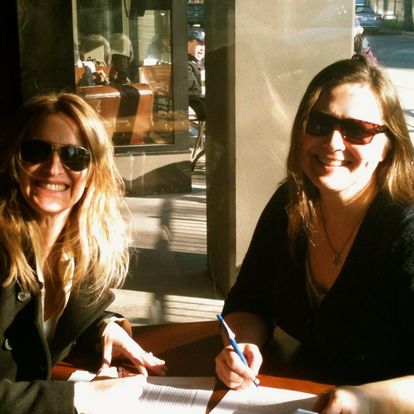
Heather Hughes and Kate Wharton have been writing together for over 12 years and worked with Disney, Hallmark, and Lifetime, as well as a plethora of indie filmmakers.

They are both graduates of the TheFilmSchool in Seattle and studied with the late, great Blake Snyder.

They are represented by The Nethercott Agency in Los Angeles.

What was the last thing you read or watched you thought was incredibly well-
written?

Heather: I thought The Queen’s Gambit was extremely well-written. The characters were very real and they avoided all tropes. I really enjoyed the mother and that character defied all my expectations. We also just rewatched Breaking Bad, which is about as far away from Hallmark movies as you can get, but genius writing.

Follow-up: a Christmas movie, TV or feature, you think is well-written.

Heather: We detail the seven sub-genres of Hallmark movies in our book and we’re huge fans of the “fake boyfriend” sub-genre, which we call “The Christmas Fake Out” or “Rent-a-Boyfriend” and thought The Mistletoe Promise (2016) was quite well done.

We also like Mary Christmas, which has one of the most satisfying and unexpected endings of any Hallmark movie ever. It’s not The Usual Suspects, but for these movies it was a shocker!

Kate: Hallmark’s The Angel Tree is very nicely done. The plot setup involves good Hallmark-appropriate conflict and there are a couple of nice plot twists. I think it’s the best of 2020’s 40 new Hallmark movies.

How did you get your starts in the industry, and how did you get into writing Christmas TV movies?  

A producer requested our screenplay, which had done well in a contest.  He routinely asks the directors of the contest to send him the winning scripts.  When we started writing together, we were advised that some screenwriting contests were a way to get noticed. That proved to be true for us. We consider Austin, the Nicholl Fellowship, PAGE, Big Break and Kairos to be some of the best contests.

You refer to these films as Cozy Christmas Romances, or CCRs. Is romance a necessary component of the story template? 

Romance is a requirement for this genre. When we first started writing these movies we assumed that any wholesome content would appeal to these networks. We spent a lot of time pitching heartwarming stories that routinely got turned down. It wasn’t until we’d been at it awhile that we realized that these scripts had to be about—to steal from the late great Blake Snyder’s Save the Cat—two people who are better together than apart AND they needed to celebrate Christmas not just take place at Christmas. Or, as one producer told us, “It needs to be about Christmas, not just set at Christmas.”

There is an abundance of CCRs on several channels and streaming services, with new ones coming out each year. To what do you attribute the popularity of the CCR? 

There are several reasons they are so popular. These movies are predictable, safe, and uncontroversial. It’s a great escape! We like to call them the mac-and-cheese of movies. They’re familiar, warm and comforting. You won’t have nightmares after watching them and you can watch them with your 92-year-old grandma and your six-year-old niece. 

When we were researching the book, we actually found that a lot of military vets enjoy watching them because they can relax knowing that they won’t encounter any disturbing content.

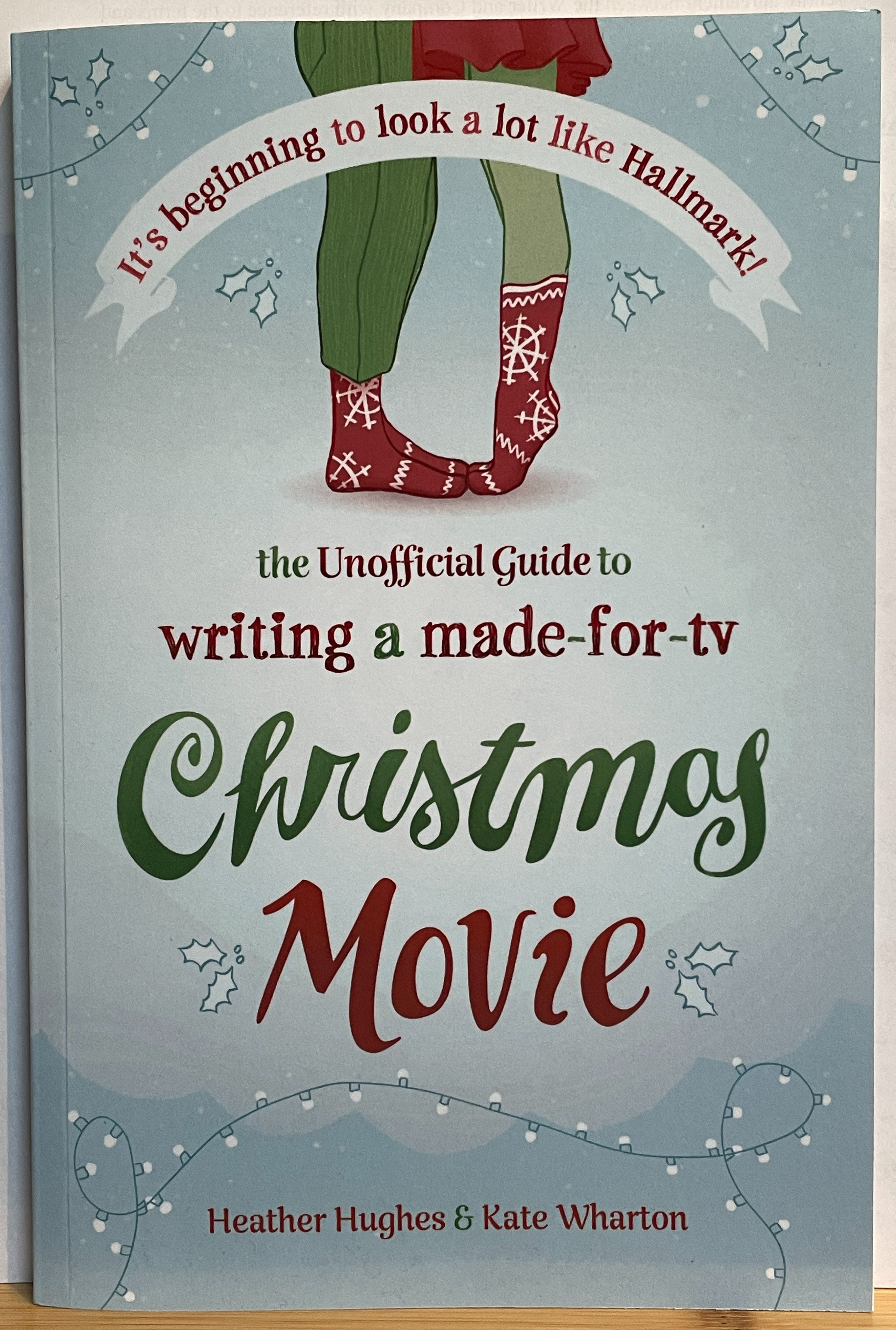
What was your inspiration behind your book IT’S BEGINNING TO LOOK A LOT LIKE HALLMARK! WRITING A MADE-FOR-TV CHRISTMAS MOVIE?

We learned these guidelines in dribs and drabs while we were working with and pitching to companies that make films for Hallmark. It would have been helpful to us if someone had written them down. For instance: we wrote a whole spec script featuring a couple in their 50s thinking it would be perfect for them. After we submitted it, we
learned the protagonist for that project needed to be 28 – yes, they actually said 28. We wish the production company had told us that at the start!

These specific guidelines change from year to year, but it’s helpful to know the basic framework for these movies.

How much research went into putting the book together? How many Christmas TV movies did you end up watching?

If you ask our husbands they would say thousands, but it was really more like hundreds. We also did extensive research with a ton of screenwriters, agents and producers. Some were eager to share, but wanted anonymity, especially when talking about money. After doing more and more interviews we began to see specific rules emerging. There are always exceptions to these rules, and we aren’t out to stifle creativity. But when we compiled our findings, we began to see them as a roadmap for writers who would like to write in this genre.

In the book, you list the 7 main types of CCRs. Obviously, that’s not all they’re limited to, but a majority tend to fall into one of those categories. If a writer comes up with something totally different from any of these but could still be considered a CCR, does that hurt their chances of getting it noticed?

We came up with the seven after watching many movies and reading all of the loglines. We’re sure there are more subgenres or ways to put these movies into buckets. We’d love to hear from your readers who identify others!

If a writer comes up with a new and original subgenre it could be great! But the companies seem to be buying similar content. If the idea strays too far from the conventions of the world (a Christmas town full of zombies, for example), it might hurt your chances of selling to Hallmark. Other networks might love it, though! 

Hallmark has honed its brand to the point where they know the 85 million viewers who tune in during November and December and what those viewers expect.

A few chapters involve the CCR beat sheet, along with filling in the blanks about the story. Some might say that there’s a certain predictability to these stories, so what advice would you give to writers striving to come up with something original?

We’ve noticed that many writers struggle with plot. They start writing with a lot of momentum, and then get stuck around page 50 because they don’t know what’s going to happen. The beat sheet is a fill-in-the-blank exercise to teach the writer a structure that is common to all these movies. If you’re great at plot without a beat sheet, then you probably won’t need this roadmap. 

These movies are intentionally predictable, but within that framework there is a lot of room for originality. If you want to write CCR movies, your original ideas will probably center on an unusual hero, and a unique romantic combination. For example: you could find a new reason the female character needs to leave the big city, an unusual job for the male character, or a unique Christmas activity to include in your montage.

You also go into “what to do after the script’s done”, i.e. queries, meetings, etc., and reference several non-professional writers who sold their scripts. While not every script is guaranteed to sell, is this something you would recommend for aspiring writers?

When you write a script, the goal is to get someone to buy it and make it into a movie—unless you want to film it yourself, which is a great option for aspiring filmmakers. After writing your script, the second hardest thing to do is to get people to read it. Our process of research and queries is a good system for getting people to read your script, regardless of your genre.

We think this is a good place for new writers who like these movies to break in simply because of the sheer number of CCRs made each year. In 2020, Hallmark made 40 new movies, Lifetime made 30 and UPtv made 5. There is never a guarantee that a script will be optioned, but there are many companies looking for content.

The two of you are about more than just writing Christmas TV movies. How can people find out more, as well as order the book?

We love teaching and writing together. Readers can contact us through our website writingtherom.com or on our Facebook page We Heart Rom Coms.  You can buy our book on Amazon, and we’d love to hear any thoughts your readers might have about it. Feel free to reach out!

Readers of this blog are more than familiar with my love/appreciation of pie. What’s your favorite kind?

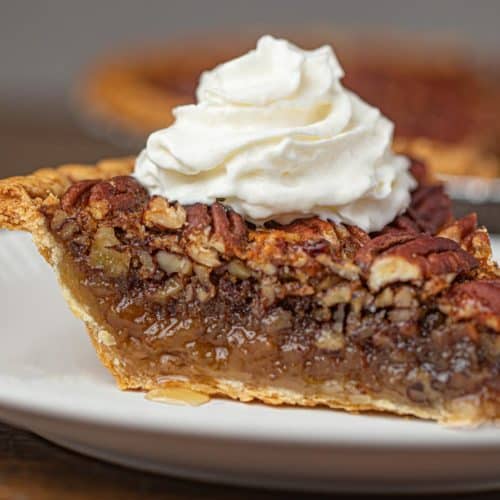
We both adore pecan pie with a ton of lightly sweetened whipped cream! No wonder we’re such great writing partners!

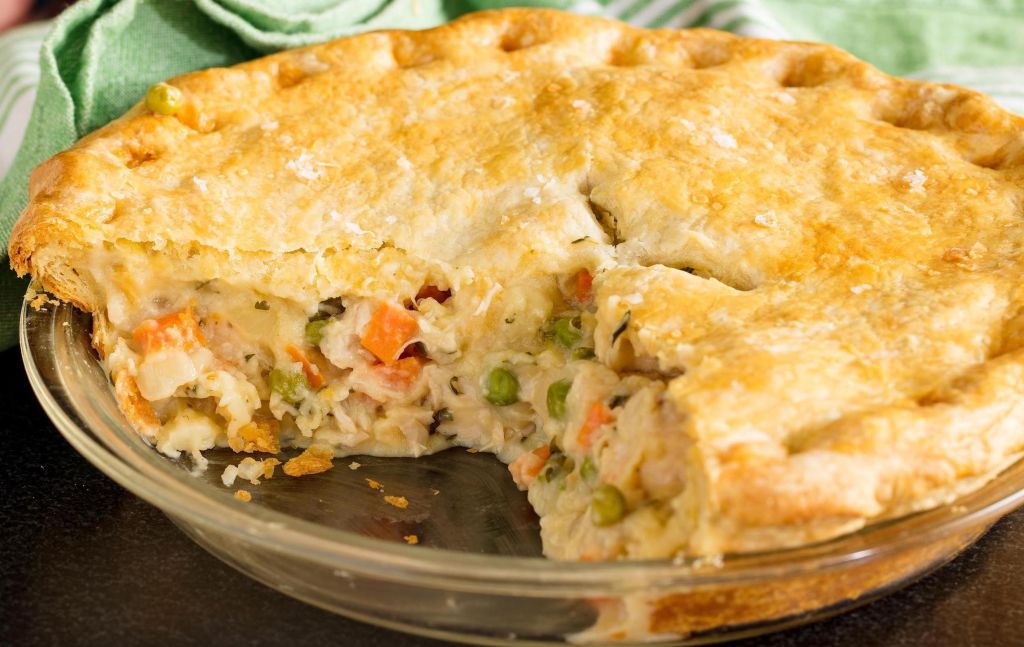
If your pie preferences run a bit more savory, we also recommend Costco chicken pot pies. They’re amazing—flaky crust, delicious chunks of chicken, and a light creamy sauce. Find them in the back, by the rotisserie chickens—It’s a cost effective, delicious meal.