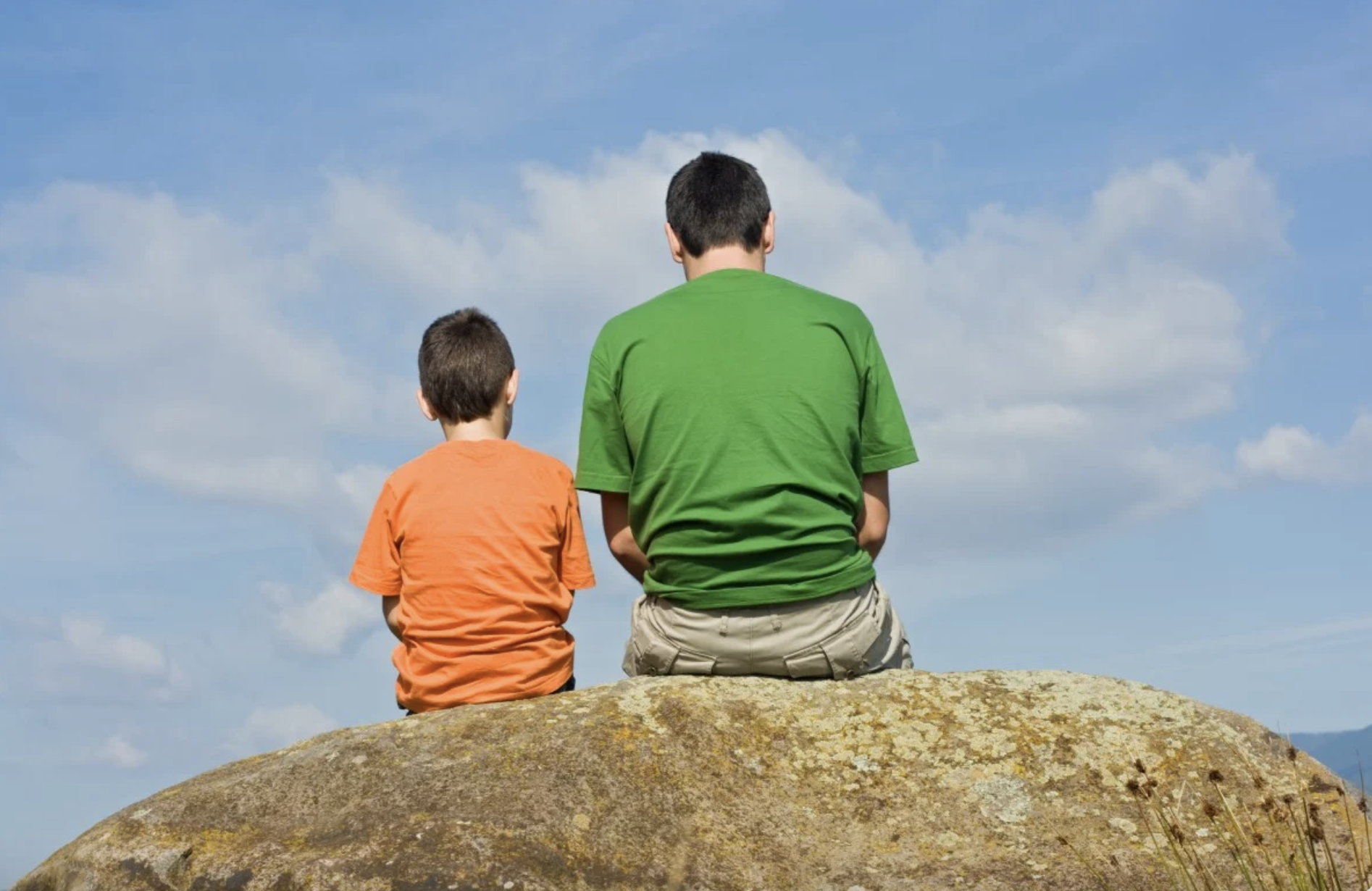
There will be questions

I’ve recently been involved with a few script swaps – some motivated by me asking for notes on a new draft, some instigated by new connections.

I always enjoy giving notes because it allows me to see the talent and creativity on display from other writers, and also enables me to develop my analytical skills which I can then hopefully apply to my own stuff.

Like I ask my readers, I try to identify what works for me and what doesn’t. Regarding the latter, it’s never “I don’t like this” or “this is wrong”; more of a “I’m not sure what you’re trying to say here” or “I’m a little confused about this. Can you clarify it?”

The biggest contribution I can make is to ask the writer questions. Lots of questions. They know their story much better than I do, especially since they’ve been involved with it since day one and this is the first time I’ve ever seen it. That means there’s a good chance something they may think is obvious isn’t to me, so I need to ask about it.

I’ll also make suggestions of how something could be done – especially if it accomplishes the same thing they already have on the page, just in a different manner. “What if your protagonist did THIS instead?” or “What if THIS happened?”

Taking it one step further, I’ll never tell a writer “This is how I would do it” because it’s not my script. It’s their script and needs to be in their voice. If my questions and/or suggestions help them in any way, then mission accomplished. What writer hasn’t gotten a note that makes them think “I never thought of it that way before”?

Like with contest judging, notes are all subjective. You might get notes you think are absolutely 100 percent spot-on, and some where you think the reader barely made an effort. And even when a note seems totally wrong to you, it’s still worth asking “Why did the reader say this?” (AKA The Note Behind The Note). Is there something in what they said you could still use?

Remember: the reader is there to help you make your script as good as it can be.

Also important: no matter what a reader says about my script, I always make sure to thank them for taking the time to do it. Reading a script and giving notes on it is a real commitment, and they should know how much you appreciate that (along with offering to return the favor, if you haven’t done so already.)

Reading scripts is already important to becoming a better writer. Reading a script and asking the writer about it helps both of you become better.

Did it before. Can do it again

The biggest note I’ve received on the animated fantasy-comedy is that my protagonist needs to be more involved; be the thing that drives things forward, and how what she does affects those around her.

The challenging part is figuring out how to do that while keeping a lot of important story details.

Challenging, but not impossible.

Just as I imagine this task becoming more insurmountable the more I think about it, I’m reminded that I did a major overhaul on my western that involved the same thing. The protagonist needed to be more proactive in driving the story forward.

The end result had A LOT of changes that required a new approach. It took some time, but I was able to accomplish that, and the script ended up being better for it.

No reason to think I can’t repeat it this time around.

Thus the revising is underway. Slow, but steady.

I’ll get there.

Past You would be really impressed

Ask any screenwriter how their most recent draft compares to, say, their very first one, by which I mean THEIR ABSOLUTE VERY FIRST ONE, it’s probably a sure thing they’ll say something along the lines of “It was awful!” or “An absolute mess!”, or maybe even “I don’t even want to think about it it was so bad.”

Taking a look at some of my first attempts, I can say the exact same thing. Scenes that drag on. Flat action lines, or ones that were way overwritten. Big chunks of text on the page. On-the-nose dialogue that’s pure exposition. Spoonfeeding story details to the reader to make sure they understand what’s going on.

Nothing to be ashamed of. There are vomit drafts, and “looks like my printer vomited words all over the pages” drafts. You gotta start somewhere, and the important part is YOU GOT IT WRITTEN.

Nowhere to go but up, right?

So you start working on getting better. You get feedback. You start to understand why things aren’t working and what you can do to fix them. You learn, and all this new knowledge helps shape the next draft to better than the one that came before it.

You put in the time and the effort and it becomes more noticeable how your writing is getting better. All of those newbie mistakes are a thing of the past. Your script seems more polished. There’s still room to improve, but it doesn’t seem as daunting now, does it?

Multiple drafts and seemingly neverending rewrites are par for the course. It happens to even the most experienced screenwriters. The hardest part is getting that first draft written. Accomplish that and you’re already ahead of the game.

There will most likely be a ridiculous amount of rewriting in your future, and the end result may be totally different from what you started with, but think about how far you’ve come. You probably had no idea when you were just starting out that you’d be so willing to put yourself through all of this, over and over again.

And that might even be for just one script.

Sure, you might be a little embarrassed when you look at your earliest scripts, but look at your most recent draft or the pages you wrote last weekend. As if they’d been written by two entirely different writers. Because that’s exactly what they are.

Past You was just starting out and made a lot of mistakes. Present You knows what’s needed and does it.

And just imagine the skills that Future You is going to have.
Fingers + brain + keyboard

Another shorty this week. I’ve been busy on several fronts, including the latest round of work on the animated fantasy-comedy.

Several sets of extremely helpful notes have been received. I’m quite happy with how it’s coming along. Definitely feels like a stronger script.

When it’s ready, off it goes to another batch of readers, which will most likely result in another draft after that.

I’d initially decided to skip contests this year, but am still on the fence about the Nicholl. One deciding factor is their new limit of total number of entries at 5500 (currently standing at a smidge above 650 as of this writing).

If in a few weeks I’m happy with the end result and they haven’t hit the 5500 mark, I’ll consider it. Early bird deadline is March 1st, with a still-reasonable entry fee of $50 USD, then regular deadline on April 1st for $70, and finally late deadline on May 1st for $120.

And if in the end I still decide to skip it, it’ll definitely be ready for next year.

I’d rather take the time to fine-tune it as much as possible than send in a draft considered “good enough”.

Hope you have a productive writing weekend, and for my fellow Californians – stay dry.

That worked out nicely

Bit of a shorty today.

It took several days of almost-constant work, including a good deal of editing, tweaking, and overall wordsmithing, including a marathon 6-hour stretch at the very end, but the rewrite of the animated fantasy-comedy is complete.

Total page count now stands at 106, which is still good.

Got a squad of beta readers currently working their way through it, and the initial responses have been very, very positive – which is always encouraging – as well as a handful of suggestions for minor fixes scattered throughout.

I’m quite happy with the end result.

Up next – concept art, character designs, a pitch deck, and researching potential targets for querying.

Writing is just one piece of the puzzle.

Allowing myself a brief respite before jumping back into the rewrite of the sci-fi collaboration, which also seems reinvigorated in terms of ideas and execution. The jotting-down of new material is well underway.

Overall, a mighty fine writing week. Hope it was for you too.

-really, really enjoying BLUE EYE SAMURAI on Netflix. Incredible stuff, and definitely NOT family-friendly.