
Ask a Penchant-for-Verbs* Script Consultant!

*Actually, he's skilled in all aspects of grammar, but his company is named for three very important verbs
*While Brad is skilled in all aspects of grammar, his company is named for three vital screenwriting-oriented verbs

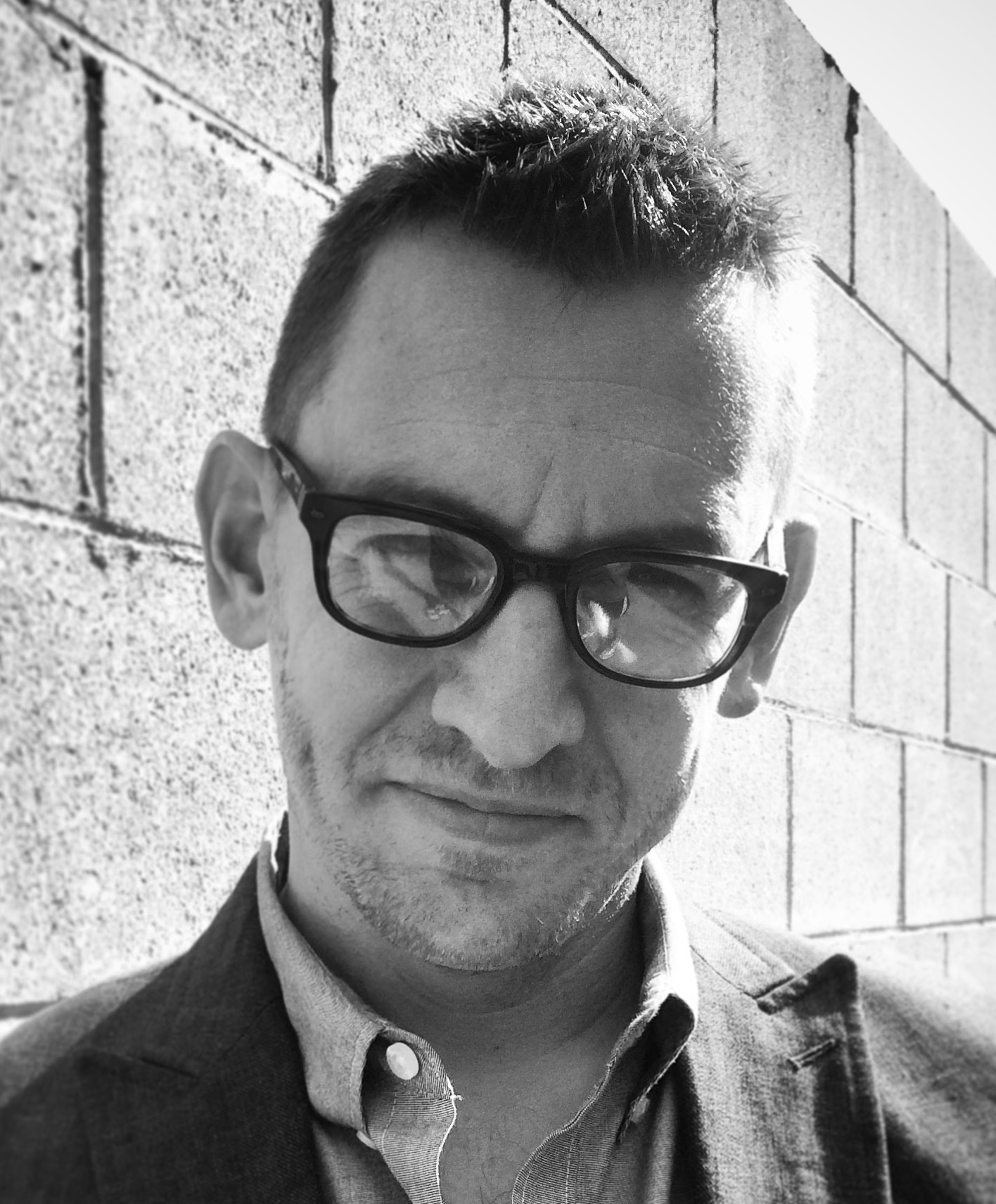
The latest in a series of interviews with script readers and consultants who would be worth your while to work with if you want to get your script in shape. Today’s spotlight is on writer-reader-consultant Brad Johnson of ReadWriteWatch.com.

Brad is an experienced screenwriter, producer and script consultant who, in addition to operating his own script consultancy, has also read for the Nashville Film Festival and been a judge for the NYC Midnight Screenwriting Challenge. His scripts have reached the semi-finals in Final Draft’s Big Break Screenwriting Contest, and a second place finish for the Walt Disney Screenwriting Fellowship. Additionally, Brad has worked as a producer on the short film Tesla versus Cthulhu, and a production assistant on My Boring Zombie Apocalypse. Brad is also a regular contributor to Script Magazine where his Specs and the City column discusses methods for beginners and pros alike to improve their writing. You can learn more about Brad, his script services, and the 52 Script Challenge on his website, ReadWatchWrite.com. He can also be found on Facebook and on Twitter @RWWFilm.

1. What’s the last thing you read/watched that you thought was incredibly well-written?

Nightcrawler was a fantastic character study, and I recently rewatched the FX mini-series Fargo. That writing room did such an amazing job of telling a compelling story with interesting characters, and capturing a specific tone and voice while doing so; perfectly capturing the feel of the Coen Brothers movie. As for reading, I just finished Body Heat (again) and continue to be blown away by it. Lawrence Kasdan makes you feel the humidity in his words in that script. The heat becomes its own character. It’s palpable. Go read it right now if you haven’t had the chance yet.

2. How’d you get your start reading scripts?

On a personal level, I started reading scripts as part of a challenge I set for myself – to read one produced script a week for an entire year. It worked so well that I’ve continued the tradition (you can find the 2015 list of scripts I’ll be reading, along with downloadable PDFs for each screenplay on my website).

For my clients, I decided to start consulting after several people read the column I write for Script Magazine and contacted me, asking if I’d be willing to look over their screenplays. As I started doing more of that, I discovered I have a genuine love for helping other writers learn to tell their stories in the best way possible. There’s nothing more satisfying than helping a writer break their story, or realize how they can tell it more effectively. At its best, consulting is a truly rewarding experience for both sides.

3. Is recognizing good writing something you think can be taught or learned?

It’s definitely a learned skill. Sure, you can be taught the basic structure and formatting of screenwriting, but what makes a good script is something you learn by reading lots and lots of screenplays. The more you read, the better you’ll get at realizing what works – and what doesn’t.

4. What are the components of a good script?

Showing rather than telling – it’s a cliché for a reason. Remember that you aren’t writing a story, you’re writing a story that is going to be watched on a screen, so be visual. Don’t tell us that someone is disappointed by a piece of news – tell us their shoulders slump and the smile fades from the lips; paint the picture of what we will be seeing should your script be made into a film.

5. What are some of the most common mistakes you see?

Not knowing the story you want to tell – or a lack of narrative focus. I see scripts all the time where so much time is spent jumping back and forth between two different stories (which, to be fair, could each be worthy of their own film), that neither is ever developed enough to be truly compelling. Whose story you’re telling, and why it needs to be told, are the two things you should never start writing without knowing. If you keep that firmly in mind, it becomes easier during rewriting to identify and cut the things that aren’t serving that story.

6. What story tropes are you just tired of seeing?

Pretty much anything from the last 15 years worth of romantic comedies. There are outliers (Love, Actually, Crazy, Stupid, Love, and Bridget Jones’s Diary leap to mind), but the Hollywood romcom formula has gotten to point of being so generic and overused that it’s actually insulting to audiences.

7. What are the 3 most important rules every writer should know?

-Read, Watch, and Write. It’s my mantra and it’s invaluable advice. If you want to be a professional screenwriter you have to get better than good – you have to get great – and the way you’re going to do that is by Reading scripts, Watching movies, and Writing pages.

-Live your life. You need to be out in the world doing things, meeting people, taking in experiences to fuel your next story.

-Less is more. Your goal with your script should be to tell as little of your story as possible, while still keeping it engaging and narratively cohesive. After you write your first draft, go back and start cutting the fat away until what’s left is the leanest most effective and impactful version of your story.

8. Have you ever read a script that was an absolute, without-a-doubt “recommend”? If so, could you give the logline?

I haven’t, but to be fair, that’s like asking if I’ve ever found a four leaf clover. They’re real and they’re out there, I just haven’t seen one in person yet.

9. How do you feel about screenwriting contests? Worth it or not?

Like anything else related to screenwriting, it’s not exactly a question that has a black and white answer. A lot of it depends on what makes it worthwhile for you. If you’re looking to feel better about your writing and have bragging rights, you can submit to basically any contest out there. But if you’re looking for contests that can actually impact your life and help your career, it’s few and far between. The Nicholl, Austin Film Festival, the Sundance Screenwriting Lab (though technically not a contest per se), Big Break, and Scriptapalooza are all solid contests. Recently, the Tracking Board has also launched contests for both feature scripts and televisions scripts, and the word on that contest is great as well.

10. How can people get in touch with you to find out more about the services you provide?

I don’t do consulting anymore, but am happy to talk about screenwriting on Twitter – @RWWFilm.

11. Readers of this blog are more than familiar with my love/appreciation of pie. What’s your favorite kind?

That’s a surprisingly difficult question to answer. To eat, I don’t think it gets better than a slide of hot homemade apple pie. But I enjoy baking and, not to brag, but make a mean key lime pie. Everything from scratch. Hand squeezed lime juice, graham cracker crust, fresh-made whipped cream. The works.

Ask a Master of the Ultimate Editing Tool Script Consultant!

Erin Whittemore

The latest in a series of interviews with script readers and consultants who would be worth your while to work with if you want to get your script in shape. Today’s spotlight is on agency reader-turned-consultant Erin Whittemore of Red Pen Script Consulting.

“I have a B.A. in film and screenwriting from the University of Michigan, and am also the proud recipient of the Hopwood Award in screenwriting that boasts such alumni as Arthur Miller and Lawrence Kasdan. After graduating, I relocated to Los Angeles, where I worked for United Talent Agency as a freelance script reader. Two of my own scripts have been produced as short films and premiered at film festivals.”

1. What was the last thing that you read/watched that you thought was incredibly well‐written?

I loved Nightcrawler and The Lego Movie as scripts. Nightcrawler’s story was really lean and mean and practically seamless, and The Lego Movie was not only a great narrative in itself, but was also incredibly cheeky and self‐aware at the same time. In terms of TV, Marvel’s Agent Carter put other network shows to shame. In my humble opinion, of course.

2. How did you get started reading scripts?

After spending two arduous years as a pre‐med undergraduate, I finally became so miserable that I switched to film and never looked back. I learned to do coverage through screenwriting courses, and was lucky enough that UTA was hiring part-timers after I graduated. Full disclosure: I did know somebody in the story department, but even then I almost didn’t get the job due to the amount of competition for the position. It all comes down to your “test coverage.” (When an agency gives you a sample script to cover.) If you’re aiming for reading professionally, make sure you have your own sample coverage ready to go as well, preferably showcasing two different genres.

Eventually, though, I needed a better‐paying and more stable job, but I wanted to continue reading scripts as well. Having been a part of “the system” I knew it could take up to three months for writers to get any feedback on their submissions, which is kind of agonizing, especially if the writer ends up getting rejected. I figured, why not give writers a chance to see what a professional script reader would say about their material before sending it out to agencies and production companies? Thus, Red Pen was born!

3. Is recognizing good writing something you think can be taught or learned?

I believe if you’re willing to be taught, you can learn. You have to watch a lot of movies and read a lot of scripts, and you have to learn to think critically about what you ingest. It’s not enough to say “I like this” or “I don’t like this,” you have to think about why. If it doesn’t come naturally to you, you have to ask questions like “why does this work” or “why doesn’t this work?” and “how could I make it work?” Some people naturally think this way, others have to train themselves to make it a habit.

4. What are the components of a good script?

A good script generally has an intriguing premise, strong characters, and an original and compelling execution. As a script reader, I look at character, story, theme, dialogue, visuals, and tone to determine what areas need work. In general, a great script knows exactly what it is and what it’s trying to achieve

5. What are some of the most common mistakes you see?

-Unlikable, uninteresting characters that do uninteresting things. This doesn’t mean your protagonist can’t be an unlikable character, but they must be at least be interesting and do interesting things. (See There Will Be Blood, Nightcrawler.)

-Exposition in dialogue. The golden rule of screenwriting is “SHOW, DON’T TELL.” A little exposition is usually necessary, but too often I see writers trying to cram entire backstories or plot elaborations into a talking scene. Firstly, we only need to know what’s relevant at the time, part of the fun of watching a story unfold is piecing things together. Secondly, remember, it’s a movie. It’s much more dramatic and emotionally immediate to watch a sequence about something important than to hear a character talk about it.

-Inconsistent tone. Is your script Silence of the Lambs or Fargo? Guardians of the Galaxy or Interstellar? 12 Years A Slave or Django Unchained? When a script yo‐yo’s back and forth between tones, or spends the first half of the movie a comedy only to turn serious drama it can be very confusing for the audience and takes us out of the story. Know what tone you want your script to have and stick with it.

-No structure. A story is more than just a series of events, it’s a series of events that influence each other. If you’ve ever had a friend who is terrible at telling stories, they most likely sound something like this: “So Jack and Jill fall down this hill. No, wait, sorry, first they go up this hill. Then Jack falls down. And then Jill falls down. And then they get married.” As opposed to someone who might say, “Jack and Jill grew up together as next door neighbors and they hated each other. They were mean and played pranks on one another until Jill left for school. Jill married an orthodontist, but got divorced soon afterward because life became too predictable for her. Jack had a string of girlfriends but nothing ever seemed to stick, especially since none of them seemed to appreciate his sense of humor. Having both moved back to their hometown at a low ebb in life, one day Jack spotted Jill on top of a hill while walking his dog in the park. Jack smacked Jill in the back of the head with a snowball. Jill yelped, slipped, and tumbled headfirst down the hill. Alarmed, Jack rushed to her aid only to slip and fall, himself. The two ended up in adjacent hospital beds and wouldn’t speak to each other, until they both started laughing. Soon after, they fell in love, and have been married for 35 years.” In other words, remember that each beat of your story should make sense and be relevant in the larger context.

-It’s a movie not a book. Give us just enough flavor text so we get the atmosphere and the characters, but don’t go overboard. I should be able to read your script in the same amount of time it would take to watch the movie, if not less. Don’t bog the reader down in unnecessary description. That doesn’t mean what you write can’t be poetic and evocative, but just remember to keep it lean and mean. If you’re lucky, the type of person reading your material will give it their full attention, but this is not often the case.

6. What story tropes are you just tired of seeing?

Okay, first a disclaimer: most stories are tropes in one way or another. There’s an adage in Hollywood that goes “give me the same thing, only different!” What that basically boils down to is, “give me something I can latch onto, but surprise me!” It’s okay if you have an “everyman protagonist” (The Lego Movie) or if your story is about a rag‐tag bunch of people in space (Guardians of the Galaxy, or alternatively, Star Wars) – what really matters is the execution, or what you do with those characters and set‐ups. That’s where the originality comes in. That being said, here are a few that leap to mind:

-Women with no agency! Or alternatively, women who are portrayed with agency only to have it stripped from them at important points in the story by male counterparts.

– Actually, on that note: stereotyping certain genders, races, or sexual orientations into negative tropes like “the magical ethnic minority” or “token black person” or “exceptionally shallow and flamboyant gay best friend” at all. For a comprehensive list, Google “gender/racial/ethic/gay/transgender/bisexual tropes in media.”

-“You were really working for the bad guys all along.”

-Gritty for the sake of gritty, not because it actually works or makes sense.

-Teen love triangles.

-The ex (Marine, Army, Navy, etc.) whose family or significant other is kidnapped or killed, and must rescue them/seek vengeance. (Sorry, but I’ve read this script a hundred times)

-Scripts that are mostly music‐video segments strung together without much story.

-Manic Pixie Dream Girls

-Inexplicably bloodthirsty military males

-The scientist who knows everything. Ever.

-The brooding, emotionally unavailable romantic interest with no reason to be brooding or emotionally unavailable.

-The hacker who can hack into anything. Ever. Also, it’s probably a guy who lives in his parents’ basement.

-The magical cure‐all that can bring everybody back to life if they die, so there are no consequences or stakes!

-The love interest because there needs to be a love interest.

-The unnecessary cliffhanger, because it’s an unnecessary trilogy!

7. What are the 3 most important rules every writer should know? 

-Write.

-Rewrite. One of the most common things I hear is “I hate rewriting my material.” Nobody likes taking a chainsaw to their baby, but more often than not it’s a vital part of the creative process. Let’s face it, we’d all like to believe we’re capable of writing a perfect first draft, but in reality turning out something great takes a lot of work and usually a good number of drafts. As a script reader, I see that squeamishness about rewriting get in the way of some good scripts, and that’s a real shame when they could be great scripts. Just “polishing” your material is sort of like watering around a sick plant and expecting it to improve.

-For screenwriters: make every scene worth watching. Almost every scene should a) have some sort of conflict, be it internal or external, b) move the story forward, and c) tell us more about the characters involved.

8. Have you ever read a script that was an absolute, without‐a‐doubt, “recommend?” If so, could you give the logline?

I have actually read several, but most of them were under an NDA, so unfortunately I can’t share any loglines. Sorry.

9. How do you feel about screenwriting contests? Worth it or not?

The Nicholl is definitely worth submitting to, as there is some fairly significant exposure in the industry the farther you make it into the competition. I would also recommend submitting a polished script to the Black List.

10. How can people get in touch with you to find out more about the services you provide?

You can get more information at www.redpenscriptconsulting.com or send me an email at redpenscriptconsulting@gmail.com. I also have LinkedIn, Facebook, and Twitter accounts. If you’re just looking to get your script proofed, though, I would check out my friend’s fantastic service at www.scriptproofed.com

11. Readers of this blog are more than familiar with my love/appreciation of pie. What’s your favorite kind?

Strawberry‐rhubarb is always an instant win with me, but sometimes I like a good old-fashioned apple topped with vanilla ice cream. Am I allowed to have two favorites?

Ask an Extraordinarily Insightful Script Consultant!

Andrew Hilton

The latest in a series of interviews with script readers and consultants who would be worth your while to work with if you want to get your script in shape. Today’s spotlight is on Andrew Hilton, aka the Screenplay Mechanic.

Andrew Hilton grew up in the U.K. and studied film in England and New York, before working in motion picture development at almost every major studio. Having read more than 13,000 scripts, he is one of the most highly-regarded independent screenplay analysts in the film industry.

Andrew’s first produced credit as a screenwriter was the psychological thriller FATAL TRUST.  He also rewrote and Co-Produced the indie thriller BRAKE, and served as a Co-Executive Producer on the feature documentary WHY WE RIDE.  Andrew also has several feature projects in active development, including his own big-budget action picture BULLET RUN and the Dickens-inspired action thriller THE GUNS OF CHRISTMAS PAST.

What’s the last thing you read/watched that you thought was incredibly well-written?

While I’m more of a feature guy, I love that NEWSROOM is back on TV. At least in terms of dialogue, there are very few screenwriters on Aaron Sorkin’s level. He has the ability to craft dialogue exchanges that are as mesmerizing as any action sequence. Some criticize the heightened reality of his rapid-fire, snappy dialogue, arguing that it’s contrived and inauthentic. Personally, I’m going to savor every episode of this final season.

How’d you get your start reading scripts?

I attended film school in the UK and New York, then finished my final year of university in Los Angeles so I could start interning at the studios. My first gig was working for a producer at Universal and I spent six months reading scripts for him. I then moved to Warner Bros. and worked in the story department of one of my favorite producers, Joel Silver (DIE HARD, LETHAL WEAPON, etc.). After six months there, I landed my first paying job at Paramount, as a Story Editor for Mario Kassar (FIRST BLOOD, TERMINATOR, etc.). It was there I began teaching others to write coverage and really honed my story skills.

Is recognizing good writing something you think can be taught or learned?

The ability to recognize good writing can be learned, but recognizing a good movie is a skill far fewer people possess because it’s partly instinctual. Consequently, there are many agents, producers and actors in the industry who struggle to recognize a good script. That’s one of multiple reasons why so many sub-par projects get off the ground. Often, producers and studio execs are throwing stories against the wall (or into theaters) to see what sticks. On the flipside, there are people in the industry – from readers to top producers – who consistently find that diamond in the rough. 

What are the components of a good script?

It really all comes down to two things: Can this story entertain an audience for a couple of hours? Is that audience going to be big enough to turn a profit? It’s that Goldilocks balance of art and business, and reconciling that reality is one of the first goals every new writer should work towards. You could argue that there are good scripts which won’t be profitable at the box office, but who is that script “good” for? It might make a solid writing sample, but a genuinely good script is one that’s well-written and will make some serious coin in the marketplace once it’s produced.

So what specific components in a script will ensure the audience is entertained? An interesting protagonist is essential. We don’t necessarily have to like the hero, but it’s crucial we find them interesting. Ideally, the screenplay will also feature compelling conflict, engrossing dialogue, and a brisk pace which holds our attention. The end game is to ensure the audience leaves the cinema feeling completely satisfied. Nobody likes leaving a restaurant hungry, and nobody enjoys leaving the multiplex feeling as if they just wasted $15 on a crappy film.

What are some of the most common mistakes you see?

Overwriting the narrative to the point where clarity suffers is very common. Screenwriting is somewhat unique in that one of the best traits a scribe can have is efficiency of language. Don’t use twenty words to describe something when ten will do. Don’t try and impress anyone with your vocabulary or your grasp of metaphors and similes. Just write the most compelling and vivid movie using the fewest words.

What story tropes are you just tired of seeing?

Anything post-apocalyptic is becoming tiresome. MAD MAX was released in 1979 and the spec marketplace is still saturated with clones.

Ditto for “man on the run” stories. Whether the hero is in possession of a flash-drive, witnessed a crime, or underwent some kind of experiment, these screenplays always follow the same structure and climax. There’s often a foot chase in a subway and the protagonist almost always ends up sleeping with the love interest in a hotel. I read one or two of these most weeks.

I’m happy to read big expensive sci-fi epics, but 99.99% of the time the author needs to realize they’re writing it for themselves because it’s not going anywhere. If nobody in this town knows you and the story isn’t based on an existing IP, where’s the $200m budget going to come from?

Another common formula is the comedy about the dishonest hero. Often, these are romantic comedies which feature the protagonist misleading or lying to the love interest. The charade has to be maintained throughout Act II, at which point the love interest learns the truth and shuns the hero, leading to a climatic reconciliation (often a race to an airport).

All that said, if you have a unique conceptual twist, or craft one of these stories in a genuinely fresh and commercial way, there are still plenty of potential buyers out there. Clichés often become clichés because they work repeatedly. It’s also worth pointing out that this is where an experienced story analyst can be most useful. Some people rail against spending money on coverage, but I’ve read well over 7000 screenplays so I might be able to tell you how often I’ve seen a specific idea before and can give you suggestions on how to make your work differ from past fare.

What are the 3 most important rules every writer should know?

Not “rules” per se, but…

Know your audience.

Don’t bore anyone.

Always remember a complete stranger will eventually have to write a huge check to make your story come to life. They’ll want that money back.

Have you ever read a script that was an absolute, without-a-doubt “recommend”? If so, could you give the logline?

I used to read approximately 70% of major theatrical releases when they were still at the script stage, either for production companies or foreign distributors. Hence, I’ve done coverage on everything from THE SIXTH SENSE to THE LORD OF THE RINGS. Many of my clients have written great projects too, most recently Jesse Chatham with LAND and Bao Tran with THE PAPER TIGERS.

How do you feel about screenwriting contests? Worth it or not?

Some are worthwhile, e.g. the Nicholl, but most are akin to entering the lottery. If you’ve written a genuinely brilliant piece of work, it may still go unnoticed because most contest judges are inexperienced and all of them are underpaid. However, there are enough lightning strikes to keep the contest industry alive, and if a writer can afford it I see no harm in rolling the dice. More often than not, it’s akin to a farm program where a small-time manager or agent may discover you. If you’re considering the contest world, target the established ones which have a good reputation.

How can people get in touch with you to find out more about the services you provide?

My website www.screenplaymechanic.com, my Mechanic Facebook page, or simply email me at screenplaymechanic@gmail.com.

Readers of this blog are more than familiar with my love/appreciation of pie. What’s your favorite kind?

I’m going savory on this one. Steak and ale (with a pint, of course).