Being realistic in a work of fiction

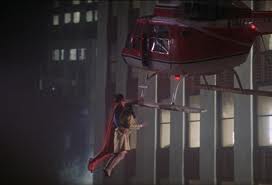
You're upset about the scientific inaccuracies in a comic book movie about an alien who can fly?
Some people were actually upset about the scientific inaccuracies in a comic book movie about an alien who can fly

“The monsters attack.”

This simple line in my action spec outline was the catalyst for a major thought process that continues to grow by leaps and bounds.  Questions are being raised that demand answers.

In creating this world, not only do I have to develop the story you’ll be following, but also fill in a lot of details about the world itself – which just happens to have monsters in it, which leads to more questions.  It never occurred to me to consider subjects such as biology, geology and the laws of physics as they apply to monsters (all of which play a part in the story).

“But it’s just a story,” some might say. “Don’t worry about stuff like that.” But it’s exactly the stuff like that that makes the story better, plus it shows I’m taking this seriously – even if it does involve monsters.

I’ve always had an intense dislike for writing that takes the easy way out in explaining something, or does it in a very half-assed way.  It makes it seem like the writer didn’t care enough to do a little more work.

It’s very important to me that not only are the events of the story based in reality, but the setting is as well.  This is something I strive for in everything I write – no matter what the genre.

The more detailed you can make the world of your story, the more believable it’ll be. But be careful not to overdo it – too much detail creates confusion. Just give enough to make ’em say “Yeah, that makes sense.” or “I can totally see that happening.”

Now it’s back to my research on which metallic alloy would be the most effective for killing monsters. So far, tungsten carbide seems to be the frontrunner.


Hey kids! Fill in the blanks!

The good news is this will not count towards your final grade
The good news is this will not be on the final, but neatness does count

Since I’m always interested in what other writers are working on, here are some questions I’d really like to see your answers to.

1. MY LATEST PROJECT IS TITLED _______________

2. IT’S A  ______________ (genre)

3. HERE’S THE LOGLINE __________________________________

4. THINK OF IT AS ___________ + __________

Here’s mine:

1. NORTH POLE’S MOST WANTED

2. mystery-comedy

3. A mild-mannered elf uncovers a sinister plot to get rid of Santa, but nobody believes him, somebody’s now trying to kill him, and Christmas is one week away.

4. LA CONFIDENTIAL + RUDOLPH THE RED-NOSED REINDEER

Now you.

Quel est le bon mot, baby?

Normally I'm a G&T kind of guy, but one these sounds pretty nice right now
Normally I’m a G&T kind of guy, but one of these sounds kind of nice right now

Opting for a random assortment of topics today. Enjoy.

-Ever get to the point where you just want to finish whatever is you’re working on and get it out of the way? That’s about where I am right now with this first draft. I wouldn’t call it a slog; more like resisting the urge to make a mad dash to the end.

On a positive note, the closer I get to finishing, the more I see how much has to be fixed.

Here’s a great guest column from Lee Jessup’s blog about how a writer should approach rewriting.

-Sometimes you come up with a story idea out of nowhere that makes you wonder: Even though this is a totally new genre for me, could I make it work?

I came up with a concept for a found footage story, including what may be a workable grasp on how to handle the ‘omnipresent camera’ part. It can be a little intimidating to try something new, but you won’t know until you try and possibly even discover a strength you never knew you had.

-I connected with this fine fellow the other day on Twitter. Do so if you haven’t already, and make sure to take the screenwriting survey. One of the questions is something along the lines of “what are some of your basic screenwriting rules?”

This is what I came up with:
1. Don’t be boring.
2. The audience is more intelligent than you think.
3. Write as if ink costs $1000 an ounce.

There are lots of others, but I think those are pretty important. Feel free to contribute yours in the comments section.

-This isn’t necessarily me hopping on the Kickstarter bandwagon, but check this out if you’d like to help preserve the small moviehouse experience. Give if you can, even if you don’t live in the Bay Area. It’s a great theatre.

An air of authenticity -OR- That’s why God invented Wikipedia*

Wikipedia was actually founded by this guy - Jimmy Wales - but it's not as funny
*Yes, I know Wikipedia was actually founded by this guy – Jimmy Wales – but it’s not as funny

“Write what you know” can only get you so far.

What if you want to write something you don’t know that much about?

One word: research.

Thought you were done with that when you got out of school? No such luck, my friend.

When you write, you want to make the reader/audience feel like you know what you’re talking about, or least give the impression you do. Just making stuff up or copying something used in an older movie is the lazy approach.

This isn’t saying you need a character spouting a master’s thesis on the subject, but tossing a few facts or proper terms here and there can really go a long way towards establishing credibility.

If you’re still in the outline phase, this is prime researching time. As you’re developing your story, try to find out something you can use that would make it that much more believable.  While this practice definitely applies to anything history-based, it also works with stories set in the present.

Say you’re working on a medical drama. Those characters should be able to immediately identify a certain condition, the cause (if necessary) and what the treatment is. Spending a few minutes finding this information out will make that possible.  You think the writers of HOUSE just made stuff up? Nope. The medical problem in each episode was based on facts.

Researching could also prove to be a key part of moving your story forward. Maybe a character finds something out or reveals something that suddenly changes the direction things are going.

Writing about a profession you know nothing about? Talk to someone who actually does that for a living. How would they handle this type of situation? When someone finds out you’re writing a story and want their input, they’re usually pretty enthusiastic about helping you.

Spending some time finding stuff out can even pay off when you least expect it, or aren’t expecting it all. Even if you don’t use it this time, there’s a good chance it could come in handy somewhere down the line.

This way you can solve that particular problem faster, thereby making yourself look that much more like a writing genius, impressing all who sample your craft.

And isn’t that what it’s really all about?

Deliberately avoiding a QT comparison

Mine is nothing like this
Something to admire, but not duplicate

When I was working on that student short a few years ago, the director was concerned the way a scene was playing out was too similar to how things worked in INCEPTION, and that people would think he was ripping it off.

I assured him it wasn’t on both fronts. It may share some similar aspects, but it was totally different.

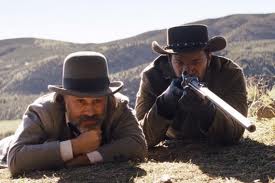
Jump ahead to now, or at least last week. I finally got around to watching DJANGO UNCHAINED. It was great and a lot of fun. I loved it, especially the writing.

(Side note: Christoph Waltz fully deserved Best Supporting Actor, and I found King Schultz to be a much more interesting character than Django.)

So as I continue work on my western spec, I can’t help but think “But this isn’t how Tarantino did it.  Would somebody hold that against me?”

I’m inclined to think “probably not”, which is actually a good thing, and may even work in my favor.

He writes in a certain way, which is totally different from mine.  Nobody’s going to read my script and say “not grindhouse enough”.

Our two stories may share some similar elements, and that’s where the comparison ends.  It’s a western, so there are going to be the unavoidable elements (horses, shootouts, etc.), but that comes with the territory.  My challenge is to put my own spin on them.

Same rules apply to UNFORGIVEN, the vastly-underrated OPEN RANGE and the forthcoming LONE RANGER (which in theory may be the closest to my story in terms of rip-roaring, dime novel-type adventure).

This script is my opportunity to work in a genre I love, tell a story I’m excited about and create its world the way I want to.  The whole time, I’m striving to be as original as I can, and present stuff that hopefully hasn’t been seen before.

There are countless ways to tell a story, and there’s no reason mine can’t be one of them.