No matter what your screenplay is about, or what genre it is, it really comes down to one thing: telling a story about the characters and what happens to them.
While some may put more emphasis on the latter part with its vast number of variables and possibilities, it’s equally important to put a lot of effort into developing the former.
You want your characters to be relatable. Let us see ourselves, or at least part of ourselves, in them. How they act and interact. What they do. Even if it’s within a completely ridiculous or unbelievable scenario.
A good example: the works of Judd Apatow. “Comedies with heart,” is often used to describe them. By injecting emotion into what might otherwise be just something silly, he adds that extra layer of humanity. Notice you never heard the phrase “wacky hijinks ensue”? Because it’s about the emotion within the comedy, not just going for the cheap laugh.
Nobody only experiences one emotion, and neither should the fictional population within your pages. If a character’s happy, sad, or angry, show us why. Don’t hold back. Put it there for us to see.
Do they act like a real person? Is this how they would act in this kind of situation? Is it a real reaction or a “movie” reaction? Getting your characters to act using their emotions makes them come across as more realistic, which makes for a better story.
“The characters are too one-dimensional,” or “He/She’s just a one-note character.” Heard those before? If your character only acts one way, or remains static and never changes, or doesn’t even react accordingly, that’s what the response will most likely be. And you don’t want that.
A savvy writer knows how to use emotion without being blatant about it. Maybe it’s a subtle action, or a turn of phrase, or the subtext within a line of dialogue.
Find the way that works best to develop and advance the character both within their own story and the story overall.
You only get one chance to make a good first impression. And that also applies to a screenplay. If your first page doesn’t make us want to keep going, why should we? Chances are the rest of it is exactly the same.
The first page is your golden opportunity to start strong straight out of the gate. Show us from the absolute get-go you know what you’re doing. A lot of the time, I’ll know by the end of the first page what kind of ride I should be expecting.
Just a few items to take into consideration.
-First and foremost, how’s the writing? No doubt you think it’s fine, but face it. You’re biased. You want a total stranger to find it fault-free, so look at it like one. Is it easy to follow and understand? Does it flow smoothly? When I read it, do I get a clear mental image of what you’re describing? Does it show, not tell?
-Is there a lot of white space? Are your sentences brief and to the point, or do they drone on and on with too many words?
-Do you point the reader in the right direction and let them figure things out, or at least get the point across via subtext, or do think it’s necessary to explain everything, including what a character is thinking or feeling? Yes, that happens on the first page.
-If your protagonist is introduced here, are they described in the way you want me to visualize them for the next 90-110 pages? Does a notable physical characteristic play a part in the story? Are they behaving in such a way that it establishes the proper starting point for their arc? Are they doing something that endears them to us, making us care about them?
-If your protagonist ISN’T on the first page, does it do a good job in setting up the world in which the story takes place? Do the characters introduced here play any kind of role later on in the story?
-Are there any mistakes regarding spelling or punctuation? Are you absolutely sure about that? SPELLCHECK IS NOT YOUR FRIEND. A team does not loose a game, nor do I think they should of won either. Two glaring errors that your software will not recognize. But a reader will.
-Does it properly set up the genre? If it’s a comedy, should I be prepared to have my sides ache from laughing too hard? If it’s a horror, should I make sure the lights are on, even if it’s 12 noon? If it’s a drama, should I have a box of tissues within arm’s reach to dry the expected river of tears?
-Do your characters sound like people saying actual things, or are they spouting nothing but exposition and overused cliches?
Not sure about any of these? Read it over with as critical an eye as you can muster, or get help from somebody within your network of savvy writing colleagues. DO NOT go to somebody who doesn’t know screenwriting.
Think I’m being overly critical? Ask any professional consultant or reader, and I bet 99 out of 100 will say they know exactly what kind of read they’re in for by the end of the first page. And number 100 might also agree.
Then again, there’s also the possibility that the first page could be brilliant and it stays that way until FADE OUT.
Or the wheels could fall off anywhere between page 2 and the end.
Your mission, and you should choose to accept it, is to make that first page as irresistible as you can, grab us tight, and not let go. Make us want to keep going. Then do the same for page 2, then page 3, page 4, etc. Make us totally forget what page we’re on.
Take a look at the first page of your latest draft. Does it do what you and the story need it to?
-Didja notice the spiffy new look? Had to make some behind-the-scenes changes, and this is the result.
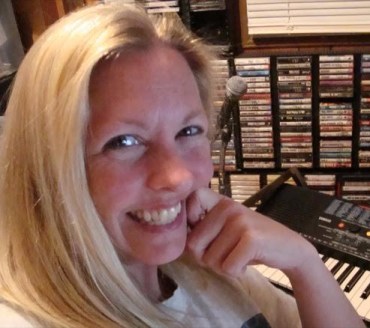
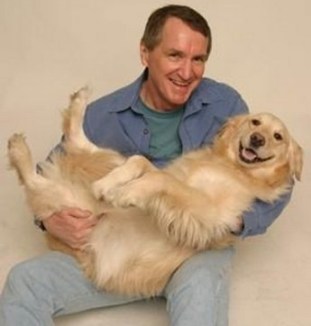
Tammy GrossBill Donovan and friend (Bill’s the less hairy one)
When you read a script, it’s not just about “Do I find this story interesting?” or ” Why should I care about these characters?”. There’s also “Does it look like a professional script?”
That’s where proofreading comes in handy.
This week offers up a 2-part panel discussion with professional proofreaders Tammy Gross of proofmyspec.com and Bill Donovan of screenwritingcommunity.net to discuss proofreading and its connection with screenwriting.
Enjoy.
How exactly does one proofread a screenplay? What are some of the things you’re looking for?
Tammy Gross (TG): That’s a loaded question! For me it boils down to what I call “the language of screenplay.” Spec screenplays need to be streamlined, devoid of technical distractions and written in a cinematic style that transports the reader to the theater.
And, of course, it’s my job to fix all the “errors.” In context, misspellings and bad grammar are often intentional and work better than perfect grammar and spelling conventions. However, you gotta know the rules to break them. And there are many ways to format some things, though the best is always whatever is clearest, most economical, and relevant to the story.
My job is to make a screenplay easy, fast, and fun to read – and up to professional standards. So I look for anything that gets in the way of that.
Bill Donovan (BD): My service is a bit of a hybrid. I give some story and screenplay structure notes as well as proofread and copy edit. The proofreading/copy editing part covers:
— Typographical errors
— Spelling errors
— Grammatical errors
— Punctuation errors
— Capitalization errors
— Verb tense errors
— Sentence structure and clarity problems
— Basic formatting mistakes
— Cramming in too many words
— “Saying” when you need to show
What’s the difference between editing and proofreading?
TG: When it comes to screenplays, it usually is a matter of time and thoroughness. Proofreading should be the last step before submitting a screenplay to anyone for consideration. In a perfect world, a screenwriter will go through various phases of self-editing. Once it’s polished, it should probably receive a copy edit to have fresh eyes to catch all the formatting, consistency, and text issues. After it’s been cleaned up and the story is solid, it’s time for proofreading. And the depth of proof-editing depends on the writer’s level of proficiency.
I take it a couple steps further than most. First, I create a style sheet to ensure that preferences are observed and maintained throughout. I also work very hard to help the screenwriter understand the edits I’ve made so they can grow in their craft. I’ve seen writers improve from script to script as a result. Some have gone from disaster to master.
BD: There are key differences. Proofreading, strictly defined, is a bit more limited. It involves fixing actual errors, such as typos, missing words, missing punctuation or wrongly-placed punctuation, capitalization errors and other outright mistakes. Copy editing covers all of those mistakes and also addresses larger issues of clarity, such as fixing a sentence or paragraph which may be grammatically correct but is vague.
I have great difficulty leaving a badly-written sentence or paragraph alone even when it might be okay in strict proofreading terms. Since I make my changes in colored type, I figure that the writer can go in and change it back if he/she prefers his or her own phrasing.
For example, some of my clients write much of their scene description in partial sentences. That’s fine if you can do it well. However, most of the writers who come to me do not write partial sentences well. The meaning is clear to them because they know what they mean. However, if it’s not clear to the reader, I fix it or give the writer a note suggesting that he or she fix it.
A lot of writers might say “I can do just as good a job proofreading it myself.” Your response?
TG: In nine years I’ve read only one screenplay that was error-free, including shorts. The biggest mistake even the most experienced writers make is assuming that because they understand some mechanics, they have a full grasp of format. While everyone claims there are no “rules”, there really are guidelines that are basically rules. Very few writers can keep up with the latest standards the way I and other professionals (hopefully) do.
My favorite trick for self-editing is to simply read backward from bottom to top. But it won’t catch everything. Most quality scripts go through many revisions and rewrites. It’s bound to pick up some introduced errors along the way that you become blind to.
BD: If you’re very good at English language usage, and if you’re an experienced editor, and if you walk away from it for a while, and if you then focus on every word and every bit of punctuation for all possible mistakes from overall clarity down to missing commas, yes, you can.
But will you? For example: I’ve sent out email blasts for my proofreading service about 15 times in the past 15 months. Three times, recipients have written back, gleefully and snidely, “Ha-ha! I found a typo in your email blast.” They were right. How could I make such a mistake, in a blast advertising proofreading, when I have thousands of pages of experience as a proofreader and copy editor? I know exactly how: The mind tends to gloss over the tiniest little details of that which you have written yourself, and you become both tired of reading it and eager to get it out.
What are some common mistakes you usually see?
TG: I have a very long, and boring list of words and format issues I plan to turn into a book once I can figure out how to make it fun and simple to reference. The usual suspects: its/it’s, your/you’re, there/their/they’re, lie/lay. A baffling but common one is “draw” instead of “drawer.” Possibly the biggest peeve and most common issue is passive voice.
There’s also a zeitgeist in the editing world. One year something like “clinch” vs. “clench” needs fixing in every script (or manuscript) I read, then the next year everyone is misspelling or misusing “rifle” vs. “riffle.” It’s weird.
Also, some things in spec writing evolve, so things that were “mistakes” five years ago are perfectly normal or even preferred today. I work hard to keep up on the current trends and roll with the changes, but I’ll probably never accept “how r u” for spoken dialogue.
BD: This is the short answer. I maintain a document on common mistakes screenwriters make. It’s 14 pages of paragraphs and explanations. These are not in order of frequency, but are some of the most common:
1. The “Their, they’re, there” and possessives sort of grammar mistakes.
2. Missing commas. Commas are sneaky little creatures, always slipping away from your text where it needs one.
3. The worst, and surprisingly common, is the “Show, don’t say” mistake. John Vorhaus, author of The Comic Toolbox, summed it up perfectly:
“You could tell by his face he was thinking of Paris.”
But, of course, you can’t tell by his face what he’s thinking of. He could just as easily be thinking about a juicy cheeseburger.
4. Specifying shots. In film school, they used to say that you learn to write by directing and you learn to direct by editing. You don’t learn to direct by writing, so the decision on shots should be left to the director 95% of the time. Even when a closeup is required in order to provide closeup information, it can be done without saying “CLOSEUP” or “CU”. I don’t tell writers not to specify a closeup, but another way to do it is a separate paragraph describing the content of the closeup. The director will get the idea.
5. Run-together sentences. Even grammatically-correct compound sentences can be bad choices when they gloss over the action. They forego the opportunity to emphasize great moments. One way to “direct the director” without specifying shots is to write a separate paragraph for each camera setup.
For example:
“Jack kisses Jill and they walk off into the sunset.”
Better:
“Jack kisses Jill. Their lips lock, long and loving.”
“They break the kiss. Grasping hands, they turn, and walk off into the sunset.”
New writers tend to rush through both the blocking of scenes and the emotions of the moment. In contrast, a recent client of mine, a produced director and stage director, wrote a comedy screenplay so precisely that many of his descriptions were delivered with punch lines in visual jokes. It was marvelous to read.
6. Writing in present participle rather than present tense. A screenplay is action taking place NOW. Sometimes, present participle (“Jack is standing”) is unavoidable because it’s needed for clarity. However, if Jack pulls out a gun and then pulls the trigger, then “Jack shoots,” not “Jack is shooting.”
7. Incorrect use of ellipses.
8. Incorrect parentheticals. If a character does something before speaking or after speaking, it doesn’t belong in the parenthetical; it belongs in the scene description.
9. Failure to do research. When laws, government regulations, and historical events are mentioned, they should be correct. I’ve seen two screenplays in which the writers had significant plot turns saying that under HIPAA, they couldn’t get their own medical records because they were company secrets. It’s the other way around.
My list has quite a few more. Again, the “common mistakes” reference I’ve created is 14 pages long and growing.
Do you have a “most memorable” example of writing that was in severe need of proofing?
TG: My very first client almost scared me off from doing this. I put my website up in the middle of the night and a guy in Australia emailed me almost immediately. He sent me a Word file filled with something more like ideas or musings about some stuff in outer space. No formatting. No story. I don’t think there were even any characters or dialogue. Fortunately, my second client wasn’t high after a long walkabout (that I know of) and let me cut my teeth on a good script in Final Draft (my favorite, though I work in every program under the sun).
BD: Yes, and no. I just turn back the “most memorable” with notes suggesting to the writer what should be done before hiring me to proofread the work. For example, I recently sent back a feature script that was 195 pages with the suggestion that it be cut to 115.
Even as I continue to plow my way forward with the pulp spec (page 91 so far), I’m already anticipating what and how to edit what I’ve already written.
I suppose the current mood is “keep going until it’s finished!” rather than “write this, go back, edit it, then move on.”
The final page tally will be somewhere between 120 and 125, which isn’t bad, but it’s a safe bet I’ll be able to trim it down. It’s an even safer bet a lot of what will have to be cut stems from my habit of overwriting.
There’s no doubt I can make some good headway cleaning up the action lines, but my work is definitely cut out for me when it comes to dialogue.
It’s not uncommon for me to occasionally veer into chitchat territory. I even recognize it as I’m writing it. So why do I still do it? Probably as a form of placeholder; I know I’ll go back and fix it, but for now, it does the job.
To help provide some guidance on this, whenever I’m watching a film, I’ll pay extra attention to the dialogue. So many times the exchange between characters is just what it needs to be. They get to the point, and then get out. Anything beyond that wouldn’t be necessary, so it simply isn’t there. This is what I try to keep in mind when I’m in editing/rewriting mode.
I’ve read a lot of spec scripts with scenes that seem to never end because the writer throws in a lot of idle conversation between characters, so it feels like it takes forever to get to the point.
Too much dialogue adds to slowing down the read, which you want to avoid at all costs. The challenge is to use the dialogue to get to the point of the scene as soon as you can, then get out even faster.
Like with almost everything associated with writing a screenplay, difficult, but not impossible.
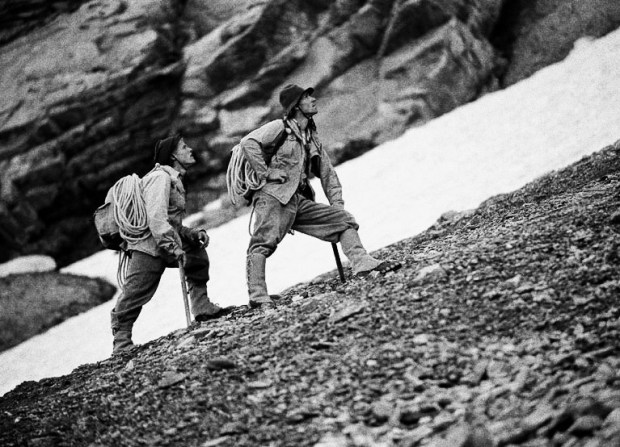
That was when our heroes realized things were about to get a lot tougher from here on in…
When I write out a scene, I have a pretty solid idea of what needs to happen in it; how to make it follow the one before it, and lead into the one after it.
Sometimes it ends up the way I intended, and sometimes it needs a little more punching-up.
And a lot of the time, that punching-up involves making things more complicated, which does a simultaneously effective job of upping the conflict, which was already a necessity.
This whole process most recently came into play while working on a scene in the pulp spec. I’d planned out what was supposed to happen, and on the surface, it seemed okay.
And then I wrote it, but it wasn’t the same as I’d envisioned. It was still missing a vital component, and I couldn’t determine exactly what.
Did it successfully connect the scenes before and after? Was there conflict? Did it advance the necessary elements? Yes on all counts, but it still seemed off.
I read through it again. It was tight and efficient, and did what it was supposed to. But this second read also revealed the hidden problem that was nagging at me.
It was too tight and efficient. The protagonist accomplished what they were supposed to, but it needed to be tougher for them to do so.
So back I went to the planning-out stage, tossing in a few more wrinkles to make it that much harder for my hero. Although they still achieve their goal within the context of the scene, this time I made sure they really earned it.
Plus, the new complications really emphasized the overall nature of the story, which is always good.
This isn’t to say that every scene has to have some kind of monumental obstacle to your protagonist, but the journey towards their goal shouldn’t be an easy one. It might not even be a physical thing; maybe your hero has to overcome an internal or emotional problem.
It may be easier for you to keep things simple and straightforward, but unfortunately that makes for dull storytelling. Making things more complicated for your protagonist may complicate things for you in putting it all together, but it will definitely make for a better story while also improving your skills as a writer.
Don’t hold back. Put both yourself and your protagonist through the wringer. You’ll both be better for it.



 Maximum Z