*Renaissance as in “those possessing many talents or areas of knowledge”, not the cultural and intellectual movement between the 14th and 17th centuries.
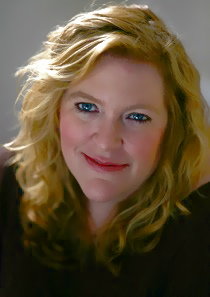
The latest in a series of interviews with script readers and consultants who would be worth your while to work with if you want to get your script in shape. Today’s spotlight is on Julie Gray. I had the good fortune to interview Julie a few years ago just before she relocated to the other side of the planet.
Bonus question: So much has changed for you since I saw you last – you moved abroad and now live in Tel Aviv, Israel. What’s that been like, and what are you up to?
After ten years in Hollywood, it was time for a change. Tel Aviv is an incredibly vibrant city and there is SO much going on in the art scene here, it’s really exciting.
I work with screenwriters and novelists from New York, LA, the UK and Australia and increasingly, filmmakers here. I just interviewed the writer/directors of the Israeli film Big Bad Wolves, which Quentin Tarantino called the best film of 2013. The interview will be in Script Magazine this fall. I go to London every year and teach at the London Screenwriter’s Festival, which is really fun, and I have been volunteering with Amnesty International in Tel Aviv, working with Sudanese refugees on story telling. I founded the Tel Aviv Writer’s Salon in 2013, a group that meets weekly and writes flash fiction. During the war this past summer, I was asked to do a writing workshop for US embassy employees, to write about the trauma of what we all went through and will be doing writing workshops for victims of terror and war here in Israel for an Israeli non-profit later this fall. So I keep pretty busy!
1. What’s the last thing you read/watched that you thought was incredibly well-written?
I read an hour-long drama pilot by a client of mine and I just went insane, it was SO clever and unique. I can’t talk about the premise because it’s so unique and because I got so excited about it that I sent it to several producer friends of mine in Hollywood and the writer has a bunch of meetings coming up! I was so glad to help him and so impressed by his talent!
This summer, I watched a lot of movies but two really stood out – The Dallas Buyer’s Club and The Grand Budapest Hotel. I also watched McConaughey in True Detective; he’s really hitting his stride at this point in his life; it’s a joy to watch him. I’ve been a Wes Anderson fan since day one and so GBH just had me floored. Every single shot, every single moment is so stylized. It reminded me a bit of one of my favorite books, The Hotel New Hampshire.
I went on a real reading bender in the past few months and read A Confederacy of Dunces, All Quiet on the Western Front, Things Fall Apart and Revolutionary Road by Richard Yates. I’d seen the film but the book was better (as is so often said – Wow.) I am also an inveterate reader of The New Yorker and The Atlantic – a real addict of both.
2. How’d you get your start reading scripts?
I was writing scripts, of course, and attending the Writer’s Boot Camp in Santa Monica – I’d won the 2 year professional program through a screenwriting competition and there, at that program I heard about these “readers” and that you could become one. So I did. I was, as it turned out, really good at it and it wasn’t long before I was reading for some really big deal production companies in LA – Bedford Falls, Red Wagon at Sony, Walden Media – it was a great experience! I met a lot of great producers and agents and read scripts all day every day for a long time. It helped sharpen my own sense of what is original – or not – and what really good writing looks like. That kind of repetition ingrains a lot in you about which scripts have a chance in Hollywood and which do not. Lessons I will never forget.
3. Is recognizing good writing something you think can be taught or learned?
I don’t believe I’ve heard that question before! Well, the answer is complex. In order to recognize good writing, you have to READ good writing a lot. I was a freakishly good reader because I am a freakishly well-read person in the first place – and also a movie nut – so my frame of reference is pretty refined. But the question, for a Hollywood reader, is not whether YOU think it’s good writing, the question is whether the producer or agent will think so. And primarily, whether the script is unique and marketable. You learn what is expected in a rather mathematical way, and you rate those things, one by one. Being a good reader is about knowing what the particular company you are working for is looking for, specifically, what the general rules are in coverage, and then how to write up a great summary about what is good or bad in a script. And doing that very, very quickly, over and over again.
Being a good reader happens through experience. Much more of the skill lies in the ability of the reader to communicate as thoroughly and as objectively as possible what is and is not working. You might read a script of a genre you hate – it doesn’t matter what you like, it matters whether this script is written well for that genre. So – you have to know that genre. That’s why, to be a reader, you really have to know your movies, otherwise you’ll say something is unique and original when it was already done in 1947, and then another take on that premise was done again in 1976. If you don’t know that you will get fired very, very quickly. It’s a bit merciless. Readers really have their feet to the fire. It’s the belly of the beast.
But to answer your question, which is really, “what is good writing” – a good screenwriter is one who takes you on such a ride that you forget you are turning the pages. Every character seems real, every action line is cinematic, every plot twist is totally organic – it’s having a way with words that seems effortless. Can this be taught? I think that writers can be taught how to write but that GREAT writers are born that way, to be honest with you.
4. What are the components of a good script?
GREAT CHARACTERS, GREAT CHARACTERS, GREAT CHARACTERS. Oh – and a unique premise. If you have great characters and a unique premise, your structure will fall into place. You have to understand structure, but it won’t work unless the character arc really flows with the structure – informs it. Structure should not be obvious, it should just feel right.
5. What are some of the most common mistakes you see?
Unoriginal ideas. Writers who don’t test their ideas and look and compare and see who else has done this idea – if anyone. In my book, Just Effing Entertain Me: A Screenwriter’s Atlas, I go into great detail about idea testing. It’s crucial. It’s everything. Other common mistakes are things like typos, poor format, clunky action and sluglines. But if I had to point out THE worst mistake you could make and the most common one – being unoriginal wins by a landslide.
6. What story tropes are you just tired of seeing?
1) Any deus ex machina – something that just magically happens and changes the direction of the story. This is very easy for new writers to do but as you get more experienced, you’ll see why this is a big no-no, not only from a Hollywood perspective, but from a creative perspective as well. Creatively, it’s cheating, It’s taking the easy way out instead of letting the possibilities of the story play themselves out.
2) The person who’s had a big accident or someone they love died and now they are this tragic figure that nobody can reach. Oh man. I’m so tired of that one. It’s not that grief doesn’t have a huge impact – I know – I’ve experienced it – but writers often broach grief like it’s a kind of slam dunk, simple emotion – and it’s really not. Watch Ordinary People if you want to explore grief.
3) In a horror script, the character that goes to the door or UP INTO the attic when they hear a strange sound. They go TO the danger – it’s laughable. Scream really sent that up well – what a seminal film. But writers have to remember that we readers have seen and read every script, so surprise us. Not easy, you say? No. It’s not. If it were easy…
7. What are the 3 most important rules every writer should know?
1. Don’t write for the money – you’ll never write from the heart.
2. Watch movies – all kinds – all the time. Know your Hollywood history, understand genres and which movies were seminal and why.
3. Don’t be afraid to write badly! Writing is writing, but real writing is REWRITING.
8. Have you ever read a script that was an absolute, without-a-doubt “recommend”? If so, could you give the logline?
A very few times. Most recently, the client I referred to at the beginning of this interview. Unfortunately I cannot divulge the logline, but it was a mixture of a VERY popular cable show and a Bradley Cooper drama. I’m sorry I can’t share it. I read an unproduced film by the amazing writer Ben Queen, called Slanted and Enchanted and I lost it – I flipped out, it was so good. Ben and I became friends. American Beauty made me cry really hard – but it was already in production. Lucky for me, my best friend was the property master of the film so I got to visit the set and later on, Alan Ball and I had offices near each other while he was doing True Blood and I got to hang out with him and it was amazing.
9. How do you feel about screenwriting contests? Worth it or not?
I ran a screenwriting competition for six years so naturally I think there is worth in them. But the biggest worth is not so much the cash prizes, etc. but the validation you receive. Sometimes just quarter-finaling in a competition is enough of a good feeling to keep you going, and that can be so important in this pursuit! That said, look, be realistic and know that there are millions of competitions mushrooming all over the place and that you have a budget as a writer. So enter only a few every year – the biggies only – and then spend your money seeing movies, buying a how-to book or two, maybe go to a seminar to meet other writers. The ONLY thing that really matters is your writing, so make sure not to get sucked into lottery-like thinking, that if you buy SIX books on screenwriting or go to EVERY screenwriting event, or enter EVERY competition, that somehow this will magically do something for you. Ass in chair. That’s it. But entering a select handful each year can be fun, it can force you to meet deadlines, and it might get you the validation that you need in order to keep writing. The competitions that I consider really worth entering are: Final Draft Big Break, Blue Cat, Page International, the Nicholl (although it is VERY competitive, so know that…), Slamdance and Scriptapalooza. I may have overlooked some, but those are competitions I am very familiar with and know the people who organize them, so I can recommend them heartily.
10. How can people can get in touch with you to find out more about the services you provide?
They can go to my website at juliegrayediting.com or email me at hello@juliegray.info.
11. Readers of this blog are more than familiar with my love/appreciation of pie. What’s your favorite kind?
Coconut Cream – preferably at the House of Pies on Vermont in Silverlake. So many memories there.



 Maximum Z