Slightly easier (but I still don’t like it)

Takes a while to really get it right

After a great discussion of his notes for the western spec, my manager’s script guy said those words I have always and will probably continue to dread.

“All we need now is your logline and one-pager.”

Ugh.

You know that feeling of loathing when there’s something you really don’t want to do, but know that you absolutely have to? That’s exactly how I felt, and from what I understand, I’m not alone in this.

But like I said, it had to be done.

First up was the logline. I’d already spent a lot of time working on this, so most of the heavy lifting was out of the way. Turns out it just needed a little tightening up, so yay on that front.

Which brings us to the one-page synopsis.

Double ugh.  Calling it the bane of my existence is a little harsh. More like a necessary evil.

Using what I did last year for DREAMSHIP as a model, I opted to put it together like a slightly extended version of what you would read on the back of a paperback novel.

A quick overview-setup establishing the major character and main storyline, then some hints/teasers at what comes after things really get started, followed by a sort of cliffhanger about the ending.

As was explained to me, to convert the potentially-interested into the definitely-interested, the synopsis has to really capture the tone of your script and not focus as much on what happens. The more concise and descriptive you can be regarding what the story’s about rather than the story itself, the better. Go into too much detail and you’ve lost their interest.

It took a few attempts, but in the end I had what I consider to be a pretty strong synopsis. There will most likely have to be some rewrites, but that’s okay. The hard part’s done.

In the meantime, it’s back to the mystery spec rewrite. Rest assured that as I work my way through the second half, my always-reliable subconscious will keep reminding me of one absolute truth:

“You know you’re going to have to write a one-pager for this one too, right?”

Triple ugh.

What’s wrong with PG-13?

One of the two movies which resulted in the creation of this rating

In recent discussions with other writers, I’d be asked what I was currently working on. I’d mention the western and mystery specs, and give a thumbnail description for each.

Among the responses I’ve come to expect is usually the follow-up question:  “Who’s your target audience for that?”

Everybody.

While what I write would probably be too much for very small children, there’s no reason it couldn’t be enjoyed by anyone between 8 and 108, as the saying goes.

In addition to all the usual criteria, I want to make sure the story is interesting enough so it would appeal to a wide spectrum of viewers, as well as keeping the content dead-center on that fine line between “not enough” and “too much.”

One writer sent back his notes on the western. He had some very good comments, but some of them seemed to be through a DJANGO UNCHAINED filter (which he also admitted being influenced by). It was suggested I go for a more intense level of violence in some scenes.

Which would be fine if I were writing something that was a hard ‘R’, but this isn’t.

I’m just more of the family-friendly sort, and there’s absolutely nothing wrong with doing that kind of material. (FROZEN has earned $350.7 million so far. Not too shabby, with the sing-along version ready to be unleashed.)

Although I want my stories to be fun and exciting, it’s also important to me they respect the audience’s intelligence, no matter what age they are, while also being fairly easy to follow.

I appreciate it when a movie does that, and hope to keep the practice going.

The second half is all uphill

The first and last time I do a race like that. Maybe.

A few weeks ago, I did a half-marathon that was easily the hardest I’d ever done. The distance wasn’t the hard part – it was that most of it involved going up and down a small mountain. Radical inclines, steep dropoffs right next to the path, the whole shebang.

Sure, some of it was extremely daunting, and sometimes I had to walk, but I was determined to keep pushing until I crossed the finish line (2:22:26, which wasn’t too bad, especially taking that whole mountain aspect into consideration).

The whole time during that first half, as I was working my way up, there were two thoughts that kept me going:

1. Even though this is harder than I expected, I want to keep going and do the best I can
2. Once the halfway point is reached, it’s literally all downhill from here

While the first thought can easily be applied to writing a script, the second one – not so much.

There’s a reason the midpoint of a script is sometimes referred to as The Point of No Return. Not only is your protagonist now fully committed to achieving their goal, but so are you.

While their situation becomes more daunting and their goal more unreachable, it might feel just as insurmountable to you.  But, as I once again utilize the running analogy, your diligent training and extensive preparation have made you ready to take this on.

You know what has to happen between here and the end. The stakes are raised, and only you can ensure a satisfying finish. All you can do is dig deep, draw on your reserve strength and keep pushing yourself until you’re done.

Make sure you pace yourself and take your time. Rushing can only hurt you, so stay focused.  It may seem like the end will never arrive, but you’ll get there before you know it.

What’s great about finishing a race is you get a medal, and most likely the desire to do better next time. Finish a script and you’ve got a finished draft and hopefully the desire to make it better.

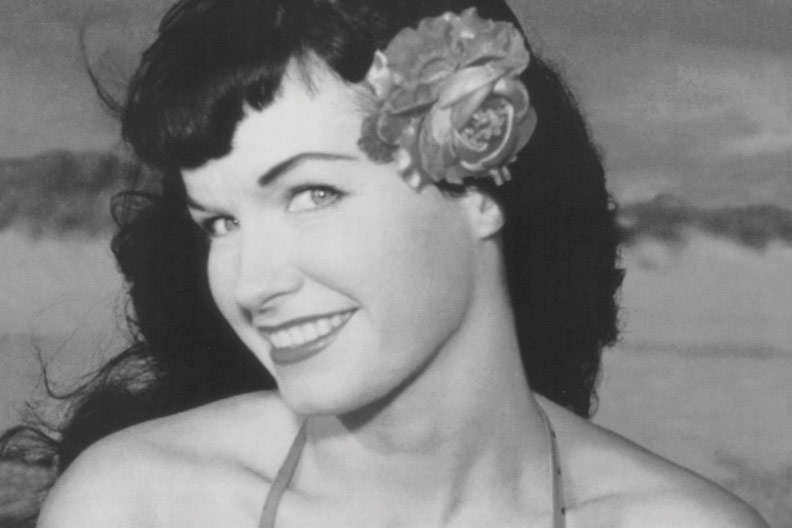
She kicks ass just right

There were too many to choose from, so I opted for a classic example
There were too many to choose from, so I opted for a classic

Encouraging feedback on the western spec continues to roll in, with a recurring theme developing regarding opinions about the main character.

-“calm, cool and witty in the face of danger and indomitable odds”
-“a really great character to get behind”
-“actor bait”

Did I mention the main character is a woman?  More than a few considered that a major plus.

When I first started figuring out the story, which included seeking online help for the logline, anonymous posters on assorted forums pulled no punches in letting me know what a terrible idea they thought it was.

Yet despite all that negativity, I still felt this was a story worth the time and effort to tell. The West was a harsh, brutal place. You had to be tough to survive. Why wouldn’t the women be as tough as the men?

When I write action, I’m hoping to create a sense comparable to a thrilling rollercoaster ride; one that grabs you tight and pulls you along at top speed. Whether the main character behind it all is a man or woman is a non-issue. It really comes down to two things: an entertaining story with three-dimensional characters.

To me, this had both. Being a fan of the genre helped – I know what works, what doesn’t and what I as an audience member would want to see. And as far as I could tell, it was a story that hadn’t been done before.

So I wrote it, and now it’s all about the wait-and-see.

Not surprisingly, articles continue to pop up about how a female main character in an action film is still considered somewhat of a novelty, or that since an action film with a female main character absolutely tanked at the box office, logic can only dictate it was because the main character was female, and not because the story sucked.

Count me among those hoping these ways of thinking will someday not be an issue.

Meeting again for the first time

handshake
Hi there

A day short of one year ago, I wrote this.

Since then, through social media and community forums, I’ve connected with writers from all over the world as well as several from right here in my neck of the woods.

Whether it’s exchanging feedback on a script or offering up a solution to a story problem, or even just meeting for a get-to-know-you chat over lunch or coffee, networking and communicating with other writers can provide a kind of support system that benefits everybody involved.

The other day I met with a guy very busy with several projects, each one offering up a special brand of stress, but he wouldn’t have it any other way. He’s getting to write as well as be involved with the actual production of projects he’s written. Who doesn’t want that?

(An interesting side note – he has severely cut back on his involvement with Done Deal Pro because the negative comments and constant in-fighting became too overwhelming. I don’t blame him and have pretty much done the same thing.)

Try this little experiment to get you started: connect with up to 5 writers a day for one week. Do it through whatever format you want – a blogger you enjoy, Twitter or a respectable forum (Despite the aforementioned issues, DDP is still pretty good). Don’t forget to be polite. Give it a go and see what happens.