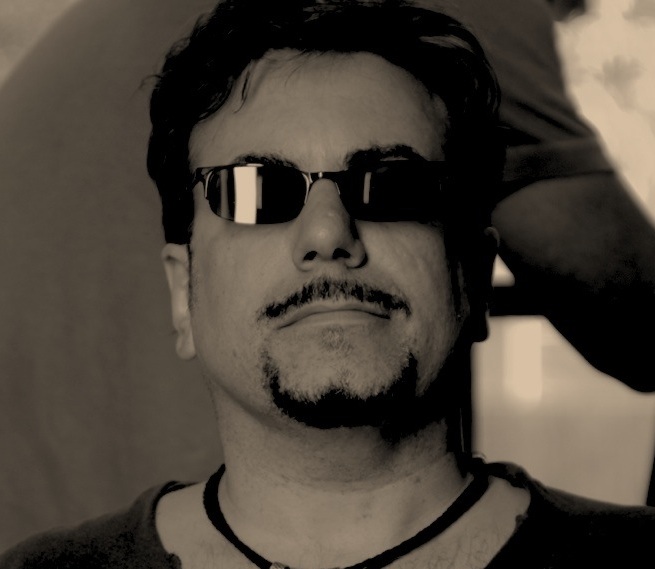
Ask a Straight-talkin’ Script Consultant!

Jim Cirile - Coverage Ink

The latest in a series of interviews with script readers and consultants who would be worth your while to work with if you want to get your script in shape. Today’s spotlight is on Jim Cirile of Coverage Ink.

1. What’s the last thing you read/watched that you thought was incredibly well-written?

After binge-watching “Sons of Anarchy” season 6, you really have to marvel at the craftsmanship. The upheaval and complications are so constant as to be ludicrous, yet it’s so devilishly well-written that you just strap in and hold on tight. And blowing our own horn a bit, the last script I read which was truly special was Brandon Barker’s “Nottingham and Hood,” which we found as part of our last Get Repped Now! promotion this summer. We got him into Benderspink, where he’s now working with their head of lit Jake Wagner. So, win-win. A real talented guy with a bitingly funny comic voice.

2. How’d you get your start reading scripts?

Kind of fell into it, really. I originally founded Coverage Ink to offer my small handful of analysts, whom I’d assembled to help develop my own material, to other writers at low cost. Getting feedback from smart readers is a major part of my process and always has been. In fact, the very first person I met when I moved to Los Angeles 20 years ago was a union studio reader, and that fellow was enormously gracious in giving me feedback and teaching me how the biz really works. Over time, as a writer myself, I gave feedback to plenty of other writers and realized I had a lot to say in that regard. Our approach is based around writer empowerment – giving constructive feedback as opposed to humiliation. This is in part a reaction to some of the astonishingly humiliating and unhelpful coverage I’ve received on my own scripts and have seen others receive over the years. I figured there had to be a way to give helpful guidance without belittling the writer. So all of that combined to get the CI ball rolling in 2002.

3. Is recognizing good writing something you think can be taught or learned?

Yes, but to a point. Obviously anyone can read a bunch of books, take classes on writing and so forth, and get down your Save the Cat!, Syd Field, McKee, etc. However, some folks have a hard time putting aside their egos — the frustrated writers out there who fancy themselves story analysts. These folks project their personal tastes and frustrations onto material as opposed to appreciating it for what it is and trying to help it become the best possible version of itself. I’ve had to let go of several very smart people who fancied themselves as story consultants because they actually could not recognize good writing or material with potential.

4. What are the components of a good script?

Great, multidimensional characters. Solid structure. Avoiding clichés and surprising the reader. Snappy, tight pacing. And of course, good storytelling. That said, a lot of it is about hitting your marks and doing it in creative ways – nailing those structural beats that Hollywood uses to judge whether you’ve got game or not, such as the inciting incident by page 15, Act II beginning by page 25, etc. Even things like whether you know how to write down the page or use sluglines and white space properly all contribute to the first impression as well as perceived ease of the read. A good screenplay is simply a fascinating story well-told. If you’re facile with words, that’s a start – but that’s all it is. You still have to study the form.

5-6. What are some of the most common mistakes you see?

By far the biggest one, and I’m just as guilty of this, is sending a script out before it’s fully cooked. We finish a script and we’re so excited that we immediately contact our industry friends and before long, you’re dead in the water. It took a long time to learn to never send out first or even tenth drafts (if I can help it.) Taking the time to develop a screenplay until it’s bulletproof is crucial. My current spec is on its 11th draft and we only just got our first consider. It will probably be three more drafts until we nail it and get consistent considers, which will indicate we’re finally ready to go, and even then we’ll still have to do at least another draft or two for our manager.

The second one is: is your concept really multiplex-worthy? You have to really think about whether your idea is one that makes sense in the current filmmaking climate – be it studio film, indie or festival darling. There are certain stories that just work better as a book, stage play, web series, or whatever, than a feature. Or maybe it just isn’t an exciting idea at all, or is just too played out or derivative – how many spy or vampire movies can they make? Unless you can find a way to bring something really fresh and innovative to those genres, you’d best keep looking for the killer concept.

7. What are the 3 most important rules every writer should know?

1. Be a student of the business. There’s no point in trying to be a screenwriter if you don’t learn what that actually means and how the game is played.

2. Learn your craft. Just because you wrote a great thesis in college or even a novel doesn’t mean you have any idea how to write a screenplay. Take classes at your local community college or online, get into a writer’s group, read scripts and how-to books and study. Can you get hired as a doctor or lawyer without years of study? So why would you expect another lucrative job like screenwriting to be any easier to learn or break in to?

3. Don’t expect to find representation until you are really, really ready – and by that I mean they come to you because you’re winning contests, or producers and industry types are championing your material. We all want to get representation, but usually an agent won’t even read you unless you’ve already got some heat.

8. Have you ever read a script that was an absolute, without-a-doubt “recommend”? If so, could you give the logline?

The aforementioned “Nottingham and Hood.” The Sheriff of Nottingham captures and attempts to transport his prisoner, Robin Hood, to trial. Complications, as they say, ensue. “Midnight Run” in Sherwood Forest. Boom.

9. How do you feel about screenwriting contests? Worth it or not?

Our contest Writers on the Storm has gotten several of our winners into agencies like UTA, and last year’s “Cake” was produced and stars Jennifer Aniston. (WOTS is on hiatus this year.) So the answer is – damn right they’re worth it, but it depends on the contest. There are really a few worth the money – Tracking B, Nicholl, Scriptapalooza, Final Draft Big Break, Script Pipeline, maybe one or two others. But the rest – no juice. Save your money. Sadly, no one cares that you made the top ten of the Terre Haute Screenwriting Showdown 2003.

10. How can people get in touch with you to find out more about the services you provide?

Email me at info@coverageink.com, or check out our website – www.coverageink.com

11. Readers of this blog are more than familiar with my love/appreciation of pie. What’s your favorite kind?

Here in Culver City, there is an amazing 2-piece band, a guy and a gal, who play often at the Culver Hotel, my favorite watering hole. They’re called Pie. I’d have to go with them, since they go quite well indeed with an Absolut martini with lime. Other than that, Boston Cream, baby!

I seek rewatchability

Never gets old. Never.

It goes without saying that any screenwriter is a movie buff. We have to be. It’s our love of movies that got us into this in the first place.

We’ve all got our favorites. Countless genres are spanned. Writers, directors or performers we can usually rely on for solid, quality work. Who hasn’t claimed to have seen a particular movie “over a hundred times”?

So what is it about them that makes us have no problem with watching them over and over, as opposed to seeing something once and being done with it, or maybe even abandoning ship around the halfway point?

A favorite film motivates repeat viewings. You’re enjoying the whole experience so much that when it’s over, you’re already looking forward to seeing it again.

Consider the films in your home collection. What is it about them that made you go so far as to want to own them?

For as much as I talk about STAR WARS, RAIDERS OF THE LOST ARK and BACK TO THE FUTURE, all of which I could watch over and over, I’m also perfectly content with something that doesn’t involve special effects, like TO KILL A MOCKINGBIRD, THE MAGNIFICENT SEVEN or SOME LIKE IT HOT.

What do all of these have in common? For me, it all boils down to fantastic storytelling with well-crafted three-dimensional characters, both of which also motivate and inspire me to be a better writer.

Which is what it all comes down to. The writing, which starts with us.

Not only are we striving to create a story, but we want to make them so amazing that they’re practically irresistible not only to the people who make the movies, but the movie-going public.

While working on that latest project, we imagine what the finished product would look like on the big screen and hope the audience is having such a blast watching it that they’ll want to come back for more.

But imagining is one thing. Actually making it compelling and involving is another.

We must continuously write, rewrite, hone and polish each individual piece of work to make it as involving and engaging as possible.

Not sure if yours is? Ask somebody. Writing group, trusted colleague, paid analyst. Doesn’t matter. Always be striving for greatness, my friends.

Our work is definitely cut out for us.  It’s hard enough to write a good script. It’s even harder to write one people want to continuously return to.

Isn’t a rock a hard place to begin with?

Gotta pick one, but which one?

Hard choices. That’s what it comes down to for your protagonist.

Someone in my old writing group put it very succinctly: each scene should force the protagonist so they have no choice but to go with the option that makes things harder for them.

If things were easy for your protagonist and everything went right for them, it wouldn’t be much of a story, would it?  We’d be bored silly.

It all stems from the necessary key word: conflict. Something must be opposing them reaching their goal.

This doesn’t mean it’s someone or something physically blocking them, although that is one option. It could be something out of nature, like a great white shark, a hurricane or a killer virus, or something from the grand scheme of the universe, like time, fear or silence.

One of the great things about conflict is there are countless ways to present it. It comes in all forms, but it really boils down to something in the scene (as well as the overall story) preventing your protagonist from moving things forward.

Taking it one step further, not only do you have to make sure they do, but they have to be the one doing it. Anything else is a cheat, and totally negates their development as a character.  Imagine if Dumbledore said, “Here’s a step-by-step list of what you have to do, Harry.” The mentor figure is there to guide the protagonist down the right path, not take the path for them.

The protagonist has to endure all of these conflicts in order to not only accomplish their goal, but grow or change from what they were when we first met them.

So go ahead and put ’em through the ringer. It’s the way it must be.

-I had the pleasure of doing an interview with Henry Sheppard, aka Adelaide Screenwriter. Check it out here.

The value of face-to-face time

Coffee makes for a good 3rd part of this equation

A few weeks ago, I’d read a post on Done Deal Pro from a writer who’d gone to Los Angeles to attend a Writers Guild function, but was now back home in the Bay Area.

Since I’m always looking to expand my network of fellow writers, especially ones that could be considered local, I contacted him and asked if he’d be interested in meeting.

Fortunately, he was. Coffee at the Ferry Building.

Since most of this summer has involved V being at work with me, she and I worked our way from my office to our designated meeting place.

I handed her my phone so she could play video games while Justin Sloan and I sat down to talk.

We exchanged backgrounds and career developments. He was especially intrigued about my results using the Black List.

Unfortunately, Justin had to get back to work so we had to cut things short, but he asked if he could read my script, and I offered to give feedback on his.  He also asked if he could send me some questions for his blog Bay Area Screenwriters. You can read those here, and I’ve added a link to it over on the blogroll.

It was great not only talking about writing, but also discussing the assorted experiences we’ve each had in relation to writing. Contests, writing groups, etc.

This is one of those experiences that can’t be duplicated via an online forum or instant messaging. Having an actual conversation with someone will hopefully be fulfilling for both parties.

So send those emails, set up those coffee chats, get out there and talk to people.

-Movie of the Moment: PACIFIC RIM (2013). What happened? This was supposed to be the big hit of the summer. No such luck. Instead, we got great special effects weighed down with forgettable characters and horrible dialogue. (Can’t people come up with something better than “Let’s do this!”?)

I will give del Toro and Beacham credit for coming up with an original story, but feel bad it was so poorly executed. There was no way this could lived up to all the hype. Scott Pilgrim, anyone?

Some notable disappointments: the Russian and Chinese pilots/robots were treated as throwaway characters, and were dispatched with way too quickly.
-the Australian guy with a huge chip on his shoulder seemed straight out of a studio note. “This guy should be a real asshole, but give him a dog so he’s semi-likeable.”
-the trailers featured most of the robot-monster action, leaving little to surprise us during the actual movie.

-THE LAST STARFIGHTER (1984). Hadn’t seen this in years.  Also watched it with V because I thought she might like it – she did. There are elements similar to DREAMSHIP. Not exactly the same, but definitely there.

The story by itself still holds up, even though the rest feels a little clunky, and Robert Preston’s fast-talking Harold Hill-type character always brightens up whatever scene he’s in.

Watching this on an HD screen makes it that much more obvious you’re looking at a film set, and the special effects, cutting-edge at the time, seem quaintly dated.

Destination: uncharted territory

And my journey continues…

First and foremost, thanks to everybody for the hearty congrats. Words of encouragement from one’s peers are always nice, doubly so when it’s from people you know are good writers.

I’ll also admit to sending updates of my recent accomplishments to my old writing group, more with the intent of “Hey kids, ain’t this swell?” rather than “Suck on it, losers!”

And a big mazel tov to the 24 other semifinalists, 10 finalists and the top 3 winners of the Tracking Board Launchpad contest. Best of luck to all of you on your future endeavors! Celebrate in your desired appropriate style. I find pie to always be a solid viable option.

Speaking of which (the writing stuff, not the pie), these are exciting times. I don’t think I’ve ever been this close to something potentially happening with one of my scripts before – he said with fingers firmly crossed.

There isn’t a writer out there, including yours truly, who doesn’t daydream about achieving some kind of success while they hammer away at their latest project.

But things are different for me now, and a new learning curve is underway.  I’m a bit nervous, but still quite psyched about it.

This is exactly what I’ve been working towards, and feel very fortunate to have even made it this far. I hope everybody can experience this kind of sensation at least once.

So all I can do now is keep writing and maintain a positive attitude while staying reasonably sane and level-headed.

I’m a huge fan of tales from the trenches, so any anecdotes of early-in-my-career experiences and such are more than welcome in the comments below.

-Movie of the Moment: MONSTERS UNIVERSITY (2013). I didn’t think there was really a demand for this; the first one seemed more than enough. Despite it’s box office success, I wouldn’t call this another home run for Pixar. A triple, maybe. And kudos to them for making the college experience as G-rated/Disney-safe as possible.

V was interested in seeing it, but she didn’t laugh that much. There were chuckles from both of us, but not as many as you would expect.

Still, glad we saw it, especially in 2-D, and at one of SF’s remaining single-screen theatres. We’re always happy to send them business.

-It’s heartbreaking on several levels to read how much THE LONE RANGER is sounding more and more like a train wreck (no pun intended). Hopefully this won’t be yet another death knell for westerns in 21st century, such as the one I’m working on.  I’m discouraged, but not defeated.