The health benefits of writing organically

I'm a much better writer than a gardener
Not necessarily THAT kind of organic

Getting closer to the end of the outline rewrite. I like how the story’s developing, and it definitely feels stronger than it did before. There are still some tweaks and adjustments to be made, but overall, it’s really coming together.

The last two words of the previous sentence are especially poignant, because as I modify the previous draft, it exposes some problems that need immediate fixing.

Occasionally, something would happen in an “all of a sudden”-type of way, mostly because I hadn’t set it up properly.  So I’ll go back to earlier in the story to see where it can.

If I can make it work, great. If not, what has to be changed so it still works on all the levels it’s supposed to?

You want your story to flow smoothly and not feel forced. Throwing something in out of left field not only disrupts the story, but is just lazy writing.

Each scene should continue what happened in the one before it, and lead into the one after it. One of the basic tenets that tends to get lost in the shuffle, especially among beginner writers.

Take the time to plan things out, and don’t be afraid to cut where necessary.

You also want to make sure the details of your story all mesh together. This applies not only to what happens in the story itself, but the world in which your story takes place.  Make it feel as authentic as possible. Part of our job as the writer is to convince the audience this kind of world could actually exist.

You have to do everything you can to ensure the story is fresh and original, stays interesting and keeps things moving. You may not think all those little details matter, but people will notice them (or lack of them).

Think of it as a story renovation project

This is kind of what it feels like
They’re the writers and the house is the first draft. See? It’s a visual metaphor!

When I started this rewrite, I wanted to really shake things up and take it beyond just putting on a new coat of paint and rearranging the furniture.

This had to be really different from what it already was. Major changes require major brainstorming and planning.

The starting point was breaking down the previous outline on a scene-by-scene basis. What worked? What didn’t?

One subplot has already been cut because it just didn’t mesh with the rest of it. A more suitable replacement has been developed, and not only does it still work for the story, it opened up more possibilities.

Each scene is still evaluated to determine how it advances the story as well as how it fits in to the plot.  Yes, some darlings must be killed as work progresses, but if they don’t serve a purpose that supports the overall story, then they weren’t needed in the first place. Maybe they can be reconfigured and used another way.

Working through all of this reminded me of a significant bonus to writing on a regular basis – your creativeness gets a constant workout, which has made it slightly easier than expected to come up with ideas of how to make a scene stronger or at least more effective.

And since this is a mystery, it’s extremely important that all the intricate details are in place. Clues and red herrings are in the process of being planted, a key factor of which is making sure their place in the puzzle is organic, and not shoehorned in.

Taking a steady, methodical approach to this has made it not as imposing as originally expected.

When I started this rewrite, I had the standard fear/concern that I wouldn’t be able to figure things out and come up with solutions.

Now, not so much.

Isn’t a rock a hard place to begin with?

Gotta pick one, but which one?

Hard choices. That’s what it comes down to for your protagonist.

Someone in my old writing group put it very succinctly: each scene should force the protagonist so they have no choice but to go with the option that makes things harder for them.

If things were easy for your protagonist and everything went right for them, it wouldn’t be much of a story, would it?  We’d be bored silly.

It all stems from the necessary key word: conflict. Something must be opposing them reaching their goal.

This doesn’t mean it’s someone or something physically blocking them, although that is one option. It could be something out of nature, like a great white shark, a hurricane or a killer virus, or something from the grand scheme of the universe, like time, fear or silence.

One of the great things about conflict is there are countless ways to present it. It comes in all forms, but it really boils down to something in the scene (as well as the overall story) preventing your protagonist from moving things forward.

Taking it one step further, not only do you have to make sure they do, but they have to be the one doing it. Anything else is a cheat, and totally negates their development as a character.  Imagine if Dumbledore said, “Here’s a step-by-step list of what you have to do, Harry.” The mentor figure is there to guide the protagonist down the right path, not take the path for them.

The protagonist has to endure all of these conflicts in order to not only accomplish their goal, but grow or change from what they were when we first met them.

So go ahead and put ’em through the ringer. It’s the way it must be.

-I had the pleasure of doing an interview with Henry Sheppard, aka Adelaide Screenwriter. Check it out here.

What happened to the action movie?

Often imitated, rarely equaled

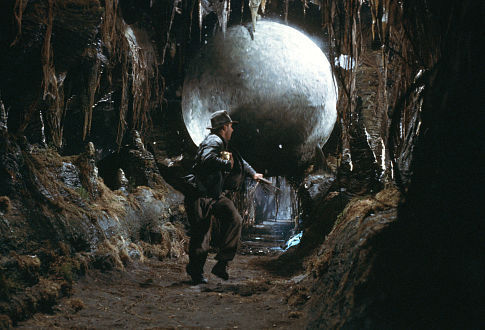
A little over a week ago, a friend posted the following question on Facebook – “Is RAIDERS OF THE LOST ARK the best action movie of all time?”

As would be expected, this led to a somewhat lengthy discussion. Several other titles were bandied about (DIE HARD, ALIENS, several John Woo HK films), and was summarized quite succinctly with “The main lesson here is that the 80s were a goldmine for high-quality action films.” (mea culpa – I’m the one who said it).

All I can think of for the 90s are TERMINATOR 2: JUDGMENT DAY and SPEED.

While you’re thinking about those, compare them to some more recent ones, such as:
-THE EXPENDABLES – a nostalgic remembering of the genre itself
-THE EXPENDABLES 2 – silly, over the top parody
-PACIFIC RIM – cool to look at, but that’s about it
-FAST & FURIOUS 6 – haven’t seen it, but I’ve heard nothing but good things about it
-THE LONE RANGER – couldn’t bring myself to see it, but will catch it on home video. Is it as bad as they say?

Now there’s this. Oy. Someday I’ll discuss how much I dislike reboots.

So why do action films from 20-30 years ago still hold up?

Looking at strong examples of the genre, they all have: Original stories. Smart writing. Three-dimensional characters. Action that enhances and supports the story.

If you’re writing an action spec, these should be your goals and objectives. Yes, it’s a lot of fun to blow shit up, but don’t use an explosion or shootout just for the sake of having one. It’s pointless.

Make the action part of the story, not what the story’s about. Use it to move things forward. Ratchet up the tension and create more conflict for your hero.

Need a refresher course in how it’s done? Pick one you’ve always liked, and watch it as a writer. Take notes. See how it all fits together. Then see if any of it can be applied to your story and rewrite accordingly.

If only all learning could be this enjoyable.

The fine art of world-building

Tell us what we need to know about this place
Now that you’ve created it, what do we need to know about it?

One of the primary functions of the first act is to establish the current situation of your protagonist. You, the writer, have to convey to us, the reader/audience, what’s going on around our hero and how they fit into this scenario.

Tell us what we need to know about them, but don’t overwhelm us. Give us the details relevant to the story; anything else is totally unnecessary.

Show us why this character is worth our time and attention. What is it about them we can relate to?  Make us care about them. Pique our interest and curiosity.

This is also your chance to establish the rules of this world you’ve created and how it works. If it’s something other than the world as we know it (i.e. science fiction or fantasy), then you definitely need to explain how things work here. Don’t expect us to know what you’re talking about; just because you know doesn’t mean we’re going to. Keep things simple.

Now that you’ve presented us with our protagonist and the world they live in, SOMETHING HAPPENS around page 10 that drastically changes their everyday routine and gets the story going. It also raises the central question of the story – “Will the protagonist achieve their goal?”

Some may say the protagonist should be the one that makes something happen, which is possible, but it seems more likely this disrupting-of-the-everyday-routine event happens to them, rather than because of them.

What’s great about this next stretch of pages is it offers you the opportunity to show a little more of this world, especially how your protagonist reacts to what’s happened to them as well as how their world responds to it. Explore the consequences and ramifications of how their life is changing as they leave their old situation behind and become more involved with the new one.

By the time we get to the end of the first act, the protagonist is totally immersed in this new world and has to figure their way out/through it. Everything we need to know has been taken care of, so now we can focus on following the story.