Scriptshadow Success Stories – part 2

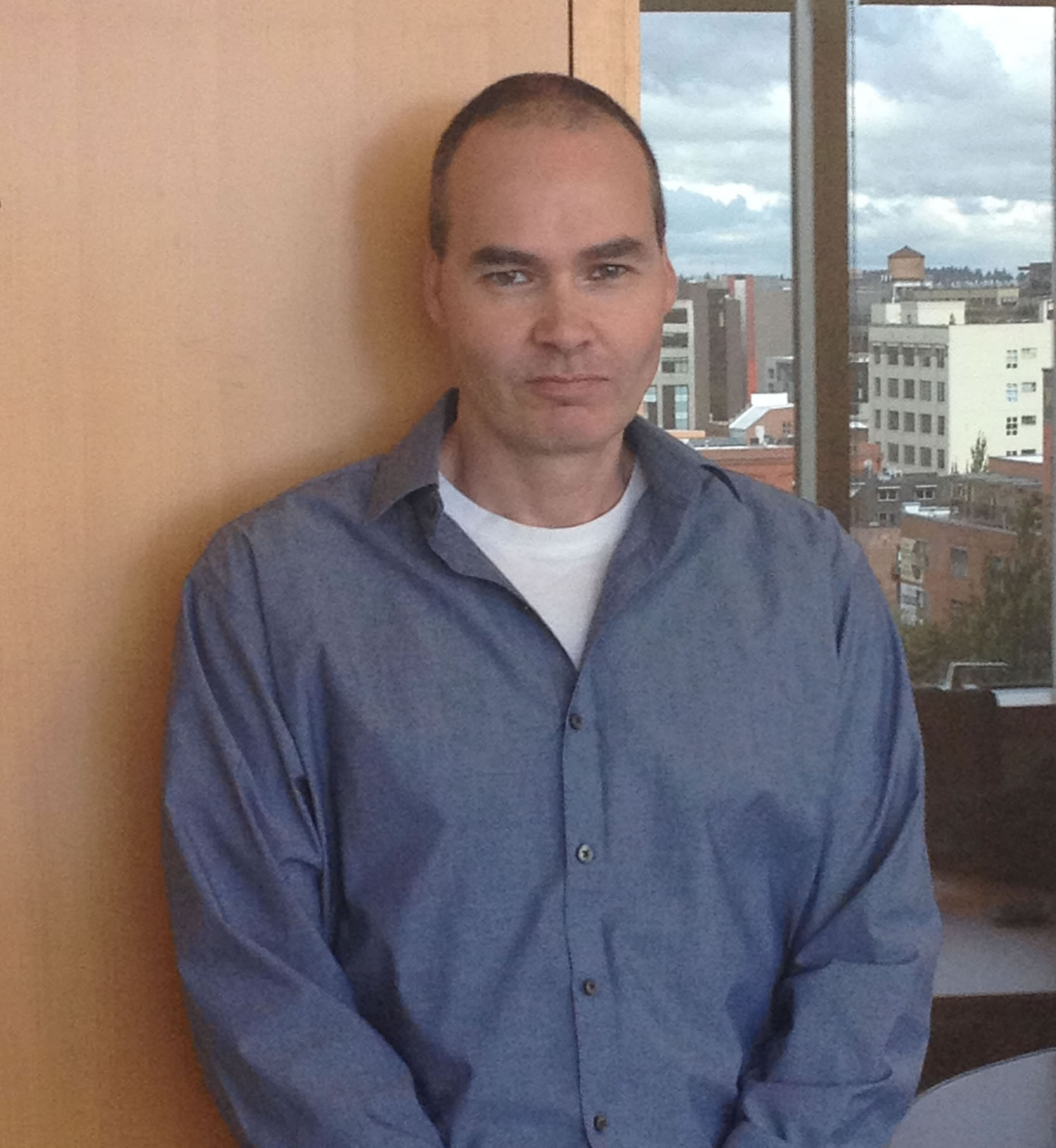
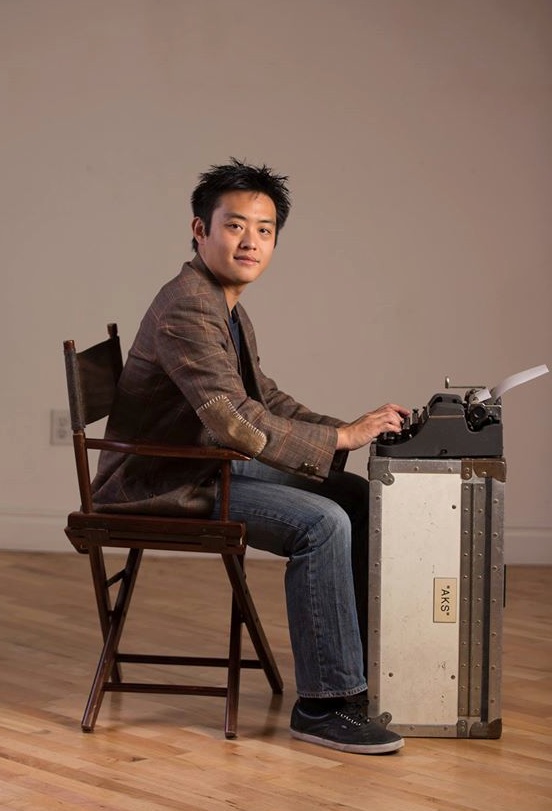
image courtesy of Springfield Punx
image via Springfield Punx (http://springfieldpunx.blogspot.com)
As one of the multitude of screenwriters working on establishing a career doing exactly that, I’m always exploring different potential avenues to get that first break.

In recent years, the website Scriptshadow (and its moderator Carson Reeves) has offered writers the chance to submit their script for review and feedback. While most are sent back to their keyboards with suggestions of potential fixes for the next draft, once in a while a script garners approval, hopefully leading to continuing success for the writer.

Today’s spotlight is an interview with two of four writers who fall into the latter category: Matthew Ballen, whose script placed in the site’s recent Top 10 Amateur Scripts EVER, and Louise Ransil, whose script was a semifinalist in the 2013 Tracking Board Launchpad competition and was recently profiled in the LA Times (see below).

1. What’s the title and logline of your script?

Matthew Ballen (MB): FATTIESWhen a lonely masochistic chubby chaser is abducted by two fat lesbian serial killers, it’s the best thing that ever happened to him.

Louise Ransil (LR): MARLOWEBased on a True Story:  African American P.I. Sam Marlowe shows novice writer Raymond Chandler the realities of detective work, juggling gangsters, corrupt politicians and movie star Jean Harlow to find out who’s burning farms along the Arroyo Seco Canyon.

2. What did Carson think of it?

MB: Carson said he couldn’t put FATTIES down and that it was really memorable. I made a lot of unusual choices, and I think this clicked with Carson because he sees a lot of scripts that in his opinion play it too safe.

LR: Carson’s reaction was mixed. He was completely honest, saying the noir genre wasn’t in his wheelhouse. He seemed to enjoy the dialogue and elements of style, but was put off by the dense and complicated plotting. He suggested I streamline the plot.

3. Did you find any of the reader comments useful?

MB: Carson thinks FATTIES may be one of the most polarizing projects he’s had on the site. My favorite reader was probably the guy who said “It’s stuff like this that makes me question the fate of Western Civilization.” I found that strangely flattering. Fortunately, a lot of readers liked it though.

LR: Reader reaction was fairly positive. Carson has a very knowledgeable reader base.  Some commented on how the script’s style and structure fit classic noir. There was discussion on whether the genre was relevant to current audiences. I found the comments useful, and overall reactions reflected those I’ve gotten elsewhere.

4. What’s happened with the script since it appeared on Scriptshadow?

MB: The review couldn’t have come at a better time. I was up for my first major re-writing assignment, and the producer and director who hired me each saw the SS review on their own. I should clarify that I already had a relationship with these people, but I didn’t have any produced credits and they were taking a big chance on me. My Scriptshadow attention made everything feel a little safer for them.

I’ve since done a deep polish on FATTIES, and it’s attracted some nice attention from a couple of producers, but nothing concrete yet. I’ll probably wind up directing it myself when my writing gigs slow down, but I’m still interested in finding a home for it if something cool comes up.

LR: Since my script appeared in Scriptshadow, it was featured in a Front Page L.A. Times article. This created some buzz for it, so I’m now shopping it around.

5. What’s going on with your writing career now?

MB: I’m currently writing a screenplay adaptation for veteran Academy Award-winning producer Arthur Cohn. The project’s a complex period drama, almost the polar opposite of FATTIES, though I think unexpected humor and a certain humanity to the characters might be the bridge between them.

LR: I’m working on other scripts now.

6. How can somebody get in touch with you to inquire about this or other scripts of yours?

MB: If anyone wants to reach me about my projects, rewriting, script doctoring, or watching their pets when they’re away, I can be reached at ballen.matthew@gmail.com.

LR: *editor’s note – Louise has opted to not include her contact information.

7. Is submitting a script to Scriptshadow something you would recommend?

MB: Absolutely! I think Amateur Friday is one of the best ways to get attention and feedback on an amateur script.

LR: I definitely recommend Scriptshadow. It’s good exposure and a balanced critique.

8. Readers of this blog are more than familiar with my love/appreciation of pie. What’s your favorite kind?

MB: Fresh strawberry pie from a farmer’s market in June. Oh, and every other kind of pie.

LR: Pecan.

Ask a More-Than-Just-Horse-Sense Script Consultant!*

Tracee Beebe

The latest in a series of interviews with script readers and consultants who would be worth your while to work with if you want to get your script in shape. Today’s spotlight is on Tracee Beebe of The Script Coach.

Tracee, now repped by First Story Entertainment, has continued to climb the ranks of Hollywood screenwriters and now has several scripts slated for production in the coming months. As a writing coach, Tracee has switched from the technical “how to make your script better” type of consulting to mindset mastery to help writers set themselves up for success both on the page and in their careers.

Her screenplay DEEP WATER was in the top 3 of The Blood List and she has been a finalist in several top screenplay contests.

Her previous career as a horse trainer, and her work in animal rescue, has flavored much of her work and given her the tenacity to believe that anything is possible if you just work hard enough along with the humility to know that there is always more to learn.

1. What’s the last thing you read/watched that you thought was incredibly well-written?

I just rewatched To Wong Foo, Thanks for Everything! Julie Newmar and fell in love with it all over again. Wonderful, unique characters, tons of subtext, and it just grips you right from the start.

2. How’d you get your start reading scripts?

I started out just exchanging scripts with other writers for feedback. After some particularly helpful notes, a Facebook friend offered to pay me to do detailed notes for him, word got out and more and more writers came to me for script coaching/consultation. After about a year of that, I saw an ad on ISA looking for experienced readers to do coverage for a new management company and applied.

3. Is recognizing good writing something you think can be taught or learned?

Absolutely. I think that part of it is innate, but the more scripts you read (both good and bad), the more you can start to really see what makes a great script.

4. What are the components of a good script?

Entire books are written on this topic, but I think the most vital are structurally sound, unique concepts and really strong, interesting dialogue. Without those, you’re in trouble.

5. What are some of the most common mistakes you see?

Exposition is probably the worst and most common mistake I see. Another rookie mistake is coming in to a scene too early and not leaving soon enough.

6. What story tropes are you just tired of seeing?

There are things that make me roll my eyes and say “really? that’s the best you could come up with?” but thankfully nothing I see over and over again. I will say I am not a fan of anything resembling “Let’s get ‘em!” People don’t say that kind of stuff in real life. Oh, and a personal pet peeve (though not really a trope) is a writer using “we see” – to me it denotes lazy writing.

7. What are the 3 most important rules every writer should know?

-Show, don’t tell.

-Don’t write it unless it is important to the story.

-Make every word count.

8. Have you ever read a script that was an absolute, without-a-doubt “recommend”? If so, could you give the logline?

It’s rare, but there have been a few. One was a very clever comedy about a personal chef to a mob boss. “When the mob boss’s personal chef gets wind he’s about to be flambéed, he must find a way to take down the Family before his goose is cooked.”

9. How do you feel about screenwriting contests? Worth it or not?

Yes, some of them. Some of the bigger contests are now so flooded it’s not worth entering unless you have gotten solid coverage and done some strong rewriting before you submit. But there are some good contests out there that also provide coverage to entries. I think that makes it worth the entry fee.

10. How can people get in touch with you to find out more about the services you provide?

www.TraceeBeebe.com

11. Readers of this blog are more than familiar with my love/appreciation of pie. What’s your favorite kind?

Pumpkin, with lots of homemade whipped cream! Now I have to go find myself a piece!

*because she works with and writes about horses. A terrible joke, I know, but how could I resist?

Ask a PAGE Silver-Winning Script Consultant!

Derek Ladd

The latest in a series of interviews with script readers and consultants who would be worth your while to work with if you want to get your script in shape. Today’s spotlight is on consultant Derek Ladd. His script Nina NANO was a Silver Prize Winner in the 2013 Page International Screenwriting Competition.

Award-winning screenwriter Derek Ladd started telling stories as a kid and never stopped. He lives in Portland, Oregon where he spends as much time writing as he does shaking off the rain (which is pretty much all the time).

1. What’s the last thing you read/watched that you thought was incredibly well-written?

The last exceptional script I read belongs to Matt Tolbert, a client of mine. I can’t go into specifics but it’s an historical screenplay about the Nordic Vikings. It’s refreshing to work on a script that pulls me in on page one and doesn’t let go. All of the elements (pacing, plot, characters) came together to create an immersive reading experience. As for movies, the last one I saw that featured great writing was DALLAS BUYER’S CLUB. This is a movie that nails the writing on all levels: the visuals, the dialogue, the subtext, all of it. Another surprisingly good movie I loved is an indie foreign film (horror comedy genre) set in Ireland called GRABBERS.

2. How’d you get your start reading scripts?

When I started my script consulting service, one of my early clients wanted to produce a movie. I’d written a couple dozen short stories and a few novels by this time and this client had read some of my work. And since a screenplay is the first element one needs to make a movie, she recruited me to write one. The only obstacle was that I had no idea how to write a script. So I bought two books on the subject and they didn’t help: each book contradicted the other. Then I bought one of those fancy bound scripts at Barnes & Noble – ADAPTATION (Charlie Kaufman, based on Susan Orlean’s book). Of course, it was more of a transcript so it didn’t help much either. I finally gave in to the fact that I would need to attend a class, and in Portland, Oregon the master of screenwriting was Cynthia Whitcomb. I took both of her classes, read her books and picked it up pretty quickly. My first script was an adaptation of my novel WITHOUT WINGS. From there I started reading scripts written by my classmates so I could give them feedback. The writers I worked with were so pleased I started doing it professionally. To date, over a dozen of my clients have won or placed in a variety of screenwriting contests.

3. Is recognizing good writing something you think can be taught or learned?

I would say ‘Yes’ to both questions simply because one has to know how to recognize good writing in order write good material. While writing novels I found inspiration in everyone from Heinrich Boll, Truman Capote, Norman Mailer, Kurt Vonnegut and David Sedaris to William F. Nolan, Anne Rice and Stephen King. If an aspiring screenwriter thinks GIGLI or SHOWGIRLS is a great screenplay, trying to write a great script will be damn near impossible. If, however, the same screenwriter dives into work by Michael Mann, the Coen brothers, Joss Whedon, or Luc Besson (to name a few), or any brilliantly written script (JAWS, FARGO, THE MATRIX, HAROLD AND MAUDE, SERENITY, THE SILENCE OF THE LAMBS), that writer will strive to achieve the same level of success in their own work. Excellent writing that makes you laugh and cry and get goosebumps has more power to teach aspiring writers than any classroom instruction ever could.

4. What are the components of a good script?

The Seduction Element: I watched a good DVD lecture featuring Michael Hauge a while back called ‘Grabbing The Reader In The First 10 Pages’. Mr. Hauge opened the lecture by explaining that part of the title is a misnomer: he said that ‘grabbing’ is too forceful a word and that what a writer should aim to do is seduce the reader. That’s at the top of my list. Seduce me with your words. Make it impossible for me to put it down: make me laugh, make me anxious and/or make me curious in the first five to ten pages. If you can evoke a strong emotion in the reader as soon as possible and keep it flowing that reader will be yours to the end. A famous writer (don’t ask me who) once said, “The first sentence should make you want to read the second. The second sentence should make you want to read the third…”

Strong characterization: A fleshed-out, intriguing character has the power to lead the reader anywhere. If a script starts out with three pages that describe the inside of a barn or a ton of details to set up what’s to come, I’ll put it down, or throw it at you if you’re close enough. The writer may have created the most awesome outpost on an alien planet anyone has ever dreamed up, or constructed the greatest plot ever conceived in the history of the written word, but without a solid character to invest in it won’t matter. For me, strong characterization is the whole shebang: a memorable introduction, sharp, believable dialogue, behavior that’s consistent with how the character would act in a given situation, etc. If the character has an arc (not required in some genres, but strongly recommended) it should be begin and end at the proper times – no rushing and no shuffling. Steady as she goes…

Originality: Is this a script I’ve read a hundred times before, or will it surprise me? I’m not saying it has to be about a group of purple, basketball-shaped alien opera singers from the planet Snergle. When I say ‘original,’ I’m referring to the unique spin a writer puts on the material. As an example, a good detective story populated with adults is okay, while a detective story populated with high school kids (like the film BRICK) is original and stands out. No need to reinvent the wheel; popular genres are popular for a reason. Just find a way to spin them and surprise the reader.

5. What are some of the most common mistakes you see?

Everyone’s guilty of typos and grammatical errors (myself included), so it’s a given that any editor/consultant will find them. Aside from that, one common technical mistake I see involves scenes that spill over into other locations without new scene headings. Drives me crazy. I also see a lot of scene headings written improperly, missing words, character name inconsistencies and factual errors (names of objects, cities, states, countries or famous people misspelled). To a lesser degree, I see action lines that are jumbled: a character enters, pulls a gun, fires. Then it’s noted that the light is flickering overhead. Oh, and the guy in plain sight by the pool table (who was never mentioned before) fires back. It’s like when someone tells a joke and stops in the middle to say, “I forgot to mention, the guy riding the donkey is a priest.” It’s distracting. Unless you’re writing a narrow-to-wide shot, set the scene: describe who’s there and what they’re doing then describe the action. Otherwise it feels clunky and awkward.

6. What story tropes are you just tired of seeing?

The expression “I get it” is everywhere now. I don’t know where it came from. Maybe it’s like the cicadas that surface every 17 years or whatever and it’ll disappear soon. Here’s an example: “Hey, getting hit in the crotch with an umbrella ticked you off. I get it.” The biggest users of “I get it” are the writers for SUPERNATURAL, CRIMINAL MINDS, and SONS OF ANARCHY, all great shows that would be even greater if they’d stop using “I get it” six times per episode. It’s superfluous. Think about it: if one character describes what another is feeling, is it necessary to cap it off with “I get it.”? No. It isn’t. So please stop it. A visual trope, as it were, is the weird technique where the action goes into slow motion then speeds up again. I think the movie 300 started that whole thing. Hopefully a better movie will come along to put an end to it soon.

7. What are the 3 most important rules every writer should know?

The following answers are based on the assumption that the writer has developed a unique concept and story that he/she is passionate about. My answers further assume that the fundamentals of story, characterization, plot, dialogue, writer’s voice, pacing, style and overall balance (60% action, 40% dialogue) have been carefully considered throughout the writing process.

-The first 5-10 pages are life and death for a writer. As an editor/consultant, I get paid to analyze a writer’s work. Studio script readers, on the other hand, get paid to say ‘No’ to conserve a producer’s valuable time and an investor’s money. So unless you give the reader a solid reason to say ‘Yes’, your script is headed for the recycling bin. Set the hook as soon as possible and set it deep. Make that studio reader take your script into the bathroom (to read).

-Unless you’ve written a character-based indie script, structure is critical. Do your own structure analysis to see where you land: inciting incident by around page 12, plot point one by the 1/4 mark, strong midpoint by the 1/2 mark, plot point two by the 3/4 mark and the climax in the last 10-15 pages. You’re allowed a brief end-cap/denouement of 1-3 pages and then FADE OUT.

-Formatting DOES matter, especially for a spec script. Know the average length for comedies, thrillers, horrors, dramas, etc. Turning in anything under 90 pages or anything over 120 is a longshot. Know that formatting varies between different genres and how to use these varied techniques to your advantage. Barb Doyon’s book Extreme Screenwriting has an excellent chapter on formatting and how to use it to enhance a spec script.

8. Have you ever read a script that was an absolute, without-a-doubt “recommend”? If so, could you give the logline?

I’ve read a few scripts over the years I would strongly recommend, which is probably right in line with the industry percentage of one half of one percent. I don’t have loglines to share, but the clients whose scripts I would recommend include Chanrithy Him (WHEN BROKEN GLASS FLOATS), Santa Sierra (spec episode of THE GOOD WIFE), Bill Johnston (REQUITED), Erin McNamara (BORU), Mike McGeever (SMILERS) and Dorothy St. Louis (EL CUBANO). Others can be found at ProofEdge.com on the Testimonials page.

9. How do you feel about screenwriting contests? Worth it or not?

It really depends on the contest. My advice is to do some research, comb the web and read message boards. Moviebytes has a lot of info on contests and how contestants rate them. Find a contest that’s a good fit for your work. Some contests aren’t as open to traditional Hollywood blockbuster-type scripts (Zoetrope), while others offer a range of categories to accommodate all writers (PAGE Awards). If it’s a sizeable, reputable contest (PAGE Awards, StoryPros, Nicholl, among many others) I strongly recommend using it as a measuring stick to see where you stand as a writer. A writer shouldn’t get too bummed if his/her script doesn’t make it past the first round – a script can do poorly in one contest and win another, it happens all the time. Many contests offer notes for an additional fee, which can be quite helpful if done by a professional. Keep in mind that, while winning is the goal, simply making the Finals can attract studio attention, and doing so looks good on a resume when querying agents and producers. Winning or even placing in a contest can make the difference between an exceptional, unknown writer and an exceptional, discovered writer.

10. How can people get in touch with you to find out more about the services you provide?

Check out my website www.deladd.com, or email me at derek@deladd.com.

11. Readers of this blog are more than familiar with my love/appreciation of pie. What’s your favorite kind?

Apple, hands down. My mom always made the best apple pie when I was growing up. The way she makes it, the apples aren’t too sweet and they’re not overcooked and mushy. A couple of years ago I made a butter crust from a simple recipe I acquired as a sous chef. The combination of her perfect filling and my crust (which melts in your mouth) is pretty spectacular.

Ask a Fount-of-Knowledge Script Consultant!

Matt Lazarus

*note – Matt passed away in July 2020

The latest in a series of interviews with script readers and consultants who would be worth your while to work with if you want to get your script in shape. Today’s spotlight is on Matt Lazarus of The Story Coach.

Matt Lazarus has worked in the industry since 2003. He started in development with jobs at Untitled Entertainment, CAA, and Platinum Studios (Cowboys and Aliens). He joined the WGA in 2007 by selling a horror script to RKO, and he sold a movie to Cartoon Network in 2011. Matt’s story coaching was designed to be affordable, regular, and useful, and he excels at breaking advanced concepts into simpler processes and exercises.

1. What’s the last thing you read/watched that you thought was incredibly well-written?

SHORT TERM 12, a thoughtful, sad drama about a foster home for displaced youth and the human condition. I saw the trailer and it hooked me. The world, performances and characters are all on point. It’s a great example of a drama, and of wringing the most entertainment and potential out of a simple concept.

2. How’d you get your start reading scripts?

I moved to Los Angeles in 2003, and I got my first assistant job after working really hard at an unpaid internship. I wanted to be a writer, and I talked about it way too much. Anyway, I got good at reading scripts and it always provided me an entry to meeting lit agents and executives who wanted to ask follow up questions on material. I’ve been a freelance reader for some studios for years, and there was a time I was even unironically working on a book on how to cover (most of it made it onto my blog). I’ve been a sporadically working WGA writer since 2007, but the financial security of coverage has always given me something to fall back on.

3. Is recognizing good writing something you think can be taught or learned?

Good writing is hard to define. You want it to be accessible: a mediocre scifi appeals to scifi fans, a great one appeals to everyone. You want it to be engaging: no one goes to the movies to not be affected. You want it to help your career. It’s great to sell a script, but if a script doesn’t sell but gets me in a room with someone who can hire me for my next job, I’ll take it.

Anything can be learned. Not everyone who studies piano will become Glen Gould, but they will get somewhat better at piano. I was pretty cineliterate when I moved to LA, and my years in the development trenches helped me marry my base of knowledge to a working understanding of how the industry works and what the powers that be tend to look for.

4. What are the components of a good script?

“Good” is a hard term to define, a semantic minefield. The components of a good script are the same as the bad ones: they both have the same main four (character names, dialogue, sluglines,descriptions), they both take up the same amount of space.

The difference is harder to measure. We see a thousand faces a day, but only a few make us stop and say wow. We hear new songs on the radio every day, few of them will become our favorite. Most would agree that a good writer can do more in the same space than a bad writer, but the ways in which they are better will always and should always be argued over.

5. What are some of the most common mistakes you see?

The most common is writing a script without a premise. I use something called the premise test. It breaks things down to what’s simple. It’s not the only way to look at scripts, but it’s as good as any, better than most:

“An <ADJECTIVE> <ARCHETYPE> must <GOAL> or else <STAKES>. He does this by <DOING> and (optionally) learns <THEME>.

This seems simple, but the doing is the real meat of the movie. If a naive accountant must raise 100k or his daughter dies, different doings give you very different movies (for example, he could win a surf contest, kill a vampire lord, or invent a time machine and go back to 1979). If you can’t explain what’s interesting about your script in 50 words, you’re unlikely to improve things by writing out 100 boring pages.

Writing is a lot like being a chef. Both are creative forms that have structural limits and immense room for interpretation. Tastes are subjective, but a good chef can anticipate the audience and when he serves something he should have a rough sense of why the average patron might find it delicious.

Most writers write without a real sense of the audience. We’re writing to entertain, to deliver a satisfying emotional experience to the audience. If a writer isn’t writing with a sense of empathy for the audience, the end result is likely to be disappointing.

6. What story tropes are you just tired of seeing?

-Scripts about Hollywood power brokers written by people who haven’t met Hollywood power brokers.

-TV pilots that spend their entire length explaining how we got to the premise without every showing what’s fun or interesting about the premise (see #5). There won’t be a second episode. What are you saving it for?

-Comedies that aren’t funny. I recommend taking an improv class and reading the UCB Handbook.

7. What are the 3 most important rules every writer should know?

The word “rules” needs to die. It always starts a fight. People have an unending appettite for hearing that they can write, but any suggestion of how one might approach writing is generally taken as a suggestion of how one ought to write, and then an unproductive argument ensues. Here are three general principals:

-Entertain. You should know exactly what feeling you want to create in your audience.

-Use unity. Once you’ve set up your script, you want everything to feel connected, organic, and like a ramification of what’s come before. Bad scripts keep inventing random stuff throughout the second act, and it leads to a script that feels arbitrary.

-Be specific. A lot of writers will write in variables, keeping things loose (my character is either an architect or a deli owner… I haven’t decided which) because they think it will prevent them from getting lost or stuck in the later stages. This never works. Imagination thrives on immediacy and specifics. It’s better to commit to an idea and follow it to its conclusion. Even if you went in a wrong direction, the specifics you generate add value to your story. If you keep things vague, you’re building on sand and it’s hard to move the story forward when things exist in a vacuum.

8. Have you ever read a script that was an absolute, without-a-doubt “recommend”? If so, could you give the logline?

In 2003 I read a really funny script called Underdogs. I couldn’t stop reading it or quoting the dialogue. It ended up turning into DODGEBALL starring Vince Vaughan. The movie is really funny, the script is funnier.

9. How do you feel about screenwriting contests? Worth it or not?

It depends on the contest. When I was at big companies, execs would usually read the top Nicholl scripts out of a morbid curiosity, but other big script contests (Scriptapalooza comes to mind) would try to get executives to read their top three, and the execs were lukewarm. For instance, a lot of people are selling off the Black List right now. It’s useful now, but might not be in three years.

10. How can people get in touch with you to find out more about the services you provide?

Matt passed away in July 2020, and his site thestorycoach.net has since been taken down.

11. Readers of this blog are more than familiar with my love/appreciation of pie. What’s your favorite kind?

Humble pie. If you’re serious about writing, you’ll be served it more times can be counted. Alternately, strawberry rhubarb. I’m from Vermont, and it reminds me of a childhood garden.

Ask a Prolifically Verbose Script Consultant!

Ms. Hay swears this is what she actually looks like
Ms. Hay swears this is what she looks like

The latest in a series of interviews with script readers and consultants who would be worth your while to work with if you want to get your script in shape. Today’s spotlight is on Lucy Hay of UK-based Bang 2 Write .

1. What’s the last thing you read/watched that you thought was incredibly well-written?

Cripes, difficult to pick something out, I think the last couple of years have been exceptional … For me, as I’m a movie buff, it’s a tie: I loved RUSH, by Peter Morgan; also SAVING MR BANKS by Kelly Marcel and Sue Smith. Both were very different, yet still massively ambitious stories that were visual and yet had loads of heart, too. A lot of the spec scripts I read aren’t BIG enough like that – they confuse potential actual money spend (“how many locations, people, CGI or explosions can I get into this?”) with story ambition, which isn’t the same.

2. How’d you get your start reading scripts?

I went to university to study screenwriting and to pass the course we had to do a six-week placement in the media industry somewhere. I was a young single mum of 21 with no childcare and no money, so going up to London and coach-surfing was out of the question. So I wrote to every production company and every literary agent whose address I could find, asking them if I could read their scripts for them. I ended up mailing – not emailing – 79 letters. I got about 14 replies, most of them saying “thanks but no thanks”. A couple of them invited me in for a chat, including Working Title, which gave me a tour of their offices, which was nice; also an animation studio gave me some toys for my son. The last however, a literary agent, called me in, opened the door to the back room and said: “Knock yourself out, take home as many as you like!” The room was packed with screenplays. Actually full to the brim. So that’s where it started for me!

3. Is recognizing good writing something you think can be taught or learned?

Sure you can learn it, but SHOULD you? Recognizing good writing requires an open mind, but also recognizing where your limitations are. End of the day, you can be objective as you can, but there’s certain stuff you’re never going to “get”. You need to be able to recognize this in yourself and that is a talent, I think; as is the ability to give constructive criticism to a writer. But you can hone this and get better at it. When I started, I made a renowned playwright cry with my feedback, I was that harsh. But that taught me the lesson as a young person I wasn’t *just* looking at a work in isolation on the page, I was also handling people’s dreams. So if you can’t handle either of those two things with care, then stay away from script reading and working with writers else you’re only going to end up buried under somebody’s patio!

4. What are the components of a good script?

A great concept. If you haven’t got that, you got NUTHIN’.

5. What are some of the most common mistakes you see?

Structure and character. Structure because it’s lumpy – especially sagging middles – or there’s non-linearity splurged all over the place. Sometimes all of these things, lucky me! And as for characters … It’s the tragic backstory that does my swede in at the moment. Every single character’s got dead wives and dead kids and dead friends and dead dogs and flashbacks of accidents and anything else you care to mention, especially in genre stuff. LE YAWN.

6. What story tropes are you just tired of seeing?

I don’t like the word “trope” – most of the time people seem to use it on the internet to mean, “something I don’t like”, rather than its actual definition, “a recurrent theme or motif”, which is actually more neutral. Writers can actually NEED tropes as a kind of shorthand; bring something entirely new to the table every single time and you could end up creating a new meaning altogether that derails the story. It’s a difficult balancing act. So there are no specific things I say NEVER do (unless it’s horrible and offensive); instead, think of the things we see often and subvert our expectations of them. Left of the middle is ALWAYS better than something completely out of left field.

7. What are the 3 most important rules every writer should know?

  1. Concept is king (or queen!)
  2. Don’t be boring
  3. There are no rules.

8. Have you ever read a script that was an absolute, without-a-doubt “recommend”? If so, could you give the logline?

It would have to be the new film I associate produced which is coming out in 2015 – I got involved BECAUSE I loved it. ASSASSIN is about a professional contract killer who compromises himself when he realizes that his latest victim is the estranged father of the girl he has fallen in love with. Now, I first read that script back in 2007 when it was called UNTITLED HITMAN THRILLER. Like most readers, I obviously read a lot of spec scripts involving hitmen, but it was immediately apparent to me this one was different than the rest. For one thing, it’s got some GREAT roles for named talent and sure enough, we were able to secure our beloved “King of Indies” Danny Dyer and Gary and Ross Kemp, back together on screen for the first time in over twenty years since THE KRAYS! Very exciting. Plus it has a great story, that reminds me of DRIVE (2011) and other such moody, violent and dark tales. I can’t wait for everybody to see it.

9. How do you feel about screenwriting contests? Worth it or not?

Definitely worth it. The good ones can act as a microcosm of the industry, making good writing rise to the top and offer very real opportunities to the winners and those that place highly. What’s more, for those writers with day jobs, they can offer deadlines and opportunities they may not have been able to seek otherwise, plus competitions with specific briefs and targeted voices can help showcase marginalised screenwriters, especially women and people of colour, but also different age groups/people living in places that aren’t in L.A. and so on. What’s not to like? Of course, there are also those competitions and so on that take the Mick, so it’s buyer beware. But I think this is the case with everything, not only in screenwriting. New writers are not children that need to be cosseted; they’re grown men and women who can make their own choices. All this said, screenwriting contests are not 100% necessary to making a career – I’ve never won a contest in my life!

10. How can people get in touch with you to find out more about the services you provide?

I get everywhere, like germs! Type “Bang2write” into Google and you’ll find me – my website, plus pretty much any social media platform you care to mention. People can find free writing resources and downloads at my site too, or ask me writing questions – you don’t have to use the B2W Script Reading Service to ask. I’m always happy to help. Here you go: www.bang2write.com/resources

11. Readers of this blog are more than familiar with my love/appreciation of pie. What’s your favorite kind?

Pecan pie is my favourite, but it’s hard to get a decent slice in the UK, or at least where I live; all the supermarket versions are rubbish. There’s only one place that does a good homemade one and I stake it out most weekends, ‘cuz my husband loves it too (though I would totes eat the last slice if it was between me and him, sorry that’s just the way it goes). I can however be distracted by a decent mince pie, especially hot, with clotted cream. And actually, treacle tart too. Or lemon meringue pie. Or apple pie. Or cheesecake. In fact, just give me all the pies, in the entire world … No one gets hurt that way.