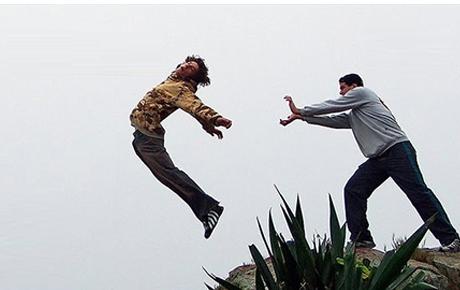
Bulletin board back in action!

times square
It’s not your name in lights, but pretty darned close

Reinvigorated from their summer vacation, the hard-working staff at Maximum Z HQ has assembled the latest batch of projects from savvy creatives well worth your time and attention.

-Writer/director/producer Aaron Mendelsohn is offering a special 20% discount for his new ebook The 11 Fundamental Questions: A Guide to a Better Screenplay. Aaron is the co-creator and co-writer of the AIR BUD franchise (12 films and counting), has served as Secretary-Treasurer for the Writers Guild of America, and is currently a Professor of Screenwriting at Loyola Marymount University.

-Writing coach and author EJ Runyon runs the online writing service Bridge to Story. She’s launched the Little by Little crowdfunding project to help her build a vehicle that with your help will bring her services to those without internet access “anywhere in the lower 48”. You don’t “donate” to her Kickstarter; you book a coaching or story editing session and your funds go to the build!

-Screenwriter Phillip Hardy has launched his own script consulting company The Script Gymnasium. Phillip’s scripts have placed or won at over 30 film festivals and script contests, including Austin and Screencraft, and he also serves as a judge in the New York City Midnight Screenwriting Challenge. Seeking help to get your script in shape? He’s your guy.

-Writer-director Josh Mitchell runs Wicked Pissa Publicity, but has also worked on a lot of short films and is now running a crowdfunding campaign for his feature-length family film project HARRY HEAD, an original story about loyalty, family, unity and differences. Donate if you can!

-Screenwriters Chris and Jay Thornton have been busy the past couple of years with some script sales and developing a TV show with The Weinstein Company, but they’re now working on their debut feature CACTUS JACK, “an ultra-contained, thematically supercharged and extremely relevant gonzo micro-budget film.” A crowdfunding project is up, and you can view the NSFW proof-of-concept trailer here. Donate if you can! And as an added bonus, an interview with the Thorntons will post in the very near future.

Have a project of your own for which you’d like a little help getting the word out? Our email inbox is always open.

Several thoughts while you wait

young-frankenstein
This was originally a clip of “Igor, would you give me a hand with the bags?”, but the greedy jackals at Fox have removed it. This photo proudly takes its place. RIP Mr Wilder

More feedback coming in on the comedy spec, so some tweaking and revamping is underway. Hope to be done with it soon.

In the meantime, I think these previous posts do a more-than-adequate job of summing up what a lot of writers, along with yours truly, probably experience and encounter during this process.

Enjoy.

Thank you. I’ll take that under consideration.

Knocked down, but not staying there

Not everybody’s going to like it

The great exchanging of two cents

Am I getting better?


Thank you for being better than me

fancy pie
Mine don’t look like theirs yet, but give me time…

Via a writing colleague, I recently found myself in the possession of a pair of scripts written by a pair of pros.

“Open one and read a few words and you’ll be in for the rest of the script,” I was told.

And you know what? They weren’t far off.

I only got a few pages in, but found the writing to be extremely vivid and descriptive. No problem at all in painting those mental pictures with a powerful brush.

My only complaint – all that dazzling wordsmithing got a little too distracting, making it slightly tougher to focus on the story. Nevertheless, I’m looking forward to reading both scripts.

But I totally got my friend’s point: the writing was exceptionally engaging. It really grabbed you and made you want to keep going.

Compared to it, my writing comes across as kind of dry and might even be considered sort of dull and lackluster. Not to totally disparage my own work, but these writers are professionals. I, as it has already been established, am not.

But reading these scripts and others like them are good reminders of what I and every other writer should be trying to do. You don’t want a stick drawing. You want a finely-crafted elaborate work of art.

Speaking from experience, this isn’t easy. It’s almost like learning a new way of writing. It requires a lot of work, nor will it happen overnight.

But don’t despair. The good news is you can start working on these improvements practically immediately.

Take the last scene you wrote. How does it read to you? Does it compel you to want to know what happens next? Feel free to tinker with it until it gets to that point. Then do the same with the scene after it. And the one after that. And so on, and so on.

Think of it this way – you want the reader to “see” the scene in the same way you imagined it. Therefore, your challenge is to write it so the actions, images and dialogue in it come as close as possible to matching your version AND that no other description would do it justice.

Reading these professional scripts was at first intimidating in a “I’ll never be able to write like that!” kind of way. But with a continuous effort and a lot of work, there’s no reason to think I couldn’t come mighty close.

Just the push I needed

push
What are friends for?

Notes are coming in for the comedy spec, and reactions are pleasantly positive. My always-reliable readers have provided some extremely helpful notes, including an across-the-board opinion about a key plot point.

A lot of what they had to say made some good sense and are really helping solidify the script into something more-than-decent.

While they had nice things to say about the script, each reader threw in an extra little tidbit in the form of comments directed at the script’s writer.

AKA me.

“These two lines of dialogue are an anomaly compared to the rest of it. I know you can do better.”

“Great story, but I’d like to see you dig deeper.”

And these are comments from experienced writers who’ve read some of my other scripts, so they know what I’m capable of. They’re not just saying these things in a casual, generic feedback kind of way, or because they’re trying to be nice. They really mean it, and I take what they say to heart.

I thought the script was okay to begin with, but after getting comments like these, it makes me want to try even harder.

When you’re in the process of putting a script together, you really dedicate yourself to doing a good job, and then try to do better with each subsequent rewrite. It’s how we improve.

But it’s also kind of tough to be able to get yourself past a certain point. You think you’ve done everything you can, but then you get a bit of a supportive nudge and your journey resumes.

It’s quite the confidence booster to know there’s somebody out there rooting for you (especially somebody without a vested interest in you). They want to see you succeed just as much as you do. So you buckle down and throw yourself into making that next draft even better.

End result – you have a stronger script and their belief in you and your abilities is confirmed. Wins all around.

And when the time comes and they ask me for notes on their script, I have a strong suspicion I’ll be able to do the same for them.

Q & A with Babz Bitela

Babz Bitela

Barbara “Babz” Bitela is a literary manager operating out of northern California, a “hired gun” editor for fiction writers, and hosts the Babzbuzz internet radio show “because folks were nice to me and helped me, so I’m trying to pay it forward, and believe me, I’m keeping it real.”

“We want voice on the page. We KNOW it when we ‘hear’ it.”

Her book Story of a Rock Singer is currently being adapted as a Broadway musical.

What’s the last thing you watched/read that you thought was incredibly well-written?

Justified and Bates Motel are my top two. Joss Whedon is by far one of my favorite writers. Buffy the TV series –  WOW!  You can youtube his interviews: it’s like an AA degree in writing and it’s free to anyone.

How’d you get your start doing representation?

I pitched a semi-retired agent named Ed Silver on a book I wrote. He was Lee Marvin’s manager and finance guy, also for James Coburn and many others. The guy’s ‘seen’ stuff, man – Hitchcock napping, for one. He loved my style and offered me a gig to take over and he’d mentor. We clicked big time. He’s Jewish, I’m Italian. As Sebastian Maniscalco says, “Same corporation, different division.” That’s us.

Is recognizing good writing something you believe can be taught or learned?

You for sure can learn it IF you want to. Here’s why – bad writing obviously sucks. It just does. How do you know that? By reading GREAT (not just good) scripts. I read so much so often I can now tell what’s going to go and what MAY go but here’s the rub: in the absence of money behind it, it may not matter. And I may love it and another may say “meh”. So pov does matter.  So you can learn and pitch but Lady Luck is no lady: she’s a tramp in cheap shoes and she’s fickle. We press on because we believe in the story/writer we hawk. If it goes, it goes, if it doesn’t, well, I’ve had the benefit of “seeing” incredible “movies” and the only down side is, so few others will see that. THE WRITER however, benefits. Why? Job well done. And if you don’t write for the JOY of the craft, there’s no point. Write for the sale? That’s an industry sucker punch. I’ve learned to find great scripts and I’ve learned it can be like screaming in space once you do.

What are the components of a good script?

VOICE, RISING ACTION and TWISTS.  What is voice: it’s a lot like porn – I know it when I see it but it’s hard to describe. Think of it this way: you open a novel, settle in and by page two you’re thinking “Ugh, this just sucks”, but you press on and by page ten you know it’s not the book for you so you donate it to Goodwill. It’s the same with a script. I once read a tv pilot by my client that I couldn’t read it fast enough. Why? I WAS DYING TO SEE WHERE IT WOULD LEAD. The action and characters were alive on the page. That is what makes a good script: I call it NARRATIVE TUG.

What are some of the most common mistakes you see?

Where to start? Typos, for sure. It’s a speed bump.

Wrylies. Just don’t. UGH! Makes me crazy. There’s only one time I’ve seen it used where it worked. ONCE. And that writer is a five-figure-income writer.

Novels posing as scripts. The writer MUST understand the economy of words and do VISUAL storytelling. Telling a story with pictures is a movie. Telling a story with talking is a soap opera.

Avoid using “ing” words – slows narrative, slows the readers eyes.

Avoid “very”. Just find what IT IS. Don’t say “very smart”, say “bright”  – just pick! Not kidding. You’ll thank me. Rodale’s The Synonym Finder is invaluable for writers.

And never fall in love with your stuff. It’s gonna get cut.

What story tropes are you tired of seeing?

Well, many work. Some don’t. My favorite recently was probably in draft form: “Fire all phasers!” But instead he said “Fire everything!” Love it!

But I say write bad and cliché in the draft, leave it there, then go back and rewrite it.

Lots of folks say “Not my first rodeo.” I say “Not my first rocket launch.” Anything to WAKE UP the reader.

What are the three most important rules every writer should know?

I’ve got more than three.

-Don’t enter a script contest pitching a word doc.

-Don’t send a script unless invited.

-Don’t ask me what I think if you don’t want to know.

-Don’t go past 120 pages. I mean it. Try to stay around 100 if you can.

More rules? I think it’s just wise to do 12pt Courier font as it’s tradition. The Coen Brothers don’t use Courier. But they’re already famous, so when you’re famous do what you want. In the meantime, stick to tradition.

What do you look for when it comes to potential clients, both personally and professionally?

No dope. No booze. No drama.

Feet on the ground, and committed to spending tons of time doing what you love, regardless of the outcome.

My clients pitch themselves. They must. If that’s not for you, then I’m not the agent for you, and also, you’re in the wrong business.

Yes, the agent makes inroads, but you must pitch you and build relationships. When you do; AVOID using “I” and ask the person “What do you do, and how do you do it?” Ask about them. We’re people FIRST. That’s why I do Babzbuzz. People like me. They helped me. So I take what they tell me and mush it up with what I’ve learned, and talk about it on my show to try to help.

I’m a small company: I’m WGA.

Meh. Folks hang up on me all the time.

Why?

“Babz, love the script! Who’s funding?”

Crickets.

“Babz, baby. Call us back when you have the dough and I’ll show my client. He may want to star in it.”

EEEK!

What happened to love of story?

Hell, that left the building and moved to an island the actor/director owns. He’s got to feed his family too, ya know. So bring the bricks.

EEEK!

Lightning can and does strike. That’s what I do. I’m really a stormchaser who looks for folks with money who want to buy.

Readers of this blog are more than familiar with my love and appreciation of pie. What’s your favorite kind?

Oh man, you had me at the fridge door. Dutch apple. Key lime. Rhubarb when you can find it. And pretty much any clever use of chocolate.