3 months in, and…?

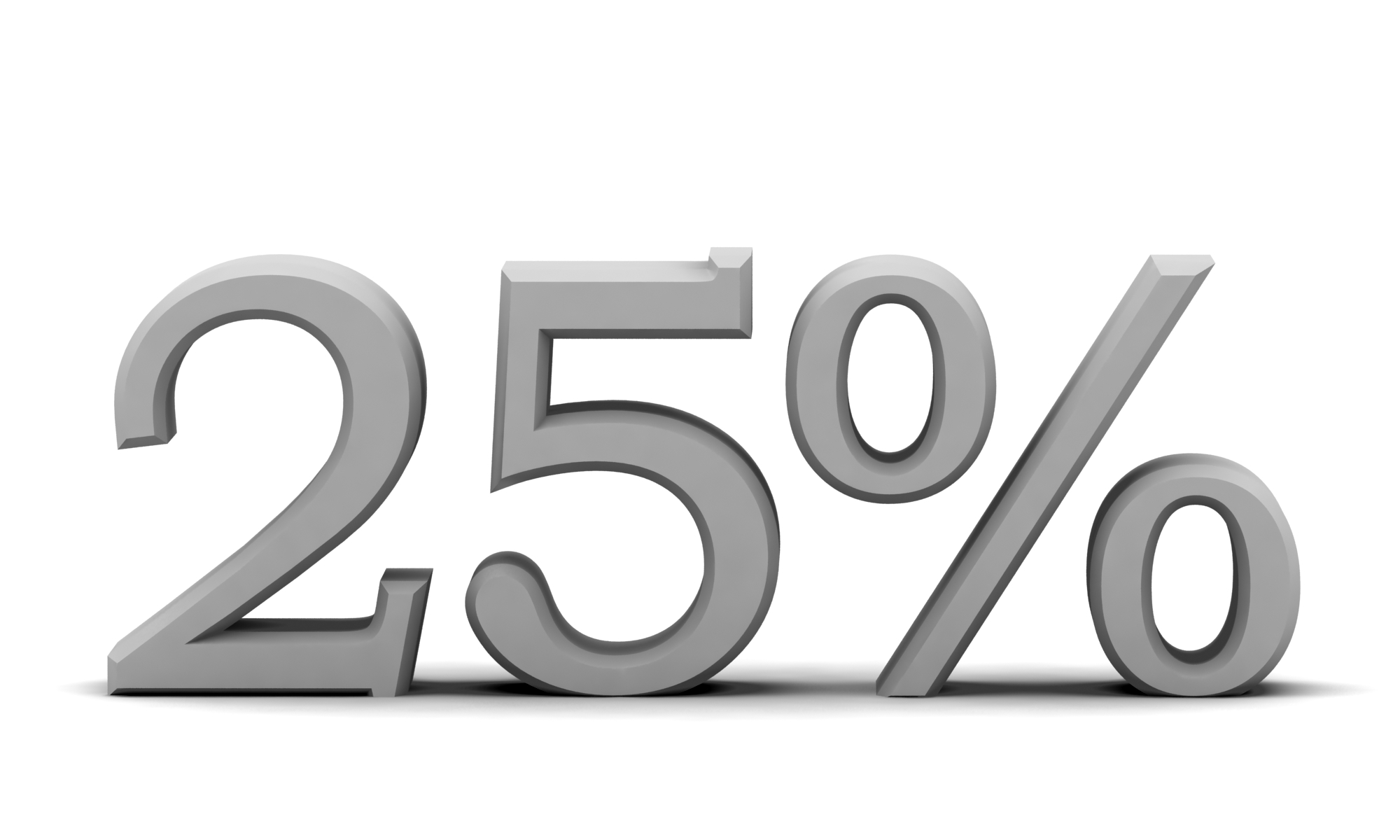
2022 is now 1/4 over. How’s it been for you, productivity- and results-wise?

Are you making the progress you’d hoped you would? Any goals achieved or finish lines crossed?

If so, great!

If not, don’t be so hard on yourself. Sometimes things take longer than we’d like them to.

The important thing is that you’re putting in the effort, and that any progress is good progress.

It can probably said with absolute certainty that lots of writers started the year with the mindset of “I’m going to accomplish X, Y and Z!”. Like with most things, numerous factors play a role, so results will vary.

It’s great to give yourself some long-term goals, but setting up some short-term ones can really help boost your morale. Create goals you know can achieve, like setting aside a specific amount of time per day for writing and writing-related activities, or that you’re going to write X pages a day.

Accomplishing something is all about putting in the work, and that takes time.

Look at it from this way. If you’re not where you thought you might be around now, you still have 9 months to work on getting there.

It’s a marathon, not a sprint.

This applies to more than just writing a script.

Pace yourself. Know what you’re capable of, but don’t be afraid to give those limits a little extra push.

Good luck, and hope you have a wonderfully productive next three months.

Does your script sound like you?

When was the last time you read a script that was really hitting on all cylinders?

Great story, cinematic writing and vivid imagery, compelling characters, the whole kit and kaboodle.

What’s the one thing that ties all of them together?

That writer’s voice.

We hear about it all the time, and I’ve always described it as how the writing in a script is a reflection of the writer’s style.

If you read a script by Shane Black, Judd Apatow, Nora Ephron, or Quentin Tarantino, you’d know it by the way it reads. Each one is written in the distinctive voice of each writer.

And that’s what you want to achieve with your writing. When somebody reads your scripts, they’ll know it was you.

The need to establish your own voice when it comes to your scripts can’t be stressed enough.

I’ve read a lot of scripts that try to mimic an established writer’s voice, and it usually falls flat. Part of the reason is that the writer is trying too hard to sound like the established writer, which seems counterproductive. If I want a script that reads like Judd Apatow wrote it, I’ll read a Judd Apatow script.

It also doesn’t help that some of these established writers created a niche for themselves with their writing style, so anybody who comes after them with the same approach will immediately be labeled a pale imitation. You might have a phenomenal script, but if the only thing somebody remembers about it is that it’s just ripping off Tarantino, you’ve just wasted everybody’s time.

Now this isn’t to say that you can’t write in a similar style, but you need to put your own spin on it to help it stand out.

What are some of your strengths, writing-wise? In what areas do you really shine? Is there a way you can apply that to other aspects of your script? You want your script to have a real impact on the reader; one with a strong voice can help accomplish that.

Another benefit of a script with a strong voice is that it helps make it that much more memorable. Not only does it leave an impression, but chances are it’ll stick with the reader long afterward. Many’s the time I’ve finished reading a script and within five minutes don’t remember a thing about it. Sure, the writing may have been adequate or possibly just slightly above average, but a lack of a distinctive voice from the writer is a key missing ingredient.

Then there are those I’ll remember a long time after. Maybe it was the story or even just the concept, or the protagonist, or a great scene/sequence. No matter what it was, you could come to me a few months from now, or maybe even next year, and ask “Hey, do you remember that script about ____?”

Chances are I will BECAUSE of the writer’s voice.

Which is exactly what you’re aiming for.

Still a thing?

That little paper box full of extra cards is tucked away somewhere

A few weeks ago, I had the pleasure of being interviewed on the Telling The Show podcast to talk about networking as it relates to screenwriters.

Over the course of the discussion came this question: in pre-COVID times, it wasn’t uncommon for a writer to have a business card. Does a writer still need one?

I thought it was a great question, and had to really think about it.

My initial thought is probably not, especially due to how most networking is now done online, and most writers have their phone with them, so contact – or at least reaching out – can be practically instantaneous.

What good is having a card to hand out when you’re practically isolated and there’s nobody around to hand it to? These days you’re more likely to connect with somebody via a social media platform, so you’ll probably do everything via email and/or texting in order to set up meeting one-on-one.

A lot of writers now have a strong online presence – websites, blogs, an account on Youtube, Twitter, Instagram, etc., so it’s significantly easier to get in touch with somebody to strike up a conversation, or at least establish a professional relationship.

Keeping that in mind, in-person interaction is slowly coming back, so if we get to the point where you show up at a venue where you don’t know anybody, and then have some nice conversations with people, would you want to have a card to hand out, or be comfortable asking for their email address?

There are exceptions, of course. A majority of writers tend to be on the introverted side, so dealing with a real live person can be somewhat intimidating. This makes online networking easier for some people. Somebody quiet and shy in person might be more involved or outgoing on a Zoom call or on Twitter.

Just as an example, I recently tweeted a compliment to the hosts of another screenwriting podcast regarding the interview they did with a high-profile manager (I also included the manager in the tweet). Both hosts and the manager liked it, and another writer friend of mine added in his two cents, leading to a brief discussion among all of them.

I didn’t do it because I was trying to suck up to the hosts or hope the manager would offer to read something; it was because I liked what I’d heard, and wanted to let them know that. Would I have achieved the same results if this had been done in person? I’m going to go with “slightly maybe, but probably not to the same extent”.

Online interaction is one of the things I encourage for writers seeking to expand their network. Nobody’s going to get to know you if you hang back and stay quiet. Become involved. Join conversations. Just make sure to be polite, civil and respectful.

There are forums and group chats to take part in, as well as lots of screenwriting groups on Facebook. I find the smaller ones to be better because the members tend to be more experienced, more mature, and of a more rational temperament.

Networking and interacting has really changed, especially over the past few years. But one thing remains the same: online or in person, business card or no, be the kind of person you’d want to know.

Getting your time to work for you

Most of this week for me has been splitting time among a few projects, with notable progress on each. Especially notable was that two of them had felt somewhat stalled, so to have broken through that wall and kept going was quite the endorphin rush.

Since I was feeling rather accomplished about this relatively minor feat, I put out on social media how nice it was to have done so. A number of writing associates offered up congrats and encouragement, as well as one person who asked “How do you find the time to do all this?”

I’ve gotten this question before.

How DO I find the time? How does any writer?

I guess the simple answer is: I make the time, whenever I can.

Some writers are able to have a designated window of when they work. Maybe they wake up a little earlier than they need to and write for an hour or two before they need to get ready for the day job.

Or they have mini writing sprints at the day job; 10 minutes here or there, during the second cup of coffee or lunch, what have you.

Or maybe they wrap up their day with writing before going to bed.

It really depends on what works best for you.

As much as I’d love to have a big block of time each day to be all about the writing, some days that just isn’t possible, so I make do. I have a little downtime during the day job, so I try to squeeze something in when possible.

But I’m also trying to get in better shape, so a certain amount of my day might involve an hour-plus at the gym or going out for a run. This in turn means I’d have less time to write, but if I don’t exercise, I’ll feel lousy mentally and physically, which in turn won’t help me be productive for the writing. If that means a slight extension of how long it takes to finish a project, I’m okay with that.

(One exception – if I’m on a deadline, all bets are off and it’s all about the writing.)

Sometimes it’s not about how much time I have to write, but how much I plan to write in that time. More than once I’ve sat down thinking “I want to write at least three pages today.” If I write three, great. A lot of the time I’ll push myself to do at least a little more, depending on how productive I’m feeling. Anything beyond the original objective is a bonus.

It’s all about setting up your own goals and expectations. Be realistic. What do you think you can accomplish each day with the time you have to work with? You know better than anybody how you operate, so plan accordingly. Write for an hour and see how far you get? Set an achievable goal (the aforementioned three pages) and see how it goes?

It’s easy to feel negative when you see other writers proclaiming things like “Woo-hoo! Another dozen pages done today!”, and all you could manage was two or three.

Don’t. Everybody runs at their own pace. Like I remind myself when I take part in a race:

It’s the distance, not the time.

It’s more important to do this – and finish – on your own terms, rather than pushing yourself too much and running yourself ragged, resulting in collapse and/or burnout. And I’m not just talking about running.

Know what you want to accomplish, and knowing how much time you have to do it, you can plan accordingly.

Repeat as long as necessary until the damned thing’s finished.

Until the next draft, where you go back and find the time to do it all over again.
From the archives: If only you could eat a bad script

pineapple upside down cake
Let the metaphors commence!

Author’s note: got some other stuff that requires my attention, and a recent discussion about pineapple upside-down cake reminded me I did a post involving it a few years ago, so hope you enjoy this blast from the past from July 2016.

“Before we get to the gist of today’s post, let’s address the elephant in the room: my western did not advance to the quarterfinals of the PAGE contest.

Honestly, I was a little surprised; I thought it would have done better. After a brief wallow in disappointment, I shrugged my shoulders and moved on. It’s just another one of those things over which I have no control. I still have a ton of confidence in this script and might submit again next year. Also waiting to see how it fares in Austin and the Nicholl.

True, it was a rather lousy way to start the weekend, but over the next couple of days, I managed to redirect my focus, which included a nice long run that involved traversing the Golden Gate Bridge, and attempting something I’ve always wanted to try:

Making a pineapple upside-down cake (from scratch, naturally).

Guests were coming over for dinner, and I’d made pies for them before. But this time,  I wanted to try something entirely new and preferably a little challenging. I’d say this falls into both categories.

I scoured the internet for an ideal recipe, found one to my satisfaction, and followed the directions to the letter. The result? It looked like it was supposed to, and that’s where the similarities end. A little too sweet and the center was still kind of goopy. Nevertheless, my guests still liked it, and K & I split the last piece after they left. Not bad for a first attempt.

Why did it not turn out the way I expected? A lot of reasons. The oven’s a piece of junk. It didn’t bake long enough. The ingredients and the amount of them probably need to be tweaked. No matter what, I know now that I can adjust all of these next time and get closer to the results I seek.

Except for the oven. It will forever remain a piece of junk until it dies. Which can’t happen soon enough. But I digress.

Notice all of the comparisons you could make between baking and writing a script? Trying something new and long-sought-after. Seeking advice and guidance. Following the guidelines. Doing what I was supposed to. An okay-but-was-hoping-for-better initial result. Planning ahead on what to fix/adjust for next time.

If a less-than-determined baker ended up with the cake I made, they’d probably denounce the whole process, give up entirely and probably buy pre-made stuff at the supermarket. But we’re made of sterner stuff. We hit a snag or some kind of unforeseen development, and we compensate as best we can. We learn what not to do next time. Sometimes you end up with something jaw-droppingly amazing, and sometimes you end up with something totally inedible.

With this whole experience behind me, I can now focus on projects of the immediate future, which includes another round of editing and revising a script, and making a pie or two for a dinner party this coming weekend.

It’s my intention to have the results of both of these undertakings be totally and utterly irresistible when they’re done and ready to serve.”