Just a moment of your time, please

It’ll only take this long, right?

Even though I don’t actively participate on a lot of online forums, I still enjoy reading them, occasionally throwing in my two cents when I think I have something worth saying.

On one such forum, an experienced writer offered to provide detailed notes on the script with the logline he liked the most. He was very detailed and meticulous in laying out the guidelines and rules, including that the script “MUST be ready to read NOW. No exceptions.”

Up until that caveat, I’d thought about submitting the logline for my mystery-comedy, but knew the script still needed work, so instead opted to hold off and wait until I thought the script was ready. And I said words to that effect in the comments.

Much to my surprise, he responded almost immediately.

“Now that’s what I love to see. Writers respecting the investment of time and energy of others. I’m taking about five hours out of my life to do this and I want to feel the script I’m about to read will be worth it. Good on you, Paul, for being so conscientious. It’s one of the responsibilities of a writer no one tells you about, but it’s absolutely vital for building and sustaining a career.”

I never thought of it that way because I was looking at it from my perspective: I didn’t want offer up a script I didn’t consider ready yet. But he makes a very good point – the other person has their own schedule, and you need to be respectful of that.

It’s easy to forget that even though you’ve put a lot of time and effort into your script, now you’re imposing on somebody else to devote a sizable chunk of their time to giving it a solid read-through. That’s a lot to ask, especially when they’ve offered to do it for free.

When somebody asks me if I can take a look at their script, I always let them know it’ll probably take me longer than I think to get those notes to them – and it usually does. Nobody’s complained about it (to my face, anyway). And when the situation is reversed and someone’s giving me notes, I’ll send the script with a note of thanks and that there’s no rush. I’ll distract myself from the waiting game by working on another project or two.

We all only have so much time to spare to devote to work on our own material, let alone someone else’s. Just be grateful and appreciative that someone’s willing to sacrifice some of their time to help you out, and definitely be just as willing to return the favor.

In a timely manner, of course.

This is feedback?

I'M LOUD, WHICH MEANS I'M RIGHT!
I’M LOUD, WHICH MEANS I’M RIGHT!

Oh, the hell and agony I must endure so as to spare you, my loyal reader, from hopefully having to experience the same thing.

Once again, your humble author has been savaged by the sharp knives of online criticism. This time around, it was regarding the logline for my mystery-comedy.

Perhaps I’d been lulled into a sense of false security by recently receiving positive feedback on it from other sources. Feeling buoyed by those encouraging comments, I posted the logline somewhere else. Even though I like how it currently reads, that doesn’t mean it can’t still be improved.

Ever notice that a lot of online forums are usually organized with the intention/suggestion/guideline that participants “offer up helpful advice” to those seeking it? More on that in a minute.

There was one positive response, which was quickly shoved aside by one of a more…negative nature.

Among the highlights:

“…probably one of the worst concepts I’ve ever heard.” (*Ahem* PIXELS?)

“Maybe if it was written for 5-year-olds…” (because that hasn’t worked for Disney)

“That’s how hokey your entire concept comes across as. Sorry, but I think it’s truly dreadful. (sad face emoji)” (So glad they threw the emoji in or I would have totally missed their point.)

Younger-writer Me would have not taken these comments well. Present-day Me laughed my fucking head off.

You don’t like it? Fine. Makes no difference to me. But why all the hate and insults? All I’m reading are the thoughts of a bitter asshole who doesn’t understand the term “constructive criticism”.

If your overall message is simply “Your idea sucks, and now I’m going to shit all over it!” then what’s the point of even saying anything? Do you think your vitriolic rant is going to make me suddenly stop working on it?

There were so many ways I wanted to respond, and came really close to doing it several times, but instead opted to just stay silent. No matter what I said, it would probably be misconstrued and more than likely start an unnecessary battle of words. Not worth it.

Remember that little guideline for the group regarding “helpful advice”? How exactly does anything that was said do that? Anybody can say they don’t like something, but at least give a valid reason why. Another member chimed in that “you have to take the comments if you post”. I agree, but that means the comments have to be worth taking in the first place.

A friend offered up this reminder: “When someone criticizes, it needs to be specific and constructive. Otherwise, it has no value.” I’d say that’s pretty accurate, and definitely applies here.

An even more amazing aspect to this whole thing is that this is the exact same person who issued a similar diatribe over the logline for my western last year. As far as my research can tell, they are still a self-proclaimed “director, producer, screenwriter and script consultant,” although without any identifiable credits or internet presence.

The whole purpose of providing feedback is to use your knowledge to help the other person make their something better, and in a way that’s not insulting or belittling. In this case, neither happened.

This was just an angry opinion showing a total lack of knowledge, help and encouragement, and definitely could not be considered feedback in any true sense of the word.

The benefit of connecting with people in person

Availability of coffee is always a pleasant option
Face-to-face. Classic. Effective.

I had the good fortune earlier this week to attend the meeting of a new writing group. It’s been a while since I’ve been part of one, and it was nice being able to once again interact with other writers and engage in casual discussions about our respective projects before moving on to the focus of the evening. Since it was my first time attending, I’d opted to stay in the role of observer/commenter, rather be than one of the four-to-five who brings pages for review.

Following a brief table read, the group then offers up its collective comments. This week’s selections weren’t bad, but each set had room for improvement. Some maybe a little more than others.

When I got the opportunity to toss in my two cents, I talked about what stood out for me and what I thought needed work, making a point of being nice about it.

Others chimed in with their opinions and suggestions, not all of which I agreed with. While I may have been thinking “That’s not right,”or “That doesn’t make any sense,” my lips remained sealed. I didn’t want to come across as the pompous know-it-all. It’s important to make a good first impression, no matter who you’re meeting.

When the meeting was over, I talked to the guy who organizes it (we were in a different writing group years ago), saying I’d hoped I wasn’t too obnoxious with my comments. “Not at all,” he said. “A lot of these folks are newer writers, and you told them some things they needed to hear. It’s the only way they’re going to get better.”

Whew.

It’s been my experience, and hopefully yours, that getting feedback from an actual person is beneficial on several levels. Chances are you’ll know something about that person’s background and experience, so you can put the appropriate level of merit into what they have to say. And unless they’re a jerk to begin with, they might be a little less harsh with their comments than if it was an online forum, where for some reason people have no problem letting loose with vitriolic criticism and put-downs.

If you asked somebody for feedback, wouldn’t you rather the notes were helpful in a supportive way, rather than “This sucks! What makes you think you can write?” That would be pretty devastating, right?

Now imagine that situation reversed. A newer writes comes to you, asking for notes. Do you think “They don’t realize how fortunate they are to have the wonderfulness of my vast superior knowledge bestowed upon them!” or “I used to be where they are. How can I help?”

My advice: opt for the latter. Both of you will be better off for it.

Run at your own pace

It's the total opposite of a sprint
It’s the total opposite of a sprint

For the past couple of days here at stately Maximum Z HQ, yours truly has been doing everything possible to fight off a nasty viral infection (Note to self – invest heavily in Kleenex and Halls cough drops) because I’m doing my first half-marathon in over a year this weekend. I do expect to be well enough to run. Fingers firmly crossed hoping to at least break the 2-hour mark.

As a result of being sick, I’ve been home from work the past couple of days, which means a little more time than usual to work on the western rewrite. Latest update: page 38.

When I have a lot of time to write, I’ll give myself a short break after reaching a milestone, such as the end of a scene, or x number of pages written or after a certain amount of time (this also helps prevent premature burnout). Sometimes break-time involves perusing social media or screenwriting forums, just to see what’s going on out there.

What’s been going on this week has been a flurry of activity among my peers. One got a manager. Another finished their latest draft. Another had an agency request their script after a pitch.

And there’s me, filling a wastebasket with snotty tissues, coughing up things of a color not found in nature, and hoping to get to the bottom of the next page before the day is done. Slightly disheartening, to say the least.

But, like when I run a race, I remember that it’s different for everybody. I’ve been working on this rewrite for quite a while, and have confidence that it’ll be done sooner than I think.

I’m also overseeing all of the “Ask a…!” interviews, and have now added this into the mix.

Oh yeah, and training runs.

When you finish a race, you get a medal, and you wear it with pride. You’ve earned it. You finished an hour behind the winner? Big deal. Chances are you didn’t do it to win. You did it to test yourself, to see how you could do with this self-imposed challenge.

When you write a script, yes, you are going up against every other writer out there, but you do it the way that works best for you. You can only manage 30 minutes a day? That’s fine. You tell yourself you’re going to write at least 3 pages a day, and you actually do? Fantastic.

Will others get done before you, or accomplish things faster than you? Of course, but that’s nothing for you to worry about. Focus on you, not them.

I think it’s absolutely phenomenal that these other writers have each reached a certain point with their writing and careers. And so will I. Maybe not as fast, but it’ll happen.

Just gotta keep working at it.

See you at the finish line.

Am I wrong, or just stubborn?

Sometimes you're the puller, and sometimes you're the pullee
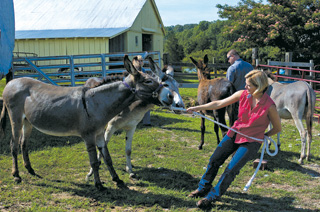
Sometimes you’re the puller, and sometimes you’re the pullee

Ever since I started working on the western, a lot of comments have been made pertaining to the belief that certain aspects of it are just not believable (including the always-popular “It’s not historically accurate.”). Therefore, the story doesn’t work.

But I didn’t let that stop me from writing it. In fact, a majority of the notes on the previous draft were quite complimentary and enjoyed the originality and execution of how it all played out.

Jump to the present. I’ve recently become involved with an online writing group. Despite some negative experiences in the past, this one came recommended, so I’m just starting out with them.

Since I don’t have pages for the western rewrite yet, I sent in a revised version of the logline. In all honesty, I don’t really like it. It feels very lacking and incomplete, hence my need for help.

So far, only two people have commented on it, each saying they cannot get past the number of ways this idea can’t work.

Argh.

This kind of response has always bothered me. As writers, our imaginations are the biggest tools in our arsenal. The possibilities of what we can come up with are endless. Just because it’s not how you would do it means my way is wrong; we’re just taking different approaches.

I’ve never been one to use “because I say it does” as a counter-argument, and will never, ever say “you just don’t get it”. I prefer “I can make it work,” and will spend a lot of time and effort figuring out how.

Which pretty much sums up how I’ll deal with this for now.

Like I said to them, there’s a solid logline out there somewhere. It’s finding it that’s the hard part.