Stepping into the arena

That's one way to eliminate the competition (no pun intended)
That’s one way to eliminate the competition (insert rimshot here)

If your inbox is anything like mine, chances are you’ve been getting a lot of emails lately touting the pending deadline of more than a few contests.

For the most part, I usually ignore them. Maybe the Nicholl if I have a script ready, but rarely any others, if any at all.

But a little more confidence in my abilities and encouragement from other writers is making me gradually change my mind.

I’m seriously considering biting the bullet and submitting a script, warts and all, to a few competitions over the next few months.

It’s one of those things every screenwriter should do at least once or twice.

But which ones? There are a lot to choose from, ranging from the obscure to the high-profile.  While there’s nothing wrong with the Brand X Screenwriting Competition, you have to admit it doesn’t carry the same cachet as being a finalist in Austin, PAGE or TrackingB.

Everybody has different criteria for what they’re looking to get out of a particular contest. While a cash prize is nice, most are seen as stepping stones to making industry connections and getting representation.

Some offer script notes – a handful do it for free, but almost all charge extra for it. It’s not something I’d do, but that’s me.

If you’ve decided this is the year you take the plunge, then do your homework and research the ones you’re interested in to find out they have to offer. What kind of reputation do they have? How was the experience for previous entrants and winners? Do the prizes justify the amount of the fee?

No matter which ones you decide on, keep in mind you are going up against a lot of other writers just as eager and ambitious as you. Do you think your script is ready to take them on? Like, REALLY ready?

Even if you have a tiny amount of uncertainty, how much time is there between now and the deadline? Use this to your advantage and give your script an extremely thorough read-through (or two) and fix what needs to be fixed. Nobody likes finding a typo after the fact.

Do whatever you can to make your script ready to go, cross your fingers when you hit ‘submit’ and hope for the best.  How long you wait until getting back to your current project is up to you.

Good luck.
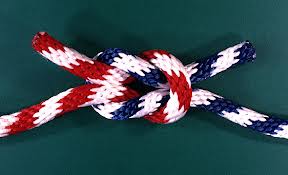
Tying it all together

Nothing better than a solid connection of two loose ends
Nothing better than connecting those potential loose ends

Even though I just started this rewrite of the mystery spec, I’m firmly entrenched in the practice of always thinking “What’s the best way to tie this in?” for every scene. It’s something I strive for every time.

No matter how seemingly small or insignificant a part of a scene is, we as writers must be compelled to make sure it all fits not only within the context of the scene, but also within the story as a whole.

Everything should serve a purpose. If it doesn’t, why is it there in the first place?

Think of it as a slight variation on setup and payoff. While those usually apply to the plot (or at least should), tying things together is more of a way to support what happens around the plot. Anything that doesn’t belong is going to be even more noticeable.

It drives me crazy when something happens or is in a scene for no apparent reason. It’s easy to fall in love with your own writing, but don’t put something in because you think it should be there. Have it in there because it has to be.

Taking it in the opposite direction, I’m always impressed to realize after finishing a read (or viewing) how something tied in, but didn’t recognize it at the time. This can be tricky to get a handle on. You don’t want to be obvious about it, but also don’t want to make it too obscure.  It takes practice.

So the next time you’re writing, editing or proofreading, keep in mind to constantly ask yourself “Does this really belong here?”


Seeking the feng shui-ness of your script

A place for everything, and everything in its place

Got some great notes for my western spec. Some of the suggestions involve significant moments I hadn’t considered – now I have to figure out where these should take place. A daunting task indeed, but also not too challenging.

It’s one thing to plot out a story, but knowing how to do it effectively is a little more complicated.

You can’t just throw stuff in there and hope it sticks. Information has to be doled out appropriately so it not only fleshes out the characters, strengthens and advances the story and the plot, and most importantly, keeps the reader/audience interested.

If you’ve put together a solid outline (as you should before moving on to pages), all the help you need is right there in front of you. Take a look at how your story develops. Do things happen the way you want them to, and do they happen when you want them to?

As you work your way forward, are you seeing potential opportunities for where something could be added or possibly changed? Would that scene from way back near the beginning work better somewhere later on?

Once you find somewhere that scene could go, is it a good fit within the flow of how the story’s developing? Does it keep that forward momentum going while providing us with some kind of necessary information?

Take the time to figure these kinds of things out. It may be frustrating now, but once you work your way through it, you’ll have a better script and wonder what it was you were so worried about.

Pause, think, act – OR – What’s the rush?

One wrong step is all it takes to mess everything up

As nice as it would be for everybody to get on the ball and work within our timeframes, it just doesn’t work that way. Waiting is truly a necessary evil in this business.

In our overeagerness to get things moving, sometimes poor judgment prevails, despite a pre-established conscious effort – “I’ve seen other people make these stupid mistakes, but that’s not going to happen to me.”

I hate to break it to you, but in one way or another, yeah, that’s exactly what’s going to happen.

But we learn from experience, and move forward, knowing what not to do.

Most of the time.

The spectre of “act first, think second” can still rear its ugly head when we’re least expecting it.

You send out your latest draft, only to then see all those typos you forgot to fix. That query letter to an agent has the wrong name in it. Things of that nature.

Yes, you want to get things moving, but if you don’t slow down and take a good, hard look at your material, then you’re defeating yourself before you even start.

“But this is perfect!” you protest. “It’s ready to go!”

According to you, maybe. Many’s the time I thought my latest draft was the definitive final one, only to find out from outside sources how it could be better.

Don’t think something has to get out right now. It’s going to take time to get a response, let alone have things start happening. Better to hold off and make sure it’s the best it can be, rather than send something out too soon and look unprofessional.

The writing sprint: no training necessary

race
It’s not about speed; it’s how you handle the course

Finally, finally got to type in those illustrious words FADE OUT, which brings the first draft of the western spec to a satisfying close.

It’s very tempting to read it and see what needs work, but at this point, I’m opting to let it sit in hibernation while shifting the focus to the rewrite of the mystery-comedy.

While the previous draft is a more solid foundation than I thought, there are still some ideas I’m looking to incorporate.

Rather than jot a few down at a time, or hope inspiration hits every once in a while, I’m opting for a method that’s proven quite helpful in the past: the writing sprint.

Set aside 30 minutes. Just you and a blank page (paper or digital – doesn’t matter, although digital might be easier & faster to work with). Once that timer starts, write out scene ideas as fast as you can.  Don’t stop to think if they’re good or not. Just crank ’em out.

It’s not a bad thing to write what you already have, but maybe you’ll come up with something you never thought of, or suddenly hit on a solution to a problem that’s been bothering you.  Feel free to even take things a totally new direction. For now, there are no bad ideas.

It’s possible you could run out of gas before time runs out, but push yourself to keep going.

Once the 30 minutes is up, take a look at what you’ve got: a ton of (mostly) new material.

Pick and choose what works for you now, but make sure to hold on to the rest. Inspiration could hit from any of them, and you never know what might come in handy later.