Actually, Zippy, I am

zippy
Zippy the Pinhead c/o Bill Griffith

Although the numerical output isn’t as high as I’d like it to be, the daily churning-out of pages for the current project continues. I’m hoping to ramp things up over the next few days and beat my self-imposed deadline of having a completed draft by December 31st.

There are a few factors in play regarding getting this done:

-I’ve got a solid outline to work with. This took a long time to put together and fine-tune, but it’s been a very helpful foundation for keeping both me and the story on track.

-Taking that one step further, sometimes I’ll describe a scene in the simplest of terms; maybe one or two sentences (which can be quite a challenge when you need more detail to make that scene into at least more than a page). A lot of the time, this means I’ll have to come up with something right then and there to flesh it out, and after years of working on this, it’s just gotten easier to actually do that. Fortunately, a majority of my initial ideas seem to work out the best.

-And what may be the most important in helping me continuously move forward – it’s fun. I’m just really enjoying doing it. It’s a genre of which I’ve proven to be somewhat adept. While it may not be the most original concept, I’m able to have a little fun messing with some of the tropes that come with the territory. I’ve got free reign to write whatever scenario I want that works within the context of the story. It’s quite liberating.

All of this combined makes for daily writing sessions that seem to zoom by. I’ll hammer out a scene or page, oblivious to the passing of time. Before I know it, it’s later than I expected, I’ve inched forward in the script, which chips away at the number of scenes still left to do. A very nice scenario indeed.

Dorothy Parker said “I hate writing, I love having written.” I don’t mind admitting I love the writing part too. Sure, sometimes it’s tough, but it’s the only way to get to “having written”.

And if you’re not enjoying writing in the first place, then why do it at all?

Good or fast? Pick one.

hurdles
Careful! All too easy to end up flat on your face.

As some of you may recall, earlier this year I had to get a script done in order to send it to somebody who’d requested to read it. Seeing as how I had all of eight pages written, I wanted to finish it and sent it out as soon as possible.

It took a grueling 10-day writing marathon, but somehow I managed to do it. I got a draft written, polished it up and sent it out.

It was quite an experience, and the end result could best be described as…adequate. I’ll be the first to admit the script still needs a ton of work.

My sole objective was simply to get it done to the best of my ability in as short a time as possible. Would I have benefited from more time? Of course, but at the time, it wasn’t an option.

Fast forward to the beginning of November. My goal: have a completed draft of the latest project by the end of the month. Sadly, I wasn’t able to get as much writing done as I’d hoped, so I’m heading into December with a script that’s right at the halfway point and the intention to have the whole thing done by the end of the year.

Sure, I could push myself through that exhausting process of cranking it out just to get it done, but by working with a slightly longer timeframe, I can take it slow and spend more time fine-tuning the script. In theory, this increases the likelihood the end result will be more acceptable and not require as much extensive follow-up (i.e. rewrites).

Would I love to be done with this draft sooner rather than later? Again, of course. But I’m also willing to be patient and focus on a few pages at a time. If that means it takes me until the end of the month/year to have a quality script ready to go, so be it.

Everybody writes at their own pace. Some are extremely prolific, some aren’t. It doesn’t matter how many pages you write. The important thing is that you’re actually writing.

This whole process can seem excruciatingly long at times, and we all want to produce lots and lots of quality work. But it already takes time to learn how to do it properly, let alone effectively. Patience is one of those things that gets easier the more you work on it.

There’s nothing wrong with churning out a draft in record time, but be aware that focusing on quantity rather than quality will definitely be reflected in those pages. I went through this firsthand, and definitely see it as a positive learning experience. I know I can write something quickly, but also know it’ll require a lot of cleanup work.

But given my druthers, I prefer to take my time. It’s less exhausting.

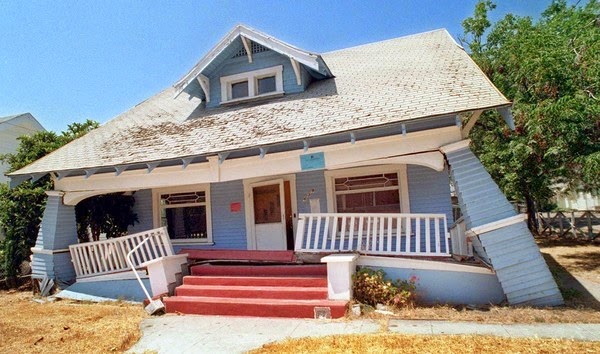
First, you build a solid foundation…

foundation
And this is what could happen if it isn’t

As the daily churning-out of pages continues for my November writing project, I’ve found it extremely helpful that so much time was spent working on the outline.

Only through trial-and-error did I eventually discover that making sure the outline is rock-solid before starting on pages makes a huge difference.

Keep in mind that this is what works for me. You may have an entirely different approach, and that’s totally cool. Actually, I’m curious to hear about some of them. Feel free to discuss in the comments section.

And now, back to the subject at hand…

I see putting together the outline as a gradual building-up process. I start with establishing the main plot points. What are the pivotal moments in this story? Does each one properly fulfill its purpose in the overall context of the story?

Then I fill in the blanks between those plot points. Does it make sense how we get from, say, the inciting incident to the end of the first act? Does each scene do its job in moving the story and characters forward? Are you presenting information we need to know, or setting things up so as to adequately pay them off later? Does each scene appropriately follow the one before and lead into the one after it?

Something important to keep in mind during this part: eliminating unnecessary scenes. You may have a scene you really, really like, but may not be absolutely vital to the story. My recommendation is to either make it vital or get rid of it entirely. The last thing you want is to interrupt the flow of your story for a scene that really doesn’t have to be in there.

Once you’ve got all those blanks filled in, then you move on to expanding each scene – mostly just putting in the necessary elements that reinforce the purpose of the scene. Sometimes I’ll add in a snippet or two of dialogue.

Another very important detail about each scene: get to the point, then get out and into the next one. Once the scene fulfills its purpose, anything after that just slams on the brakes.

Hang in there. You’re almost done. The outline is pretty sturdy, but it could probably use a little more editing, fine-tuning and polishing. When you think it’s honest-and-truly ready, that’s when you make the big jump to pages.

This isn’t to say there won’t be more changes in store once you’re into pages mode, but by putting so much time and effort into your outline, you’ve eliminated a lot of the heavy lifting for when you get there.

A splendid use of a month’s time

pilgrim-marilyn
Most apropos Pilgrim-related photo I could find

Bit of an Election Day shorty today (and for readers in the US – make sure you vote, if you haven’t already).

Count me among the legion of writers using the month of November as a 30-day writing exercise.

My project of choice: first draft of a script that’s been in development for about a year and a half. Looking forward to talking about it more once the draft is complete and some next steps take place; but for now – mum’s the word.

The daily goal of 2-3 pages has again been established. So far, so good, especially working with an outline that’s pretty solid. That really helps.

Working on this reminds me of how much I enjoy the writing process, particularly when it involves my genre of choice (action).

My objective is to be finished, or at least as close to being finished as I can get by the end of the month. Fingers remain, as always, firmly crossed.

I sincerely hope your November is equally as productive.

Just another gradual shifting of gears

gear-shift
Start at first and take it from there

Notes continue to trickle in for the comedy-now-dramedy spec. General consensus – solid concept, underdeveloped, reads like a first draft, still needs a ton of work, and so forth.

All of which is fine by me. I wrote it in an extremely short amount of time, which is probably quite evident in the draft itself.  It’s also the fastest I’ve ever cranked out a draft, and to me that’s still a victory in itself.

Would I have loved for everybody to gush about it and claim it truly wonderful? Of course, but that ain’t gonna happen. As long as nobody says “This is terrible!”, I’m good.

Is it at least a decent script? Well, I like it. There’s a lot of potential in it, and the quality can only improve from its current state.

So while the thoughts of “what to fix and how to fix it” percolate, I’ll slide it to the always-expanding back burner and move on to the next couple of items on my agenda, which includes notes on some friends’ specs, followed by the first draft of a long-in-development project.

Exciting times, chums.