The great exchanging of 2 cents

team vs wall
Sometimes you’re doing the lifting or pulling up, and sometimes you’re the one to whom it’s being done

One of the greatest benefits I’ve found from developing and interacting with my network of fellow writers is the mutual willingness to help out when that help is requested.

Just within the past month, I’ve had three requests for script notes and two for logline feedback. (Although I’ll be the first to admit my timing could use a little improvement. It always takes me longer than I think. But I make a point of doing it. That counts, right?)

And during this same time, I’ve contacted several associates, asking “If you have the time, what do you think of this?”

The advantage of this kind of arrangement cannot be understressed. While I’ve gotten a lot out of using professional feedback, I’ve also been extremely fortunate to have received some very insightful and helpful comments from other writers. I couldn’t even begin to tell you how much their suggestions have contributed to the improvement of my scripts and loglines.

Since politeness actually does count (and people will remember it, or the lack thereof), I make sure to send them a thank-you note, which includes “More than happy to return the favor.” Which I am. I enjoy reading and commenting on other people’s stuff. And I’ve yet to have one person say my notes weren’t helpful. To my face, anyway.

One of those written-in-stone tenets of screenwriting is “It’s not what you know, it’s who you know.” While this primarily applies to people working in the industry, it can also work for those of us trying to break in.

Take a look at your own personal network. How many of them would you be willing to contact and ask for a little help? And how willing would you be to help them if they came to you? Being helpful and supportive goes a long way for both parties.
The learning never stops

classroom
Class is in session

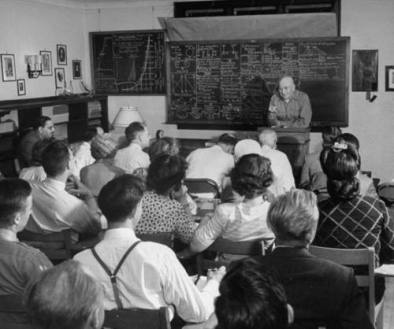
I had the good fortune this past weekend to attend a writing retreat in the serene hills of Malibu, the core of which was a seminar given by noted screenwriting consultant Bill Boyle (who was featured here in my recent Ask a Script Consultant series).

This was by no means “Intro to Screenwriting”, but more along the lines of taking your writing beyond the basics and making it richer and more layered so it reads more like a script written by a professional. Each idea and concept was explained using examples both written and visual.

The way you describe a scene so the words really pop off the page. Writing a character’s introduction to create a solid image of what kind of person they are. Creating dialogue composed of exactly-right words and with a rhythm so it sounds exactly as it should.

And this is just a small part of what was covered. There was a lot of information to process – in fact, I’m still processing it now.

Added bonus for me – a one-on-one with Bill to talk about steps to take to help get my career going.

The big question at the wrap-up session was “Did you get anything out of this?” This isn’t something I could answer right away. I really had to mull it over. In the end, my response, which still applies, was this:

There was a lot to take in, so I don’t think the results will be immediate. It’s not a superficial fix. All of it is something you really need to think about before and while you’re writing.

I have a strong suspicion that in the coming weeks and months, the more I write, the information that was presented will work its way onto my pages. I’ll probably develop my own method of doing it, which will then most likely become an automatic part of my writing process.

Am I glad I went? Very much so. It also gave me the chance to meet and talk with other writers, which is always great. Would I recommend this sort of thing to writers seeking to improve their skills? Definitely. (Here’s a link to Mia Terra Tours, the company that runs them)

No matter how much you think you know about screenwriting, there’s always more of what you don’t know. So when you get an opportunity like this to increase your knowledge and improve your skills, take advantage of it and do it.

Don’t open that door!

doors

Another busy week around Maximum Z HQ, with a significant part of it involving waiting to hear about the potential future of some of my projects.*

I hate the waiting. It opens the door to allow fear and anxiety to stroll on in.

A friend who’s a director put it very succinctly: It’s all about control. A lot of that stuff is out of your hands now, which makes you nervous about the outcome. You have to redirect your attention to anything and everything for which you can take charge, and do something with it. The sooner the better.

How absolutely true, and it was exactly the reminder I needed.

In my case, that comes down to the work and all things related. It’s easy to forget how many things with which I’m involved. My own stuff (which is a growing category unto itself), giving notes, networking, sending out queries, just to name a few.

Sure, it would be great for everybody to respond quickly, preferably with news of a positive nature, but it doesn’t work that way. These things are known to drag out for excruciatingly long periods of time, and me fretting over it is the last thing I need.

I wouldn’t even be surprised if I get an email in a few months about one of these that I’ll probably have totally forgotten. It’s happened before.

Keeping busy really does help you stay focused and keep the negatives at bay. It might not be easy, but do what you can to slam that door shut, lock it and throw away they key.


*heard back from a producer soon after posting this. They passed on my script, which sucks, but will now re-double my efforts with the other projects.


A multi-pronged approach

freeway
Lots of different ways to go, as long as you know where you’re going

Had another great lunchtime chat with a fellow writer yesterday. Among the many topics of conversation: the necessity of how a writer trying to break in must work towards achieving success from as many angles as they can.

Got a good script? How many others have you got that are ready to go? How many are you currently developing so as to increase that number? Are you sticking with one genre or trying several?

Are you actively seeking writing projects? There are a lot of smaller, not-as-prestigious projects out there in need of writers. You may not get a big paycheck, but you’ll gain experience (and maybe an onscreen credit). It could also help educate you about what goes on during production.

Think your script is good enough for one of the high-profile contests? What’s more important to you – the prize money, the prestige of winning (or at least placing), or how this could help get your career going?

Are you connecting with other writers? As introverted as a lot of writers are, social contact is a necessary factor of doing it professionally. It’s one thing to communicate electronically, so make a point of going to a social event in your area (you could even go so far as to arrange one!), or attend a conference where you actually talk to people. This will also come in handy when you reach that next level and start taking meetings.

You’ve done everything you can with this current script and are ready to start looking for representation. How much research have you done into who would be the most receptive to it? Does your script seem like a good match for them? Have you worked on that query letter to the point that it would be impossible for them to not want to read your script?

Naturally, these questions and situations are just the tip of the proverbial iceberg. Everybody’s path is going to be different from yours, but there will be similarities. Fortunately, you have time and a wide array of resources at your disposal to start preparing in your own way for all of them.

Good luck, and get to it.

Make something happen

organizational chart
Time to get organized!

Lots of resolutions and goals being bandied about today, but that’s just the first step.

All the things you want to accomplish this year as a screenwriter. What are you doing to make them a reality?

It’s going to take a lot of work. It’ll be frustrating at times, but isn’t this something you’re willing to put yourself through hell for in order to see happen?

Give yourself some goals, but be realistic.

Write. Edit. Rewrite. Polish.

Watch. Analyze.

Read. Study. Learn. Hone.

Network. Connect. Share. Support.

Enter contests. Attend conferences. Pitch.

Research. Query. Reconnect.

Keep trying.

Don’t give up.

Enjoy yourself.

Make 2016 the year you make something happen for you.

Now go get started.