Ask a PAGE Silver-Winning Script Consultant!

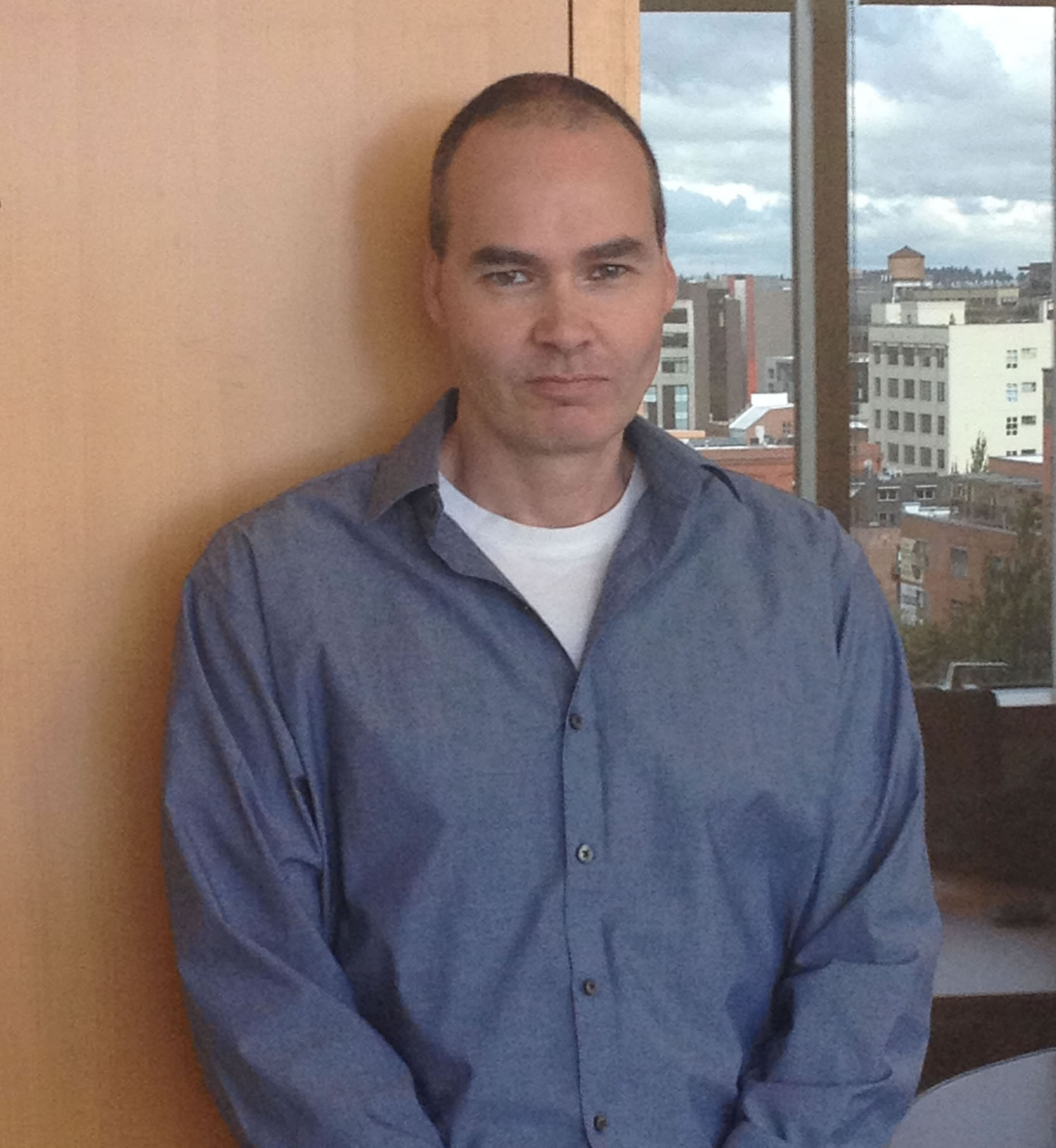
Derek Ladd

The latest in a series of interviews with script readers and consultants who would be worth your while to work with if you want to get your script in shape. Today’s spotlight is on consultant Derek Ladd. His script Nina NANO was a Silver Prize Winner in the 2013 Page International Screenwriting Competition.

Award-winning screenwriter Derek Ladd started telling stories as a kid and never stopped. He lives in Portland, Oregon where he spends as much time writing as he does shaking off the rain (which is pretty much all the time).

1. What’s the last thing you read/watched that you thought was incredibly well-written?

The last exceptional script I read belongs to Matt Tolbert, a client of mine. I can’t go into specifics but it’s an historical screenplay about the Nordic Vikings. It’s refreshing to work on a script that pulls me in on page one and doesn’t let go. All of the elements (pacing, plot, characters) came together to create an immersive reading experience. As for movies, the last one I saw that featured great writing was DALLAS BUYER’S CLUB. This is a movie that nails the writing on all levels: the visuals, the dialogue, the subtext, all of it. Another surprisingly good movie I loved is an indie foreign film (horror comedy genre) set in Ireland called GRABBERS.

2. How’d you get your start reading scripts?

When I started my script consulting service, one of my early clients wanted to produce a movie. I’d written a couple dozen short stories and a few novels by this time and this client had read some of my work. And since a screenplay is the first element one needs to make a movie, she recruited me to write one. The only obstacle was that I had no idea how to write a script. So I bought two books on the subject and they didn’t help: each book contradicted the other. Then I bought one of those fancy bound scripts at Barnes & Noble – ADAPTATION (Charlie Kaufman, based on Susan Orlean’s book). Of course, it was more of a transcript so it didn’t help much either. I finally gave in to the fact that I would need to attend a class, and in Portland, Oregon the master of screenwriting was Cynthia Whitcomb. I took both of her classes, read her books and picked it up pretty quickly. My first script was an adaptation of my novel WITHOUT WINGS. From there I started reading scripts written by my classmates so I could give them feedback. The writers I worked with were so pleased I started doing it professionally. To date, over a dozen of my clients have won or placed in a variety of screenwriting contests.

3. Is recognizing good writing something you think can be taught or learned?

I would say ‘Yes’ to both questions simply because one has to know how to recognize good writing in order write good material. While writing novels I found inspiration in everyone from Heinrich Boll, Truman Capote, Norman Mailer, Kurt Vonnegut and David Sedaris to William F. Nolan, Anne Rice and Stephen King. If an aspiring screenwriter thinks GIGLI or SHOWGIRLS is a great screenplay, trying to write a great script will be damn near impossible. If, however, the same screenwriter dives into work by Michael Mann, the Coen brothers, Joss Whedon, or Luc Besson (to name a few), or any brilliantly written script (JAWS, FARGO, THE MATRIX, HAROLD AND MAUDE, SERENITY, THE SILENCE OF THE LAMBS), that writer will strive to achieve the same level of success in their own work. Excellent writing that makes you laugh and cry and get goosebumps has more power to teach aspiring writers than any classroom instruction ever could.

4. What are the components of a good script?

The Seduction Element: I watched a good DVD lecture featuring Michael Hauge a while back called ‘Grabbing The Reader In The First 10 Pages’. Mr. Hauge opened the lecture by explaining that part of the title is a misnomer: he said that ‘grabbing’ is too forceful a word and that what a writer should aim to do is seduce the reader. That’s at the top of my list. Seduce me with your words. Make it impossible for me to put it down: make me laugh, make me anxious and/or make me curious in the first five to ten pages. If you can evoke a strong emotion in the reader as soon as possible and keep it flowing that reader will be yours to the end. A famous writer (don’t ask me who) once said, “The first sentence should make you want to read the second. The second sentence should make you want to read the third…”

Strong characterization: A fleshed-out, intriguing character has the power to lead the reader anywhere. If a script starts out with three pages that describe the inside of a barn or a ton of details to set up what’s to come, I’ll put it down, or throw it at you if you’re close enough. The writer may have created the most awesome outpost on an alien planet anyone has ever dreamed up, or constructed the greatest plot ever conceived in the history of the written word, but without a solid character to invest in it won’t matter. For me, strong characterization is the whole shebang: a memorable introduction, sharp, believable dialogue, behavior that’s consistent with how the character would act in a given situation, etc. If the character has an arc (not required in some genres, but strongly recommended) it should be begin and end at the proper times – no rushing and no shuffling. Steady as she goes…

Originality: Is this a script I’ve read a hundred times before, or will it surprise me? I’m not saying it has to be about a group of purple, basketball-shaped alien opera singers from the planet Snergle. When I say ‘original,’ I’m referring to the unique spin a writer puts on the material. As an example, a good detective story populated with adults is okay, while a detective story populated with high school kids (like the film BRICK) is original and stands out. No need to reinvent the wheel; popular genres are popular for a reason. Just find a way to spin them and surprise the reader.

5. What are some of the most common mistakes you see?

Everyone’s guilty of typos and grammatical errors (myself included), so it’s a given that any editor/consultant will find them. Aside from that, one common technical mistake I see involves scenes that spill over into other locations without new scene headings. Drives me crazy. I also see a lot of scene headings written improperly, missing words, character name inconsistencies and factual errors (names of objects, cities, states, countries or famous people misspelled). To a lesser degree, I see action lines that are jumbled: a character enters, pulls a gun, fires. Then it’s noted that the light is flickering overhead. Oh, and the guy in plain sight by the pool table (who was never mentioned before) fires back. It’s like when someone tells a joke and stops in the middle to say, “I forgot to mention, the guy riding the donkey is a priest.” It’s distracting. Unless you’re writing a narrow-to-wide shot, set the scene: describe who’s there and what they’re doing then describe the action. Otherwise it feels clunky and awkward.

6. What story tropes are you just tired of seeing?

The expression “I get it” is everywhere now. I don’t know where it came from. Maybe it’s like the cicadas that surface every 17 years or whatever and it’ll disappear soon. Here’s an example: “Hey, getting hit in the crotch with an umbrella ticked you off. I get it.” The biggest users of “I get it” are the writers for SUPERNATURAL, CRIMINAL MINDS, and SONS OF ANARCHY, all great shows that would be even greater if they’d stop using “I get it” six times per episode. It’s superfluous. Think about it: if one character describes what another is feeling, is it necessary to cap it off with “I get it.”? No. It isn’t. So please stop it. A visual trope, as it were, is the weird technique where the action goes into slow motion then speeds up again. I think the movie 300 started that whole thing. Hopefully a better movie will come along to put an end to it soon.

7. What are the 3 most important rules every writer should know?

The following answers are based on the assumption that the writer has developed a unique concept and story that he/she is passionate about. My answers further assume that the fundamentals of story, characterization, plot, dialogue, writer’s voice, pacing, style and overall balance (60% action, 40% dialogue) have been carefully considered throughout the writing process.

-The first 5-10 pages are life and death for a writer. As an editor/consultant, I get paid to analyze a writer’s work. Studio script readers, on the other hand, get paid to say ‘No’ to conserve a producer’s valuable time and an investor’s money. So unless you give the reader a solid reason to say ‘Yes’, your script is headed for the recycling bin. Set the hook as soon as possible and set it deep. Make that studio reader take your script into the bathroom (to read).

-Unless you’ve written a character-based indie script, structure is critical. Do your own structure analysis to see where you land: inciting incident by around page 12, plot point one by the 1/4 mark, strong midpoint by the 1/2 mark, plot point two by the 3/4 mark and the climax in the last 10-15 pages. You’re allowed a brief end-cap/denouement of 1-3 pages and then FADE OUT.

-Formatting DOES matter, especially for a spec script. Know the average length for comedies, thrillers, horrors, dramas, etc. Turning in anything under 90 pages or anything over 120 is a longshot. Know that formatting varies between different genres and how to use these varied techniques to your advantage. Barb Doyon’s book Extreme Screenwriting has an excellent chapter on formatting and how to use it to enhance a spec script.

8. Have you ever read a script that was an absolute, without-a-doubt “recommend”? If so, could you give the logline?

I’ve read a few scripts over the years I would strongly recommend, which is probably right in line with the industry percentage of one half of one percent. I don’t have loglines to share, but the clients whose scripts I would recommend include Chanrithy Him (WHEN BROKEN GLASS FLOATS), Santa Sierra (spec episode of THE GOOD WIFE), Bill Johnston (REQUITED), Erin McNamara (BORU), Mike McGeever (SMILERS) and Dorothy St. Louis (EL CUBANO). Others can be found at ProofEdge.com on the Testimonials page.

9. How do you feel about screenwriting contests? Worth it or not?

It really depends on the contest. My advice is to do some research, comb the web and read message boards. Moviebytes has a lot of info on contests and how contestants rate them. Find a contest that’s a good fit for your work. Some contests aren’t as open to traditional Hollywood blockbuster-type scripts (Zoetrope), while others offer a range of categories to accommodate all writers (PAGE Awards). If it’s a sizeable, reputable contest (PAGE Awards, StoryPros, Nicholl, among many others) I strongly recommend using it as a measuring stick to see where you stand as a writer. A writer shouldn’t get too bummed if his/her script doesn’t make it past the first round – a script can do poorly in one contest and win another, it happens all the time. Many contests offer notes for an additional fee, which can be quite helpful if done by a professional. Keep in mind that, while winning is the goal, simply making the Finals can attract studio attention, and doing so looks good on a resume when querying agents and producers. Winning or even placing in a contest can make the difference between an exceptional, unknown writer and an exceptional, discovered writer.

10. How can people get in touch with you to find out more about the services you provide?

Check out my website www.deladd.com, or email me at derek@deladd.com.

11. Readers of this blog are more than familiar with my love/appreciation of pie. What’s your favorite kind?

Apple, hands down. My mom always made the best apple pie when I was growing up. The way she makes it, the apples aren’t too sweet and they’re not overcooked and mushy. A couple of years ago I made a butter crust from a simple recipe I acquired as a sous chef. The combination of her perfect filling and my crust (which melts in your mouth) is pretty spectacular.

Ask a Wicked-Smart Script Consultant!

Rebecca Norris copy

The latest in a series of interviews with script readers and consultants who would be worth your while to work with if you want to get your script in shape. Today’s spotlight is on Rebecca Norris of Script Authority. She works with writers, producers, and directors to consult on feature-length screenplays, TV pilots, TV specs, webseries pilots and full series, and career direction and strategy.  

1. Whats the last thing you read/watched that you thought was incredibly well- written?

My current obsession is House of Cards. At first, I didn’t care for the show. I found the device of Francis talking directly to camera a bit odd, the plot lines confusing, and I didn’t like any of the characters! However, a friend encouraged me to keep watching, and I’m so glad I pushed through. The genius of the show is in the slow reveals—they don’t hand you anything up front—you earn carefully-placed insights into the characters over time. I ended up binge-watching all of Season Two and am now deprived of new episodes until January! I should have spaced them out more.

2. Howd you get your start reading scripts?

For my first internship, I worked at a state film office that held an annual screenplay competition. They had an entire room stacked with feature-length screenplays, and it was my job to read and recommend scripts to the higher-ups for the contest. When I moved to L.A., I was able to parlay that experience into reading for a production company and then another screenplay competition, and it snowballed from there. This has included reading for Sundance, QED Entertainment (DISTRICT 9, FURY), Screen Queensland, BlueCat, ScriptXpert, Script Reader Pro, and other contests/services, and I’ve worked in development at Southpaw Entertainment (AUGUST RUSH, THE SPACE BETWEEN US).

3. Is recognizing good writing something you think can be taught or learned?

I think anyone can be taught to do anything; whether or not they have a natural aptitude for it is another matter. The thing is, we are all storytellers. It’s engrained in our psyche. And reading is a personal, subjective experience for each individual. Some stories that bore the pants of me might be endlessly entertaining to someone else, and vice versa. That’s why a film can be rejected from one contest and then go on to win first place at another.

However, the technical aspects of a script can be judged in a fairly uniform way. Is the writing concise yet descriptive, or is it overly wordy? Are there misspellings and grammatical errors? Is the script formatted to industry standards? Is the page count a reasonable length? A writer can’t control whether or not a particular reader will judge their writing as “good”, but they can control the technical aspects of the script to give it the best possible chance of impressing a reader.

4. What are the components of a good script?

A good script has a solid premise, interesting characters, a well-conceived plot, tight narration and dialogue, and is technically up to par as far as typos, sentence structure, formatting, etc. It also must be ENTERTAINING. This is something I believe writers forget about sometimes, especially if they’re writing, say, a historical drama. Audiences don’t care about facts and figures and accuracy nearly to the extent that they want to have an emotional journey—a catharsis. It’s the writer’s job to provide that journey and entertain along the way—that’s why we’re in the Entertainment Industry. I think most readers would agree with me on this—the first question I ask myself after reading a script is, “Am I bored?” If I’m bored, then the script will not get a Consider or Recommend, no matter how true to life or historically accurate it is.

5. What are some of the most common mistakes you see?

By far, the most common mistake is spelling errors. Most scripts I read are chock-full of typos and glaring grammatical errors (including sentences with missing punctuation, missing words, or only parts of words.) It’s incredibly frustrating because this is something completely under the writer’s control. What writers may not realize is that every time I come across a typo, I’m taken out of the story. When a script has multiple typos per page, as some of them do, I’m taken out of the story dozens of times by the time I read the last page, which essentially ruins the experience. As writers, the written word is our only instrument. A pianist wouldn’t perform on an out-of-tune piano, and likewise, a writer should fine-tune his or her instrument and become a master of language. Having a typo-free and correctly formatted script says to the world: “I’m a professional, and I care about the quality of my work.” In my opinion, it’s the best way to control your first impression to a reader.

6. What story tropes are you just tired of seeing?

There has been a trend over the past several years of incredibly brutal, violent, and bloody dramas. (And I’m not talking about horror movies here.) I think it’s a reflection of the dark times we’ve gone through over the past decade and the current political landscape in the world. I’ve also programmed at some film festivals, and some films I screened were sickening to the point where I had to turn them off. I’m not a prude and I enjoy a good action or horror film just as much as the next person, but it’s gone a bit overboard lately. Some of the films had gratuitous violence toward women and children, which I find disheartening and painful to read. Sometimes I long to read a comedy or something lighter that ends on a positive note, and I hope the trends change in the coming years toward lighter (and less barbaric) fare.

7. What are the 3 most important rules every writer should know?

1) Don’ t get disheartened if you aren’t getting recommends or considers on your early scripts. Take the notes, learn from them, and keep writing. Your writing will improve greatly if you just keep at it.

2) It’s okay to struggle with writing. Some writers get disheartened and give up if writing isn’t the glorious, self-expressive, free experience they think it should be. Writing can be difficult and tedious. It’s courageous to be vulnerable and put your heart out on the page, and even more courageous to then send your work to total strangers. The best thing a writer can do is show up every day and write, and when the work is ready, keep sending out those ships. One day, a ship will come back in.

3) You are in total control of your very first impression on the reader. You do so through your mastery of language, spelling, formatting, brief yet descriptive narration, etc. You can’t control whether or not a reader loves your script, but you can control your presentation. Hire a professional coverage service to proofread and get feedback before you send your scripts out—it’s the best way to test the waters and see how your script will be received, since many coverage services employ readers who have worked at contests and production companies.

Even if your script doesn’t get a recommend, the writer themselves can. Scripts and writers are tracked by production companies, and if you as a writer make a bad impression, a company is less likely to be willing to read another one of your scripts. If you made a good impression as a writer but they just passed on that particular script, a company will be much more willing to read future work from you.

8. Have you ever read a script that was an absolute, without-a-doubt “recommend”? If so, could you give the logline?

Since most of my work deals with newer writers, I have not yet personally come across a script that was an absolute Recommend with no doubts in my mind. Most scripts I read have a solid concept but need work to get them industry-ready. I have read many scripts that I would recommend if the writer made adjustments and changes, and those scripts might receive a Consider.

9. How do you feel about screenwriting contests? Worth it or not?

Absolutely worth it. They’re a great way to build up credibility and provide the ‘pitching points’ writers need to become interesting to agents, managers, production companies, etc. You don’t have to win. Even being a quarter-finalist in larger contests or fellowships can make you attractive and garner interest in your work. And if you do win or place in a major contest, it can open doors for you very quickly if you take advantage of the opportunity.

Submitting to contests also provides built-in deadlines. If you know you have regular submission deadlines you have to meet, it puts a fire under you to write every day. It’s not that expensive–you can take $400 and submit to most every major screenwriting competition and a couple of smaller ones. Think about all the things most people waste $400 on in a year (like coffee!). It’s a small investment that can have a big payoff, if even just to get you motivated to write.

10. How can people get in touch with you to find out more about the services you provide?

Contact FreebirdEntertainmentLA@gmail.com for availability and pricing.

11. Readers of this blog are more than familiar with my love/appreciation of pie. Whats your favorite kind?

Pumpkin! I’m thrilled that it’s Fall and we’re just a few weeks away from Halloween, my favorite holiday. I’m going to have to binge on all the pumpkin products over the next couple of months before they’re gone!

Damn you, Seth MacFarlane

Let us sincerely hope the sun has not set just yet

If ever there was a need for a man in a white hat to ride in and save the day, now would be a good time.

First THE LONE RANGER is the mega-bomb of 2013, followed by the much-heralded crash and burn this weekend of A MILLION WAYS TO DIE IN THE WEST.

Mea culpa – I’ve not seen MILLION, and based on what I’ve read, have no real desire to do so. It doesn’t bode well when a lot of the reviews generate more laughs than the trailer.

The western just can’t catch a break. Every once in a while you get something incredible like TRUE GRIT, 3:10 TO YUMA or DJANGO UNCHAINED. Jeez, even RANGO had a little redeeming value. Films like these come along and hope grows in our hearts, but then we get dreck like JONAH HEX or COWBOYS & ALIENS, and back to movie jail goes the western.

I had no real hopes for Mr. MacFarlane’s latest, but at least he was attempting to do some kind of western. Granted, it was trying to be this generation’s BLAZING SADDLES, but apparently failing miserably.

This goes beyond another nail in the coffin. At this point the coffin’s already in the ground with a few shovelfuls of dirt on it.

As a writer offering up a totally kickass western spec, my hopes for success seem to diminish just a little bit more with this kind of news.

I can imagine every potential recipient recoiling in fear. “A western? Eek!” followed by the frantic pressing of the ‘delete’ key.

Contacting a friend repped at a high-profile agency, I asked if anybody there might be open to reading it.

“I wrote a western, and they won’t sell it,” was the reply. “They don’t believe there’s a market for them after THE LONE RANGER.”

Well, sure. Because every western is going to be an overpriced, convoluted bloated crapfest.  It doesn’t help that a lot of them actually have been exactly that.

Why have so many recent westerns been bombs? Wish I knew.

Skimming the credits of some of the great westerns of the past shows that the people who made them had a real understanding and appreciation of the genre – John Ford, Howard Hawks, Clint Eastwood, just to name a few. And it shows in the finished product.

Hopefully somebody else will give it another go in the near future, sooner rather than later, and know how to do it right.

Did I mention I’ve got a totally kickass spec?

A world of my own design OR Atlas, schmatlas

The land is mine to manipulate as I see fit. So there.
This land is mine to manipulate as I see fit.  So there.

Making some good progress on the western outline. This “working at least 30 minutes a day” thing has really moved things along; actually much faster than originally anticipated. Give it a try if you haven’t already.

Sure, there are still some small details here and there that need to be hammered out, but for the most part the majority of the story is pretty close to being done.

When I started this, I wanted to make it as realistic as possible (or at least as much as a story about a female train engineer in the Old West can be), and that included using real geographic settings.  I wanted the fort here, the showdown here, etc.

But that just raised more questions. If the fort’s here, how far is it to this other point, and how fast would the train have to go in order to get there, and could trains go that fast during that time, and was there even a rail line between those two points?

This was becoming way more complicated than it had to be. I want to tell a story, not set up a math word problem.

So as I was going back and forth between the new and previous drafts, it dawned on me: I can just make stuff up, including where things happen.

I’m the writer. I’m allowed to do that.

So out went locations that actually exist, and in came totally fabricated ones (yet another benefit to all those years of listening to old-time radio westerns).

The feeling’s quite liberating. No longer do I have to worry about making sure every single detail is spot-on accurate, and can now focus on developing a rousing tale of adventure populated with colorful characters.

Which is how it should be.

-Major crisis narrowly averted! I’d lost a flash drive with a lot of script stuff on it. Only during the DREAMSHIP rewrite did I start making additional copies onto my hard drive, so a lot of projects I’d started before that were apparently gone forever.

I did a fairly good job of masking my pain, but was internally kicking myself for not having more backups (20/20 hindsight and all that).

Happy ending – K found the flash drive. Lesson learned – I’m in the process of saving everything on Google Docs so I never have to panic like that again.

You’re probably thinking “that’ll never happen to me. I’m always careful.” I used to think that too. Now it’s all about taking extra precautions.

-Movie of the Moment – FRANKENWEENIE (2012). A lot of fun that cleverly pays homage to classic monster movies. Parental advisory – V cried when the dog was killed (done very tastefully offscreen)

You want realism? Go outside.

You invoke the ‘i’ word? I beg to differ

“…the idea of a female train engineer during the time of steam locomotives or even into the early decades of the twentieth century is, I think, virtually inconceivable.”

This was part of a comment that pointed out the historical and factual inaccuracy and basic impossibility of the concept behind my western-adventure.

My problem isn’t with what this person is saying. They’re entitled to their opinion.

What bothers me is that they seem to just flat-out refuse the idea that such a story could, or even should be considered.

Which is exactly why I want to write it.

We don’t go to the movies to watch a reflection of our lives. We go to see a story told in an original and interesting way. The more original and interesting, the better.

I happen to think this one has the potential to be both.

It may not be a 100 percent-accurate depiction of the era, but I’m not setting out to make a documentary.  This is escapism. Pure and simple.

Besides – how could I pass up the chance to give my imagination a workout like this? This is why I write.

There will always be those who shoot your ideas down, or at least find fault with them.  Listen to what they have to say, take what you want from their comments, and ignore the rest. Then go write what you want.

If they think they can do a better job, by all means  – let ’em try.