New steps on an old path

road
A return journey to a long-ignored route

Over the past couple of days, as notes for the low-budget comedy spec were being compiled, I considered jumping right in to the rewrite, but instead opted to take a break and put it on the back burner for now. It’s been the focus of my attention for a while, and I didn’t want to risk burning out on it.

No big deal. All of the material will still be there when I get back to it.

So what now? Work on another script, natch.

But which one?

I just didn’t have it in me to work on the few that were still in plot-development stage, nor did my brain feel totally ready to tackle assembling the pieces of the jigsaw puzzle that is the mystery-comedy.

Since I’ve been on a bit of a low-budget kick, I delved into my stash of long-ignored stories to see if there was a suitable candidate.

And I found one. A comedy I haven’t worked on for a good number of years that would make for another great low-budget production.

It had gone through several better-than-I-remembered drafts of the outline, each one with elements similar to the others, but also with its own uniqueness. Looking them over, there’s a lot of material to work with and develop into a new version.

Plus, it’s a fun story, which is always enjoyable.

(Moral of the story – never throw anything away.)

Working on the previous comedy spec also helped boost my confidence regarding my comedic writing skills. It’s not perfect, but better than it was. There were already some good jokes among these earlier drafts, and coming up with new material is still somewhat of a challenge, but not as daunting.

So the next couple of weeks will be all about combining, editing and fine-tuning this story, and then cranking out some actual pages.

Exciting times, chums.
Break out the sledgehammers!

renovation
Just like me during a rewrite

A few more sets of notes on the comedy spec have come in, and they are good. And helpful. Which is very good.

The value of having connections with experienced and knowledgeable writers once again proves to be a huge asset. Networking, people!

But back to the topic at hand…

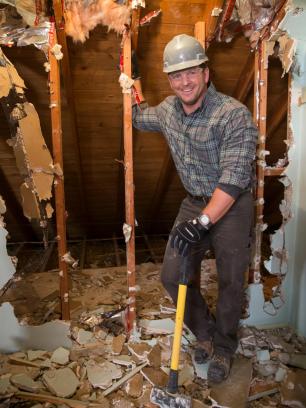
It doesn’t appear that a major reworking is in order, but there’s still a lot to do. This is definitely more than just a new coat of paint; more like a thorough renovation. More than a few comments covered the same issues, so working on those and the resulting ramifications will be the starting point.

One of the biggest obstacles when it comes to a rewrite (for me, anyway) is that nagging thought of “How am I going to make this better?” Especially when there’s already something there on the page.

It’s tough to get rid of the old stuff. You worked so hard on it, and now you have to get rid of it? Or change it? Sometimes you gotta just jump right in, totally let go and kill all those darlings. Sounds gruesome, but it has to be done.

And as I have often found in the past, once those changes are made, the new version is usually significantly better to the point that you barely remember that much about the old one. Plus, making those changes gets a little bit easier each time.

Into the breach!

A few additions to the Maximum Z Bulletin Board:
-The filmmakers behind the short film Goodbye, NOLA have set up their crowdfunding project. Donate if you can.

-Author Jeff Guenther proudly announces the release of his new World War 2 thriller In the Mouth of the Lion.

Got something you’d like to promote? Drop me a line.

One question to rule them all


frodo
An epic adventure based on the fate of a piece of jewelry

I recently had the pleasure of giving a friend some notes on his script (a drama). It was a great take on a familiar subject, but I had some trouble determining what kind of story they were trying to tell.

One of my suggestions was to streamline the story so it was more focused on the primary storyline as indicated by the central question. He asked me to elaborate.

I put it this way:

The inciting incident raises the central question of the story, and everything after that revolves around answering it – which takes place in the climax/showdown part. Anything that’s not connected to the central question doesn’t need to be there and should therefore be cut.

This isn’t to say you can’t have subplots, but even those should be in some way tied to the central question.

What would you say are the inciting incident and central question in your story? We, the reader/audience, want to know; we’re constantly asking that central question and want to see how the answer comes to be.

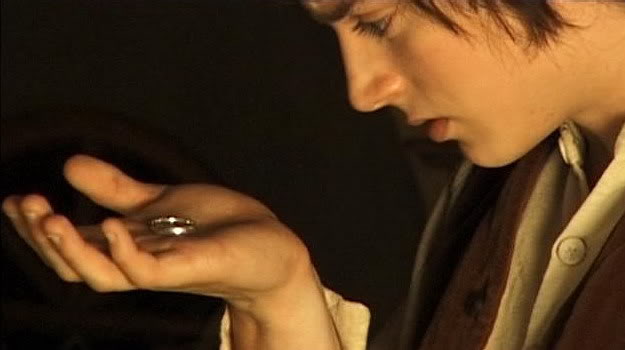
To put it in perspective, albeit from an action-adventure approach, in THE LORD OF THE RINGS films, after some necessary exposition, we learn the central question as “Will Frodo get the Ring to Mt Doom?”

Notice how everything after that revolves around that question in some way. Each scene continues to ask the question and gets us a little closer to finding out the answer, even if it might seem like the scene isn’t connected to it and about something else entirely.

On top of all of that, since you need conflict, the hero’s journey to achieve their goal is going to be rife with obstacles that would otherwise prevent them from doing that. Every time they encounter one of those obstacles and the hero reaching their goal is put in jeopardy, the central question is once again raised.

Hope this helps.

Commencing transfer to second horse

horses
All these new ideas were really starting to nag at me (C’mon. They can’t all be gems)

Notes continue to come in for the low-budget comedy spec. I am very fortunate to benefit from the insight of such savvy folks. Lots and lots of great notes that will come in handy for the next batch of rewrites.

Taking a look at all the notes, along with the new ideas they trigger, makes me think about what changes could be made in future drafts. Changes that would strengthen the script on several levels, especially those where it’s been indicated the most work is needed.

This isn’t saying that I’ll blindly accept every single suggestion that’s been made. More like a combo of taking the ones I think work best and some of my own new ideas. That’s one bonus of getting multiple sets of notes.

I’m also expecting to alter parts of the story just enough that it’ll be slightly different from these earlier drafts while still retaining a lot of what originally appealed to me about the overall story/concept. There are a few new factors being thrown in, some of which I’m looking forward to begin implementing (and also fall into the category of “why didn’t I think of that before?”)

Thus the fun and thrillingness of it all continues…

Not everybody’s going to like it

pie
Astonishing as it is, some people actually don’t like pie. Heathens.

Notes and comments continue to come in for the comedy spec. I’m seeing some very insightful stuff that will prove most beneficial for the next draft.

Reactions range from “I loved it!” to “I was very disappointed with this.” The author of the latter even started things out by saying “I wanted to like it, but just couldn’t. I guess our senses of humor are just too different”.

And you know what? They’re right, and that’s totally fine. Comedy is subjective. Everybody likes different things. If it’s not for you, it’s not for you.

Would I have preferred they liked it? Of course. But they didn’t, and that’s all there is to it. I still value their opinion and will continue to ask them for feedback in the future.

But I also shouldn’t totally disregard what they had to say. They made some valid points and suggestions in their explanation of why it didn’t work for them, a lot of which could potentially be applied to the aforementioned rewrite.

Nor should I take one person’s rejection as the final word. They didn’t like it, but in no way does that mean everybody else will have the same opinion. For all I know, this one dislike is the exception to the rule.

This is one of those things that a lot of writers, especially newer ones, fail to grasp. You slave away on a script, and then you send it out, convinced it’s a work of genius. And you don’t get the reaction you were hoping for. PASS. Thanks, but no thanks. We’re working with something similar.

Heartbreaking, ain’t it? “How could they not have liked it?” you cry out to the writing gods. It’s just the way it is. Remember – it’s not about you. It’s about the script.

So you’ve got two choices. Obsess over the rejection, or accept it, put it behind you, and keep pushing forward. Maybe figuring out why their reaction was negative could help.

But don’t let that negative slow you down. Do what you can to turn things to your advantage. Like with practically everything connected to screenwriting, it won’t be easy.

Start by making sure you like it, and then take it from there.