Seeking the feng shui-ness of your script

A place for everything, and everything in its place

Got some great notes for my western spec. Some of the suggestions involve significant moments I hadn’t considered – now I have to figure out where these should take place. A daunting task indeed, but also not too challenging.

It’s one thing to plot out a story, but knowing how to do it effectively is a little more complicated.

You can’t just throw stuff in there and hope it sticks. Information has to be doled out appropriately so it not only fleshes out the characters, strengthens and advances the story and the plot, and most importantly, keeps the reader/audience interested.

If you’ve put together a solid outline (as you should before moving on to pages), all the help you need is right there in front of you. Take a look at how your story develops. Do things happen the way you want them to, and do they happen when you want them to?

As you work your way forward, are you seeing potential opportunities for where something could be added or possibly changed? Would that scene from way back near the beginning work better somewhere later on?

Once you find somewhere that scene could go, is it a good fit within the flow of how the story’s developing? Does it keep that forward momentum going while providing us with some kind of necessary information?

Take the time to figure these kinds of things out. It may be frustrating now, but once you work your way through it, you’ll have a better script and wonder what it was you were so worried about.

Find a tone and stick with it

Something in this seems a little out of place

I used to dread getting feedback. It always meant having to go back and rewrite something.

Fortunately, I’m well past that and now appreciate how necessary both feedback and rewriting are.

Feedback makes you learn to value the necessity of hearing how somebody else interprets your work, and more importantly, how to be objective when it comes to really understanding what they have to say.

While working on the outline of my mystery rewrite, I looked for opportunities to put in an occasional joke (read: cheap laugh).

The problem, according to my top feedback-provider, was that the jokes, while understandable for their intent, were totally wrong for this kind of story. They make my protagonist come across as an idiot and the action comes to a screeching halt each time. And since this is more mystery than comedy, they shouldn’t be drawing attention to themselves like that.

There were other notes besides this one, but this one really struck a nerve – in a good way. I’ve been working on rewriting the jokes to make them a better fit within the context of the story, rather than have them be glaringly obvious and out of place.

As you create the world of your story, you have to make sure all the elements combine to make a believable scenario. This goes way beyond the story and the characters – take everything into account.  If something seems out of place, fix it or get rid of it.

And if you’re not sure, that’s what feedback is for.

The fat that must be trimmed

Personally, I prefer a red pen and the 'delete' key
Personally, I prefer a red pen and the ‘delete’ key

Steadily working my way through the coveted territory of Act 3, although the wrapping-up of some subplots still needs some work. Nothing I can’t handle.

Throughout this whole process has been an ongoing tinkering with what was there before. Some items have been cut (necessarily so) while some have been expanded (also necessarily so).

Among what had been cut were a trio of characters who only existed in a handful of scenes in the third act. The only reason they were originally around was to provide conflict with the main character, but didn’t really serve much else of a purpose.

So they’ve been cut, with another character’s part slightly modified and expanded to take their place.

This goes way beyond killing one’s darlings. It’s about making the story as lean and streamlined as possible, and if that means cutting characters, scenes or even sequences, so be it.  You do what’s necessary.

But this is also where it can get tricky. How do you know what should stay and what should go?

Unfortunately, there’s no easy answer. But you can learn by constantly writing, rewriting and getting feedback. It’s a skill that takes time to develop, so don’t rush it.

(You could read scripts, but those are often the finished product. You won’t know what it looked like before.)

A good rule of thumb: ask yourself as you write and edit – “How much of a difference will it make to the story if I take this out?”

Chances are once you make those cuts, you won’t even miss what’s been taken out, which means it probably shouldn’t have been there in the first place.

-A total self-indulgent announcement: I ran the San Jose Rock & Roll Half Marathon on Sunday, thinking there was no way I could beat my previous best time ever of 1:53:07, set back in August.

But somehow, despite warm weather and the occasional feeling of “Jeez, when is this going to end?”, I shaved almost 2 minutes off and finished at 1:51:11. Totally didn’t see that coming.

With no races scheduled in the near future, I don’t want to get ahead of myself and even consider the possibility of hitting 1:50.

Although I’ll admit the thought does occasionally cross my mind.

Isn’t a rock a hard place to begin with?

Gotta pick one, but which one?

Hard choices. That’s what it comes down to for your protagonist.

Someone in my old writing group put it very succinctly: each scene should force the protagonist so they have no choice but to go with the option that makes things harder for them.

If things were easy for your protagonist and everything went right for them, it wouldn’t be much of a story, would it?  We’d be bored silly.

It all stems from the necessary key word: conflict. Something must be opposing them reaching their goal.

This doesn’t mean it’s someone or something physically blocking them, although that is one option. It could be something out of nature, like a great white shark, a hurricane or a killer virus, or something from the grand scheme of the universe, like time, fear or silence.

One of the great things about conflict is there are countless ways to present it. It comes in all forms, but it really boils down to something in the scene (as well as the overall story) preventing your protagonist from moving things forward.

Taking it one step further, not only do you have to make sure they do, but they have to be the one doing it. Anything else is a cheat, and totally negates their development as a character.  Imagine if Dumbledore said, “Here’s a step-by-step list of what you have to do, Harry.” The mentor figure is there to guide the protagonist down the right path, not take the path for them.

The protagonist has to endure all of these conflicts in order to not only accomplish their goal, but grow or change from what they were when we first met them.

So go ahead and put ’em through the ringer. It’s the way it must be.

-I had the pleasure of doing an interview with Henry Sheppard, aka Adelaide Screenwriter. Check it out here.

What happened to the action movie?

Often imitated, rarely equaled

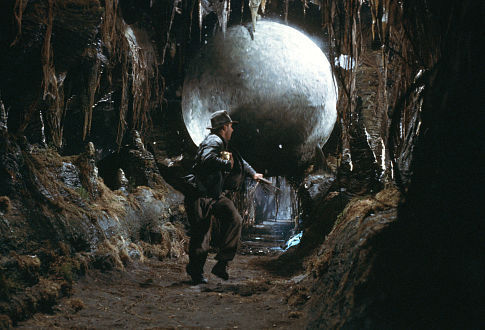
A little over a week ago, a friend posted the following question on Facebook – “Is RAIDERS OF THE LOST ARK the best action movie of all time?”

As would be expected, this led to a somewhat lengthy discussion. Several other titles were bandied about (DIE HARD, ALIENS, several John Woo HK films), and was summarized quite succinctly with “The main lesson here is that the 80s were a goldmine for high-quality action films.” (mea culpa – I’m the one who said it).

All I can think of for the 90s are TERMINATOR 2: JUDGMENT DAY and SPEED.

While you’re thinking about those, compare them to some more recent ones, such as:
-THE EXPENDABLES – a nostalgic remembering of the genre itself
-THE EXPENDABLES 2 – silly, over the top parody
-PACIFIC RIM – cool to look at, but that’s about it
-FAST & FURIOUS 6 – haven’t seen it, but I’ve heard nothing but good things about it
-THE LONE RANGER – couldn’t bring myself to see it, but will catch it on home video. Is it as bad as they say?

Now there’s this. Oy. Someday I’ll discuss how much I dislike reboots.

So why do action films from 20-30 years ago still hold up?

Looking at strong examples of the genre, they all have: Original stories. Smart writing. Three-dimensional characters. Action that enhances and supports the story.

If you’re writing an action spec, these should be your goals and objectives. Yes, it’s a lot of fun to blow shit up, but don’t use an explosion or shootout just for the sake of having one. It’s pointless.

Make the action part of the story, not what the story’s about. Use it to move things forward. Ratchet up the tension and create more conflict for your hero.

Need a refresher course in how it’s done? Pick one you’ve always liked, and watch it as a writer. Take notes. See how it all fits together. Then see if any of it can be applied to your story and rewrite accordingly.

If only all learning could be this enjoyable.