…and looking ahead

Last week was all about 2025.

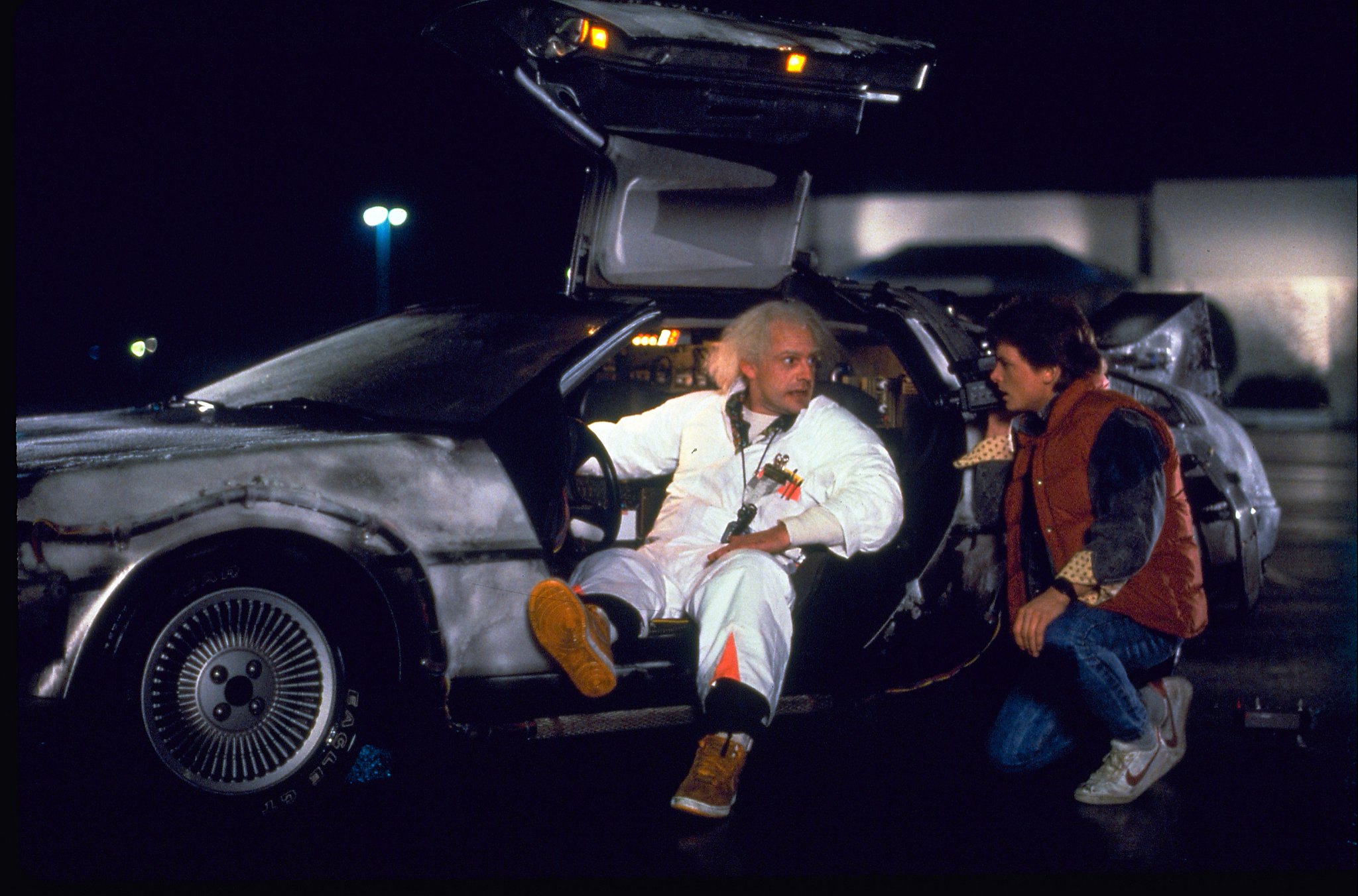
This week, to paraphrase the words of Dr Emmett L Brown, we plan for… the future!

-First and foremost, nailing down the story of the new action-comedy spec, and churning out at least 1-2 drafts. I’d say it’s about 2/3 of the way there. Still some details to work out, but I like how it’s developing.

Also nice – several readers have already volunteered their services to give it a look and subsequently tear it apart. In a helpfully critical way, of course.

-The other big thing is doing a major polish/revision on my western and fantasy-comedy specs. They’re good, but there is definitely potential to elevate the quality of each.

I’m also very fortunate to have a manager who’s really psyched about helping me on all fronts, from feedback on pages to getting the scripts out there.

As last year wound down, several columnists and podcasts talked about planning a strategy for achieving writing goals over the course of the year. A few really hit home for me, and I’ll be putting my own spin on that approach.

Looking forward to seeing how it all goes.

-Another significant project for this year is seeing the completion of post-production on my thrill-omedy short film SHECKY. The crowdfunding is just about halfway there and as of this posting, hovering around 71% funded.

Several readers of the blog have chipped in, and I once again put out a sincere request to anybody else who can contribute and is willing to do so. This is a long-in-development project for me, so any help I can get to reach that finish line is highly appreciated.

There are also some fantastic tier rewards, including invaluable feedback on scripts, directing reels, and acting reels. Click on the link above to take a look around and see if anything strikes your fancy.

-Lastly, my hosting of The Creative Writing Life Podcast continues. Guests are already lined up into February, and I’ll see what I can do about finally adding some theme music.

Those are the big ones for the next 12 months, and no doubt other things will show up.

Exciting times are ahead, chums. Make your 2026 as amazing as you want it to be.
From the archives: Because ‘Journal of the Whills’ just doesn’t cut it*

How DOES it look on a marquee?

As part of the ongoing rewrite of the animated fantasy-comedy, there have been more than a few suggestions to come up with a title of stronger significance and impact. While I struggle with that latest wrinkle, here’s a post from waaaay back in February of 2013 about the same situation with an earlier script. I eventually did come up with one, and am confident I can do the same this time around.

In the meantime, enjoy this blast from the past.

*the original title George Lucas had for STAR WARS. Not as good, right?

After reading countless spec titles in places such as The Black List and Done Deal Pro, I’ve come to the conclusion that my script really needs to undergo a name change.

DREAMSHIP

It sort of just…sits there, when instead it should be grabbing your attention and making you think, “Cool! I’ve gotta see this!”

Examples: BACK TO THE FUTURE. CHINATOWN. DIE HARD. See what I mean? Solid. Succinct. To the point.

I may go back to the original title – THE AMAZING DREAMSHIP ADVENTURE. It feels like it does a better job of conveying what the story’s about and what kind of ride you’re in for, but I wouldn’t put it past me to try and tweak it a little more.

It was also suggested that since this is more of a family-oriented kind of story, I should go the HARRY POTTER route and include the main character’s name. I’m not sure how I feel about that.

Having a good, strong title is key because it and the logline create the first impression. Do an effective job with that and you’ve got their attention. Just make sure the script/story can hold onto it.

Sums it up succinctly

bttf1
“Spaceman from Pluto”?*

While taking a break from working on the comedy spec this weekend, I took an unexpected dip into my file of “ideas in development” – scripts I plan on eventually writing.

One had more details to the bare-bones outline than I remember. In fact, I barely recall even writing it. Still, pretty impressive.

Another was just a logline and three potential titles. While the story really adheres to my ongoing attempt at trying to write material of a smaller nature (i.e. not as big-budget), what really stood out was those three titles and how different they were from each other.

The first stirred up a kind of noble nostalgia, and in retrospect might be better suited for another story.

The second was pretty generic; almost like something you’d see on a VHS copy of a mid-90s B-movie gathering dust on a lower shelf at your local video rental store. If you’re of a certain age, you totally get that reference.

The third was very reminscent of a certain genre and style of older films, and the final word in the title tells you what kind of story to expect. Such was the case here, but as much as I like the word, it wasn’t exactly the right fit for the story I wanted to tell.

Fortunately, the word in question has a lot of synonyms, and one in particular really jumped out at me. Some might consider it of a vulgar nature, but wow did it fit. In fact, as soon as it popped into my head, I actually laughed out loud, thinking “oh my gosh, this is PERFECT.”

Because not only is the new word an ideal fit for the story, but it really drives home the tone.

Although work on this script goes into the ever-growing pool of “future projects”, at least now the concept and story are a little more developed than they were. And any progress is good progress.

There can’t be enough emphasis on the importance of a strong title for your script. It’s the entry point for your reader. You want them to know what kind of story they’re getting, what to potentially expect, and most importantly, you want them to be excited about reading it.

Sometimes your initial title is good, but there’s nothing wrong with a little tinkering to find an even better one. Like your script, it can always do with a little rewriting.

*Universal Studios head Sid Sheinberg didn’t like the title “Back to the Future,” claiming nobody would see a movie with “future” in the title. In a memo to Zemeckis, Sheinberg suggested the title be changed to “Spaceman from Pluto,” and the title reference be worked into the film.

In response, Spielberg sent a memo back to Sheinberg, thanking him for sending his wonderful “joke memo” and that the office “got a kick out of it.” Embarrassed, Sheinberg let Zemeckis and Spielberg keep the film’s original title.

It requires some planning ahead

planning-ahead_4
Sometimes mapping it out by hand can prove most beneficial

Lots and lots going on within the hectic hallways of Maximum Z HQ, what with all the writing, note-giving, and career-developing taking place.

Much as I would love to offer up an original composition, my current schedule is a bit tight, so instead I humbly present a trio of posts, all plucked from the archives, and all dealing with what I consider to be a most important aspect of telling a story.

Enjoy.

Set up, pay off

Strong rope & solid knots required

Tying it all together


One scene, three points

trident
Careful not to get stuck on any of them

After some thorough self-imposed analysis, the revising of the comedy spec is underway. It’s getting easier to spot trouble spots.

There’s one scene in particular that’s giving me some trouble. It’s a pivotal scene involving the main character and offers a revealing glimpse into his backstory. The problem was in figuring out how to best do that.

After much drumming of fingers, rubbing of chin, and a whole lot of attempts, a potential solution may have presented itself. It’s still in the development phase, but for now, quite workable.

One of the first things I learned about screenwriting was what each scene needs to accomplish:  advance the plot, the character, and the theme.

Regarding plot, does the scene move things forward? Does it fall neatly into place in terms of how the overall sequence of events plays out? If you took it out, would it totally mess things up?

I’ve read a lot of scripts where something happens and I don’t know why. Maybe it’ll pay off later? Sometimes it does. Other times, well…

Another handy tip when it comes to advancing the plot in a scene: do it quickly. Get to the point of the scene as fast as you can, then get out. Don’t wait around. Just get out now. Too many times I’ve seen a scene drag on much, much longer than it needs to.

Regarding character, does each scene show them changing a little bit more from when they were first introduced? This doesn’t just apply to the main character. Every character needs to grow/develop. Wouldn’t it be kind of boring to read a story where nobody changes?

And tying it into the advancement of plot, every situation the character experiences should help move their own development along.

Which brings us to theme. The message of your story. This can be a little tricky.

Each scene should tie into the theme, or have it on display in some manner. I recently worked with a writer having trouble tying everything together. We discussed the story and the main character’s internal and external goals. What was the message they wanted to convey? Based on those discussions, we were able to come up with a theme that worked for both the story and as it applied to all of the characters.

One of my favorite examples of a theme in use is BACK TO THE FUTURE. Early on, Marty says “History’s going to change.” And boy, does it. We get a ton of set-up in the first act, and then everything does indeed change in the second act as all of those setups are paid off. Amazing.

Take a look at your latest draft. Does each scene advance the topics in question? If not, do you have a way to fix that so it does? The more you get in the habit of doing this, the easier it’ll get and the faster it’ll become second nature to do it all the time.