Putting the characters first

No, no. After you. I insist.

The end of the latest polish of the western spec is at hand, with just the last few pages needing some work.

Various subplots are being wrapped up, and I know what happens with the characters involved, but all of my attention now is focused on what may be the most important scene in the whole story: the main character makes a literal life-changing decision.

Notes from a few trusted colleagues indicated the decision as it stands now seems out of character. I’d known since starting this project that this was how I wanted this storyline to end. Changing it was out of the question.

Bonus points for those who’ve probably already figured out what happened next.

Their suggestion kept making more and more sense. My main character would not choose this, despite me wanting her to. But the story’s not about what I want. This change had to be made.

Now that I’ve opted to take things in this new direction, I’m working out a real heart-wrenching scene that depicts the character in the process of making this decision and the toll it takes on her. Conflict, character development, moving the story forward – all based on her.

It’s often been said that your characters will let you know how things are supposed to go.

It’s too easy to have a character do something because that’s what you would do. The challenge is to have them do something you wouldn’t, but you have them do it because that’s the kind of character they are.
Typing with frostbitten fingers

Yeah, kind of like that
Yeah, that’s kind of how it feels

Technically, it’s not winter yet, but you wouldn’t know it around here.

32 degrees in San Francisco? Amazing, but true. Not to mention harsh, bitter and just plain unpleasant.

At least it’s not snowing. Traffic is hellish enough around here when it rains. I can’t imagine what would happen if Bay Area motorists had to deal with snow. And don’t even get me started on what some of the larger hills would be like.

So with several layers in place and a large cup of coffee at my side, I’ll do my best to stay warm while recounting recent goings-on from my slice of the frozen tundra.

-Work on the mystery spec continues. Page output varies from day to day. Have to keep reminding myself it’s an early draft, so everything doesn’t have to be perfect this time around. The “this plot point happens on this page” concept is already out the window, but for now, it’s all about just getting it written. Fixes come later.

-Notes on the western spec from friends and trusted colleagues continue to pour in. A wide variety of comments to take into account for that inevitable rewrite.

Several people had the same comment/suggestion about a significant story point, which has made me seriously reconsider how it plays out. I’ve been foolishly stubborn about not wanting to change it, but taking everything into account, the alternative may actually be the best fit.

-Slowly working my way through Season One of BATTLESTAR GALACTICA on Netflix Streaming. Worth the wait.

-Signed up for my fifth half-marathon of the year, taking place on Dec 28th. Which means I have to go outside and train. Safe to say that shorts will not be involved.

As much as I’d like to hit 1:50, I’ll be happy with anything under 1:55 and actually more concerned with not freezing my ass off.

Stay warm, friends.

Out of the fog – literally

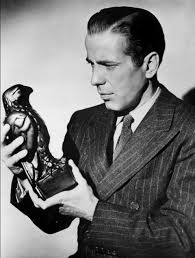
Definitely the kind of weather you'd find this guy in
Conditions like this I call “Sam Spade kind of weather”

Call it a benefit of being a creative type.

Even though I may be working on one project, there’s always the strong possibility that ideas connected with another can still pop up. Happens to all of us.

When they do, I do my best to take advantage of it.

Just such a thing happened yesterday morning. As is my usual routine, I was riding my bike to work. (Didja know I leave the house at 4AM? True.) Suffice to say, it was dark.

And foggy. This is San Francisco, where fog is a serious issue. Visibility was limited to fifteen, maybe twenty yards.

So there I am, pedaling along, and I can’t help but notice how delightfully creepy and sinister it all is. Barely-lit slick streets blanketed with dense fog, the hearty blast of the foghorn sounding over by the Golden Gate.  Something in my brain switches on.

“This is the perfect setting,” I think to myself, “for the opening of the monster script.”

The fog hung around for about another two miles, giving me lots of time to come up with a mental list of what could happen during that sequence. After I got to work, I wrote some of them down. If only the rest of this was as easy.

Even though this is just a small part of the story, and the actual work on the script may not happen for a couple of months, it was pleasantly unexpected.

We can’t force inspiration, so when you suddenly come up with an idea, let alone one that works, no matter how big or small it is, grab hold with both hands and do not let go.

The details might change, or you might not even use it, but it’s still a small step towards being done that helps make the whole process a little more bearable.

Seeking the feng shui-ness of your script

A place for everything, and everything in its place

Got some great notes for my western spec. Some of the suggestions involve significant moments I hadn’t considered – now I have to figure out where these should take place. A daunting task indeed, but also not too challenging.

It’s one thing to plot out a story, but knowing how to do it effectively is a little more complicated.

You can’t just throw stuff in there and hope it sticks. Information has to be doled out appropriately so it not only fleshes out the characters, strengthens and advances the story and the plot, and most importantly, keeps the reader/audience interested.

If you’ve put together a solid outline (as you should before moving on to pages), all the help you need is right there in front of you. Take a look at how your story develops. Do things happen the way you want them to, and do they happen when you want them to?

As you work your way forward, are you seeing potential opportunities for where something could be added or possibly changed? Would that scene from way back near the beginning work better somewhere later on?

Once you find somewhere that scene could go, is it a good fit within the flow of how the story’s developing? Does it keep that forward momentum going while providing us with some kind of necessary information?

Take the time to figure these kinds of things out. It may be frustrating now, but once you work your way through it, you’ll have a better script and wonder what it was you were so worried about.

Find a tone and stick with it

Something in this seems a little out of place

I used to dread getting feedback. It always meant having to go back and rewrite something.

Fortunately, I’m well past that and now appreciate how necessary both feedback and rewriting are.

Feedback makes you learn to value the necessity of hearing how somebody else interprets your work, and more importantly, how to be objective when it comes to really understanding what they have to say.

While working on the outline of my mystery rewrite, I looked for opportunities to put in an occasional joke (read: cheap laugh).

The problem, according to my top feedback-provider, was that the jokes, while understandable for their intent, were totally wrong for this kind of story. They make my protagonist come across as an idiot and the action comes to a screeching halt each time. And since this is more mystery than comedy, they shouldn’t be drawing attention to themselves like that.

There were other notes besides this one, but this one really struck a nerve – in a good way. I’ve been working on rewriting the jokes to make them a better fit within the context of the story, rather than have them be glaringly obvious and out of place.

As you create the world of your story, you have to make sure all the elements combine to make a believable scenario. This goes way beyond the story and the characters – take everything into account.  If something seems out of place, fix it or get rid of it.

And if you’re not sure, that’s what feedback is for.