A tentpole frame of mind


kids-movies
My objective. Every single time.

Here in the US, we are heading into what’s known as Memorial Day weekend, where we honor those who have given their lives in the service of our country. It’s also considered the kickoff of the summer season, even though summer doesn’t officially start for a few weeks.

Once upon a time, Memorial Day weekend was when the summer movie season kicked into high gear, with each weekend seeing the release of a potential blockbuster. It has since crashed through the barrier of time limitation, with some summer-appropriate fare being released as early as late March.

I was fortunate enough to have come of age when each summer saw its fair share of films that could be categorized as prime examples of not only filmmaking, but also of storytelling.

Definitely storytelling.

RAIDERS OF THE LOST ARK. GHOSTBUSTERS. BACK TO THE FUTURE. ALIENS. ROBOCOP. DIE HARD.

Each one has made its indelible mark on me, making quite the impact on my psyche and personality, and severely influencing the way I write. I make no secret about loving to write these kinds of stories.

(Author’s note – I’m no fool. Nobody’s going to take a chance on a mega-budget script from an unknown. Hopefully once I establish a foothold with my smaller scripts, I can eventually bring out the bigger ones.)

Some may see a summer release as Big Dumb Fun, which admittedly some of them are, but I make a point of treating the audience as intelligent people and want to give them a story that goes beyond simplistic expectations.

I strive to write material that entertains more than just the eyes and ears; I go for the brain, too. It takes a lot of effort to put together a story that stimulates the viewer on more than just a sensory level, but when it’s done in a smart and efficient way, the satisfaction of seeing it pay off is well worth it.

Will I ever get paid to write these kinds of stories? I like to think so. It doesn’t hurt to at least daydream about it.

Imagining that sometime in the relatively near future, a trailer will come up that features snippets of characters and dialogue, all of my creation, all culminating with those words laden with the excitement of anticipation:

“Coming this summer to a theatre near you”

A big smile and chills up my spine, believe you me.
Rather apropos for today

laughing crowd
Go ahead. Make me laugh.

Feedback is starting to trickle in for the latest draft of the comedy spec. So far, reviews are favorable. It’s still very rough around the edges, but confidence is running high heading into the next rewrite.

It’s very encouraging to have more than one person tell you “I actually laughed out loud. More than once!” That counts as a win in my book.

So in keeping with the comedy theme, here’s a question for you:

Someone asks for your recommendation for an underrated comedy. Preferably one they’ve never heard of.

I’d go with GOON. Quite a nice surprise. Bonus points if you know anything about or have an appreciation of hockey.

What’s your pick?

The dreaded ensuing of wackiness

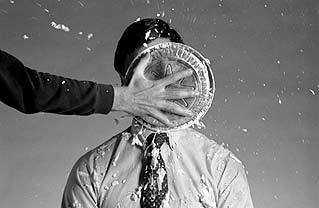
pie-in-face
Done right, this is comedy gold

As part of my work on the low-budget comedy spec, I’ve made an effort to read other comedies to help get a better understanding of how it could be done and hopefully some guidance I could apply to mine.

It’s always been tough for me to read comedy because my sense of humor doesn’t always align with others. Many’s the time I’ve read a script that garners universal praise for being gut-bustingly hilarious, but doesn’t do anything for me.

There is, however, one detail I’ve noticed that keeps popping up:

Unrealistic situations.

Things that seem to happen only for the sake of a joke, and not much else. These often feel forced and inorganic to the plot. Almost as if the writer thought “Hey, wouldn’t it be crazy if ____?”

In theory, potentially a good idea, but in execution – not really.

Some might argue that since it’s comedy, things don’t have to be realistic as long as they’re funny.

I beg to differ. If I don’t think something could actually happen, I will most likely not find it funny.

**side note – this doesn’t necessarily apply to slapstick or absurdist fare, which are two entirely different discussions**

Sure, there are comedies where the entire premise isn’t all that realistic to begin with, but even the humor in those should stem from the situation, rather than being a crazy assortment of wacky gags.

Going for the easy laugh or cheap joke doesn’t take much skill and shows a lack of sincere effort. If a writer does it once, chances are they’ll do it a lot. It also doesn’t offer anything new. Who wants a joke they’ve probably seen or heard a thousand times before?

Looking at comedies that would be considered strong, there are a lot of instances where the joke is an integral part of the scene, rather than feeling like something tacked on.

You’ll hear that the best comedy is the kind that makes you think. I prefer comedy that shows the writer did a lot of the thinking.

Guaranteed to last forever

khan
And it all starts with this guy
Something just a little different and of a somewhat personal nature today.

In the summer of 1982, I went to see Star Trek II: The Wrath of Khan.

With my dad.

At a night-time show (probably the 7:30 one).

As a thunderstorm raged outside (typical south Jersey summer weather conditions).

It was a great night.

All of these elements combined to make what was one of the most memorable times I’ve ever had at the movies. What made it that way? I can’t say specifically, but it just was.

It’s still something I will truly never forget. If I ever get to meet Nicholas Meyer, I’ll make a point of telling him that.

Maybe someday a dad and his son or daughter will go to see a movie I wrote, and that child will experience the same sensation I did: the creation of a memory they cherish for the rest of their life.

(Whether or not they tell me about it in their adult years is beside the point, but I wouldn’t object.)

What writer wouldn’t want to have their work be the basis for something like that?

And now I’m a dad who enjoys going to the movies with my child. Could history repeat itself and we see a movie, and we have a great time, and it’s something she’ll remember for the rest of her life?

So far, it hasn’t happened yet (as far as I know).

But it sure is fun to keep trying.

The silver lining of a bad movie

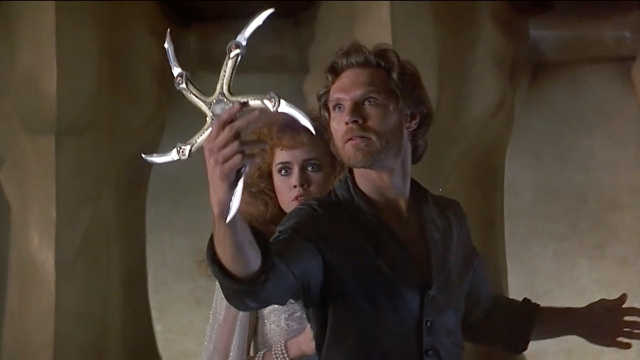
Krull
A definitive shining example (AND a prime candidate for a remake)

Since the screenwriter’s education is ongoing, there’s always something for you to work with or study to get a better grasp and understanding of what constitutes good writing, which can then be applied to your own.

Read scripts. Attend or take part in a table read. Watch movies.

While there are countless examples of exemplary writing and filmmaking to see it done properly and effectively, there are even more examples of crappy writing and lousy filmmaking to see it done poorly and ineffectively.

Nobody starts out with the intention of making a bad movie. What starts out as a great script can easily be messed up along the way to the point that there’s no salvaging it. It happens.

Is watching one waste of time? Not necessarily.

As enjoyable, informative and educational as the good stuff is, the bad stuff is actually just as good, possibly even more so. Because from these cinematic travesties you can learn what not to do with your own scripts. Lessons abound with all the glorious misfires regarding story, characters, and dialogue.

Regrettably, bad acting is a category all by itself and there’s nothing that can be done about it. Do what you can to ignore it (which can border on the impossible, depending on the quality of badness) and focus on the non-tangibles.

It’s especially helpful to work with something from the same genre as your script. See how they did it, then compare it to your own. Can you see why theirs didn’t work? Is it riddled with plotholes you could drive a truck through? Is the dialogue pure on-the-nose? Do the characters come across as unrealistic caricatures?

Look at it as a whole. Does it respect the reader/audience’s intelligence? Is the structure solid? Do you care about what happens to these characters over the course of the story?

Now bring your script into the equation – and be objective! How much of a similarity or difference is there between that story and yours? Did that other material open your eyes to some previously unforeseen flaws and potential problems within your script, so much that it made you realize “this needs work”?

Once you identify these problems, your writer’s mind goes to work, figuring out how to make sure your script doesn’t repeat the mistakes you just read or watched.

It may not be easy to endure having to watch a bad movie just for the educational experience, so just keep reminding yourself “It’s to help me become a better writer”.

Good luck!

Question time! What’s your favorite bad movie? Feel free to list it in the comments.