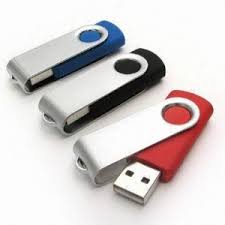
Saving now for future use

Behold! Filing cabinets of the 21st century

When was the last time you looked through your idea file?

You know the one. That desktop folder or flashdrive where you keep all those random thoughts and story ideas you’ve jotted down over the years.

You do have one, right? If not, you really should start one.  It’s easy. Just write stuff down, hold on to it and never get rid of it. Never.

Chances are a majority of these ideas probably won’t make it past the logline/story concept stage, and it’s even more likely you’ll have forgotten about them after a relatively short time. But don’t let that stop you from constantly adding to the file.

Each idea is a good reminder of the potential you saw within that story. Why else would you have written it down?

It’s also a nice little ego boost/confidence-builder to be reminded of your own creativeness. “I don’t remember coming up with that.”

I’ve mentioned many times about being ready when someone asks you “What else have you got?”. This guarantees you’ll have something ready to go, even if it’s just a couple of sentences that take all of ten to fifteen seconds to pitch.

You never know what’s going to work. That throwaway concept you came up with years ago could end up being your next project.

So the next time you take a break from whatever it is you’re working on right now, open up that file and see what’s in there. You might be surprised, intrigued, pleased or even thrilled.

The possibilities really are limitless.
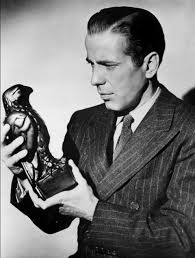
Out of the fog – literally

Definitely the kind of weather you'd find this guy in
Conditions like this I call “Sam Spade kind of weather”

Call it a benefit of being a creative type.

Even though I may be working on one project, there’s always the strong possibility that ideas connected with another can still pop up. Happens to all of us.

When they do, I do my best to take advantage of it.

Just such a thing happened yesterday morning. As is my usual routine, I was riding my bike to work. (Didja know I leave the house at 4AM? True.) Suffice to say, it was dark.

And foggy. This is San Francisco, where fog is a serious issue. Visibility was limited to fifteen, maybe twenty yards.

So there I am, pedaling along, and I can’t help but notice how delightfully creepy and sinister it all is. Barely-lit slick streets blanketed with dense fog, the hearty blast of the foghorn sounding over by the Golden Gate.  Something in my brain switches on.

“This is the perfect setting,” I think to myself, “for the opening of the monster script.”

The fog hung around for about another two miles, giving me lots of time to come up with a mental list of what could happen during that sequence. After I got to work, I wrote some of them down. If only the rest of this was as easy.

Even though this is just a small part of the story, and the actual work on the script may not happen for a couple of months, it was pleasantly unexpected.

We can’t force inspiration, so when you suddenly come up with an idea, let alone one that works, no matter how big or small it is, grab hold with both hands and do not let go.

The details might change, or you might not even use it, but it’s still a small step towards being done that helps make the whole process a little more bearable.

Rediscovery within the idea factory

Where output is a 24/7 operation

Where do you keep your collection of story ideas? A folder stashed away somewhere in your home office? A notebook tucked away on a bookshelf?  A flash drive lost amidst the clutter on that messy desk you keep telling yourself you’re going to eventually get around to cleaning?

No matter where it is, hopefully you still have it and have been contributing to it all this time.  The stuff you came up with way back when with the intention of getting back to it someday.

When was the last time you looked at any of them?  How much did you work on this or that before moving on?

It might just be a title, a logline, or a single paragraph. Take a closer look. How do they read now?

Does your mind still race about the possibilities of what could happen? Do you read it and think “I barely (or don’t) remember writing any of this,” or (hopefully) “This is a lot better than I remember.” Do you make a mental note that this has to be your next project?

Sometimes the ideas we come up with are better than we realize. The initial effort might not be what we’re hoping for, but  the idea or concept behind it is so strong – that’s what really appeals to us; it really drives us and motivates us to explore it further. Some may jump right into reworking it, while others file it away – “I’ll hold on to this.”

Maybe all you really needed were time and experience. Aren’t we all better writers than we were, say, a year or two ago?

Last week I wrote about working on two projects. While I wait for feedback on each in their current state, I turned my attention to the outline of a story I came up with about five or six years ago.

Much to my surprise, there were two outlines: the original, and then a semi-rewrite from two years after that. I skimmed through both. I prefer the second one, but there are definitely elements from the first I can incorporate into a new version.

There’s nothing like finding some of your old material and not just enjoying it, but seeing its potential and looking forward to working on it.

(As much as I’d like to add this into the mix, it’s probably better to not overdo it. I’ll focus on the other two, then move on to this one.)

So dig around and find your ideas from days gone by. You might even be surprised and potentially impressed with what you find.

Finding the spark to get those synapses firing

The solution to your problems is somewhere in there

Finding time to work on the outline of the rewrite has been a bit challenging these days, but I’m managing. I do what I can to make the most out of a limited timeframe. Do this often enough, and it actually gets easier.

One of my biggest concerns with this new draft was “what if I can’t think of anything?”

Trying to figure things out had been bothering me for the past couple of days. No matter what I was doing, I’d be going over potential scenes and scenarios in my mind. How about this? Does this work?

All that was missing was the cartoony stormcloud over my head.

So I’m riding my bike home from work. All of a sudden, a metaphoric lightning bolt springs from that cloud and hits me dead center.

A small idea pops in.  Just a two-word phrase, but within it is the potential to have a widespread impact throughout the rest of the story.

This then triggered a steady flow of still more possibilities. If I redo this part, then this could happen, thereby changing that and the other thing around completely.

How could I not see any of this before?

Writer’s block happens to everybody. It can be extremely frustrating, but you can’t let it stop you. It takes time to break it down, but don’t force it.

Do what you can to encourage your creativeness, and eventually it’ll be a lot more cooperative.  Once you have that breakthrough, you’ll feel like there’s nothing that can stop you.

Pretty cool, isn’t it?

The writing sprint: no training necessary

race
It’s not about speed; it’s how you handle the course

Finally, finally got to type in those illustrious words FADE OUT, which brings the first draft of the western spec to a satisfying close.

It’s very tempting to read it and see what needs work, but at this point, I’m opting to let it sit in hibernation while shifting the focus to the rewrite of the mystery-comedy.

While the previous draft is a more solid foundation than I thought, there are still some ideas I’m looking to incorporate.

Rather than jot a few down at a time, or hope inspiration hits every once in a while, I’m opting for a method that’s proven quite helpful in the past: the writing sprint.

Set aside 30 minutes. Just you and a blank page (paper or digital – doesn’t matter, although digital might be easier & faster to work with). Once that timer starts, write out scene ideas as fast as you can.  Don’t stop to think if they’re good or not. Just crank ’em out.

It’s not a bad thing to write what you already have, but maybe you’ll come up with something you never thought of, or suddenly hit on a solution to a problem that’s been bothering you.  Feel free to even take things a totally new direction. For now, there are no bad ideas.

It’s possible you could run out of gas before time runs out, but push yourself to keep going.

Once the 30 minutes is up, take a look at what you’ve got: a ton of (mostly) new material.

Pick and choose what works for you now, but make sure to hold on to the rest. Inspiration could hit from any of them, and you never know what might come in handy later.