She kicks ass just right

There were too many to choose from, so I opted for a classic example
There were too many to choose from, so I opted for a classic

Encouraging feedback on the western spec continues to roll in, with a recurring theme developing regarding opinions about the main character.

-“calm, cool and witty in the face of danger and indomitable odds”
-“a really great character to get behind”
-“actor bait”

Did I mention the main character is a woman?  More than a few considered that a major plus.

When I first started figuring out the story, which included seeking online help for the logline, anonymous posters on assorted forums pulled no punches in letting me know what a terrible idea they thought it was.

Yet despite all that negativity, I still felt this was a story worth the time and effort to tell. The West was a harsh, brutal place. You had to be tough to survive. Why wouldn’t the women be as tough as the men?

When I write action, I’m hoping to create a sense comparable to a thrilling rollercoaster ride; one that grabs you tight and pulls you along at top speed. Whether the main character behind it all is a man or woman is a non-issue. It really comes down to two things: an entertaining story with three-dimensional characters.

To me, this had both. Being a fan of the genre helped – I know what works, what doesn’t and what I as an audience member would want to see. And as far as I could tell, it was a story that hadn’t been done before.

So I wrote it, and now it’s all about the wait-and-see.

Not surprisingly, articles continue to pop up about how a female main character in an action film is still considered somewhat of a novelty, or that since an action film with a female main character absolutely tanked at the box office, logic can only dictate it was because the main character was female, and not because the story sucked.

Count me among those hoping these ways of thinking will someday not be an issue.

Caught in the ripple effect

It starts a chain reaction you just can't stop
A chain reaction you just can’t stop

When I work on pages, I make a point of adhering to the story as it’s written in the outline. There may be some slight alterations here and there, but that’s not an uncommon thing.

At the moment I’m in the middle of a sequence, that, according to the outline, was all planned out. No problems.

Little did I realize that over the course of the pages before this, all of those slight alterations would drastically change the circumstances surrounding my protagonist’s situation in that sequence.

Without knowing it, I had made things much harder not only for him, which is how it should be, but also for myself, which isn’t exactly the greatest of news.  Most of the details now had to be thrown away.

And because I’m such a glutton for punishment, this sequence was slowly becoming way too similar to one from about 20 pages before it. How I didn’t see this while outlining I’ll never know.

So it’s not necessarily back to square one, but I’ve got some work to do. Looking at this from the silver lining perspective, this is actually some pretty good stuff:

-My protagonist now faces bigger challenges, which still advance the story, theme and character development.
-I’m forced to come up with better, more creative ways of depicting how things play out.
-Recognizing and handling the domino effect those earlier changes have made and will make on the rest of the story.

Fortunately, we writers are a hearty lot and not easily deterred.  Time, experience and constant rewrites provide us with the determination and intestinal fortitude to work our way through this sort of thing.

Saving now for future use

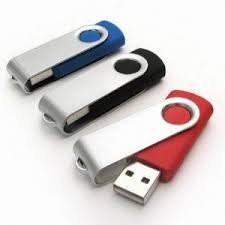
Behold! Filing cabinets of the 21st century

When was the last time you looked through your idea file?

You know the one. That desktop folder or flashdrive where you keep all those random thoughts and story ideas you’ve jotted down over the years.

You do have one, right? If not, you really should start one.  It’s easy. Just write stuff down, hold on to it and never get rid of it. Never.

Chances are a majority of these ideas probably won’t make it past the logline/story concept stage, and it’s even more likely you’ll have forgotten about them after a relatively short time. But don’t let that stop you from constantly adding to the file.

Each idea is a good reminder of the potential you saw within that story. Why else would you have written it down?

It’s also a nice little ego boost/confidence-builder to be reminded of your own creativeness. “I don’t remember coming up with that.”

I’ve mentioned many times about being ready when someone asks you “What else have you got?”. This guarantees you’ll have something ready to go, even if it’s just a couple of sentences that take all of ten to fifteen seconds to pitch.

You never know what’s going to work. That throwaway concept you came up with years ago could end up being your next project.

So the next time you take a break from whatever it is you’re working on right now, open up that file and see what’s in there. You might be surprised, intrigued, pleased or even thrilled.

The possibilities really are limitless.

Out of the fog – literally

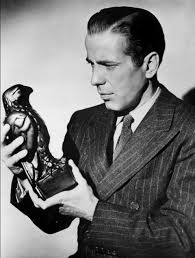
Definitely the kind of weather you'd find this guy in
Conditions like this I call “Sam Spade kind of weather”

Call it a benefit of being a creative type.

Even though I may be working on one project, there’s always the strong possibility that ideas connected with another can still pop up. Happens to all of us.

When they do, I do my best to take advantage of it.

Just such a thing happened yesterday morning. As is my usual routine, I was riding my bike to work. (Didja know I leave the house at 4AM? True.) Suffice to say, it was dark.

And foggy. This is San Francisco, where fog is a serious issue. Visibility was limited to fifteen, maybe twenty yards.

So there I am, pedaling along, and I can’t help but notice how delightfully creepy and sinister it all is. Barely-lit slick streets blanketed with dense fog, the hearty blast of the foghorn sounding over by the Golden Gate.  Something in my brain switches on.

“This is the perfect setting,” I think to myself, “for the opening of the monster script.”

The fog hung around for about another two miles, giving me lots of time to come up with a mental list of what could happen during that sequence. After I got to work, I wrote some of them down. If only the rest of this was as easy.

Even though this is just a small part of the story, and the actual work on the script may not happen for a couple of months, it was pleasantly unexpected.

We can’t force inspiration, so when you suddenly come up with an idea, let alone one that works, no matter how big or small it is, grab hold with both hands and do not let go.

The details might change, or you might not even use it, but it’s still a small step towards being done that helps make the whole process a little more bearable.

Rediscovery within the idea factory

Where output is a 24/7 operation

Where do you keep your collection of story ideas? A folder stashed away somewhere in your home office? A notebook tucked away on a bookshelf?  A flash drive lost amidst the clutter on that messy desk you keep telling yourself you’re going to eventually get around to cleaning?

No matter where it is, hopefully you still have it and have been contributing to it all this time.  The stuff you came up with way back when with the intention of getting back to it someday.

When was the last time you looked at any of them?  How much did you work on this or that before moving on?

It might just be a title, a logline, or a single paragraph. Take a closer look. How do they read now?

Does your mind still race about the possibilities of what could happen? Do you read it and think “I barely (or don’t) remember writing any of this,” or (hopefully) “This is a lot better than I remember.” Do you make a mental note that this has to be your next project?

Sometimes the ideas we come up with are better than we realize. The initial effort might not be what we’re hoping for, but  the idea or concept behind it is so strong – that’s what really appeals to us; it really drives us and motivates us to explore it further. Some may jump right into reworking it, while others file it away – “I’ll hold on to this.”

Maybe all you really needed were time and experience. Aren’t we all better writers than we were, say, a year or two ago?

Last week I wrote about working on two projects. While I wait for feedback on each in their current state, I turned my attention to the outline of a story I came up with about five or six years ago.

Much to my surprise, there were two outlines: the original, and then a semi-rewrite from two years after that. I skimmed through both. I prefer the second one, but there are definitely elements from the first I can incorporate into a new version.

There’s nothing like finding some of your old material and not just enjoying it, but seeing its potential and looking forward to working on it.

(As much as I’d like to add this into the mix, it’s probably better to not overdo it. I’ll focus on the other two, then move on to this one.)

So dig around and find your ideas from days gone by. You might even be surprised and potentially impressed with what you find.