Expiration date: NEVER!

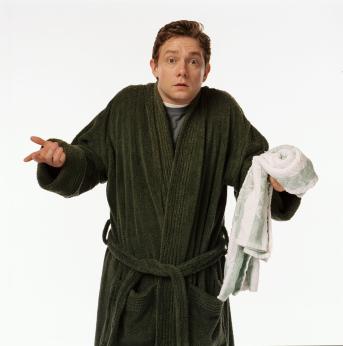
arthur dent
Don’t throw in the towel just yet, Arthur

A friend emailed me earlier this week to vent his frustration regarding the latest development for pitching his TV pilot. Suffice to say, it didn’t go the way he’d hoped.

“Writing is hard work for me, and to have a project like this dismissed completely deflates me. I think I need to set a deadline (end of 2016?), and if I haven’t gotten a sale or at least representation by then, exit, stage left.”

I can totally sympathize. Who hasn’t been in that boat before? You try and try, feel like you’re making no headway and going nowhere fast.

But setting up a deadline of when you’ll stop once and for all?

Um, no.

As we all know, this is not an easy thing to do. The odds are already stacked against us, and it takes an extraordinary amount of effort, determination and perseverance to keep moving forward. And that’s just to get your first break.

I of all people can attest to feeling like nothing good is ever going to happen for me, and why again am I putting myself through the agony of all of this?

Because we’re writers. WE WRITE BECAUSE WE LOVE DOING IT.

For a writer willing to give up writing is, to quote the late, great Vizzini, inconceivable. As crazy as it sounds, I’d rather write and continue to fail than not write at all. (But in theory would be improving after each failure, thereby resulting in an inevitable success.)

DON’T GIVE UP. You never know when things will work out for you, so continuously having at it will always increase your odds.

Continue to work on getting better. Even if only a handful of people read your stuff and like it, that’s still a victory. And they do add up.

IT’S A MARATHON, NOT A SPRINT. It takes a very, very long time to get to the finish line, let alone at your desired pace. And even then, you’re always striving to improve on it. Take this from someone who writes screenplays AND does half-marathons.

Believe me, there will be shitty days. Lots of them. You will be angry and frustrated. You will see others succeed while you feel like you’re going nowhere. It happens. But that’s the price you pay for setting off on this seemingly impossible journey.

But also keep in mind that you’re not alone. There are lots of us out on a similar path. Feel free to make the occasional turn so your path intersects with somebody else’s. It can help make the journey a bit easier.

My friend responded with a note of thanks and gratitude, which included “I’m ultimately a storyteller, a writer. This is what I exist to do, even if my audience is a small one. I will work hard to find it and share my stories.”

Couldn’t have said it better myself. Hang in there, chums.

Ask a More-Than-Ready-for-Prime-Time Script Consultant!

Jen Grisanti

The latest in a series of interviews with script readers and consultants who would be worth your while to work with if you want to get your script in shape. Today is about writing for television, with the spotlight on Jen Grisanti of Jen Grisanti Consultancy, Inc.

International speaker Jen Grisanti is an acclaimed story and career consultant with her own firm, Jen Grisanti Consultancy, Inc., and a writing instructor for Writers on the Verge at NBC. She spent 12 years as a studio executive, including working as VP of Current Programming at CBS/Paramount. Jen also blogs for The Huffington Post and is the author of Story Line: Finding Gold In Your Life Story, TV Writing Tool Kit: How To Write a Script That Sells, and Change Your Story, Change Your Life: A Path To Your Success. She teaches classes for TV Writers’ Summit (LA, NYC, London and Israel) and Story Expo. She has taught at the TV Writers’ Studio (Australia), Scriptwriters’ Network, The Screenwriting Expo, and The Great American Pitchfest. Jen has also served on panels for the WGA, Scriptwriters’ Network, Final Draft/The Writer’s Bootcamp, and ScreenCraft. Her company hosts online Storywise Seminars.

1. What’s the last thing you read/watched that you thought was incredibly well-written?

The best movies I’ve seen recently include: The Imitation GameGuardians of the GalaxyLocke, and Chef.

Some of my other favorite movies from the past I think are incredibly well-written include: The Lives of Others, The King’s SpeechThe Untouchables and Argo.

2. How’d you get your start reading scripts?

After studying Communications with TV & Cinema at USC, the first job that paved my way to where I am today was working as an assistant to Aaron Spelling. While working in his office I began to voraciously read scripts. Spelling was my mentor. We had a routine where I’d read all of the scripts for the current shows he had on the air and he’d review my notes and tell me what worked and what didn’t. I learned so much about what makes story work by watching him in the edit bay during rough cuts. I got my Bachelor’s at USC, but I always say I got my Master’s degree in TV in the Spelling office. It was the best place to learn.

I climbed the ladder while I was at Spelling and eventually ran Current Programming covering shows including Beverly Hills 90210, Melrose Place and 7th Heaven. I went on to become Vice President at CBS/Paramount where I covered shows including: Numb3rs, Medium, NCIS, The 4400 and Girlfriends.

3. Is recognizing good writing something you think can be taught or learned?

I believe that for some, writing comes naturally. They have a sense of their voice from the start. They may need help with structure, but the voice is there.

With others, I do believe it can be taught or learned. I’ve definitely seen this happen many times in my career. There is no greater reward than to see the growth of a writer, to help guide them in finding their voice and to help them understand how to use story structure in the best way possible to bring their voice to life.

4. What are the components of a good script?

The components of a good script are a strong trigger incident that leads the central character into a dilemma. This creates empathy. Then, the choice that they make as a result of the dilemma defines the goal. We should be clear on what the central character wants and why they want it. Another thing that really adds to a good script is when the personal dilemma is connected to the professional pursuit. With this, when the writer comes from a place of emotional truth, it really helps to connect what they are trying to say.

A strong script should have a concept we can feel and a story with a clear message.

5. What are some of the most common mistakes you see?

We don’t know what the central character wants, or we don’t know why they want it. If you don’t know what the central character wants or why they want it, then there’s no rooting factor. The central character reacts to things that happen to them versus taking action toward the goal, giving you a reactive hero instead of an active one. The obstacles happen to the central character versus being a result of an action that the character took. There is no external stakes arc. We don’t know what the worst thing is that can happen if the central character does not achieve their goal.

6. What story tropes are you just tired of seeing?

I wouldn’t say there’s a specific story trope  I’m tired of seeing. I’m just tired of seeing films being made where the story wasn’t ready. I feel like TV is in a much stronger place than film with regards to writing.

7. What are the 3 most important rules every writer should know?

-Make us empathize with your central character from the start.

-Have a clear goal.

-Establish the internal and external stakes.

8. Have you ever read a script that was an absolute, without-a-doubt “recommend”? If so, could you give the logline?

I’m not a reader. I analyze story from the studio executive perspective, so I don’t give “recommend” or “pass,” which is what readers do. I give development notes that help the writer to know how to elevate their script to the best place possible.

That being said, ninety-two of the writers I’ve worked with have sold pilots. Four of them went to series. So I do have lots of projects that I work with people on that go on to sell and be produced.

9. How do you feel about screenwriting contests? Worth it or not?

Some are very worth it. I like ScreenCraft, Final Draft, the Austin Film Festival and the Nicholl to name a few.

Competitions allow writers to put something on their bio that shows their writing has been recognized. This is a town that loves heat. If someone else thinks you’re great, everyone wants to know you. So the competitions do serve a purpose in building heat and creating possibility.

10. How can people can get in touch with you to find out more about the services you provide?

Through my website – www.jengrisanticonsultancy.com, or they can email me at jen@jengrisanti.com.

If you want to see how I work with writers one-on-one, I recommend reviewing my Writer Proposals Page – http://jengrisanticonsultancy.com/services/proposals/

Plus, if you mention this interview, I’ll give you 10% off of your first consult.

11. Readers of this blog are more than familiar with my love/appreciation of pie. What’s your favorite kind?

I love it. I’m big on baking, and my favorite is cherry pie.
Ask an Unequivocally Heavenly Script Consultant!


The latest in a series of interviews with script readers and consultants who would be worth your while to work with if you want to get your script in shape. Today’s spotlight is on Hayley McKenzie, founder of Script Angel.

1. What’s the last thing you read/watched that you thought was incredibly well-written?

In film, I loved Philomena by Steve Coogan and Jeff Pope. I think it’s hard to make intimate stories in the Drama genre that feel like they deserve to be a feature film, but this one really nailed it for me. Also, Locke by Steven Knight – set entirely inside a car. I honestly didn’t think it would be possible to sustain tension with a guy talking on a phone driving a car for 90 minutes. It’s not a thriller, there is no threat to his life, no car-chase. It was a really stunning piece of writing. For TV, it was probably the second season of UK mini-series/serial drama Line of Duty by Jed Mercurio – a thriller that sustained tension and threat following one story over 6 hours of TV. One interview scene was 17 minutes long and you were holding your breath watching it – amazing writing.

2. How’d you get your start reading scripts?

After a Degree in English Literature, I started in film and TV production as a Runner, then 3rd AD. Then I discovered what Script Editors did – combining story analysis and film production – and knew I’d found my perfect role. I got a job as Development Co-Ordinator at BBC Drama where I got to read scripts for Jane Tranter (founder of Bad Wolf, Exec Producer Industry and His Dark Materials) and Pippa Harris (now Executive Producer for Call the Midwife). I was reading all the submissions to the department as well as everything in development and production. They read all my early script reports and really encouraged me to pursue it as a career.

3. Is recognizing good writing something you think can be taught or learned?

The technical analysis side of it can definitely be taught, and certainly improved through study. But I think good script readers are also very empathetic. Like the writer, they need to be able to imagine themselves inside the lives of the characters they’re reading about. Script Editors also need to be empathetic towards the writer themselves. As a Script Editor it’s not just your job to critique the script but to deliver criticism and useful solutions in a way that encourages rather than demoralizes the writer. You can’t not give the tough notes but as a Script Editor you’re working in a long-term development process with the writer so you can’t just tell them what’s crap and then walk away and wash your hands of it. What comes back in the next draft is in part your responsibility.

4. What are the components of a good script?

It’s got to make me feel something – almost anything as long as it’s not bored or confused. It almost doesn’t matter how you do it. If it’s a Drama I want it to make me cry. If it’s a Thriller it should be a tense, exhilarating read, etc. If it’s achieved that, even only in part, then I know there is something there I can work with.

5. What are some of the most common mistakes you see?

A great plot but poor characterizations; characters doing things because you need them to do it to get the plot to the next beat, not because it is what that character would do in that situation. And the reverse of that: great characters but almost nothing happens to them. Most writers have a natural flair for one or the other and the key is helping them strengthen the areas they’re weak in.

6. What story tropes are you just tired of seeing?

The hard-boiled, world-weary cop. It’s particularly a problem in television development because so many of our shows are in the Crime drama. Trying to find new angles on the ‘troubled cop’ is tough!

7. What are the 3 most important rules every writer should know?

1) Don’t be boring.

2) Don’t confuse me. Intrigue is great but utter bewilderment for huge swathes of screen-time will just make the reader ditch the script.

3) Don’t give up.

8. Have you ever read a script that was an absolute, without-a-doubt “recommend”? If so, could you give the logline?

Papadopoulos and Sonswhich was a huge UK indie hit in 2012, outselling GI Joe: Retaliation in some London cinemas! “Following his ruin in the latest banking crisis, a self-made millionaire reluctantly re-unites with his estranged freewheeling brother to re-open the abandoned fish and chip shop they shared in their youth.” I was lucky enough to be brought onboard as Script Editor – such a privilege.

9. How do you feel about screenwriting contests? Worth it or not?

Definitely. Placing in a well-respected contest can really get you noticed. But not all contests are equal. We have a curated round-up on the Script Angel Writers’ Hub of the best UK and US screenwriting contests.

10. How can people get in touch with you to find out more about the services you provide?

They can find out about our one-to-one screenwriter coaching service and we’ve got lots of free articles on developing you screenwriting craft and career on our Writers’ Hub.

11. Readers of this blog are more than familiar with my love/appreciation of pie. What’s your favorite kind?

Treacle tart – which is almost a pie! Yum!