
Ask a Nicholl-winning Script Reader!

1465249_10202485687454053_1139689699_n

The first in a series of interviews with some script readers who would be worth your while to work with if you want to get your script in shape.

Today’s spotlight on: Doug Davidson!

Not only is Doug Davidson a Nicholl Fellow, but his script LETTER QUEST has the distinction of being the only animation script to ever achieve that honor.

1. What’s the last thing you read/watched that you thought was incredibly well-written?

DAWN OF THE PLANET OF THE APES. The most compelling character to hit the movies in a while is an ape. Caesar is a textbook protagonist. An extraordinary individual doing extraordinary things under extraordinary pressure. When you can end a movie by zooming in on the lead character’s face, and not have it feel cheesy, you know you’ve done something right.

2. How’d you get your start reading scripts?

I started in a screenwriting group, a large group that lasted several years. Early on, we agreed on always giving each other formal written feedback, because if you don’t have to write your feedback down, then you don’t think nearly as hard about it. When you put your feedback in paragraph form, you realize you have to make sense, you have to be consistent and you have to justify what you say. It gave me the discipline to write constructive, reasoned feedback instead of just tossing out opinions.

3. Is recognizing good writing something you think can be taught or learned?

Recognizing perfect writing is easy and intuitive. Anyone can do it. Recognizing the potential in a promising script that isn’t quite working yet, that takes more experience. And it takes a writer’s mentality. You need to study the craft for years. There are rules that are easy to memorize, but how to apply them, that’s much more difficult. Blindly applying the rules doesn’t lead to good writing, or good feedback.

4. What are the components of a good script?

The craft has to be there, and then there has to something else, a plus one. It could be funny comedy. It could be insight. It could be a new idea. That’s the “talent” part. You might think it’s this “plus one” that’s missing from most scripts, but I find the opposite to be true a lot of the time. Often a script has this amazing unique element, but the nuts and bolts of the story just aren’t in place yet. That’s when making the extra effort to put all the craft elements together really pays off.

5. What are some of the most common mistakes you see?

One of the most common mistakes I see is writers thinking a plot point (or character trait or thematic element) is clear on the page when in actuality it’s really not. At least not clear enough. It happens all the time, even to seasoned writers. That’s why feedback is so important. It’s not about saying your vision is wrong. It’s about saying your vision isn’t quite visible. Yet. The trick is to make sure everyone can see it.

6. What story tropes are you just tired of seeing?

Just about any story idea could work with the right execution. That said, I’ve come across a surprising number of scripts about screenwriters writing screenplays. Autobiography finds its way into most scripts, but it really helps to disguise it just a little.

7. What are the 3 most important rules every writer should know?

(1) Don’t (2) Give (3) Up.

8. Have you ever read a script that was an absolute, without-a-doubt “recommend”? If so, could you give the logline?

Nothing is absolute, but I’ve read more than a dozen really excellent unproduced scripts that I would recommend. I won’t go into the loglines here, but they’ve spanned just about every genre. I love to stay in the loop with the scripts I’ve read, especially the great ones. Several are optioned, several have placed very well in major contests and two have well known actors attached. Many of the writers of these scripts have secured representation as well. It requires some grit, but first-rate work will eventually get you places in this industry.

9. How do you feel about screenwriting contests? Worth it or not?

Screenwriting contests are absolutely worth it. It’s not the only path to success or a guarantee of success, but I know a fair amount of writers who have benefited greatly from contest placements. If you get an opportunity to read for a contest, I recommend that too. I’ve done it and learned a lot from the experience.

10. How can people get in touch with you to find out more about the services you provide?

My website is www.fourstarfeedback.com. I have a screenwriting blog there based on my experiences in the industry (and the numerous mistakes I’ve made). I’m also happy to answer specific questions via the email listed on my site.

11. Readers of this blog are more than familiar with my love/appreciation of pie. What’s your favorite kind?

I love pie too! I like to bake my own key lime pies. They’re pretty easy to do. I also love coconut custard, blueberry and anything with peanut butter. But my favorite would have to be . . . pecan. A great pecan pie has a sludgy quality – an intensely sweet sludge – balanced by a nutty crunch. Thanks for thinking of me, Paul! We’ll have to get together sometime for some coffee, and pie.
Constructive criticism – a force for good

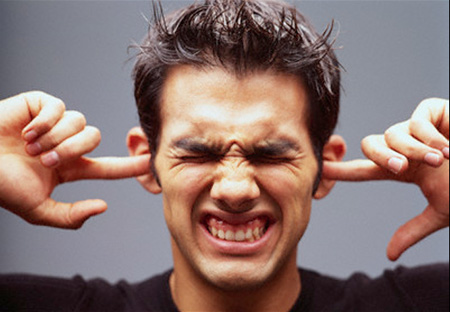
If I can't hear you, then it's not true
If I can’t hear you, then it must not be true

If you met someone who does the same thing you do, but has been doing it longer and with more success, wouldn’t you ask them for advice on how you could get to their level, and more importantly, heed that advice?

While I’m not a professional writer (yet), others, mostly on the newer side, will ask me for feedback on their script.  If I have the time, I’ll do it, and offer up what guidance and suggestions I can.

My notes are sent with the reminder that these are just my opinions to do with as they see fit. Fortunately, most of the responses have been positive and appreciative.

But once in a while, somebody will disagree with what I’ve said or totally ignore it. That’s their choice. They came to me seeking help, and I guess didn’t like what I had to say.

I once asked somebody what kind of material it was, and the answer was long-winded and very academic. While they were droning on, I couldn’t help but think “If they tried to pitch this to a producer, that meeting would probably be over right about now.”

Asking another writer for their logline, I got what sounded more like the short paragraph you’d see on the back of a novel. I tried a few different approaches, each time hoping to point them in the right direction as well as coax out some of the creativity they claimed to have. No such luck. After offering up what you do and don’t want to have in a logline, the response was a curt “Got it. Thanks.”  Can’t say I didn’t try.

Part of me wonders if my advice would be taken more seriously if I charged for it.

You came to me for help, remember? Just because you don’t like the answer doesn’t mean it’s not true.

I’m not trying to be mean. Quite the opposite. There are hard truths about this business that some people just refuse to acknowledge. All of us who came before you learned them the hard way, and if you want to make it, then you’re going to have to do the same.

I seek rewatchability

Never gets old. Never.

It goes without saying that any screenwriter is a movie buff. We have to be. It’s our love of movies that got us into this in the first place.

We’ve all got our favorites. Countless genres are spanned. Writers, directors or performers we can usually rely on for solid, quality work. Who hasn’t claimed to have seen a particular movie “over a hundred times”?

So what is it about them that makes us have no problem with watching them over and over, as opposed to seeing something once and being done with it, or maybe even abandoning ship around the halfway point?

A favorite film motivates repeat viewings. You’re enjoying the whole experience so much that when it’s over, you’re already looking forward to seeing it again.

Consider the films in your home collection. What is it about them that made you go so far as to want to own them?

For as much as I talk about STAR WARS, RAIDERS OF THE LOST ARK and BACK TO THE FUTURE, all of which I could watch over and over, I’m also perfectly content with something that doesn’t involve special effects, like TO KILL A MOCKINGBIRD, THE MAGNIFICENT SEVEN or SOME LIKE IT HOT.

What do all of these have in common? For me, it all boils down to fantastic storytelling with well-crafted three-dimensional characters, both of which also motivate and inspire me to be a better writer.

Which is what it all comes down to. The writing, which starts with us.

Not only are we striving to create a story, but we want to make them so amazing that they’re practically irresistible not only to the people who make the movies, but the movie-going public.

While working on that latest project, we imagine what the finished product would look like on the big screen and hope the audience is having such a blast watching it that they’ll want to come back for more.

But imagining is one thing. Actually making it compelling and involving is another.

We must continuously write, rewrite, hone and polish each individual piece of work to make it as involving and engaging as possible.

Not sure if yours is? Ask somebody. Writing group, trusted colleague, paid analyst. Doesn’t matter. Always be striving for greatness, my friends.

Our work is definitely cut out for us.  It’s hard enough to write a good script. It’s even harder to write one people want to continuously return to.

Here’s to our biggest fans

Couldn't do this without you
Couldn’t do this without you

Even though writing is primarily a solitary activity, there are often times when we just can’t go it alone.

Friends and trusted colleagues can only take us so far. The rest of the time we need somebody else.

But not just any somebody. Somebody extra special.

Somebody who’s there for us no matter what.

Somebody experiencing the ups and downs right along with us. Somebody who shares in our joys and frustrations.

Maybe they’re a writer too, but chances are probably not, but it doesn’t matter. They know what it is we’re trying to accomplish, and how tough it is, and offer whatever support they can.

They’re there for us in countless capacities. A sounding board for potential ideas. The editor or proofreader who sees our work before anybody else. The gatekeeper of our writing sanctums.

They provide encouragement when we’re feeling low. They sympathize when we suffer from writer’s block. They are the ones we look to for solace when the long-awaited answer is ‘no’.

But they’re also the first person you want to tell when something good happens.

They are our support, our motivation, our inspiration. They help us to move forward, keep trying and carry on.

So pass along your gratitude to your someone. Let them know how much you appreciate everything they’ve done to help you and your writing.

This is a tough enough journey as it is, and without them, it would be much, much harder.