Being realistic in a work of fiction

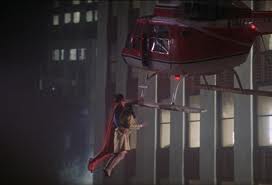
You're upset about the scientific inaccuracies in a comic book movie about an alien who can fly?
Some people were actually upset about the scientific inaccuracies in a comic book movie about an alien who can fly

“The monsters attack.”

This simple line in my action spec outline was the catalyst for a major thought process that continues to grow by leaps and bounds.  Questions are being raised that demand answers.

In creating this world, not only do I have to develop the story you’ll be following, but also fill in a lot of details about the world itself – which just happens to have monsters in it, which leads to more questions.  It never occurred to me to consider subjects such as biology, geology and the laws of physics as they apply to monsters (all of which play a part in the story).

“But it’s just a story,” some might say. “Don’t worry about stuff like that.” But it’s exactly the stuff like that that makes the story better, plus it shows I’m taking this seriously – even if it does involve monsters.

I’ve always had an intense dislike for writing that takes the easy way out in explaining something, or does it in a very half-assed way.  It makes it seem like the writer didn’t care enough to do a little more work.

It’s very important to me that not only are the events of the story based in reality, but the setting is as well.  This is something I strive for in everything I write – no matter what the genre.

The more detailed you can make the world of your story, the more believable it’ll be. But be careful not to overdo it – too much detail creates confusion. Just give enough to make ’em say “Yeah, that makes sense.” or “I can totally see that happening.”

Now it’s back to my research on which metallic alloy would be the most effective for killing monsters. So far, tungsten carbide seems to be the frontrunner.

The writing sprint: no training necessary

race
It’s not about speed; it’s how you handle the course

Finally, finally got to type in those illustrious words FADE OUT, which brings the first draft of the western spec to a satisfying close.

It’s very tempting to read it and see what needs work, but at this point, I’m opting to let it sit in hibernation while shifting the focus to the rewrite of the mystery-comedy.

While the previous draft is a more solid foundation than I thought, there are still some ideas I’m looking to incorporate.

Rather than jot a few down at a time, or hope inspiration hits every once in a while, I’m opting for a method that’s proven quite helpful in the past: the writing sprint.

Set aside 30 minutes. Just you and a blank page (paper or digital – doesn’t matter, although digital might be easier & faster to work with). Once that timer starts, write out scene ideas as fast as you can.  Don’t stop to think if they’re good or not. Just crank ’em out.

It’s not a bad thing to write what you already have, but maybe you’ll come up with something you never thought of, or suddenly hit on a solution to a problem that’s been bothering you.  Feel free to even take things a totally new direction. For now, there are no bad ideas.

It’s possible you could run out of gas before time runs out, but push yourself to keep going.

Once the 30 minutes is up, take a look at what you’ve got: a ton of (mostly) new material.

Pick and choose what works for you now, but make sure to hold on to the rest. Inspiration could hit from any of them, and you never know what might come in handy later.

So glad I didn’t listen to myself

How I originally intended to start this writing session
How I originally intended to approach this rewrite

Since it really has been years since I last looked at my mystery-comedy spec, and not wanting to be too heavily influenced by what I’d written before, I figured this rewrite would be completely fresh. A clean slate. Blank page from the get-go. A whole new ball of wax.

I sit at my desk, all set to open those floodgates. My notebook’s open to this new set of plot points, ready to be fleshed out. Pandora cranks out the sounds of the Rat Pack and the 50s jazz club scene (appropriate mood music for the story’s setting). A hot cup of joe within reach. Overall, a perfect writing scenario.

So what thought immediately pops into my head?

Yep. I’m gonna check out what I wrote before. But just out of curiosity. It’s not like I’m going to keep the whole story. Besides, it’ll be interesting to see how far my writing’s come since then.

This is also why you should never, ever throw away old material. You never know when you might come back to it.

I open the 1-pager. Okay, I remember this part. Wait. I don’t remember that. Whoa, where did that come from? Wow, this is a lot more detailed than I remember.

Finishing that, I automatically wonder how the script reads. A few scenes stick out in my memory, but most of it is long forgotten.

I’ll just take a look at the first few pages. Promise.

Hmm. Not as bad as I thought. Some of the dialogue is a little too on-the-nose. Too many adverbs. Character descriptions could be better. Some good set-ups I instantly recall how they pay off. This subplot’s a little weak.

A quick glance to the upper right corner to see what page I’m on. 26 already? Hokey smokes, this thing is flying by.

By now I feel almost obligated to finish reading it. 35 minutes later, I did.

The overall consensus: still needs a lot of work, but a much more solid foundation to start with and there are some ideas I’d like to incorporate. It’s kind of reassuring to know I’ve already taken care of a lot of the heavy lifting.

A few days ago, I was concerned this was going to be a real slog, but now – not so much.