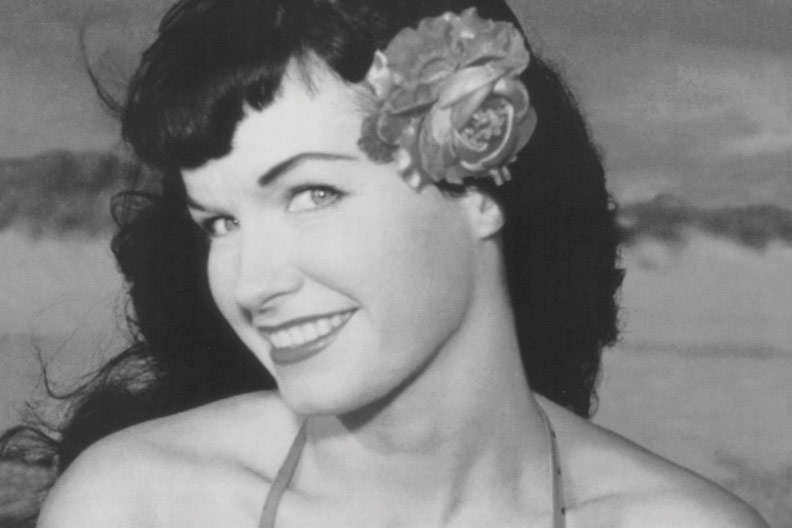
BETTIE, mid 20s. Don’t let her all-American looks fool you. Trouble goes out of its way to avoid HER.
Author’s note: had a great in-person notes session this week. Among the many topics we discussed was character intros, and what made for a good one, as well as a not-so-good (i.e. boring) one. That reminded me of this post from April 2014. Enjoy.
“When we, the reader, first meet an important character in your script, how do you describe them? What are the important details?
A lot of the time, the emphasis is on their physical traits – “tall”, “imposing”, “blonde”, “handsome”, “drop-dead gorgeous”, etc.
Or maybe it’s a simple adjective or two – “bubbly”, “funny”, “a nice guy” and so on.
These are okay, but you have to admit they’re kind of dull, which makes it more challenging for us to be interested in wanting to follow their story.
So how do you fix this? Time to ramp up that creativeness and really focus on what kind of person this character is, rather than what they look like. Unless a physical description is a key character trait, don’t worry about it.
One of the most memorable intros I ever read described the best friend of the teenaged protagonist – “James Dean cool at 15.” That’s it. Pretty effective, and in only five words.
Doesn’t this give you a better idea of what this character is like than say, “cool and aloof?”? This is the kind of writing that catches our eye AND makes an impression.
A former co-worker of mine used to describe a very talkative friend as “If you asked him what time it was, he’d tell you how to build a watch.” See how it goes beyond the good-but-simplistic “chatty know-it-all”?
Cliched as it sounds, we really are painting pictures with words – not just for the story, but the characters in it. You’re already crafting a unique and original story, so why not develop a unique and original way to tell us about the characters in it?
This isn’t saying you should always strive to be clever and witty about it, but at least try for something different. This is just a small part of showing off your writing skills.
Take a look at how you introduce the characters in your latest draft. Does it really tell us what you want us to know about them? If not, how could you rewrite it so it does?”
I hadn’t realized it had been quite a while since I’ve written about how my writing has been going, mostly because there hasn’t been as much of it as I was hoping, and what there has has been proving to be a bit of a challenge. Therefore…
The past few months have been me working on rewriting/overhauling the fantasy-comedy I wrote last year. For some reason, it just wasn’t clicking for me, hence the lengthy break.
So when I decided the time was right to dive back in, I really had to figure out what the problem was.
I still loved the concept, and a lot of what I’d already written, but something still seemed off. So I went to my tried-and-true practice of “take a step back for a closer look”.
What was it I liked about the story? Did the way it played out seem like the best way to tell it? What could be done differently, yet still yield the same results (or something even better)?
When I was first putting the story together, I must have gone through at least half a dozen different ways to start it. Each one had it’s own pros and cons. I don’t strictly adhere to “this plot point HAS to happen on THIS PAGE”, but I do what I can to stay in the neighborhood.
As I wrote down scenes I wanted to include, a pattern started to emerge. If I started the story THIS WAY, that would lead to THIS happening, and maybe I could rearrange a few things so as to get the full impact of what I was going for.
Then another realization came to me. The story was working, but my protagonist was the wrong character. Another character initially created as a big supporting role seemed to hold more potential, plus having things revolve around them would really punch up the tone of the story.
More pieces of the puzzle were falling into place.
Because of this drastically new approach, I don’t have the option of just recycling scenes from the previous draft. Each scene has to be rewritten to accommodate this new perspective and really play up the impact this new protagonist has on everything around them.
It’s a challenge, but the new story is slowly coming together. My enthusiasm for putting myself through all of this and my confidence in the story is as strong as ever.
I’ll admit this is also taking longer to than I wanted it to. My initial hope was to have completed the outline a while ago and have a new draft done by the end of the year, but that ain’t gonna happen.
Instead, I’m totally fine with the rest of 2021 being all about hammering out the outline and its subsequent fine-tuning. Kicking off the New Year with pages isn’t a bad way to go.
As we head into the weekend, here’s hoping for a whole lot of productivity for everybody’s current projects.
Scott McConnell is a writer/story consultant who has worked as a producer in Los Angeles and in fiction development. Scott edits stories from inside them as a writer. He finds solutions to story problems and can especially focus on improving a story’s premise. Scott believes this is where most films/scripts succeed or fail. He also finds that many good writers don’t focus enough on theme. It is through theme that a writer moves an audience emotionally. Scott can edit low budget features as well as big budget blockbusters. He fixes scripts for individual writers and production companies around the world.
Scott started in the business as a story analyst in Los Angeles; analyzing scripts for Roger and Julie Corman, Samuel Goldwyn and the Sundance Institute, among others. He was later the showrunner (writer/producer/director) of the U.S. nationally syndicated LIVE LIFE AND WIN! and he co-wrote the reality series HOLLYWOOD BOOT CAMP. He has found the story by studying footage, reading scripts/books, pre-interviewing talents, and writing or editing the script. Scott is a member of the Producer’s Guild of America and of the Australian Film Institute (AACTA.)
What was the last thing you read or watched you considered to be exceptionally well-written?
Regarding television, I’m a big fan of the English series VICTORIA, about Queen Victoria. The writing is often excellent, especially in season one, which dramatized a young girl developing herself in high stakes circumstances to become queen of an empire and the loving wife of a man she admires but who often has different ideas to her and is at times in romantic conflict with her because she is also his queen and leader.
Regarding film, I think SAVING MR. BANKS is brilliantly written, especially its dramatization of a profound theme and the integration of its two main plot lines from different time periods. The characters were intelligently written and layered, while the arc of the protagonist is beautifully climaxed.
How’d you get your start in the industry?
My first start in the business came after I graduated from UCLA Extension (scriptwriting) and did some interning work at industry places in town and started my own script analysis business. The study and volunteer work allowed me to get experience so I was skilled and employable.
Is recognizing good writing something you think can be taught or learned?
It is something that is learned. But there are great individual differences in how much someone might actually know about what makes a good story. And it’s hard for readers to see a story objectively as it really is and not be prejudiced by their own values and tastes.
What do you consider the components of a good script?
There are two basics to any script. First there is the mechanics of how well it is written: its structure, clarity of its theme, use of dramatic devises, the development of its character and relationship arcs, the nature of its climax, and so forth. That is, the storytelling skill.
And then there is the values side of the story, the actual nature of the specific content. For example, its theme and sensibility, the values and goals of the characters, the nature of the conflicts and the theme resolution. That is, the values the story is dramatizing.
A good script has skilled storytelling and universal, important and personal values that the audience cares about. It is the nature of these values that especially makes a story or film an enduring classic.
What are some of the most common screenwriting mistakes you see?
The biggest mistake I often see is that writers do not give their characters agency (free will). That is, more specifically, the writer does not create a protagonist who has a big main goal that drives the story and underpins its structure. One of the negative consequences of this lack of agency in characters is that it becomes the writer who drives the story by dropping contrived and coincidental problems onto the heads of the characters. Such a story lacks logic, believability and suspense.
Another common writing mistake I see all the time is that the concept of the story was not developed properly. Many scripts, for example, have unoriginal, uninteresting or one-layer premises. Creating a strong premise is the hardest and most important part of writing a story.
A mistake I see in good writers is that they often haven’t mastered theme, so they don’t know how to use it to give depth to their story and to induce deep emotion in their audiences.
What story tropes are you just tired of seeing?
Some writers want to throw in the latest political fad or fashion.
Other writers think that chases, fights and explosions are what make an action script great. They aren’t. Look at two of the great actioners, DIE HARD and GLADIATOR: both of these stories have layered and driven characters enduring terrible personal problems.
What are some key rules/guidelines every writer should know?
The first rule of all writing is to have something interesting to say or show. If your story – its premise, characters, plot, climax – are not interesting then it doesn’t matter how well you structure your story, for example, no one will care.
I think every creator of a script should have a story expert outside of their story bubble vet and edit their script, and the closer to the front end of the story creation this is done the better.
Have a writing process. Many writers who don’t have a writing process never finish their story or don’t know how to. A writing process can be learned and should be. A good writing coach can teach you one.
Have you ever read a script where you thought “This writer really gets it.”? If so, what were the reasons why?
That’s pretty rare. Most scripts, produced and unproduced, have issues. But I remember a script I edited about two years ago where I was impressed that these two writers were really in charge of the story and the writing. That is, that with some fixes this script would make a good movie. These writers had a layered, intriguing concept, an escalating plot line and characters who I cared about and I was anxious to see who among the leads won. (The three leads in conflict were all good guys but in a big conflict.)
How do you feel about screenwriting contests? Worth it or not?
That’s a good but difficult question. At best I’m mixed on contests. Yes, there are some good ones that can help a writer get doors opened or be noticed, but for other contests you have to worry about who is reading these piles of scripts. My concern is that too many contest readers seem to be straight out of college where they haven’t studied the great classic plays/novels nor analysed the truly well written films. They tend, I also worry, to be naturalistic and PC in their reaction to story content. I hope I’m wrong but….
My suggestion to those considering entering contests is to vet carefully. For example, look to see if the contest has some clout, that being a winner or a placing near the top will truly open doors, etc. Also try to see the loglines of previous winners. If they’re rubbish, be wary, as you should be if any samples of coverage by the contest’s graders indicates a focus not on story essentials. Also try to determine if that contest prefers a certain genre over others. Good luck. Caveat emptor.
How can people find out more about you and the services you provide?
I edit scripts of many genres and forms, have a mentorship program to teach writers a writing process while they actually write a script, and other writing and development services. People can learn more about me on LinkedIn at this page: https://www.linkedin.com/in/scottamcconnell/
I came up with the idea/concept for my fantasy-comedy more than a few years ago. Up until last year, putting it together consisted mostly of the occasional jotting-down of ideas for scenes and sequences. Figuring I had enough to work with, I worked my way through writing a first draft.
That was the end of last year.
After working on several projects since then, including some still in progress, I’ve decided to make things just a bit more complex for myself and start on the next draft.
The core concept and execution are still pretty solid, but after a lot of help and suggestions from some trusted colleagues, I’ve got a better grasp of which parts need some major work. It’s not as long a list as I expected, but there’s still a good deal for me to work on – especially from the perspective of character development; namely – my protagonist.
There are still some aspects to his internal and external goals that need tweaking, so a lot of my time lately has been all about that. And I was already racking my brains trying to figure out what would work best not just for that character, but also how all of it relates to the antagonist as well as the supporting characters.
Initially a daunting prospect, I am finding the more I work my way through this, the stronger the story seems to become.
I’m also working on fleshing out the storylines for some of the supporting characters, making sure to incorporate the theme into each of those. It’s also been a pleasant surprise to realize/uncover previously hidden connections between some of them and work those into the story.
As is my usual M.O., I’m taking my time in figuring all of this out and doing what I can to make sure everything is as solid as I can make it (for this draft, anyway) before starting on pages.
And what might be the most important angle to all of this – I’m enjoying it. This is just a fun story to work on. It is definitely the kind of thing I would write, and I hope that vibe really comes through in the finished product.
Until then, and as it always does, the work continues…
Hudson Phillips is a writer and producer from Atlanta, GA. He’s also the founder of ScriptBlast, an online community to help screenwriters navigate the emotional ups and downs of the writing journey, and host of the ScriptBlast Screenwriting Podcast.
What was the last thing you read or watched you considered exceptionally well-written?
The short story collection STORIES OF YOUR LIFE AND OTHERS by Ted Chiang is jaw-droppingly good. I don’t think I’ve ever read a short story collection where every single story is perfect. Each one is weird and memorable and moving and smart and tackles some big gigantic idea. I’ve also really enjoyed the Zoey Ashe series (FUTURISTIC VIOLENCE AND FANCY SUITS and ZOEY PUNCHES THE FUTURE IN THE DICK) by David Wong. Both are laugh-out loud funny with incredibly memorable characters in one of my favorite grounded science fiction worlds.
Movie-wise, NOBODY was a surprisingly fresh take on the action hero. I could use the same line to describe SHADOW IN THE CLOUD, another film that shook up traditional action films.
TV-wise, the first season ofKILLING EVE really blew me away. I can’t think of a TV show that surprised me as much as that.
How’d you get your start in the industry?
It is a very long, very winding road that has taken me here, where I still feel like I’m just getting started! I’d always been writing, but in my mid-20s I started taking it more seriously after a music career fizzled out. I ended up writing comedy scripts with two buddies of mine and the second script we wrote together (a sports comedy about church league softball) ended up getting optioned by Lionsgate films (thanks to a friend of a friend of a friend).
For a split-second we were “local celebrities” on radio and in the newspaper and then everything that could go wrong did go wrong. The writers strike happened, pushing it back a few years. Lionsgate changed out leadership and dropped the film. A local production company picked it up and made it, but completely threw our script out. I don’t think a single word of ours ended up on screen (I still haven’t seen it). So a quick high and low right out the gate. My two writing partners both gave up after a couple new scripts went nowhere, so I broke out on my own.
The problem with having writing partners is when you start writing on your own it’s like starting fresh all over again. So I leaned into the movies I loved the most – crazy sci-fi fantasy action adventure stuff – and started to write that. I’d write a script, send it out to connections in Hollywood, no one would be interested, and I’d write another one. I’d get occasional bites from a contest or the Black List, but nothing ever gained traction. I think in large part because I was a single dad to a young kid, so I couldn’t move out to L.A.
Pro tip: it’s SO much harder to make it in this industry if you’re not in the city where it all goes down. It was during this time of rejection after rejection that I started ScriptBlast as an online haven for writers to connect, talk about their struggles in a safe space, and find encouragement and inspiration.
Being stuck in Atlanta, I leaned into what the city had to offer, which was great filmmaking talent and started making short films. This was a great way to get to know local actors and crew, and we started pulling together our little “collective” of talent until eventually, in 2017, we shot our first feature film, THIS WORLD ALONE. It’s a post-apocalyptic drama / thriller about three women attempting to survive in a world without technology or power. And after a very long 4-year journey (with a year-long pause for COVID), the film was finally released in May and is now available wherever you rent or buy movies online.
THIS WORLD ALONE helped get my name out there enough and allowed me to make enough connections that I’ve since been hired to write a few other indie features. So while I’m not yet making a living at it, writing is bringing in a good second income right now. And I believe all these little seeds will eventually build momentum and add up to a career. Fingers crossed that 2021 is the year that it happens!
Is recognizing good writing something you think can be taught or learned?
It’s interesting that you say “recognizing good writing” and not “becoming a good writer.” I don’t think recognizing good writing is something that can be taught or learned. But I don’t look at good writing that way. Good writing is a feeling. Good writing is being whisked away to another world and laughing and crying and cheering and getting done and immediately wanting to go back. A technically excellent screenplay that checks all the screenwriting boxes is not necessarily “good writing.”
But I also think most people can be taught to become good writers (some just might take more time than others). I’d put writers into three categories:
Writers who can recognize good writing and turn around and immediately write an excellent story.
Writers who can recognize good writing but struggle to write an excellent story.
Writers who can’t recognize good writing and will therefore never write an excellent story.
The ones who can be taught are in that middle level but I think 90% of us are in that middle level. We know what a great story looks like but it takes a lot of time and work and practice and patience to create one ourselves.
What do you consider the components of a good script?
Such a great question. there’ s probably an infinite list, but here’s the first three that popped in my head:
Set-up and payoff. This is the easiest way to make your script look smart. Just set up everything you payoff and payoff everything you set up. Need a great line for your finale? Go back to your first act and find one that’s applicable. Have an item that represents something in the beginning? Make sure you bring it back in the end. My first rewrite is always looking for these things.
Emotional honesty. We’ve all seen the movies (usually starring Adam Sandler) where you get this pat life lesson at the end like “spend more time with family.” These kinds of lessons are ultimately forgettable because they aren’t honest. They are themes we’ve seen a million times before. The real honest emotions aren’t pat answers, they are deep questions. Mark Duplass decries this as “you know when you’re up at 2am with your best friend and you’ve had too much to drink and you talk about your biggest fears? That’s what you should write your movie about.” Give the audience an answer, and they’ll forget it right after they leave the theater. Present the audience with an honest and brave question, and they’ll keep thinking about it long after they’re done.
Tension & release. If a screenplay is a wavelength, it should go up and down. It’s all about pacing. A script should rise and fall and feel natural. I think this is one of the toughest things to teach because it’s a “feeling”. Lean into whatever genre you have, if it’s a horror movie it should be a little scary, medium scary, really scary, and then give us a break. If it’s a comedy, it should be a little funny, medium funny, really funny, and then give us a break.
What are some of the most common screenwriting mistakes you see?
Telling someone else’s story and not telling your own. So many writers just regurgitate their favorite movies and don’t have anything unique to say about the world. Audience members don’t care about the “what” of your story, they care about the “why.” If you’re just writing something because “it’s cool” or “it’ll sell”, the audience can see right through that. It goes back to the “emotional honesty’ thing above. It’s the old saying “write what you know” but that doesn’t mean write about your day job or your current boyfriend, it really means “write what you feel.” If you’re emotionally connected to your story, your audience will be too.
What story tropes are you just tired of seeing?
Usually the things that make me roll my eyes have to do with masculinity on film. I get so bored with cold, stoic, masculine action heroes. I’m equally tired of female action heroes who feel like someone went into the script and just did a search to change “him” to “her.” And don’t get me started on shallow descriptions of women in scripts “nerdy but beautiful” or whatever. Like the two films I mentioned earlier – NOBODY and SHADOW IN THE CLOUD, these are films with warm, broken, interesting, action heroes who lean into their vulnerabilities as much as their strengths.
What are some key rules/guidelines every writer should know?
Here’s kind of a checklist I try to run through for every scene I write:
GOAL: What does your protagonist want in this scene and how are they going to get it?
CONFLICT: What obstacles make it difficult for your protagonist to reach that goal?
CHOICE: What difficult choice will the character have to make as a result of the conflict?
STAKES: What is hanging in the balance with each choice?
TWIST: What does this choice tell us about the character that we didn’t already know?
THEME: How does this choice push the character’s emotional journey forward?
CONNECTIVITY: Can the elements of this scene be set-up in a previous scene or lay the ground-work for future scenes?
VISUALIZE: Is there a visual or item that can replace obvious dialogue or action?
LESS: Is there a “perfect line” or action that could say it better than a long drawn-out scene?
VOICE: How can you rewrite it to be more “you”?
Have you ever read a script where you thought “This writer really gets it”? If so, what were the reasons why?
The screenplays that I love all make me feel something. They get an emotional response out of me, whether that be fear or laughing or crying or warm-heartedness. They are masters of set-up and payoff. They surprise me at every turn and never make the obvious choice, I can’t predict where the story will go. They ask big questions about the world.
How do you feel about screenwriting contests? Worth it or not?
On their own, I think they’re worthless. I don’t know if I’d go as far as calling them scams. I think a lot of contests are well-intentioned, but it’s a model built on 99% of writers who enter paying money and getting nothing in return. That industry has created a lie that writers can write one screenplay, enter a contest, win, get an agent, and go write Hollywood films. This lie is why so many writers give up after their first script. It’s heart-breaking to me.
Having said all that, I still enter them. Why? Because I think they do have merit when combined with other things. It’s all about stacking the deck. If you google the winners of these contests, you’ll usually find that they’ve written multiple screenplays, have already made some indie films or short films, maybe published in a different medium, might even already have representation. A contest on its own means nothing, but when you put a win on your writing resume alongside a dozen other things, it helps stack the deck.
If you’re going to enter a contest, pick and choose carefully. First, only enter contests that actually give you something of value, whether that be notes or industry access. Secondly, don’t enter the big, giant contests where you’re competing against 10,000 other writers. Instead, find all the local film festivals that have screenwriting competitions, enter those and then attend those festivals! A strong connection with another filmmaker at a festival is worth a million times more than a laurel on your website.
I always tell writers “don’t put your career in the hands of someone else.” Contests are relying on someone else’s validation of your work. That’s a very unhealthy way to live. Go make a short film. Go make your own $1000 feature. Attend festivals and meet people. Seek out local producers and directors and pitch them ideas until you connect on something and go make it. Make a narrative podcast or YouTube series. There are a million options to advance your career and I suggest you do all of them.
How can people find out more about you and the services you provide?
I’ve been doing ScriptBlast as a free service for about 5 years cause I always struggled with charging for anything that wasn’t actually helpful for writers. So I just launched a new online community in 2020 where we have weekly Zoom calls, tons of free resources and courses, accountability worksheets, share notes on each other’s scripts, etc. It’s blown my own productivity through the roof just being a part of it, and multiple writers have finished their screenplays as a result of being in the group. And it’s only $10/month. You can try it free for a week at Members.ScriptBlast.com.
I also do a podcast and provide other free resources (like online courses or one-on-one consultations) you can find at ScriptBlast.com. And if you’re interested in checking out THIS WORLD ALONE, it’s available on all digital platforms. You can learn more at ThisWorldAlone.com
Readers of this blog are more than familiar with my love/appreciation of pie. What’s your favorite kind?
It’s hard to beat a slice of hot apple pie with a scoop of vanilla ice cream. But, if there is no heat source or ice cream, I might go with peanut butter pie.



 Maximum Z