
Finding the right next one

Progress continues for developing the story of the new spec, with a few important details solidifying, along with weighing options for the overall setting (Is it too familiar? If it changes, how much will that affect the rest of the story? Is that a good thing?)

But the one thing really coming into play this time around is figuring out the best way for one scene to lead into the next – to the point that it needs to seem like it was only logical that this next thing is the only thing that could have happened, and so on and so on. It’s challenging.

This is where watching films and reading scripts really comes in handy. Taking a look to see how other stories have accomplished this can make quite a difference. Granted, a lot of the scenes involve being set up earlier in the story, so not only is there a payoff somewhere down the line, they also tie in to how the story is developing AND move things forward.

A leads to B, which leads to C, which leads to D, etc., etc.

It’s also important to stress that the events of the story need to flow organically. B needs to be the only thing that could have followed A without it feeling forced or “this happens because I need it to”. Making sure of this is a big contributing factor to all the time being spent on the story.

I’ve discussed this with several other writers, and many said this is a positive thing. Putting so much effort into this now leans towards the story’s foundation being pretty solid, and establishing that steady A-to-B-to-C movement will help things flow.

Something else I’ve noticed in a lot of the films and scripts is that the scenes are VERY TO THE POINT. There is no time wasted whatsoever. The scene starts, they get to the point asap, then move on to the next one. I’ve seen the opposite in a lot of scripts, including some earlier drafts of my work. I’ll be making sure this doesn’t happen this time around.

Even though there is still a lot to figure out for this story, there’s also a lot coming together – at a slightly faster pace than usual, which is something I’m not used to. There’s even been a random moment of clarity or inspiration when I’m not expecting it, which is always great.

My automatic reaction to when that happens is “does this work within the context of the story and accomplish its purpose?” and if not, is there a way to adjust it so it does? Even if I end up not using it, it might still have the potential to be used in one form or another somewhere else in the story (or in an entirely different script).

And what might be the best thing of all is that I’m simply having a great time putting all of this together. Like I said, it’s challenging, but still fun. Wish it could go a little faster, but I think it’ll be worth the wait.

The joy of a crowded reading queue

In addition to all the work on my scripts, the short film and the recent writing conference, I’ve been making more of an effort to read more scripts. Fortunately, members of my network of trusted colleagues continue to come through and provide me with a constant supply of quality material.

It may be part of a swap, or they ask me to read their latest draft and give notes, and sometimes it’s just for hell of it.

I try to read one per week, preferably in one sitting, but that’s a time management thing. Not having to do notes really speeds things up.

The latest lineup includes two pilots, two features, and the manuscript for a book about screenwriting – all from writers I know, and another writer sent me three scripts from an established pro; one in production, the second just announced, and the third in development.

Sometimes I’ll track down the script for a film I really enjoyed and want to see how the writers had it on the page, and then see how it compares to what’s onscreen. I’ve also started compiling a list of scripts I’d love to read.

Reading scripts can be incredibly helpful. Seeing how somebody else put their story together along with how it reads on the page can influence your own methods. Not that you should try to copy them, but it helps you hone your skills and craft to make your writing more effective, as well as establishing your writer’s voice.

Speaking of voice – check out scripts by Shane Black, Quentin Tarantino and Brian Duffield as shining examples. Great writing, each with a distinctive voice that really engages and involves the reader.

Reading scripts can also help motivate ideas. If I’m feeling stuck, I’ll watch a scene that’s similar to what I have in mind, then find the script to see how it reads on the page, then figure out a different way for mine to go.

I’d forgotten how satisfying it is to take the time to read a script. Doesn’t matter whose it is. Good writing is good writing, great writing is better, and a solid, well-written script is the best.

From the archives: Guaranteed to last forever

A key element in this

My father passed away last weekend. One of the fondest memories I have of him is recounted in this post from March 2016, and is still relevant today.

Enjoy.

Something just a little different and of a somewhat personal nature today.

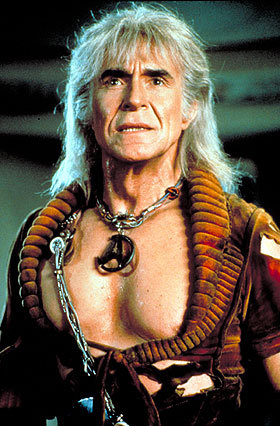
In the summer of 1982, I went to see Star Trek II: The Wrath of Khan.

With my dad.

At a night-time show (probably the 7:30 one).

As a thunderstorm raged outside (typical south Jersey summer weather conditions).

It was a great night.

All of these elements combined to make what was one of the most memorable times I’ve ever had at the movies. What made it that way? I can’t say specifically, but it just was.

It’s still something I will truly never forget. If I ever get to meet Nicholas Meyer, I’ll make a point of telling him that.

Maybe someday a dad and his son or daughter will go to see a movie I wrote, and that child will experience the same sensation I did: the creation of a memory they cherish for the rest of their life.

(Whether or not they tell me about it in their adult years is beside the point, but I wouldn’t object.)

What writer wouldn’t want to have their work be the basis for something like that?

And now I’m a dad who enjoys going to the movies with my child. Could history repeat itself and we see a movie, and we have a great time, and it’s something she’ll remember for the rest of her life?

So far, it hasn’t happened yet (as far as I know).

But it sure is fun to keep trying.

Outlook: turbulent

Back in January, I’d connected with a repped TV writer who offered to read one of my scripts. I sent it, and promptly forgot about it.

Jump ahead two months. I ask if they’d had a chance to read the script. Turns out they did and not only did they love it, asked if I’d be open to them passing it along to their reps.

Like I’m gonna say no to that?

This writer also mentioned they’d submitted scripts from other friends and acquaintances before, only to be turned down (it’s a BIG firm), so I should be aware my chances of getting through were quite, quite small.

My response – “Totally fine. I appreciate you giving it a try, and will check back in a few months if I don’t hear from you.”

I set a calendar reminder and again promptly forgot about it.

Earlier this week, the reminder pops up. Since I hadn’t heard anything, I assumed it was a pass. No big deal. Still happy to have even gotten that far. There was also the possibility they just hadn’t got to it yet. I get that. I’m not a priority. Just to be sure, I emailed the writer.

The response:

“Sorry for the delayed follow-up. The truth is, it’s not that they aren’t interested; they just haven’t read it. The industry is struggling right now, and agents are swamped trying to find work for their current clients. They simply don’t have the time to consider potential new clients at the moment. Some reps are even being let go or leaving on their own.”

Naturally, a bit disappointing, but also not surprising.

These are uncertain times, chums.

Not only are reps being let go, others are trimming their rosters – although I have seen a few writers getting repped, so there is that silver lining.

Summer movies that seem like slam-dunks are underperforming at the box office.

Studios are drastically cutting back on their output.

More than a few times I’ve heard or read somebody using the phrase “stay alive until ’25!”. In other words, do what you can to hang in there until next year – when things might start to pick up. Emphasis on ‘might’.

Last year’s strikes may have contributed to all of this, but they weren’t the only factors. Things are just different now, and from my perspective seems like everybody is struggling to adapt and nobody has any solid idea how to do that. The harsh reality that some people don’t mind waiting a few months, or even weeks now, for something currently in theaters to switch to streaming is causing a lot of headaches.

Also not helping – studios looking at AI to help cut production costs. That certainly doesn’t bode well, for writers or for anybody behind the scenes.

From somebody in my position – just trying to break in seems even tougher now. The industry is being much more selective. It’s getting tougher to get your script noticed – my experience, anyway. Seeing lots of mentions of them wanting pre-existing IP, so not as much attention being paid to original stuff. Another challenge.

Sometimes it’s like the universe is determined to make any progress for somebody like me as difficult and as insurmountable as possible.

But like a lot of you, I’m stubborn as all get out, and not easily deterred. All I can do is keep trying, keep writing, make connections and establish relationships, and hope for the best.

I like to think things will eventually start to improve in some capacity. No idea when, but it’ll happen. Probably a safe bet to say it’ll be bumpy on the way there.

Just another storm for us to endure.

There’s gold in them thar dumpster fires!

Saw a great quote the other day that was along the lines of “Being a writer is like having homework for the rest of your life.”

From a certain perspective, that definitely has a negative connotation. Emphasizing the ‘work’ part of the word indicates drudgery and toil. Like, strictly dullsville, man.

The obvious solution is to make it a positive experience.

I know. Easier said than done, but bear with me.

(Writing should never seem like work anyway, but that’s another post.)

To be a better screenwriter, you need to read scripts and watch movies. You can see how the pros did it and figure out how that could potentially influence your work.

While watching your favorites and the classics can definitely help, I also suggest watching really shitty movies as well.

Hard as this might be to accept, there’s something be gained from it.

What was it that made them bad?

The possibilities are numerous, but a good percentage of the time – it’s the script.

As a writer, you can use that to your advantage.

Painful an experience as it might be, watch that bad movie from a writer’s perspective. Is it the writing that sucks? The story? The characters (and not the actors)? Is there a coherent sense of structure? Is there any structure at all? Does the story flow naturally, or do things happen because it seems like the story needs them to?

Maybe it feels like the writer didn’t take any chances, or worse, went for the very easy and cliched (i.e. expected) solution. Does anything in your script feel that way? If so, think about what changes you could make that would produce the same results, but get you there in a totally different way.

It may be 90-110 minutes of your life you’ll never get back, but at the very least you’ll get a better idea of what NOT to do when it comes to developing your script.

And that is a worthwhile lesson for any screenwriter.