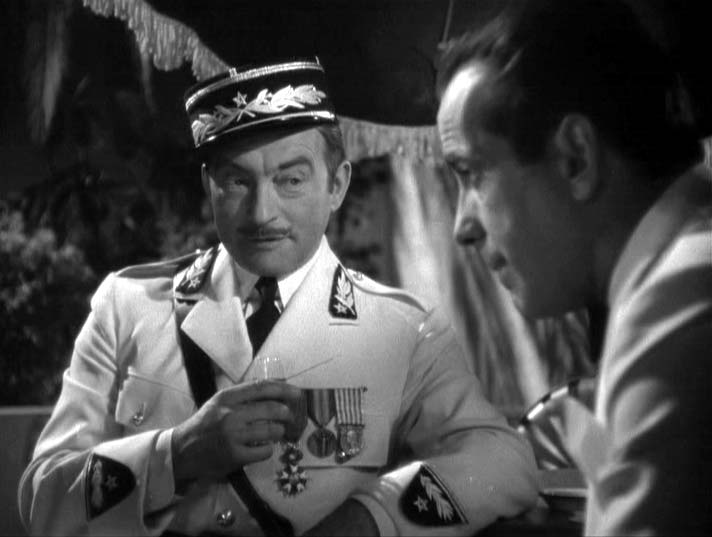
Like coming to Casablanca for the waters, I was misinformed

You and I are kindred spirits, Mr. Blaine
Kindred spirits you and I, Mr. Blaine

I really, really, REALLY do not like making mistakes, especially when it comes to things related/connected to screenwriting, and even more so when it comes to trying to get a career going.

This time around, it’s regarding query letters. Even though a majority are now done via email, for the sake of the discussion, they’ll still be referred to as ‘letters’.

Query letters are a tricky beast. Getting them just right takes an inordinate amount of effort. Some might even say just as much as goes into your script.

I actually don’t mind researching appropriate recipients, or spending the time crafting the letter (which also includes getting feedback on it from those who know more about it than I – a hearty thanks to those who’ve offered their invaluable insight & suggestions!).

What really gets my goat is when I learn, usually after the fact, that I’ve done something that can only be classified as straight-up stupid, or at least counterproductive.

And it all stems from one small, seemingly insignificant thing: what goes in the subject line.

Turns out – not so insignificant. The subject line is your one shot to grab their interest and get them to keep reading. But what should it be? There are several schools of thought about this, but more on that in a second.

I couldn’t tell you where I read it, but the advice (from an “expert”, mind you) I’d heard recommended listing the title, followed by the word ‘query’.

Wrong. Wrong! WRONG!

Apparently including the ‘q’-word is just one big kiss of death. It screams out “Amateur!” and pretty much guarantees your email will probably be deleted without even being read.

So don’t do it! Avoid at all costs!

What should you use? As stated above, several options.

-Just the title

-Title and genre

-A noteworthy contest award (e.g. “2015 Nicholl semifinalist”)

-The hook of your story. Keep it brief!

-“THIS meets THAT” (Opinions are mixed on this. Some writers have said they use it, but a few consultants say not to.)

-Referred by _____

The floor is open to other suggestions.

As for me, lesson learned as I gear up to re-send all those emails in the coming weeks. A weighty project, but whatever it takes. I’m leaning towards just the title or the hook.
Is your story worth fighting for?

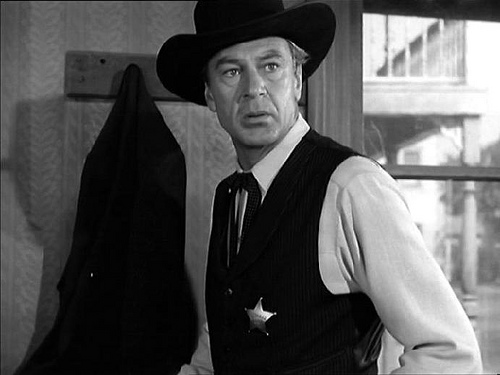
Will Kane knows what it's like to feel like one against everybody else
Follow Will Kane’s example (except without all the shooting and stuff)

The rewrite of my mystery-comedy has been put on hold because I’m teaching myself how to write a mystery, or at least how to be better at writing one. I bought a book and everything.

But I also don’t want to not be writing, so I’ve also decided to return to the low-budget comedy. It’s been a while since I’d read the outline, but it holds up more than I thought. Sure, it needs work and there are some spots where it says something like “SOMETHING FUNNY HAPPENS!,” but overall, I like it (hold onto that statement for just a bit).

Several months ago, I’d had the opportunity to have a brief chat with a writer who specializes in comedy. He asked what I was working on, so I pitched him the idea. He liked the concept, but was quick to poke holes in the story vis-a-vis the logline (which has since been rewritten), and didn’t care for how I had the story play out (as delivered in my thumbnail presentation).

“X should happen instead of Y! Having THIS CHARACTER connect with THAT CHARACTER is all wrong!” Plus some additional words to that effect.

Gosh.

I wasn’t expecting a standing ovation, nor did I expect it to be proclaimed a work of genius, but if this guy didn’t care for what I had, did that mean it was doomed before I even started?

Nope. Quite the contrary.

Several key things I had to remember:

-this was his opinion. One person, which is not a majority.

-his sense of humor and comedy stylings could be totally different from mine.

-it’s a work-in-progress in its very early stages. The end result will most likely be very different from the starting one.

-I think it’s a good story. Always have, always will. I have no intention of abandoning it or making any significant changes so as to gain his approval. I’m not writing this for him.

Every writer spends a lot of time coming up with story ideas, and then developing them as far as they’ll go. Stick to your guns if you believe in your story, but don’t totally block out advice and suggestions. Use what you think works best. Remember – this is YOUR story. If you think it works, then by all means, do what you can to make things happen.

It’s great when you get encouragement, but you’ll also encounter a lot of naysayers (“I don’t get it/like it, so it must be a bad idea.”). It’s all subjective. Everybody likes different things. If you believe wholeheartedly in your story, you have to do your absolute best to get the rest of us to be just as interested in reading it.

Just make sure to tell that story in the most entertaining, original and professional way possible. That’s all.

Just a moment of your time, please

It’ll only take this long, right?

Even though I don’t actively participate on a lot of online forums, I still enjoy reading them, occasionally throwing in my two cents when I think I have something worth saying.

On one such forum, an experienced writer offered to provide detailed notes on the script with the logline he liked the most. He was very detailed and meticulous in laying out the guidelines and rules, including that the script “MUST be ready to read NOW. No exceptions.”

Up until that caveat, I’d thought about submitting the logline for my mystery-comedy, but knew the script still needed work, so instead opted to hold off and wait until I thought the script was ready. And I said words to that effect in the comments.

Much to my surprise, he responded almost immediately.

“Now that’s what I love to see. Writers respecting the investment of time and energy of others. I’m taking about five hours out of my life to do this and I want to feel the script I’m about to read will be worth it. Good on you, Paul, for being so conscientious. It’s one of the responsibilities of a writer no one tells you about, but it’s absolutely vital for building and sustaining a career.”

I never thought of it that way because I was looking at it from my perspective: I didn’t want offer up a script I didn’t consider ready yet. But he makes a very good point – the other person has their own schedule, and you need to be respectful of that.

It’s easy to forget that even though you’ve put a lot of time and effort into your script, now you’re imposing on somebody else to devote a sizable chunk of their time to giving it a solid read-through. That’s a lot to ask, especially when they’ve offered to do it for free.

When somebody asks me if I can take a look at their script, I always let them know it’ll probably take me longer than I think to get those notes to them – and it usually does. Nobody’s complained about it (to my face, anyway). And when the situation is reversed and someone’s giving me notes, I’ll send the script with a note of thanks and that there’s no rush. I’ll distract myself from the waiting game by working on another project or two.

We all only have so much time to spare to devote to work on our own material, let alone someone else’s. Just be grateful and appreciative that someone’s willing to sacrifice some of their time to help you out, and definitely be just as willing to return the favor.

In a timely manner, of course.

This is feedback?

I'M LOUD, WHICH MEANS I'M RIGHT!
I’M LOUD, WHICH MEANS I’M RIGHT!

Oh, the hell and agony I must endure so as to spare you, my loyal reader, from hopefully having to experience the same thing.

Once again, your humble author has been savaged by the sharp knives of online criticism. This time around, it was regarding the logline for my mystery-comedy.

Perhaps I’d been lulled into a sense of false security by recently receiving positive feedback on it from other sources. Feeling buoyed by those encouraging comments, I posted the logline somewhere else. Even though I like how it currently reads, that doesn’t mean it can’t still be improved.

Ever notice that a lot of online forums are usually organized with the intention/suggestion/guideline that participants “offer up helpful advice” to those seeking it? More on that in a minute.

There was one positive response, which was quickly shoved aside by one of a more…negative nature.

Among the highlights:

“…probably one of the worst concepts I’ve ever heard.” (*Ahem* PIXELS?)

“Maybe if it was written for 5-year-olds…” (because that hasn’t worked for Disney)

“That’s how hokey your entire concept comes across as. Sorry, but I think it’s truly dreadful. (sad face emoji)” (So glad they threw the emoji in or I would have totally missed their point.)

Younger-writer Me would have not taken these comments well. Present-day Me laughed my fucking head off.

You don’t like it? Fine. Makes no difference to me. But why all the hate and insults? All I’m reading are the thoughts of a bitter asshole who doesn’t understand the term “constructive criticism”.

If your overall message is simply “Your idea sucks, and now I’m going to shit all over it!” then what’s the point of even saying anything? Do you think your vitriolic rant is going to make me suddenly stop working on it?

There were so many ways I wanted to respond, and came really close to doing it several times, but instead opted to just stay silent. No matter what I said, it would probably be misconstrued and more than likely start an unnecessary battle of words. Not worth it.

Remember that little guideline for the group regarding “helpful advice”? How exactly does anything that was said do that? Anybody can say they don’t like something, but at least give a valid reason why. Another member chimed in that “you have to take the comments if you post”. I agree, but that means the comments have to be worth taking in the first place.

A friend offered up this reminder: “When someone criticizes, it needs to be specific and constructive. Otherwise, it has no value.” I’d say that’s pretty accurate, and definitely applies here.

An even more amazing aspect to this whole thing is that this is the exact same person who issued a similar diatribe over the logline for my western last year. As far as my research can tell, they are still a self-proclaimed “director, producer, screenwriter and script consultant,” although without any identifiable credits or internet presence.

The whole purpose of providing feedback is to use your knowledge to help the other person make their something better, and in a way that’s not insulting or belittling. In this case, neither happened.

This was just an angry opinion showing a total lack of knowledge, help and encouragement, and definitely could not be considered feedback in any true sense of the word.

The end is nigh. Near. Comin’ up fast.

An apt metaphor if ever there was one (unless you're a manager, agent or producer, in which case we can talk about it)
An apt metaphor if ever there was one (unless you’re a manager, agent or producer, in which case we can talk about it)

A self-imposed deadline is fast approaching.

At the end of this week, all operations on my western will stop. The time between now and then involves one last edit/read-through to really tighten it up, but when I close the file in a couple of days, that’s it.

Mostly because I’ve been working on it for so long, and toiled through several major rewrites, that I’m simply feeling burned out on it. Plus at this point, it really feels like doing any more extensive work on it would probably have the opposite, negative effect and do more harm than good. And I like this script too much to have that happen.

As it reads now, it’s a pretty solid example of my writing style. Even if it only ends up being a calling card that results in some assignment work, that’s perfectly fine with me.

Is it perfect? Of course not. Is it above average? So I’ve been told; excessively so, according to more than a few people not related to me. Is it a rousing tale of thrills and adventure that puts a new spin on an old genre? You’re darn tootin’.

I couldn’t have gotten to this point without all the helpful comments and support of some very talented writers and consultants. All of it has helped me make the script as good as I think it can be. For now. I also like the idea of coming back to it in a few months to get it ready for next year’s Nicholl or PAGE.

But the time has come to bring down the curtain once and for all. It has been an amazing experience that I honestly believe has made me a better writer and definitely upped the quality of what I write. As one of my reliable note-givers said to me, “As good as your writing is on this one, your next one is going to be even better.”

I sure hope so.