Iron fists, meet velvet gloves

And the hits just keep on coming!
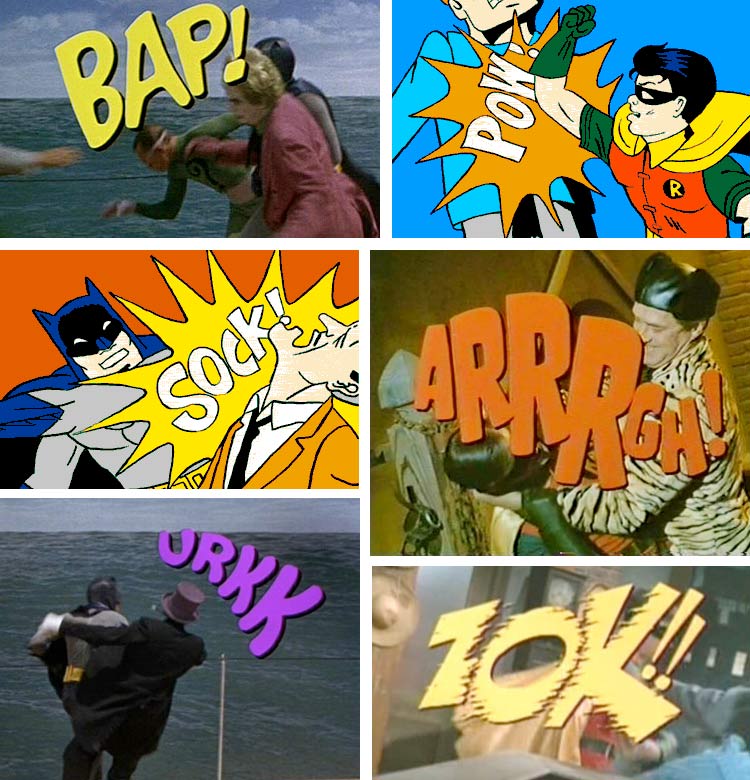
I find a little onomatopoeia makes each day a little brighter

Scenario time!

You’ve finished the latest draft of your latest project. You know it’s not perfect, but it’s probably better than the previous incarnation(s). Or at least hope it is.

In theory you’ve built up a network of reliable peers with skill levels comparable to yours, so you put the word out.

“If it’s not too much of a hassle and you have the time, would you be so kind as to take a look at this?”

Some will have to decline, but others are more than happy to oblige. You, of course, offer to return the favor if the need should arise.

So you send it off and do your best to not think about it.

Days or weeks pass, and then the notes begin to trickle in.

Thoughtful questions about story and character are asked. Typos you didn’t realize you missed are highlighted. Details you had not even considered are pointed out. Everything geared towards helping you make your script better.

These other writers, struggling to succeed just as much as you, don’t hesitate to offer their encouragement.

That’s one scenario. Here’s another.

The notes come across as angry, impatient and frustrated. Even worse, your script is criticized. Metaphorically torn to shreds.

“This makes no sense!” “I don’t get it.” “WTF?” “Bored now.”

This is helpful?

I’ve read my share of scripts that needed a lot of work, with the writers having come to me for help. If I see what I consider a problem, I’ll identify it and make suggestions of how it could be fixed, leaving the final decisions up to the writer. Nor will I hesitate to mention something that works or that I enjoyed.

I try to make it a positive experience, and am not out to make anybody feel stupid or inadequate. (We all do that just fine on our own.) Responses usually read along the lines of “These are great! Thanks so much!” and are taken at face value.

It really bothers me when somebody is excessively negative and claims “I’m just doing the same thing the industry does.” But you’re not in the industry, let alone a screenwriting guru. You’re trying to break in, just like me.

I’m not looking for lavish praise about my work, and I honestly don’t expect it. If you like the script, great. But I want to make it better, and to do that I need help, and that’s what I’m hoping you’ll provide.
Constructive criticism – a force for good

If I can't hear you, then it's not true
If I can’t hear you, then it must not be true

If you met someone who does the same thing you do, but has been doing it longer and with more success, wouldn’t you ask them for advice on how you could get to their level, and more importantly, heed that advice?

While I’m not a professional writer (yet), others, mostly on the newer side, will ask me for feedback on their script.  If I have the time, I’ll do it, and offer up what guidance and suggestions I can.

My notes are sent with the reminder that these are just my opinions to do with as they see fit. Fortunately, most of the responses have been positive and appreciative.

But once in a while, somebody will disagree with what I’ve said or totally ignore it. That’s their choice. They came to me seeking help, and I guess didn’t like what I had to say.

I once asked somebody what kind of material it was, and the answer was long-winded and very academic. While they were droning on, I couldn’t help but think “If they tried to pitch this to a producer, that meeting would probably be over right about now.”

Asking another writer for their logline, I got what sounded more like the short paragraph you’d see on the back of a novel. I tried a few different approaches, each time hoping to point them in the right direction as well as coax out some of the creativity they claimed to have. No such luck. After offering up what you do and don’t want to have in a logline, the response was a curt “Got it. Thanks.”  Can’t say I didn’t try.

Part of me wonders if my advice would be taken more seriously if I charged for it.

You came to me for help, remember? Just because you don’t like the answer doesn’t mean it’s not true.

I’m not trying to be mean. Quite the opposite. There are hard truths about this business that some people just refuse to acknowledge. All of us who came before you learned them the hard way, and if you want to make it, then you’re going to have to do the same.

Random thoughts, general musings, that sort of thing

Nothing to do with today's post. I just love their chemistry.
Nothing to do with today’s post. I just love their chemistry.

-My western failed to make it through the first round of Scriptapalooza, which makes me 0 for 4 so far this year. I’m not counting the top 20 percent ranking for the Nicholl; that’s like getting Honorable Mention. At this point, I’ve pretty much written off its chances for Austin.

My problem was overconfidence in the script. I thought it was solid enough, but apparently not. It’s not the first time this has happened to me, but I’ll be more careful about it in the future.

I still believe in this script, which is why I’ve been so gung-ho about rewriting it. The past two weeks have been all about making it better. After completing the latest round of edits, it’s now 8 pages shorter, and still some further fine-tuning to do, which hopefully won’t add more than 2-3.

-Never realized how much my characters repeat things in dialogue. “I need you go to the store.” “The store? Why?” Must be the influence of listening to so much old-time radio. Cutting all of those probably amounted to at least half a page.

-I cut at least 5(!) separate situations where the Wilhelm Scream could be used.

-Had a great lunch-chat with one of my working writer pals yesterday. While he was very supportive and encouraging, he also reminded me of the almost insurmountable task of a new, unproven writer breaking in with a high-budget script.

“Your chances improve when you offer something that won’t cost a lot to make. A lot more people can get something made for under $5 million, rather than $50 million, let alone $100-200 million.”

As it should have, it got me thinking. Do I have any stories like that? It took the bike ride home and digging through some old flash drives to discover I did. Maybe about 5 or 6, all of them just a logline and not much else.

It’s a start.

-Movie of the Moment: GUARDIANS OF THE GALAXY (2014). Loved it. Great story, great characters (and their development). Maybe my only complaint was the bombardment of exposition in the first 20 minutes. Other than that, a lot of fun.

Biggest pleasant surprise: Dave Bautista as Drax.

Biggest almost-catastrophe: Adam Sandler as a potential voice for Rocket. Somebody thought this was a good idea?

It’s really impressive how much of an effort Marvel puts into their stories and characters. I sincerely hope DC and Warner Brothers can take a lesson from this.

The fastest route out of Sore Loserville

Get out and get out fast

There’s been a disturbing trend on some online forums regarding the results of some recent high-profile screenwriting competitions. While the writers who advance receive and exchange congratulatory messages, some of the ones who don’t seem to be looking for some kind of explanation as to why their script didn’t do better.

“They don’t like this genre.” “They’re only looking for stuff they can market.” “They just didn’t get it.”

Hate to break it to you, but that’s not it.

This is: you and a few thousand other people entered the same competition, so the odds were already against you. Chances are pretty good that some of those scripts are better than yours. It happens. Accept it.

And this may come as a shock, but maybe your script just isn’t as good, let alone as perfect, as you think.

So rather than gripe, complain and avow “Those rotten bastards are never getting my money again!”, use this as motivation to make your script better. Rewrite it. Get feedback from your inner circle of trusted colleagues. Pay for one or two sets of professional notes. Some contests offer feedback for an additional fee, so maybe that’s something you might want to consider.

I was disappointed my western didn’t do better in some of these competitions. Frustration and depression were the dominant moods for a couple of days. That’s when reality smacked me in the face and said “You want to do better? Then get to work.”

So that’s what I’m doing. I’ve completed the initial edit, so the script is now 6 pages shorter. There’s still some work to do, but it already feels better and tighter than it was before. I’ll be following my own advice (more rewrites, feedback from friends and pros, etc.), all while planning ahead for next year.

What about you?

Deliberately avoiding referencing that song

A great mantra, but a little tired of hearing it over and over
A great concept in terms of editing, but a little tired of hearing it over and over

As I work my way through the hack-n-slash editing phase of the western, it’s getting easier and easier to cut something and not worry about if I’ve made the right decision.

Whole scenes, parts of scenes and lines of dialogue are wiped from existence, all with a positive result. Tighter scene(s), better flow of story, all creating a stronger efficiency of words.

Added bonus – script is already 5 pages shorter, and still have Act 3 to go.

(Counter to all of this cutting, placeholders have been identified as potential chances to add in a few lines for some character development.)

Re-reading this script has also made me realize how much I overwrite, especially with dialogue. I try to avoid extra verbage, but don’t see that’s what’s happened until long afterward. By then, it seems more like padding, so out it goes.

A lot of writers are hesitant to cut material or make drastic edits. They just can’t bring themselves around to killing their darlings, because they figure everything is just right the way it is.

Nope.

As much as you like that scene or dialogue, you have to be as objective as possible about your own work. Is it absolutely vital to the story and advance it in the best way possible? If you took it out, would it make any difference whatsoever, or at least have some kind of impact on the story?

I’d venture probably not.

Don’t be afraid to put that red pen to work and cut away! The pain of having to do so is minimal at best and lasts all of a microsecond or two. It’s more than likely that the next time you read through what you’re working on now, you won’t even notice its absence, probably not remember it ever being there and hopefully think “Wow, this draft seems a lot better.”