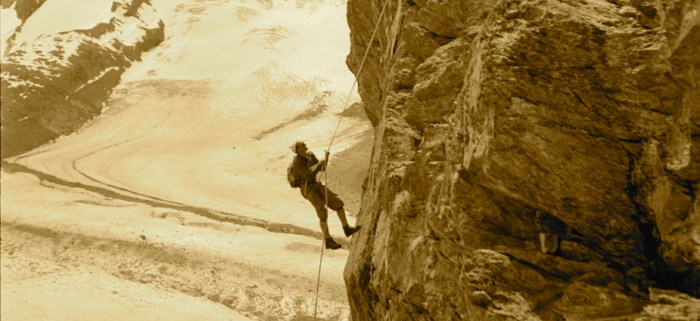
Plan accordingly forwardly

mountain climber
Know what’s ahead and what you’re going to do about it

Now that we’re well into the second half of the year, I’ve been working on scheduling out how I’d like the time between now and December 31st to be filled up, both writing and career development-wise.

As you’d imagine, there’s a lot of writing involved. Finishing the rewrite of one script, polishing another, cranking out a first draft of yet another. I’ve done what I can to establish realistic and achievable deadlines – no more writing marathons for me.

Add to that the efforts to network and meet with other writers, both in-person and online, along with pursuing viable avenues to get the work out there, such as query letters and contests.

One important part of all of this is that, for the most part, I’m the one overseeing all of this. Nothing will get done or happen if I don’t make the effort. As for the things I have no control over, especially the career-oriented ones, I’ll do what I can to get the ball rolling and see what develops.

A friend saw my list of objectives and said “Good idea. Plan to succeed.”

Part of this stems from exactly that. I’m working at this so I can succeed. Being organized about what you want to accomplish helps you stay focused on getting closer to actually achieving it.

While you’re working on your script, you should always be asking yourself “How can I make this better?” Well, this also applies to working on getting a career going. How can you make it better?

Keep writing. Your skills will improve and your number of completed projects will increase.

Seek out connections. The internet is your greatest tool for networking with other writers and folks within the industry. Very important – be nice.

Do your homework. Find out the necessary details as they apply to you and what you’re trying to accomplish. Whether it’s the best format for a query, if somebody’s contact info is still accurate, or which contest is a good match for your script.

Commit. You know all the things you need to do and want to do. Now dedicate yourself to doing them.

All of this may seem somewhat overwhelming at first, but get in the habit of making it a daily effort – even just a little at a time – and the results will start to take shape.

Leaving an indelible impression

footprint
Not expecting it to last millions of years, but wouldn’t complain about it either

As an avid fan of summer movies, this year has been one big disappointment after another. Granted, I haven’t seen a few of the latest releases yet (STAR TREK BEYOND, SUICIDE SQUAD), but barely remember anything since CAPTAIN AMERICA: CIVIL WAR, and that came out in early May.

Remember all the hoopla preceding the GHOSTBUSTERS reboot? Kind of died off quickly, didn’t it? We saw it opening weekend, mostly because V wanted to, and it was…okay. I don’t attribute it’s lack of success to angry fans of the original, but because it just wasn’t that great a movie.

Was anything from this summer truly memorable? So far, not really (although I’m still holding out hope for the exquisite-looking KUBO AND THE TWO STRINGS).

It honestly seemed like everything simply wasn’t up to standard. Despite what the various marketing assaults might indicate, the end products felt too slapdash and that too many projects were focused on being ready for the release date rather than making sure the script was rock-solid.

Based on this and almost-daily reports of forthcoming reboots, remakes, and overall more of the same-ness, breaking in as a writer of original material suddenly seems significantly harder. Not only does your script have to really wow ’em, but it better pack a significant wallop on several levels.

A great, new story with phenomenal characters, all told in the most captivating way possible. Simple, no? I realize that a lot of films start with great scripts, but the process that leads up to the film being unleashed on the public can drastically affect it – too many times not for the better.

I’ve always seen my objective as to not only tell you a story that hasn’t been told before (or at least tell an old one in a totally new way), but to tell it in the most entertaining way possible. I want you to not be able to get those images out of your head (in a good way, as opposed to a dear-God-please-make-the-nightmares-stop kind of way).

I’ll be the first to admit that I’d love for one of my scripts to be one of the surprise hits of a summer season, but if recent releases are typical of what kind of material I’m up against, my work is more than cut out for me, if not potentially impossible.

It wouldn’t surprise me if somewhere down the line, my script got turned down because it was deemed “too original”.

A scary, sobering, and all-too-possible thought.


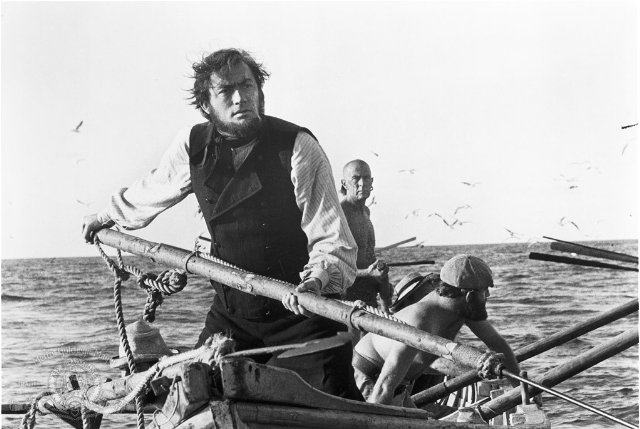
In it for the long haul

ahab
A somewhat extreme example, but you get the idea

Some days this is quite the struggle. You slave away on a script, send it out (contest, query, what have you) and hope for the best.

Unfortunately, a lot of the time, the best isn’t what happens. There will be rejection. A lot of it.

But every defeat is temporary, and a chance to regroup and try again.

In the beginning, when somebody tells you “no”, you take it personally. But you eventually grasp the concept that they’re addressing the writing, not the writer. You hunker down and keep going, continuously striving to improve.

The “no”s will still come, but eventually you get to the point where you simply shrug it off.

“Why even bother?” some might say. “Why keep doing this to yourself?”

Because the longer and harder you work at it, the closer you get to reaching that goal.

Because we feel this is a goal worth pursuing.

Because we’re compelled to.

Because we believe in our abilities.

Because we love doing it.

Success, especially when it applies to screenwriting, does not come easy. Or quickly. You will need an unlimited amount of patience and perseverance. This is going to be a long, perilous journey.

I’ve started walking. Who wants to come with me?

And I think this is a pretty good way to get things started.

If only you could eat a bad script

pineapple upside down cake
Let the metaphors commence!

Before we get to the gist of today’s post, let’s address the elephant in the room: my western did not advance to the quarterfinals of the PAGE contest.

Honestly, I was a little surprised; I thought it would have done better. After a brief wallow in disappointment, I shrugged my shoulders and moved on. It’s just another one of those things over which I have no control. I still have a ton of confidence in this script and might submit again next year. Also waiting to see how it fares in Austin and the Nicholl.

True, it was a rather lousy way to start the weekend, but over the next couple of days, I managed to redirect my focus, which included a nice long run that involved traversing the Golden Gate Bridge, and attempting something I’ve always wanted to try:

Making a pineapple upside-down cake (from scratch, naturally).

Guests were coming over for dinner, and I’d made pies for them before. But this time,  I wanted to try something entirely new and preferably a little challenging. I’d say this falls into both categories.

I scoured the internet for an ideal recipe, found one to my satisfaction, and followed the directions to the letter. The result? It looked like it was supposed to, and that’s where the similarities end. A little too sweet and the center was still kind of goopy. Nevertheless, my guests still liked it, and K & I split the last piece after they left. Not bad for a first attempt.

Why did it not turn out the way I expected? A lot of reasons. The oven’s a piece of junk. It didn’t bake long enough. The ingredients and the amount of them probably need to be tweaked. No matter what, I know now that I can adjust all of these next time and get closer to the results I seek.

Except for the oven. It will forever remain a piece of junk until it dies. Which can’t happen soon enough. But I digress.

Notice all of the comparisons you could make between baking and writing a script? Trying something new and long-sought-after. Seeking advice and guidance. Following the guidelines. Doing what I was supposed to. An okay-but-was-hoping-for-better initial result. Planning ahead on what to fix/adjust for next time.

If a less-than-determined baker ended up with the cake I made, they’d probably denounce the whole process, give up entirely and probably buy pre-made stuff at the supermarket. But we’re made of sterner stuff. We hit a snag or some kind of unforeseen development, and we compensate as best we can. We learn what not to do next time. Sometimes you end up with something jaw-droppingly amazing, and sometimes you end up with something totally inedible.

With this whole experience behind me, I can now focus on projects of the immediate future, which includes another round of editing and revising a script, and making a pie or two for a dinner party this coming weekend.

It’s my intention to have the results of both of these undertakings be totally and utterly irresistible when they’re done and ready to serve.

Taming the beast we all must face

lion 2
Intimidating at first, but eventually, just a big ol’ pussycat

When I was part of a writing group last year, each week we would read and critique a few members’ sets of pages. Some were just starting out, some had a few scripts under their belt, and some had been doing this a while. You can probably figure out which category I fell into.

Simply put, some of the writing just sucked. Really sucked. Like painful-to-listen-to sucked. To my credit, tempted as I was, I never actually expressed my thoughts that way.

I fully understood that not everybody had a firm grasp on the basics, and I, along with a few others, made a sincere effort to explain what would help improve their work. While a majority were appreciative of our comments, a select handful got defensive, some even to the point of flat-out dismissive, of any kind of comment that didn’t reinforce their belief that their writing was fine just the way it was.

This was one of the things that helped me decide to leave the group.

One of the universal truths about being a writer is that not everybody’s going to like what you’ve written, and just about everybody will have a suggestion as to how it could be better.

While there’s nothing you can do about the first part, the great thing about the second is that it gives you options. A lot of them. You like what this person said? Use it. Don’t like what that other person said? Ignore it.

Some people will make suggestions based on how they would do it, which is all well and good, but what’s more important is how you would do it. Do you agree or disagree with what they’re saying?

You’ll be bombarded with a wide variety of opinions, but don’t feel like you have to incorporate every single one. And while you may be the final word on what works and what doesn’t for your story, you shouldn’t dismiss every suggestion either. Some of them may be more helpful than you realize. There are a lot of  writers out there with more experience than you, so their opinions should be at least taken into consideration. But it’s okay to disagree with them, too.

Speaking from experience, it takes time to learn not to take criticism of your material personally. The comments you receive may sting at first, but you have to remember they’re about the material, not you. Read them with a “How can I use these to get better?” frame of mind. That’s the only way you’re going to improve.

One last thing – make sure to thank the person for giving you notes, even if you totally disagree with everything they’ve said. Doesn’t matter if you asked them to do it or they offered. They took the time to help you out, and the least you can do is acknowledge that and express your appreciation for it. And it’s the polite thing to do. Manners still count.