Q & A with Jeff Kitchen

072701AE-A653-4698-80FD-A2D6D67C3CE5

kitchen book 2

Jeff Kitchen was classically trained in playwriting technique, specializing in the work of the groundbreaking Broadway script doctor William Thompson Price.

Jeff worked as a dramaturg in the New York theater, Playwrights Preview Productions (now Urban Stages) and taught playwriting on Broadway at the Negro Ensemble Company. He then started teaching screenwriting and has taught for over twenty years in small high-intensity hands-on groups.

He teaches the craft of the dramatist, advanced structural technique, the core of dramatic action, script analysis, and plot construction. Jeff is a sought-after script doctor, plot construction specialist, and rewrite consultant.

He has taught his techniques to development execs from all the major Hollywood studios and they consistently say that he teaches the most advanced development tools in the industry.

One of his students, Ted Melfi, was recently nominated for Best Picture and Best Adapted Screenplay Academy Awards for his film about the black women mathematicians at NASA, Hidden Figures.

Jeff is the author of the book, Writing a Great Movie: Key Tools for Successful Screenwriting. Jeff is now doing high-intensity training programs for professional scriptwriters as well as script consulting.

What’s the last thing you read or watched that you thought was incredibly well-written?

Narcos: Mexico on Netflix. It was so gripping, so watchable. Hard to believe it was true. I kept telling my wife how great it is, and said to her several times I thought it was better than The Godfather. They move through so much story in just two seasons, with so much intensity and depth, great casting and acting, great writing, and so much material to weave together. The corruption makes your blood boil; the loss, the genius, the brutality, the nobility, the adventure, the chess game, the betrayal, the power and murder and love and ambition, and the pure history—there’s so much going on and it’s so compelling.

How’d you get your start in the industry?

I was mostly self-taught. A friend who was a playwright taught me the basics of Aristotle and gave me two old obscure books on playwriting to read. They were quite fascinating and very difficult, but I spent three years studying them intensely. The guy who wrote one of them, William Thompson Price, was a pioneering Broadway script doctor for top producers pre-1920 and he founded the first school of playwriting ever in the history of the world. Twenty-four of his twenty-eight students had hits on Broadway.

Price created several seriously groundbreaking tools for the dramatist and I emerged with a mastery of what he created, then improved on them and taught these tools nonstop for twenty years. People kept saying they’d never seen anything like what I taught and said they worked better than anything they’d seen. I trained development execs at all the major Hollywood studios and they consistently said I taught the most advanced development tools in the industry. So I found these old tools and ideas for tools, and studied them like crazy, then synthesized them into their current form. I taught and consulted with them for years, and got deeply experienced with them from working hands-on with them on thousands of students’ works in progress.

What do you consider the components of a good script?

The short answer to that question is my 352-page book, Writing a Great Movie. Of course I can say something in a paragraph or two, but a proper answer can go deep and wide and long. A great premise, first of all, because if your raw idea sucks, then no amount of structure or character or storytelling elbow grease will get that clunker up in the air as a commercially viable project. In the industry, it’s called Polishing a Turd. I always say well-structured crap is still crap. So start with a great idea.

Also crucial is a good strong Dilemma of Magnitude for the protagonist, but it’s not easy in such a brief format to properly communicate how to make that one dilemma occupy the full proportion of the script, build to a Crisis, force Decision and Action in the face of crisis, and then conclude with the protagonist’s active Resolution of the dilemma. The way in which the protagonist resolves the dilemma expresses the Theme, and it’s crucial to have a solid sense of theme as you build your story. You need distinct characters who are deep and complex and colorful in various ways, and who are deeply flawed, contradictory and universal.

You need attack as a storyteller, so you’re not making safe, cliché, or stock choices. Your script must be actable and it has to be stageworthy. The action of the story must move ahead aggressively, with nothing unnecessary bogging it down. It needs good cause and effect, escalating conflict, structural unity, dramatic action, and so much more. But mostly, it has to hit the audience where they live. If it doesn’t connect to the audience, then it’s not compelling.

What are some of the most common screenwriting mistakes you see?

Weak ideas, lack of imagination, lack of attack, poor execution, poor structure, lazy storytelling, stale characters, lack of depth, lack of color, overwriting, over-describing, overbearing, too much exposition, attempting to dictate an emotional response rather than earning it, lack of empathy for the main characters, underpowered ending, doesn’t pass the So What? test, crappy dialog, boring, derivative, packs no punch, uneven tone, peters out, holes in the story’s logic, lack of conflict, no clear goal for the protagonist, stupid, a simple plot vs a complex plot, episodic, formulaic, wooden characters, preachy, predictable, miserable writing skills, lack of follow-through, writing not cinematic, story not commercially viable, no sense of vision, no entertainment value, flat dramatically, lack of magnitude.

Just to name a few.

What story tropes are you just tired of seeing?

I’m not sure how many more serial killers I want to read about, or how many more procedurals, or special forces dudes, or nuclear annihilation. They can all get tiresome, but it obviously has to do with the execution, because each of them can kick serious ass when done well. But I think that things like a serial killer can be just a cardboard prop or a vastly overused excuse to write something brutal and adventurous for people who can’t or won’t do the work to go deeper and find a freakier way to mess with people’s heads.

Watch a movie like Bad Boy Bubby or Bad Lieutenant with Harvey Keitel to see something fresh and wacko. People sleepwalk through the writing process sometimes, and it’s tedious because so many people are out there writing the same warmed-over tales. There’s probably room for a story about a serial killer who kills writers who are writing about serial killers.

What are some key rules/guidelines every writer should know?

Shake things up. You’re a writer. Do something to me, mess with my head, defy my expectations, violate my sense of how a story should go. Tell a story that really tweaks me, that seriously makes me care, that grabs me by the throat and makes me notice. Make me fall in love, or go through something unimaginable, or face death, or embrace life—but do it full tilt and do it well. I don’t need the same old tired stories coming at me all day long. I’m looking for adventure, depth, love, heartbreak, power, in any genre.

Make the overall structure for your story work first. If it does not, then the details do not matter. A beautifully written scene in a script that doesn’t work is meaningless. It’s like having an ornately finished room in a house that’s falling down. Learn to work from the general to the particular. Make the overall story work, then make each act work, then each sequence, and then each scene. You gradually develop and dramatize your work as you build it.

Learn to separate the Necessary from the Unnecessary. The work of the amateur is characterized by the Unnecessary. Dialogue and description are overwritten, scenes may not be needed, whole sequences may only be dead weight, sometimes an entire act can end up being unnecessary, and in fact your entire script may be unnecessary. Which may sound funny, but it’s not. The Unnecessary kills scripts. Most scripts are unreadable—and that means 98% of them—UN-READ-ABLE. Atrocious. And in many instances, the Unnecessary plays a major part in how unreadable it is. Clean, crisp cause and effect separates the Necessary from the Unnecessary, and moves the action of the story ahead crisply and cleanly.

Master the craft of the dramatist. Dramatic writing is generally considered the most elusive of all the literary disciplines. It’s tricky, it’s slippery, it’s hard to pin down, hard to predict, and hard to diagnose or cure. But the more craft you’ve got, the more mastery you have in addressing every type of problem. People forget that scriptwriting is a performance medium—intended to be acted out in front of an audience in such a way that it’s gripping. So take the time to really learn your craft, to master it. Because almost doesn’t count, and people don’t want to read scripts that could have been good but the writer didn’t have the chops to make it work.

Take the time to build or discover deep, complex, dynamic, unpredictable, flawed, dimensional characters. Explore the Enneagram (EnneagramInstitute.com is a great resource) for each of your main characters because it’s such a remarkably powerful resource. A mixture of ancient wisdom about human nature and cutting-edge psychology, it purports that there are nine basic personality types, and each of these types has a healthy aspect, an average aspect, and unhealthy aspects. This helps you go deep and complex, to develop substantial flaws, hidden strengths, the mechanics of failure, a path to greatness, and complex, sophisticated human emotional reality.

What was the inspiration/motivation for your book Writing A Great Movie?

I wanted to get down on paper the know-how I’d accrued from teaching non-stop for eighteen years while it was still white hot. I had always taught small hands-on classes, maximum six people, and each person had to bring a script idea with them to develop so I could really get them using the tools. This helped them not only learn how to use the tools, but their scripts improved so much in the process that word of mouth on my classes was through the roof. I never taught large groups because the material was too complex. I knew that if I just talked at people about sophisticated techniques without showing them how to really use the tools that it would be mostly useless, because they couldn’t go home and use it to build their own script.

But when they started doing a big Screenwriter’s Expo in LA, they dragged me into teaching 150 people at a time. And there were riots outside my classroom of people trying to get in, so I realized that with this many people having heard about my training, it was time to write my book. So I cranked one out and self-published it by the next year’s Expo and sold a lot of them. I shopped that version and it got me a lit agent in New York who got me a publishing deal at Watson Guptill where two phenomenal editors helped bring out the best in my writing.

There are a lot of screenwriting books out there. What about this one makes it unique?

Not only are the tools unique, unusual and powerful, but I worked hard to emulate the hands-on aspect of my small classes in which I worked with each participant on their script as I explained the tools. So I explain, illustrate, and demonstrate each of seven tools in the first half of the book, and then I build a real script from scratch in the second half of the book, using all the tools. I start with a one-line idea and build the whole script, demonstrating the full use of the tools as I utilize them to create, develop, structure and write it.

Because I was rewriting the self-published edition, my editor wanted to clean up the second half of the book. I argued, saying that it had to remain unvarnished because the process of using these tools to create from scratch is necessarily messy. I needed it to remain fumbling and exploratory and rough, because cobbling a story together and dramatizing it is like feeling your way along in the dark. And I wanted to show them the raw reality, not the cleaned-up varnished version.

In the introduction to part two, I say that the first half of the book is as different from the second half as training in medical school is from working in an Emergency Room, or as studying a bear in the zoo is from wrestling one in the wilderness. I jump from tool to tool bootstrapping the story into existence, using Dilemma, the Enneagram, the 36 Dramatic Situations, Crisis, Theme, Research and Brainstorming all at the same time. And then I put the story through two structural tools, the Central Proposition and Sequence, Proposition, Plot, which help dramatize the narrative, strip out everything that’s unnecessary to the forward action of the story, and create consistent, coherent, compelling Dramatic Action.

I build the whole script with my readers looking over my shoulder, and I think it did a good job of showing the tools in action in order to give the reader genuine know-how and experience in utilizing the tools.

How do you feel about screenwriting contests? Worth it or not?

The top five or ten are definitely worth it and have launched many careers. I myself wouldn’t bother with many others, but it totally depends on what you’re up to as a writer. If you just want to put your stuff out there to see what people think of it, then you can use it as a learning opportunity. But you can also just hire somebody to give you notes on your script and that might give you more specific feedback. But there are books and websites that can help you sort the contests for value, and people who know everything about them, and they’re definitely worth taking a look at as part of a career strategy.

How can people find out more about you and the services you provide?

My website is BuildYourScript.com and I can be contacted through there or directly at jeffkitchen88@gmail.com. I offer a free class on Reverse Cause and Effect at my site. This is a powerful class that shows how to take a story you’ve roughed out and work backward from the ending, chaining backward from each effect to its cause. This enables you to stitch together the main building blocks of your story, and then to gradually flesh out the details as they become necessary. I demonstrate the process in action by working on a real script.

There’s also a paid class on a remarkably powerful plot construction tool called Sequence, Proposition, Plot which is a groundbreaking way to structure and develop your script, working from the big picture down to the details. I do consults on scripts as well as private classes on technique. One of the coolest things I do is to help people build their script from scratch, or to work with them rebuilding it once they’ve gotten a script up and running.

I’m about to roll out a high-intensity training program for scriptwriters that I’m really excited about. It’s an online immersion program in which I train apprentices for a year as we work together building multiple scripts. We’ll work two hours a day, plus one hour of homework, five days a week. In what’s called a Community of Practice, I communicate know-how through using the tools to build real scripts on the spot, and I also have students do extensive drills and rigorous exercises, handling the tools, practicing them over and over, and learning to think in that language until it all becomes second nature.

This type of learning process is called Cognitive Apprenticeship, in which writers work hand-in-glove with me to learn how to think like me. I communicate both explicit knowledge and the more ambiguous but crucial tacit knowledge, that feel for things which is indispensable for full expertise. This will be a high-intensity program, similar to a trade school, followed by a year in which I work with these highly-trained writers on building their own scripts. They will emerge as trained dramatists with key skills and experience, who can forge a career as working writers.

Readers of this blog are more than familiar with my love/appreciation of pie. What’s your favorite kind?

It’s hard to pick, but right now I’d have to go with cherry.

cherry pie 2

Q & A with Dominic Carver

Dom Carver

Dominic Carver is a screenwriter, script consultant, and script editor.

In 2008 his first short film, AGN, was produced by Split Edit in Norway and broadcast on Norwegian TV. His second short film written in 2010, the mystery thriller THE TRAVELLER, was a collaboration with Dubai-based director Musaab Ag. In June 2011, Dominic won the Prequel To Cannes Feature Screenwriting Prize for FAITH, a bleak unflinching look at the life of a London street prostitute.

Dominic has since been commissioned for seven feature screenplays and has also worked as a script editor on other projects, including the feature THE DYING EYE (2013).

Dominic continues to place highly in many competitions most notably the FINAL TEN of FINAL DRAFT’S BIG BREAK 2016 FEATURE COMPETITION – FAMILY/ANIMATED, the FINAL TEN of STAGE 32 TV WRITING CONTEST 2017 and the FINAL TEN of Idris Elba’s GREEN DOOR, GREEN LIGHT INITIATIVE 2017.

What’s the last thing you read or watched you thought was incredibly well-written?

DUBLIN MURDERS by Sarah Phelps. Utterly spellbinding, a haunting examination of loss set in and around the search for the murderer of a young girl. Sarah’s work is wonderfully paced and her dialogue frighteningly good. She writes beautifully dark, complex characters, and with THE ABC MURDERS she breathed new life into the well visited character of Poirot.

How’d you get your start in the industry?

I have always loved stories, often reading a novel a day during my teens. On one particularly slow and boring day at work, I decided I’d had enough and needed to do something other than rot away in a dead-end job, so I signed up to do the Scriptwriting for Film & TV degree at Bournemouth University. Skip forward a few years and I won the Prequel To Cannes Screenwriting Competition, and one of the judges recommended me to a producer, who offered me my first feature commission.

Is recognizing good writing something you think can be taught or learned?

A very interesting question. I believe that to be a truly great writer you have to have a certain amount of natural storytelling talent. You can be taught how to create characters, develop ideas, write characters and dialogue to a reasonable level and to recognise what works and what doesn’t, but if that natural storytelling ability isn’t there. you’re going to struggle and will only ever be average.

Good storytelling is instinct; getting to the emotional core of your characters and their journeys and being able to put that on a page to move and manipulate your audience in ways they weren’t expecting. It’s easy to spot a good screenwriter – they stand out from the crowd. From the hundreds of scripts I’ve read over the years, only four really made me sit up and pay attention and go, ‘This writer has real talent!’

What do you consider the components of a good script?

The characters and the journey they’re on. If your audience doesn’t feel for your characters or their journey, then you’ve lost them before you’ve even begun.

The film JOKER is the perfect example. He’s the most despicable character, a psychopath you would go out of your way to avoid in real life, but on the screen we understand and can empathise with the circumstances that made him. Even when he goes on a killing spree at the end of the movie, regardless of how horrifying and distasteful it is, we understand why and empathise with him. If, as a writer, you can make even the most despicable character sympathetic, that’s masterful writing.

What are some of the most common screenwriting mistakes you see?

Where do I start? Poorly developed characters. If you don’t know who your characters are, how can you expect your audience to? Generic storylines. A popular one at the moment seems to be the ‘mid-life crisis’ and the search for meaning in characters’ lives.

If you don’t approach it from a unique angle, give the audience something they haven’t seen before, then why bother as your screenplay will be lost amongst a sea of similar scripts. Static scenes where characters share their secret feelings around a table and a cup of tea. It’s a visual medium, people sitting around chatting about their feelings is boring to watch. Busy those static scenes up. And when have you ever opened up to a stranger and told them your inner most feelings? Never! People just don’t do that, unless verbal diarrhea is a character trait.

If new writers took more care in developing their characters and their stories, rather than copying what has come before and populating those tired stories with generic characters, there would be a lot more interesting stories out there.

What story tropes are you just tired of seeing?

The mid-life crisis. The hero whose family is murdered and they go on the hunt for revenge. And that’s just two. There are so many more, I’d be here all day listing them. Dig deeper, people!

What are some key rules/guidelines every writer should know?

-Spend time on developing your characters and ideas.

-Don’t write great chunks of dialogue or scene description. Less is more. You’re writing a screenplay, not a novel.

-Study people. Find out how people tick.

-Don’t try and write a Tarantino (or another writing hero) movie. Write your own, what appeals to you. Find and develop your own voice.

-Always, always, always have your work read by a professional screenwriter before you send it out into the wider world. Yes, it will cost you money, but you need to know if your story and characters work as it will save you a lot of time and effort. Far too many writers send work out before it’s ready and they wonder why they experience so much rejection.

-Write the first draft quickly without over thinking it too much. The following draft will be a lot better. Just get those ideas on the page and then worry about reworking them. A page of crap is easier to rewrite than a blank one.

-Don’t make a tit of yourself on social media. Be kind, be polite, be inquisitive but never ever pester others to read your work. If you are friendly, polite, respectful and get to know them as friends, people will start to ask to read your work or even recommend you to others.

-Rewrite! Rewrite! Rewrite!

-Network like your life depends on it… because it does.

-Never take rejection personally. It’s never about you, it’s just that your script isn’t a fit with that person at that time. If you get rejected, rework your screenplay and then send it out to two more people. Developing a thick skin is an absolute must for being a writer.

Have you ever read a spec script that was an absolute, without-a-doubt “recommend”? If so, what were the reasons why?

Yes, and it still puzzles me why it hasn’t been made. I don’t usually mention clients I read for, or their work, as it’s confidential, but in this case I’m going to name the script and the writer. It’s MINOTAUR by ADEWOLE ADEYOYIN.

I hate horror movies, I don’t see the point of watching something that you know is going to scare the poop out of you, but Ade’s script stood out because of its characters, story, themes and its depth. It took a well-explored genre and turned it into something original and compelling, a thrill ride from start to finish.

If any producer out there reads this and is looking for a cracking monster movie, get in touch and I’ll pass it on. It needs to be made!

How do you feel about screenwriting contests? Worth it or not?

Yes! Not only do they test your work, but if you do well they can help propel your career forward. A friend and I wrote a feature from conception to finished second draft in twelve days back in 2016. She wrote the first draft in seven days and I spent the next five rewriting. We entered it into Final Draft’s Big Break and made it through to the final ten in the family category. If it had been entered in the historical category, I think it would have gone even further. Every competition we entered this script into it made at least the quarterfinals, so we knew we had something special.

But which competitions to enter? Pick the well-known ones, the ones with an impressive lineup of judges or that offer access to industry players. Paying for feedback is a great idea, but how well your screenplay does in the competition will also be a great indicator of how good your writing is.

How can people find out more about you and the services you provide?

From my website at www.thescriptwriter.co.uk. It needs updating, but as usual I’ve been busy. I’m sure I’ll get around to it at some point. Maybe next year.

I’m also on Twitter – @DomCarver

Readers of this blog are more than familiar with my love/appreciation of pie. What’s your favorite kind?

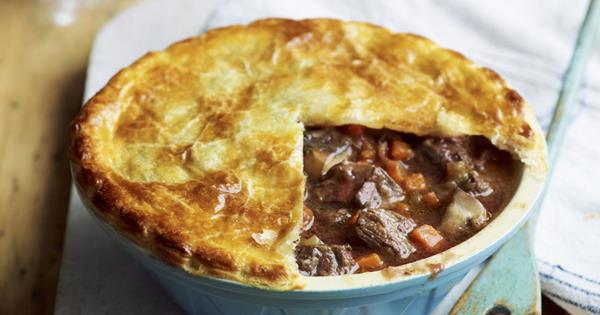
Steak and kidney… nothing beats it!

steak-and-kidney-pie

Some tasty tidbits to tide you over

vintage-buffet-1
Go ahead and dig in! More than enough to go around!

Maximum Z HQ is in a transitional phase, geographically speaking, so all attention and efforts are focused on that for the next two weeks.

As a result, no new posts until at least the end of the month.

In the meantime, here are some classic posts from years past.

Enjoy.

All that on a single piece of (digital) paper?

The good bad of your antagonist

Introduce your character with character

The twiddling of thumbs is strictly prohibited

Characters are people!

Work those writing muscles!

I see what you did there, Mr. Kasdan

Respect your reader/audience

That’s not the question you should be asking

Hey! Long time no (preferred form of communication)

Q & A with Jeff Buitenveld of ScriptArsenal

Jeff Photo

Jeff Buitenveld of ScriptArsenal is an independent producer and former development executive with over 15 years of experience on some of Hollywood’s biggest films. He is currently a producer on the upcoming thriller The Kimberlite Process. After graduating with an MFA from UCLA’s Producers Program, Jeff worked in various capacities on numerous productions for Tom Cruise and Paula Wagner including The Last Samurai, Mission Impossible 3, Jack Reacher, Valkyrie, Lions for Lambs starring Robert Redford and Meryl Streep, Ask the Dust starring Colin Farrell and Salma Hayek, Death Race starring Jason Statham, The Eye starring Jessica Alba, Suspect Zero starring Aaron Eckhart and Ben Kingsley and many more.

What’s the last thing you read or watched that you thought was incredibly well-written?

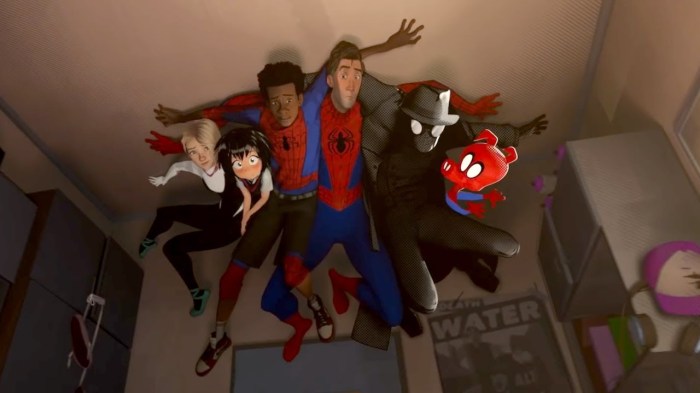
Spider-Man: Into the Spider-Verse was a blast. HBO’s Barry is a funny and oddly haunting series. I recently re-watched/re-read Hell or High Water, which is a deceptively simple, sad, and suspenseful story with rich, complicated characters. Netflix’s The Haunting of Hill House delivered the goods on scares and family dysfunction for me. Issa Rae (“Insecure,”) Jill Soloway (“Transparent,”) Amy Sherman-Palladino (“The Marvelous Mrs. Maisel,”) and Andrea Savage (“I’m Sorry,”) all have unique, exciting, and powerful voices.

How’d you get your start in the industry?

I didn’t know anyone in LA when I first moved here but developed a sci-fi project that was quickly optioned by an Academy Award-winning producer (and never made). During that time, I was also accepted into UCLA’s Producers Program where I took Meg Le Fauve’s (“Inside Out” “Captain Marvel”) Development class, which was instrumental to my growth and understanding of cinematic storytelling and how to work effectively with screenwriters. I started cold-calling various companies for internships and was lucky enough to land positions at both Artisan Entertainment and Mike Medavoy’s Phoenix Pictures. Back then, Artisan had a deal with Marvel and I was immediately thrown into pitch meetings with various notable writers/directors on properties like Thor, Hulk, The Punisher, Black Widow, and Iron Fist, etc. I was also taking pitches at Phoenix – it was an incredible learning experience. I eventually became an assistant briefly to a Hong Kong action director and then used those experiences to land a job with Tom Cruise and Paula Wagner once I graduated from UCLA.

Is recognizing good writing something you think can be taught or learned?

Though having an eye for quality material can be a natural instinct, it needs to be honed. I ultimately feel that recognizing good writing can be learned and taught.

What do you consider the components of a good script?

Generally speaking, a good script maintains a captivating concept, and a flawed but likeable hero with a concrete objective attached to grave stakes (whether intimate or epic). The hero’s emotional flaw is often rectified as a result of him/her achieving their practical goal (he/she should also be active, resourceful, and exhibit a range of change). It’s helpful if the hero’s goal is time-sensitive and somehow socially relevant. Lastly, if the script is a feature, it should adhere to a three-act structure.

What are some of the most common screenwriting mistakes you see?

Too much description, on-the-nose dialogue, flimsy structure, and the lack of a flawed hero with a concrete objective, attached to grave stakes.

What story tropes are you just tired of seeing?

I’m not at all opposed to writers using things like “one last job,” “a reluctant hero who can save the world,” “a family in peril,” or “a fish out of water,” etc. The familiar can be very accessible and., if used effectively, can lure a reader into the story. The trick, however, is to infuse that story with other unique and complex qualities so that it unfolds in fresh and unexpected ways. What can make your story different or set it apart? I always urge writers to challenge the reader’s expectations or preconceived notions as to what type of story they’re entering!

What are some key rules/guidelines every writer should know?

-Use Final Draft.

-Study the most notable screenwriting books and authors.

-Read every script you can get your hands on whether good, bad, or mediocre.

-Have conviction but be open to ideas – ultimately this is a collaborative industry.

-Don’t be afraid of genre and don’t be afraid to push the boundaries on the tenets of said genre (but know what those tenets are).

-Actively seek feedback and don’t be precious.

-Strive to be both clear and complex in your writing and understand the difference between the two.

-Don’t be a hater – watch all kinds of movies and TV shows, and be mindful of those that are both commercially and critically successful as well as those that aren’t.

-Read the trades to better understand the marketplace.

-Don’t chase trends – write from the heart.

Have you ever read a spec script that was an absolute, without-a-doubt “recommend”? If so, what were the reasons why?

“Recommends” are a rare breed. Those that do qualify show a master of the craft, are usually somewhat familiar but also somehow unique, tend to maintain complex characters, rich themes, and have an easily identifiable position in the marketplace (you can visualize the poster, trailer, audience, etc.) That being said, most of the scripts I’ve read, even from the most notable A-list writers in the industry, still needed some further development.

How do you feel about screenwriting contests? Worth it or not?

I think it can be incredibly important and worthwhile, particularly for young writers, to enter screenwriting contests. However, I would also encourage writers to do some homework on which ones are notable and relevant so as to not waste too much money and time.

How can people find out more about you and the services you provide?

Go to www.scriptarsenal.com and follow us on FaceBook and Twitter to get updates on upcoming sales and weekly helpful screenwriting tips.

Readers of this blog are more than familiar with my love/appreciation of pie. What’s your favorite kind?

Given my mid-section I generally try to stay away from sweets, but a few years ago, I had some homemade pecan pie (numerous pieces actually) for Thanksgiving and it was an absolutely transformative experience…a chemical portal to another dimension that somehow transcended the time-space continuum…okay, maybe I’m being a bit dramatic but damn, it was good!

pecan 2

Making it not what it was before

spiderverse
Well-known material, executed in an entirely new and original way

The key word for this overhaul of the pulpy sci-fi spec is exactly that: an overhaul.

And a really big one at that.

One of the notes I got on the previous draft was “It’s a fun story, but there’s still a feeling of ‘we’ve seen this before'”.

What a powerful motivator to really shake things up. The last thing a writer wants to hear is that their work is predictable or just filling in the blanks for a template with this kind of story. Readers and audiences want originality, so that’s what we need to give them.

Regarding this story, while the overall concept and primary plotline are still the same, a good majority of the rest of the details have changed in some way or another, with no doubt more to come.

Even though I’ll jot down ideas for particular moments, scenes or sequences occurring throughout the story, I gather them up and then write/develop them in a linear manner – working my way through the story from start to finish. A leads to B, which leads to C, and so on and so on. Not everybody’s style, but it work for me.

It’s probably safe to say I worked my way through at least four or five versions of Act One before arriving at its current version – the one I felt was the strongest. And even that’s been tweaked here and there since then.

Despite having a hard copy of the previous draft readily available – more as reference material than anything, a key part of this process has been for me to NOT look at it – especially when I was feeling stuck. My objective is to keep trying something really different, and sneaking a peek at what I’m trying to avoid won’t help. If anything, it would probably point me in a wrong direction.

I’ve written before about a writer should do what they can to avoid having the reader/audience know what’s going to come next. Such is the case for this rewrite.

As I work my way through, it’s with a mindset that looks at a scene or sequence as a whole, along with “what’s the most likely thing to happen here?”

That’s followed immediately by “what would be the total opposite of that?” or “what would be completely and totally unexpected here, but still works within the context of the story?” Really striving towards taking a new approach is yielding some positive results. It’s quite a thrill when an idea pops out of nowhere, and it works even better than expected.

Added bonus – by forcing myself to come up with new ideas, there’s less need for me to keep the hard copy of the previous draft nearby. The more I avoid looking at it along with figuring things out for this draft, the more changes it produces. All that being said, I’ll still hold onto it, since there’s always a chance I might need something in there, but with the story constantly changing, even that’s becoming less likely.

The whole point of overhauling this story is to take what I had before and put an entirely new spin on the initial concept. I have a pretty good idea of what needs to happen, what I’d like to happen, and that big nebulous category of what could potentially happen (still working out the kinks on that one).

The road between what I started with and what the end result will be is without a doubt one that’s going to be very long, very twisted, fraught with hazards of numerous kinds, and might, at times, seem to go on forever.

Sounds like quite a hellish journey. And I’m loving every step of the way.