Their opinion (singular) vs their opinion (plural)

Anybody else have something to say?

When you get feedback on your work, you have the luxury of being able to pick and choose which comments and suggestions you’re going to use, and disregarding the rest.

It’s only one person’s thoughts, right? Maybe there’s a worthwhile nugget or two in there.

But what if more than one person makes the same comment?  If those folks mentioned it, it might be likely more are going to as well.

Take a look at what they’re saying. Can you understand why they said it, and more importantly, what can you do to fix it?

Such was the case for a pivotal plot point in my western spec. At least three people asked “Why does this character do this?”

Each claimed it didn’t make sense and felt contrived, like it was happening because the story needed it to, rather than being set up organically.

If one person had said this, I would have thought “Maybe I’ll take a look at it.”  After the second and third piped in, it quickly changed to “How can I fix this?”

It took some work (mostly with the dialogue) to set things right, so not only does this character now feel more fleshed out, but their actions come across as more believable, there’s more conflict between them and the main character, and the flow of the story is smoother.

A writer’s ego is already a sensitive thing, but what’s more important? Thinking your work is perfect as is and doesn’t need any changes, or being willing to make those changes to make it better?

Maybe it’s a little fix or maybe it requires a major overhaul. No matter what, you’ve got some work to do.

Slightly easier (but I still don’t like it)

Takes a while to really get it right

After a great discussion of his notes for the western spec, my manager’s script guy said those words I have always and will probably continue to dread.

“All we need now is your logline and one-pager.”

Ugh.

You know that feeling of loathing when there’s something you really don’t want to do, but know that you absolutely have to? That’s exactly how I felt, and from what I understand, I’m not alone in this.

But like I said, it had to be done.

First up was the logline. I’d already spent a lot of time working on this, so most of the heavy lifting was out of the way. Turns out it just needed a little tightening up, so yay on that front.

Which brings us to the one-page synopsis.

Double ugh.  Calling it the bane of my existence is a little harsh. More like a necessary evil.

Using what I did last year for DREAMSHIP as a model, I opted to put it together like a slightly extended version of what you would read on the back of a paperback novel.

A quick overview-setup establishing the major character and main storyline, then some hints/teasers at what comes after things really get started, followed by a sort of cliffhanger about the ending.

As was explained to me, to convert the potentially-interested into the definitely-interested, the synopsis has to really capture the tone of your script and not focus as much on what happens. The more concise and descriptive you can be regarding what the story’s about rather than the story itself, the better. Go into too much detail and you’ve lost their interest.

It took a few attempts, but in the end I had what I consider to be a pretty strong synopsis. There will most likely have to be some rewrites, but that’s okay. The hard part’s done.

In the meantime, it’s back to the mystery spec rewrite. Rest assured that as I work my way through the second half, my always-reliable subconscious will keep reminding me of one absolute truth:

“You know you’re going to have to write a one-pager for this one too, right?”

Triple ugh.

The story behind the story

Figure out how it works before you start, or things could get messy
Step 1: Figure out how it all works

A slightly altered holiday work schedule has resulted in more hours on the air, which is always nice, but less time cranking out pages, which isn’t.

So I make the most of the handful of minutes between reports with the always-reliable working on an outline. This time – the monster script.

Despite knowing the general playing-out of the story, there was something that wasn’t clicking. Most of the items on my mental checklist had been checked off.

Most. Not all.  What was missing?

It took the constant back-and-forth between the opening sequences of the two previous outlines to make me realize what it was: I’d never fully established what happened before the story started.

Not knowing how everything came about was preventing me from moving forward. I had to create this world before I could write about it.

Think of the opening crawl in STAR WARS (“It is a period of civil war. Rebel spaceships, etc. etc…”). It establishes what we need to know. Without it, we’d be too busy trying to figure things out.

Using that as an example, I worked out my own version of the opening crawl. It won’t be in the actual script, but it’s a pretty solid foundation for setting things up – a better realization of how this world works, what the antagonist wants and how that can be accomplished, the challenges the protagonist faces, just to name a few.

The work on this is far from being over, but developing this really helped. Some important blanks have been filled in and I’ve got a firmer grasp of how the story works.

Time now to start the latest version of the outline and see how it goes.

-Regarding the recent release of this year’s Black List. There appear to be a handful that sound pretty good, but the rest don’t really do much for me.

No doubt they’re all extremely well-written (why else would they be on the list?), but a majority don’t have that “Read me!” vibe. It probably doesn’t help that the writers are not the ones providing the loglines. I suspect that would make quite a difference.

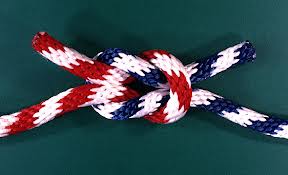
Tying it all together

Nothing better than a solid connection of two loose ends
Nothing better than connecting those potential loose ends

Even though I just started this rewrite of the mystery spec, I’m firmly entrenched in the practice of always thinking “What’s the best way to tie this in?” for every scene. It’s something I strive for every time.

No matter how seemingly small or insignificant a part of a scene is, we as writers must be compelled to make sure it all fits not only within the context of the scene, but also within the story as a whole.

Everything should serve a purpose. If it doesn’t, why is it there in the first place?

Think of it as a slight variation on setup and payoff. While those usually apply to the plot (or at least should), tying things together is more of a way to support what happens around the plot. Anything that doesn’t belong is going to be even more noticeable.

It drives me crazy when something happens or is in a scene for no apparent reason. It’s easy to fall in love with your own writing, but don’t put something in because you think it should be there. Have it in there because it has to be.

Taking it in the opposite direction, I’m always impressed to realize after finishing a read (or viewing) how something tied in, but didn’t recognize it at the time. This can be tricky to get a handle on. You don’t want to be obvious about it, but also don’t want to make it too obscure.  It takes practice.

So the next time you’re writing, editing or proofreading, keep in mind to constantly ask yourself “Does this really belong here?”